
Today’s Current Affairs: 29th May 2026 for UPSC IAS exams, State PSC exams, SSC CGL, State SSC, RRB, Railways, Banking Exam & IBPS, etc
Table of Contents
Bhimgad Wildlife Sanctuary : Rules To Regulate Development works

The Karnataka state government has issued rules to regulate development works around Bhimgad Wildlife Sanctuary in Belagavi district.
- Bhimgad Wildlife Sanctuary spans over the Western Ghats in the Belgaum district of Karnataka.
- The sanctuary derives its name from Bhimgad Fort, built by the legendary Maratha king Shivaji in the 17th century.
- Bhimgad Fort acted as a strategic outpost to guard against Portuguese expansion from Goa.
- It shares its boundary with the north of Dandeli Wildlife Sanctuary, north-west of the Bhagwan Mahaveer Sanctuary and Mollem National Park, north of Netravali Wildlife Sanctuary, and east of Mhadei Wildlife Sanctuary.
- It features rugged terrain with limestone formations and several caves, contributing to its unique biodiversity.
- The sanctuary is the origin of several rivers, including the Mhadei, Malaprabha, and Tillari and several perennial streams.
- It is most famous for the Barapede Caves, the only known breeding ground of the Wroughton’s Free-tailed Bat, a threatened species on the verge of extinction.
- The dominant vegetation of the forest comprises tropical and subtropical moist broadleaf forests.
- Forests are dominated by towering trees like Malabar teak, rosewood, and various species of dipterocarps
- It also hosts a number of medicinal plants.
- It provides habitat for several endangered species, such as the Indian sloth bear, Indian pangolin, and the elusive Black Panther.
- Other notable residents include the Malabar giant squirrel, gaur, sambar deer, and a plethora of bird species, including the Malabar trogon and the great Indian hornbill.
- It serves as ideal breeding grounds for the King Cobra, the world’s longest venomous snake.
SARTHAK Public Distribution System Scheme:
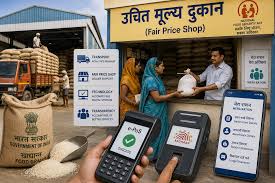
The Cabinet Committee on Economic Affairs chaired by Prime Minister approved the SARTHAK Public Distribution System (PDS) scheme.
- SARTHAK PDS (Scheme for Assistance in Ration Transport and Handling-Income with Automation in PDS) is conceived as an umbrella scheme that integrates two ongoing initiatives:
- Assistance to State Agencies for intra-State movement of foodgrains and FPS dealers’ margin under NFSA
- Scheme for Modernization and Reforms through Technology in Public Distribution System (SMART PDS)
- The government aims to create a single administrative structure for improving foodgrain distribution and strengthening implementation of the National Food Security Act, 2013.
- It will run until 2031.
- Components:
- Advanced Technology Use: It involves the use of advanced technologies such as Artificial Intelligence (AI), Machine Learning (ML), Natural Language Processing (NLP) and Blockchain to streamline operations in the public distribution system.
- Unified Data& Architecture: Under the approved plan, the government intends to create unified databases and standardised digital architecture for real-time monitoring of the PDS network.
- The scheme also proposes AI-enabled analytics and grievance redressal systems along with State Command Control Centres for monitoring operations through data-based oversight.
- Certification: Government will introduce ISO-certified process frameworks will be introduced to strengthen transparency, security standards and operational sustainability within the system.
PM-WANI: In News
The Department of Telecommunications (DoT) has introduced a series of user-friendly reforms under the Prime Minister’s Wi-Fi Access Network Interface (PM-WANI) framework.
- PM-WANI (Prime Minister Wi-Fi Access Network Interface) scheme was launched by the Department of Telecommunication in 2020.
- It aims to enhance the proliferation of public WiFi hotspots to create robust digital communications infrastructure in the country, especially in rural areas.
- Objectives:
- To overcome the digital divide by increasing internet connectivity, especially in remote and rural regions.
- To empower individuals and businesses to participate in the digital economy through affordable internet access.
- To encourage local entrepreneurs by enabling shopkeepers and individuals to become Public Data Office (PDO) operators.
- PM-WANI Ecosystem Components:
- Public Data Office (PDO): It will establish, maintain, and operate only WANI-compliant Wi-Fi access points and deliver broadband services to subscribers. No license is required from DoT.
- The local shops and small establishments as PDOs may earn extra income from selling internet without any requirement of license, registration, and/or any fees to DoT.
- Public Data Office Aggregator (PDOA): It will be an aggregator of PDOs and perform the functions relating to authorization and accounting.
- App Provider: It will develop an App to register users and discover WANI-compliant Wi-Fi hotspots in the nearby area and display the same within the App for accessing the internet services.
- Central Registry: It will maintain the details of App Providers, PDOAs, and PDOs.
- It is currently maintained by the Centre for Development of Telematics (C-DoT).
Bundibugyo Virus Outbreak:
The World Health Organization declared the Ebola outbreak caused by the Bundibugyo virus in the Democratic Republic of the Congo and Uganda as a Public Health Emergency of International Concern (PHEIC).
- The outbreak has exposed a major gap in global vaccine preparedness, as there is currently no licensed vaccine or specific therapeutic for Bundibugyo virus.
- Bundibugyo virus is one of the species of the Orthoebolavirus genus that causes Ebola Virus Disease (EVD). It is a zoonotic disease, with fruit bats considered the most likely natural reservoir.
- Human infection occurs through direct contact with infected wildlife such as bats and non-human primates.
- The disease further spreads through contact with the blood, bodily fluids, secretions, or contaminated surfaces associated with infected individuals.
- Transmission risk becomes especially high in healthcare settings with weak infection prevention measures and during unsafe burial practices.
- The incubation period ranges from 2 to 21 days. Infected individuals generally become contagious only after the onset of symptoms.
- Early symptoms are non-specific and include fever, fatigue, headache, muscle pain, and sore throat, making diagnosis difficult in the initial stages.
- As the disease progresses, patients may develop gastrointestinal complications, organ failure, and haemorrhagic symptoms.
- Past outbreaks reported in Uganda and the Democratic Republic of the Congo during 2007 and 2012 recorded case fatality rates ranging from nearly 30% to 50%.
- BVD closely resembles other endemic febrile illnesses such as malaria, making laboratory confirmation essential.
- Detection is carried out through PCR testing and antigen or antibody-based diagnostic assays.
- As there are currently no approved vaccines or specific treatments for BVD, containment relies on rapid case detection, isolation and supportive care, contact tracing, safe burial practices, and strong community awareness and engagement.
Illegal Sand Mining in National Chambal Sanctuary:

The Supreme Court recently expressed concern over illegal sand mining in the National Chambal Sanctuary and directed the governments of Uttar Pradesh, Madhya Pradesh and Rajasthan to take strict action, as mining activities are damaging the Chambal river ecosystem and threatening key species such as gharials.
- The Supreme Court recently raised concerns over illegal sand mining in the National Chambal Sanctuary, highlighting its severe impact on the Chambal river ecosystem and endangered species such as the Gharial and the Ganges river dolphin.
- Illegal sand mining in India is driven by rising construction demand, governance failures, weak enforcement, and policy gaps, leading to ecological degradation, riverbank erosion, groundwater depletion, and threats to biodiversity and infrastructure.
- The judiciary has strengthened regulation through landmark judgments and environmental principles like the Public Trust Doctrine and Precautionary Principle, while measures such as digital surveillance, stronger governance, scientific mining practices, and promotion of M-Sand are crucial to curb illegal mining.
- Sand mining refers to the extraction of sand and gravel from riverbeds, coasts and dunes mainly for construction activities.
- While sand is essential for infrastructure development, excessive and illegal mining beyond natural replenishment levels causes serious environmental and geological damage.
- India’s rapid urbanization and infrastructure expansion have created a massive demand-supply gap for sand used in construction activities.
- Illegal sand mining remains highly profitable as miners avoid costs related to environmental clearances, royalties and regulatory compliance.
- Administrative and Governance Failures: Illegal sand mining is often supported by a nexus between sand mafias, local politicians and corrupt officials, resulting in weak enforcement and poor accountability.
- In addition, authorities frequently lack adequate manpower, surveillance technology and monitoring capacity to regulate mining activities effectively.
- Outdated or inaccurate District Survey Reports often fail to determine sustainable extraction limits, leading to excessive mining.
- Weak transport monitoring systems and the slow adoption of alternatives such as Manufactured Sand further make it difficult to curb illegal sand mining.
Post-Quantum Cryptography:

A task force constituted by the Department of Science & Technology (DST) recommended that India’s critical sectors begin phased adoption of Post-Quantum Cryptography (PQC) to counter future quantum-computing threats.
- Critical Information Infrastructure (CII) sectors are expected to begin transition by 2027, migrate priority systems by 2028, and achieve full adoption by 2029.
- Modern digital security depends heavily on Public Key Infrastructure (PKI), which is based on mathematical problems that are extremely difficult for classical computers to solve.
- A powerful fault-tolerant quantum computer could use Shor’s Algorithm to break current encryption systems, posing serious risks to banking networks, government and military communications, digital authentication, and internet security.
- Post-Quantum Cryptography (PQC) seeks to develop cryptographic systems that remain secure against both Classical computers and Quantum computers.
- Post-Quantum Cryptography (PQC) also known as quantum-resistant cryptography, refers to cryptographic algorithms designed to remain secure even against attacks from powerful quantum computers.
- Unlike Quantum Cryptography (such as Quantum Key Distribution), PQC does not rely on quantum physics. Instead, it uses mathematical problems that are believed to be computationally infeasible even for quantum machines.
- Based on the difficulty of solving problems related to high-dimensional lattices, such as finding the shortest vector.
- Considered the most promising and widely adopted PQC approach.
- Offers flexibility for encryption, digital signatures, and key exchange.
- Relies on the difficulty of decoding random linear error-correcting codes.
- Known for strong security but often requires large key sizes.
- Based on the difficulty of solving systems of multivariate polynomial equations over finite fields.
- Primarily explored for digital signature schemes.
- Uses the security properties of cryptographic hash functions.
- Mainly applied for digital signatures.
- Considered highly secure and mathematically well understood.
India’s First Indigenous Hydrogen Train:
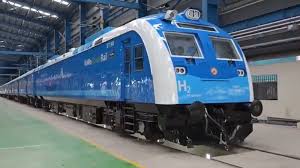
Indian Railways has officially approved the operational rollout of the country’s first-ever indigenous 10-car Hydrogen Fuel Cell-based trainset on the Jind-Sonipat section in Haryana.
- The train is a cutting-edge, 10-car eco-friendly Passenger Trainset powered entirely by an onboard hydrogen fuel cell propulsion system.
- It replaces conventional diesel engines on non-electrified routes, running as a zero-emission alternative that produces only water vapor and heat as byproducts.
- Developed By Indian Railways via its premier research and standard-setting arm, the Research Designs and Standards Organisation (RDSO).
- The train does not burn fuel like a traditional engine; instead, it mixes onboard compressed hydrogen gas with oxygen from the outside air inside a specialized fuel cell stack.
- An electrochemical reaction passes these gases through an internal membrane, combining the hydrogen and oxygen atoms to generate steady electrical energy.
- This electricity is routed directly to a heavy-duty 1,200 KW propulsion engine to turn the train’s wheels and run its onboard electronics.
- Because no fossil fuels are used, the chemical reaction leaves behind zero carbon emissions, releasing nothing but clean water vapor into the atmosphere.
- Set to begin operations along the dedicated Jind-Sonipat section in Haryana, chosen specifically to serve as the national pilot testing ground.
- Built with a powerful 1,200 KW fuel cell system engineered to handle consistent passenger transit loads across short-haul regional networks.
- Geared to run at a maximum safe operating speed of 75 kmph during its initial rollout phase.
- Supported by a local, specialized hydrogen compression and refueling infrastructure set up directly at the Jind station.
- Equipped with standard hydrogen compression units alongside a standby compressor unit to ensure continuous fueling availability.
- Protected by a network of automated safety sensors, including high-sensitivity hydrogen leak detectors and flame detectors, across the production and dispensing lines to keep operations secure.
- Backed by a dedicated maintenance workshop at Shakurbasti, operating under strict, RDSO-approved standard operating procedures and routine safety audits.
- Features around-the-clock monitoring of the fueling grids, handled by certified teams and supported by technical staff riding onboard during the early phases.
The Sample Registration System (SRS) Statistical Report 2024:
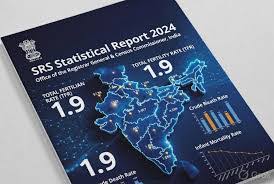
The Office of the Registrar General & Census Commissioner under the Ministry of Home Affairs released the Sample Registration System (SRS) Statistical Report 2024.
The Sample Registration System (SRS) Statistical Report 2024:
- The Sample Registration System (SRS) is a large-scale, continuous, panel household demographic survey.
- It serves as India’s primary macro-source for reliable annual estimates of fertility, birth, and mortality indicators at both sub-national and national levels.
- Published By Office of the Registrar General & Census Commissioner, India, Ministry of Home Affairs, Government of India.
- The 2024 report is drawn from the Census 2011 sampling frame, utilizing a massive representative sample covering approximately 8.9 million individuals across 8,839 sample units.
Key Findings of the 2024 Report:
- Total Fertility Rate (TFR) Collapse: India’s national TFR has officially dropped to 1.9, falling firmly below the traditional societal replacement level of 2.1.
- Crude Birth Rate (CBR) Slide: The national CBR exhibited a steady contraction, sliding down from 21.0 in 2014 to 18.3 in 2024.
- Crude Death Rate (CDR) Stabilization: The national death rate experienced a marginal drop, settling at 6.4 in 2024.
- Infant Mortality Rate (IMR) Improvement: The IMR dropped to 24 deaths per 1,000 live births at the national level, down from 30 in 2019.
- Under-Five Mortality Rate (U5MR) De-escalation: The U5MR declined to 28 deaths per 1,000 live births, down from 29 in the preceding year.
- Shifting Age Demographics: The share of young population aged 0–14 years fell to 24.0%, while the economically active working-age bracket (15–59 years) expanded significantly to 66.4%. Concurrently, the elderly bracket (60+ years) reached 9.7%.
- Delayed Effective Age at Marriage: The mean age at effective marriage for Indian females rose to 23.1 years (22.6 in rural sectors versus 24.4 in urban blocks).
- Sex Ratio at Birth (SRB) Recovery: The national SRB registered a marginal tick upward, reaching 918 females per 1,000 males for the 2022–24 three-year average.
- Widespread Institutional Delivery Access: In 2024, approximately 95.4% of live births were institutional, with mothers receiving care at government or private hospitals.
Sikkim Police Awarded Prestigious President’s Police Colour by President Droupadi Murmu:
The Sikkim State Police has been awarded the prestigious President of India’s Police Colour. It is one of the highest honors to be given to police force in the country. Honorable President Droupadi Murmu presented the honour at a special ceremony in Gangtok on May 28, 2026.The President’s Police Color is among the most prestigious recognitions which granted to the police forces in India for their exceptional service, professionalism and dedication to public welfare.While presenting the honor, President Murmu has congratulated both the serving and retired personnel associated with the Sikkim Police.She noted that since the its establishment in the year 1897, the force has consistently worked towards to maintaining law and order while earning the trust and respect of the people.The award recognizes decades of service, commitment and contribution to the public safety in the Himalayan state.
Vehicle-to-Everything (V2X) Communication:
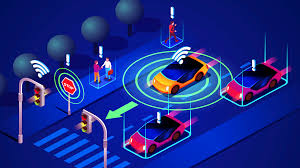
The TRAI has extended the deadline for stakeholders to submit written comments and counter-comments on its Consultation Paper on the Regulatory Framework for Vehicle-to-Everything (V2X) Communication.
- Vehicle-to-Everything (V2X) is an advanced, high-performance wireless communication system that allows smart vehicles to interact in real time with various elements of their surrounding environment.
- Serving as a foundational technology for autonomous driving, V2X expands a vehicle’s situational awareness beyond the physical line-of-sight limits of traditional onboard sensors like radar, cameras, and LiDAR.
- V2X continuously exchanges data—including relative speed, geographic position, and direction—through several interconnected communication modes:
- Vehicle-to-Vehicle (V2V): Vehicles directly share speed, positioning, and braking data with each other to avoid multi-car accidents and generate collision warnings.
- Vehicle-to-Infrastructure (V2I): Vehicles link with roadside infrastructure like traffic lights, smart signs, and embedded road sensors to optimize traffic flow and display real-time signal timing.
- Vehicle-to-Pedestrian (V2P): Enables communication between vehicles and vulnerable road users (pedestrians, cyclists) via smartphones or wearable tech to alert drivers to their presence.
- Vehicle-to-Network (V2N): Connects the vehicle to cloud-based systems and long-range cellular services for real-time navigation mapping, weather updates, and fleet analytics.
- Vehicle-to-Device (V2D): A broader category enabling direct interactions with connected personal devices, such as smart home links and local user hardware.



