
Today’s Current Affairs: 1st March 2026 for UPSC IAS exams, State PSC exams, SSC CGL, State SSC, RRB, Railways, Banking Exam & IBPS, etc
Table of Contents
Football for Schools (F4S) Programme: In News
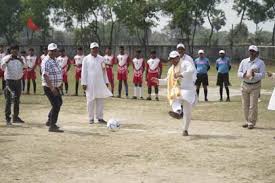
Union Minister of State for Education & Development of North Eastern Region distributed football at PM SHRI Kendriya Vidyalaya, Dakshin Dinajpur, West Bengal, as part of the Football for Schools (F4S) initiative.
- It is run by Fédération Internationale de Football Association (FIFA) in collaboration with UNESCO.
- It aims to contribute to the education, development and empowerment of children.
- It seeks to make football more accessible to both boys and girls around the world by incorporating football activities into the education system, in partnership with relevant authorities and stakeholders.
- The programme has been designed to promote targeted life skills and competencies through football and contribute to the United Nations’ Sustainable Development Goals (SDGs) and other priorities.
- The F4S Programme is aligned with:
- Global sport, education and health policies, including UNESCO’s Kazan Action Plan, the Education 2030: Incheon Declaration and Framework of Action, and the World Health Organization (WHO) Global Action Plan on Physical Activity (GAPPA).
- In India, the programme is implemented by the Department of School Education and Literacy, Ministry of Education (DoSEL), with support from the All India Football Federation (AIFF) and the Sports Authority of India (SAI).
Gypsum:
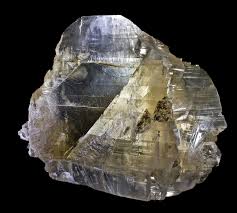
Scientists are studying gypsum in the Salar de Pajonales which is found on both the earth and Mars.
- It is a sedimentary rock primarily composed of calcium sulfate dihydrate (CaSO4 · 2H2O) and anhydrite (CaSO4).
- Gypsum is found in both crystal and rock forms.
- It commonly occurs in extensive beds alongside evaporite minerals like anhydrite and halite, especially in Permian and Triassic sedimentary formations.
- It is often found in saline lakes and salt pans and constitutes a significant part of cap rock on salt domes,
- It generally results from the evaporation of saline water and is one of the more common minerals in sedimentary conditions.
- Gypsum that occurs in nature is called mineral gypsum.
- In India, Marine gypsum is recovered from salt pans during production of common salt in coastal region, particularly in Gujarat and Tamil Nadu.
- Applications of Gypsum:
- Agricultural use: It works as an agent to remove Saline/Alkaline ingredients in the soil. It acts more or less like manure.
- Industrial use: It is used in manufacturing lime and in cement industry and also used in manufacturing Plaster of Paris.
LCH Prachand:
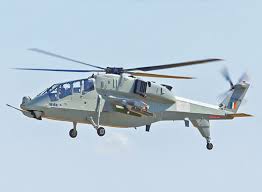
The President of India undertook a sortie in the indigenous Light Combat Helicopter PRACHAND at Air Force Station Jaisalmer, Rajasthan.
- It is an indigenously developed Light Combat Helicopter (LCH).
- It is developed by state-run aerospace major Hindustan Aeronautics Ltd.
- It is the only attack helicopter in the world that can land and take off at an altitude of 5,000 metres (16,400 ft).
- It has the best stealth features, armored-shield systems, and dark-mode attack capability.
- Its crash-resistant landing gear gives it an added edge for better survivability, among other technologies like radar and IR signature.
- A pressurised cabin offers protection from nuclear, biological, and chemical contingencies.
- It is equipped with a countermeasure dispensing system that protects it from enemy radars or infrared seekers of enemy missiles.
- The multi-role attack helicopter has been customised as per the requirements of the Indian armed forces to operate both in desert terrains and high-altitude sectors.
Controller General of Accounts:
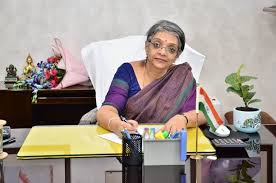
The Controller General of Accounts (CGA) launched two major initiatives i.e. the Government Bank Dashboard and the Government Bank Manual in New Delhi.
- CGA is the Principal Accounting Adviser to the Government of India.
- It was established in 1975 to administer matters pertaining to the departmentalisation of the accounts of the Union.
- The CGA is responsible for for the central government exchequer control and internal audits
- The Office of CGA prepare smoothly and annual analysis of expenditure, revenues, borrowings, and various fiscal indicators for the Union Government.
- It further formulates policies relating to general principles, forms, and procedures of accounting for the Central and State Governments.
- It administers the process of payments, receipts, and accounting in the Central Civil Ministries/ Departments.
- CGA is also responsible for coordination and monitoring the progress of the submission of corrective/remedial action taken notes (ATNs) on the recommendations contained in the Public Accounts Committee’s (PAC) reports as well as the Comptroller and Auditor General (CAG) reports through its web-based Audit Para Monitoring System (APMS).
- It also looks after the pensions of Central government employees.
- Nodal Ministry: Department of Expenditure, Ministry of Finance.
Forest owlet:
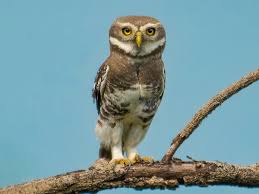
In Kuno National Park in Madhya Pradesh forest owl has been spotted 113 years after it was last seen.
- It is a member of the typical owl family, Strigidae.
- It is mainly found in tropical and subtropical moist lowland woods, dense deciduous woodlands, open dry deciduous teak woods and tropical and subtropical dry forests.
- It is endemic to the forests of central India.
- It was observed in Odisha, Chhattisgarh, Madhya Pradesh, Maharashtra, and Gujarat, and at a few locations in the Melghat Tiger Reserve in Maharashtra.
- It is a typical owlet with a rather unspotted crown, presence of full throat collar, thickly feathered legs, heavily banded wings, and a tail.
- These birds are diurnal and have been observed to hunt during the day.
- They eat rodents, reptiles such as lizards and skinks, and insects.
- Conservation Status:
- IUCN Red List: Endangered
- CITES: Appendix I
Rare Disease Day 2026:

Rare Disease Day is observed globally on 28th February (or 29th February in leap years, symbolically the rarest day) to underscore the unique challenges faced by this community.
- It aims to achieve equity in social opportunities, healthcare, and access to diagnosis and therapies for rare disease patients.
- Established in 2008, it is coordinated by EURORDIS (European Organisation for Rare Diseases) in partnership with over 70 national alliance patient organisations.
Rare Diseas - There is no single universal definition of a rare disease. It is primarily determined by prevalence, with a global/emerging consensus defining it as affecting ≤ 1 in 2,000 persons in a WHO-defined region.
- A significant 50–75% of these conditions manifest during childhood or at birth, and approximately 80% are of genetic origin (e.g., Lysosomal storage disorders).
- The remaining include rare cancers, autoimmune conditions, and infectious diseases.
- Globally, there are 6,000–10,000 identified rare diseases, affecting an estimated 300–450 million people. Critically, ~95% of rare diseases currently lack approved curative treatments, posing a major public health challenge.
- India lacks a formal prevalence-based definition due to limited epidemiological data. Instead, the National Policy for Rare Diseases (NPRD), 2021, categorizes (Group 1, Group 2 and Group 3) disorders based on treatability and clinical experience, not strict numerical thresholds.
Despite the lack of a definition, an estimated 72–96 million people in India are affected by rare diseases. - Under the NPRD 2021, financial support of up to Rs. 50 lakhs is provided to patients suffering from any of the 63 included rare diseases at designated Centres of Excellence.
- Under the Union Budget 2026–27, 7 additional rare diseases have been included for exemption from import duties on personal imports of drugs, medicines, and food for special medical purposes.
- Rare Diseases were included as a focus area under the Production Linked Incentive (PLI) Scheme for Pharmaceuticals.
Mars-Like Conditions in Salar de Pajonales:
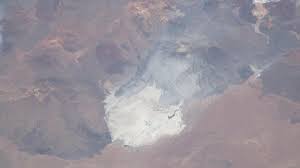
Scientists discovered that in the Salar de Pajonales, a salt flat in the Atacama Desert, gypsum acts as a microscopic shield, protecting living microbes and preserving their ancient fossils.
- Salar de Pajonales is a large playa (salt flat) in northern Chile, situated on the western margin of the Altiplano-Puna plateau at an elevation of approximately 3,500 metres above sea level.
- It is the 3rd-largest salar in the Atacama Region (after Salar de Atacama and Salar de Punta Negra).
- It lies within the hyperarid core of the Atacama Desert and experiences polyextreme conditions, i.e., extreme aridity, high altitude, intense solar and ultraviolet radiation, dramatic temperature fluctuations, and a sulfate-rich mineralogy. These conditions closely mimic those found on Mars.
- It is an endorheic basin (with no outflow) sustained by groundwater. Its surface is dominated by evaporitic deposits, including prominent gypsum (calcium sulfate dihydrate) crusts and layered microbial structures known as stromatolites.
- Recent research has focused on how gypsum deposits preserve biosignatures. Studies have found:
- Active extremophile microbial communities (halophilic bacteria and archaea) survive in protected microhabitats within the mineral.
- Fossilized microbes and molecular biosignatures trapped within gypsum date back thousands of years
- Gypsum acts as a protective repository, shielding biological material from desiccation and radiation. As gypsum is abundant on Earth and Mars, the study suggests orbiters and rovers should target these deposits, as they are prime candidates for holding ancient Martian life secrets.
Centre Pauses Rice Fortification:
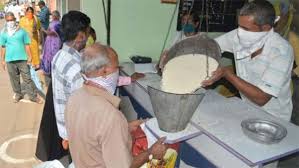
The Union government has decided to “temporarily” discontinue rice fortification under the Pradhan Mantri Garib Kalyan Anna Yojana (PMGKAY) and allied schemes after a comprehensive review based on a study from the Indian Institute of Technology (IIT) Kharagpur.
- The IIT Kharagpur study assessed the shelf life of Fortified Rice Kernels (FRK) and Fortified Rice (FR) across diverse agro-climatic zones.
It found that moisture content, storage conditions, temperature, relative humidity, and packaging material critically influence stability, leading to a decline in micronutrient levels over time. - The problem is exacerbated by the fact that rice in the central pool is often stored for 2-3 years. With an annual allocation of 37.2 million tonnes under PMGKAY and a total projected availability of 67.4 million tonnes, the gap implies extended storage cycles that heighten the risk of nutrient loss.
- The government has clarified that this temporary discontinuation will not reduce foodgrain entitlements and will not affect operations under the Public Distribution System (PDS), Integrated Child Development Services (ICDS), or the PM Poshan Scheme (formerly Mid-Day Meal scheme).
- The sudden decision has caused distress in the milling industry, with stakeholders reporting huge losses on raw materials like folic acid, broken rice, and premixes, and suggesting the policy should have been aligned with the next crop season (2026–27).
- Rice fortification is the deliberate addition of essential vitamins and minerals to rice during post-harvest processing to enhance its nutritional quality.
- It addresses hidden hunger (micronutrient deficiencies) without changing the rice’s taste, appearance, or cooking properties.
- Polished white rice, the most commonly consumed form, loses 75–90% of its natural vitamins (like thiamine, niacin, B6, and vitamin E) during milling. Fortification restores these lost nutrients and adds others that rice naturally lacks.
Centre designates Legacy Thrust Territories:
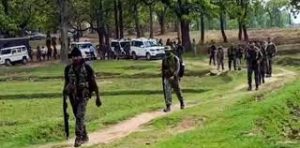
The Ministry of Home Affairs has introduced the concept of Legacy Thrust Territories to prevent the resurgence of Left Wing Extremism (LWE) after major operational gains against Naxalism.
- Legacy Thrust Territories are previously Naxal-affected districts identified by the Union Government for continued security presence and focused developmental intervention, even after major decline in insurgent activities.
- The framework ensures that gains achieved against Left Wing Extremism are not reversed.
- Earlier, nearly 200 districts were affected by LWE (around 2000).
- By 2025, the number declined to 38 districts.
- Currently, only 7 districts remain on the LWE list:
- 5 in Chhattisgarh
- 1 in Jharkhand
- 1 in Odisha
- These and other formerly affected districts are being brought under the Legacy Thrust framework for sustained monitoring.
- Aim:
- Prevent resurgence of Naxalism after operational successes.
- Ensure smooth transition from security-led operations to governance-led development.
- Consolidate peace through infrastructure, administration, and socio-economic integration.
Space Re-entry:

Space re-entry has gained attention with advancing human spaceflight missions, especially India’s Gaganyaan programme, which focuses on safely returning astronauts to Earth.
- Space re-entry refers to the process by which a spacecraft or crew capsule returns from orbit and safely passes through Earth’s atmosphere to land on the surface.
- The re-entry corridor is a narrow, precisely defined atmospheric window through which a spacecraft must enter Earth’s atmosphere to ensure safe return.
- Too shallow (Overshoot): The spacecraft may skip off the atmosphere and return to space.
- Too steep (Undershoot): Extreme heat and deceleration forces can destroy the vehicle or endanger the crew.
- Hence, maintaining the correct entry angle is critical for survival.
- The spacecraft turns opposite to its direction of travel and fires engines to reduce orbital velocity, allowing gravity to pull it into the atmosphere.
- Atmospheric drag converts kinetic energy into heat, slowing the capsule rapidly.
- Heat shields protect the capsule using ablation or insulation to withstand temperatures generated during re-entry.
- Semi-ballistic design and attitude control help maintain the vehicle within the re-entry corridor and guide it toward the landing zone.
- Ionised plasma forms around the capsule, temporarily blocking radio communication.
- At lower altitudes, multi-stage parachutes reduce speed for safe splashdown or landing.
Operation Epic Fury:
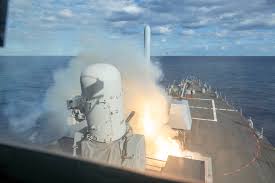
The United States military has officially named its recent strikes on Iran as Operation Epic Fury, amid escalating tensions over Iran’s nuclear programme and regional security concerns.
- Operation Epic Fury is the codename adopted by the Pentagon for US military operations targeting Iranian military infrastructure, carried out in coordination with Israeli strikes.
- It represents a large-scale military campaign aimed at weakening perceived threats posed by Iran’s military and strategic capabilities.
- Nations Involved:
- United States – Led and officially named the operation.
- Israel – Conducted coordinated strikes alongside US forces.
- Iran – Targeted country; responded with retaliatory actions.
- Aim:
- Neutralise perceived military and missile threats.
- Constrain Iran’s nuclear and strategic capabilities.
- Strengthen regional security from the perspective of US–Israel strategic interests.
US-Israel Attack on Iran:
The US and Israel launched coordinated strikes on Iran, reportedly killing Iran’s Supreme Leader, Ayatollah Ali Khamenei (a Shia cleric), and targeting key strategic facilities while calling for regime change.The joint offensive, referred to as Operation Epic Fury by the US and Operation Lion’s Roar by Israel, marked a major escalation in regional tensions.Iran retaliated through Operation True Promise 4, launching missile attacks against Israel and nearby Gulf states. The escalation comes despite recent progress in US–Iran nuclear talks, raising fears of a wider West Asian conflict with significant global implications.US and Israel Attack on Iran: Dissatisfied with the limited impact of the 2025 strikes and citing Iran’s continuing nuclear ambitions, the US viewed Iran’s large arsenal of ballistic missiles and kamikaze drones as an intolerable threat to US forces in the Gulf and regional allies.
Unlike earlier operations focused on deterrence, the February 2026 strikes aimed at decapitation.The attacks reportedly killed Supreme Leader Ayatollah Ali Khamenei, with Washington calculating that removing him could fracture the highly centralized Islamic Revolutionary Guard Corps (IRGC).The US military action was driven by a complex matrix of nuclear concerns, ambitions for regime change, domestic political pressure, deterrence calculations, and the escalation of strategic commitments.
SEBI Mandates Registered Name & Number Disclosure on Social Media:
SEBI has issued a new circular mandating all SEBI-registered market intermediaries to disclose their registered name and registration number while posting securities-related content on social media.A regulatory directive issued by the Securities and Exchange Board of India (SEBI) requiring all SEBI-regulated entities and their agents to prominently display their registered identity and registration number on social media platforms while sharing securities market-related content.Aim is to help investors clearly distinguish between authorized SEBI-regulated entities and unregistered or misleading financial influencers, thereby improving transparency and trust in digital investment communication.
Maharashtra Launches Divyang Sahayak Portal for Easy Online Disability Schemes:
Maharashtra State government has launched the Divyang Sahayak Portal. Which is described as India’s first fully integrated online platform for disability welfare schemes. Announced in February 2026 the portal removes paperwork and physical visits for persons with disabilities. It enables online applications, real-time tracking, automatic approvals, and AI-based grievance redressal. The initiative aims to strengthen implementation of the Rights of Persons with Disabilities Act, 2016 and ensure faster, transparent delivery of benefits.The Divyang Sahayak Portal is a one stop digital platform for persons with disabilities in Maharashtra.
Gujarat’s semiconductor ecosystem gets ₹1,600 crore investment boost:
Gujarat’s semiconductor ecosystem has received a fresh investment push of over ₹1,600 crore. This comes from with proposals from Japan, South Korea and Malaysia aimed at strengthening the state’s chip manufacturing value chain. Announced during the Gujarat Semiconnect conference in Gandhinagar, the investments span manufacturing units, semiconductor chemicals, advanced instrumentation, R&D centres and high tech startups. The move reinforces Gujarat’s growing status as a semiconductor hub following major projects in Sanand and Dholera.The ₹1,600 crore semiconductor boost reflects increasing global confidence in Gujarat’s electronics sector. The investments aim to build an end to end semiconductor ecosystem, covering raw materials, advanced equipment, manufacturing and innovation.
Mangaluru Airport Wins 2025 ASQ Best Arrivals Award:
The Mangaluru International Airport has once again earned global recognition by winning the 2025 Airport Service Quality (ASQ) Award for Best Airport at Arrivals in Globally. The prestigious award was presented by Airports Council International (ACI) World which marks the second consecutive year the airport has secured this honour. This award is based entirely on real time passenger feedback and highlights excellence in arrivals experience which is including immigration, baggage handling, cleanliness and overall comfort.



