
Today’s Current Affairs: 31st Aug 2026 for UPSC IAS exams, State PSC exams, SSC CGL, State SSC, RRB, Railways, Banking Exam & IBPS, etc
Table of Contents
Dung beetle: New Study
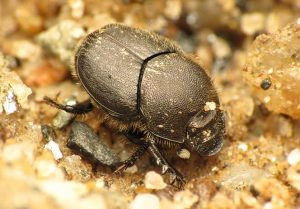
A report published in Ecology and Evolution said that dung beetles are vulnerable to a previously unforeseen risk like dogs.
- Dung beetle known as the Scarabaeidae family within the Animal Kingdom’s order
- They are robust, compact insects known for their hard, protective exoskeletons and strong, clawed legs adapted for digging and rolling dung.
- They vary in color, with some species displaying dull, black or brown hues, while others exhibit metallic shades of blue, green, or copper.
- They live in habitats that range from desert to forest.
- Dung beetles are found worldwide, on every continent except Antarctica.
- They feed on the feces of large herbivores during both their larval and adult stages.
- Dung beetles span three main lifestyles: rollers (ball-makers), tunnelers (bury beneath), and dwellers (live in the pat).
- Several dung beetles navigate using celestial cues; some use the Milky Way as an orientation reference during straight-line rolling.
- Many scarabs have fan-like (lamellate) antennae that open to sample odors-useful for locating fresh dung fast.
- They play major ecological roles in nutrient cycling, soil aeration, seed dispersal, and parasite/flies suppression.
CosmoCube Mission:

An international team of astronomers announced that CosmoCube mission will study faint radio signals from the early universe.
- CosmoCube Mission is a proposed satellite that will study the universe’s earliest stages by listening for faint radio signals from more than 13.5 billion years ago.
- It is being developed by a team of scientists led by the University of Cambridge in the United Kingdom.
- It would operate near the Moon and use the lunar far side as a natural shield against radio interference from Earth.
- It will spend around 40 minutes on the far side during every two-hour orbit.
- Time Period: Over a proposed two-year mission, the satellite could collect roughly 1,000 hours of data at extremely low radio frequencies.
- The satellite would use a lightweight radio antenna to detect the early-universe signal.
- It would also repeatedly determine its own position using onboard information and observations of its surroundings.
- This mission concept could help scientists study the poorly understood period between the Big Bang and the formation of the first stars.
- The measurements could offer scientists a clearer picture of the cosmic dark age and the transition towards the formation of the first stars and galaxies.
Index of Industrial Production: July 2026

India’s industrial activity remained resilient in July 2026, with the overall Index of Industrial Production (IIP) standing at 124.8, unchanged from the revised level recorded in June.
- Index of Industrial Production is a composite indicator designed to measure the changes in the volume of the production of item basket over a period of time with respect to its base year.
- It provides insight into the growth or contraction of industrial activity over a given period, making it a crucial economic performance indicator.
- It is compiled and released by the National Statistics Office (NSO), Ministry of Statistics and Programme Implementation (MoSPI).
- It is released every month.
- Base Year: It is 2022-23.
- The first IIP was prepared with base year 1937 and thereafter the base year has been revised successively to 1946, 1951, 1956, 1960, 1970, 1980-81, 1993-94, 2004-05 and 2011-12.
- The base year is a chosen year taken as a reference point (index = 100) to compare production over time.
Oriental Darter:
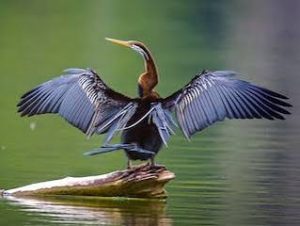
It was seen that Oriental Darters (Anhinga melanogaster) are getting affected by garbage dumping in Bengaluru’s lake.
- Oriental Darter is also known as the snakebird or Indian darter.
- It is a tropical water bird with a long, slender neck and a sharp, spear-like beak that it uses to impale fish.
- It has a very long, slender, snakelike neck and a long, pointed bill.
- Its neck has strongly developed muscles about a kink in the neck at the 8th and 9th vertebrae that allows it to be flexed and darted forward with rapid force to stab fish underwater.
- It is a water bird of tropical South Asia and Southeast Asia.
- It is found mainly in freshwater lakes and streams.
- They usually forage singly, with the entire body submerged. It darts its neck to impale fish and then brings them out of water.
- Diet: It is an omnivorous species.
- Conservation Status:
- IUCN Red List: Near Threatened
Barrier Lake:
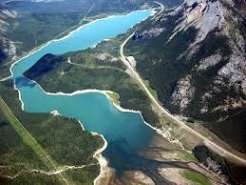
The newly formed barrier lake on the Nepal-Tibet border poses an immediate, catastrophic threat to Nepal.
- A barrier lake is more commonly known as a landslide dam or lake.
- It is created in a river valley when landslide debris completely blocks a stream or river.
- The displaced material effectively becomes a natural dam, trapping water upstream and creating a temporary reservoir.
- It is commonly formed in places with high, steep mountains and narrow river valleys that witness activity such as rock, soil and mud avalanches, slides, or flows.
- This instantly plugs the river Water rapidly accumulates behind this natural blockage.
- As water pressure mounts, the loose debris dam can erode or suddenly collapse.
- This triggers the lake burst, sending a catastrophic wall of water downstream.
- The timescale of a breach can vary from days to even decades after the formation of a dam.
- A failure of the dam can potentially release millions of cubic metres of water in a short period, causing catastrophic flooding downstream.
- This flooding can carry debris and also create secondary landslides downstream, compounding its effect.
PM e-Bus Sewa scheme:
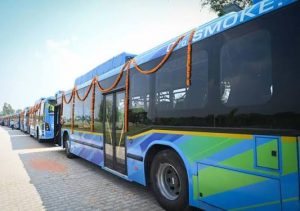
The Centre’s PM e-Bus Sewa scheme is gathering pace, with more than 500 electric buses now operational across 23 cities and daily ridership crossing one lakh.
- It aims to strengthen the urban transport system by deployment of air-conditioned electric buses to urban cities.
- Cities have a population ranging 3-40 lakh and state capitals including North Eastern and Hilly Regions below three lakh population as per 2011 census are eligible for the scheme.
- It is being implemented by the Ministry of Housing and Urban Affairs (MoHUA).
- It focuses on cities with limited public transport capacity and largely covers smaller cities including those where organised city bus services have either been absent or inadequate.
- Under this scheme, city bus operations will be done on a Public Private Partnership (PPP) model.
- This scheme will support bus operations for 10 years.
- States/Cities shall be responsible for running the bus services and making payments to the bus operators.
- The Central Government will support these bus operations by providing subsidies to the extent specified in the proposed scheme.
- It overs development of depots, charging infrastructure, green mobility initiatives including accessible bus stops, last mile connectivity Intelligent Transit
- Management System (ITMS) and National Common Mobility Card (NCMC)-based ticketing.



