
Today’s Current Affairs: 3rd jul 2026 for UPSC IAS exams, State PSC exams, SSC CGL, State SSC, RRB, Railways, Banking Exam & IBPS, etc
Table of Contents
Chandaka Wildlife Sanctuary:

With Chandaka wildlife sanctuary having a lot of anthropogenic pressure, particularly due to the presence of cattle, the wildlife wing of the forest department has put on hold the ambitious Indian gaur (bison) translocation programme.
- Chandaka Wildlife Sanctuary is located on the outskirts of Bhubaneswar in Odisha.
- It represents the northeastern limits of the Eastern Ghats.
- It was declared primarily to preserve wild elephants and elephant habitats.
- The Kumarkhunti reservoir is the only water reservoir inside the sanctuary that sustains wildlife during the summer.
- Flora is moderately diverse with an intimate mixture of evergreen and deciduous elements.
- Main tree species are Kochila, Kalicha, Belo, Kangada, Giringa, Sunari, Sal, Kumbhi, Jamu, Karanja, Teak, and Sidha.
- Elephants, Chital, Barking Deer, Wild Boar, Rhesus Monkey, Pangolin, Sloth Bear, Indian Wolf, Hyena, and other mammals.
- A variety of snakes, like the Python and the monitor lizard, can also be sighted there.
- Prominent birds of the sanctuary are peafowl, red junglefowl, crested serpent eagle, great horned owl, black headed oriole, paradise flycatcher, coucal and stone curlew.
Five New Species of Flowering Plants:
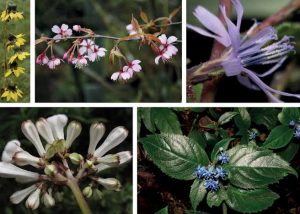
Researchers recently discovered five entirely new species of Impatiens named Impatiens berchmansiensis; Impatiens ninanii; Impatiens filcyii; Impatiens xanthopetala; Impatiens flavispicata.
Five New Species of Flowering Plants:
- They were discovered within the misty, rain-soaked peaks of the Western Ghats in Kerala.
- They belong to the genus Impatiens, a large genus of flowering plants belonging to the Balsaminaceae family.
Impatiens berchmansiensis: - It is a delicate balsam with bright yellow flowers.
- It was found beside the cold highland streams of Vagamon, Idukki District.
Impatiens ninanii:
- It is a resilient herb with beautiful violet petals and deep purple-speckled stems.
- It was found in the quiet wilderness of Mankulam Viripara, Idukki District.
Impatiens filcyii:
- It has a striking pinkish-purple flower, bearing a vibrant splash of yellow and purple at its heart.
- It was found deep in the open grasslands of Mamalakkandam, Ernakulam District.
Impatiens xanthopetala:
- Its name literally means ‘yellow-petalled’, clings precariously to the sheer, rocky cliffs, showing off deep golden petals marked with dark brown spots like a solitary drop of sunshine.
- It was found in Pambanar, Idukki District.
Impatiens flavispicata:
- It bears pure white flowers with a hidden yellow spur.
- It was found in the dense pockets of Mamalakkandam, Ernakulam District.
What are Exosomes?
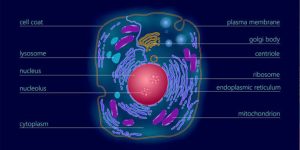
Tiny particles called exosomes released by most human cells may be promising targets for diagnosis and treatment of an array of diseases from cancer to Alzheimer’s, but scientists have struggled to see them and study them in detail.
- Exosomes are small extracellular vesicles secreted by cells.
- They are enclosed by a lipid bilayer membrane, similar to the cell membrane.
- They are naturally produced by almost all cells in the body and are packed with a cargo of proteins, lipids, RNAs, and various signalling molecules.
- In many ways, they reflect the status of their parent cell, passing on that “information” to nearby cells.
- They mediate the exchange of substances between cells, thereby affecting the biological properties and activities of recipient cells.
- They play significant roles in intercellular communication, immune response modulation, and the transfer of genetic materials.
Taal Volcano: In News

Taal Volcano recently produced a brief four-minute phreatomagmatic eruption, sending a plume about 450 meters above its crater as magma interacted with water.
- Taal Volcano is a stratovolcano located in Batangas province about 70 kilometers south of Manila, Philippines.
- It is classified as a “complex” volcano by the Philippine Institute of Volcanology and Seismology (PHIVOLCS).
- It does not rise from the ground as a distinct, singular dome but consists of multiple stratovolcanoes, conical hills, and craters of all shapes and sizes.
- It is one of the active volcanoes in the Philippines and part of the “Pacific Ring of Fire”.
- It has a massive caldera which presently holds Taal Lake and contains a prominent rock formation known as Vulcan Point.
Phreatomagmatic eruption:
- It is a type of volcanic eruption that results from the explosive interaction between magma and water.
- When magma touches groundwater, surface water, or water-rich rocks, it rapidly converts water into steam.
- The explosive release of steam and the fragmentation of magma and surrounding rocks produce a mix of ash and other pyroclastic materials and fragments of overlying and adjacent rocks.
PaleoIndia Portal:
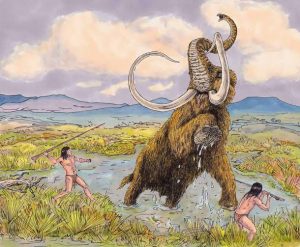
The Union Minister of Environment, Forest, and Climate Change recently launched the PaleoIndia Portal.
- PaleoIndia Portal is a digital initiative developed jointly by the Zoological Survey of India (ZSI) and the National Centre for Sustainable Coastal Management (NCSCM), Chennai, using dynamic geological maps provided by the GSI.
- The digital platform documents fossil fauna across all 28 states and 8 Union Territories.
- It currently hosts information on many fossil specimens spanning mammals, reptiles, birds, fishes, amphibians, molluscs, arthropods, foraminifera, echinoderms, and ichnofossils.
- It features a real-time data upload system to enable field-based and citizen science contributions for safeguarding India’s paleontological heritage.
National Centre for Sustainable Coastal Management (NCSCM):
- It was established by the Ministry of Environment, Forest, and Climate Change (MoEF&CC) in 2011 as an autonomous institution to support the protection, conservation, rehabilitation, management, and policy advice of the coast.
- Headquarters: Chennai, Tamil Nadu
- Aims and Objectives:
- Strive for being a world-class knowledge institution related to coastal zones, environment, resources, and processes.
- To promote integrated and sustainable management of the coastal and marine areas in India for the benefit and well-being of the traditional coastal and island communities.
- Advise the Union and State Governments and other associated stakeholder(s) on policy and scientific matters related to Integrated Coastal Zone Management (ICZM).
- Its work includes coastal vulnerability assessments, coastal environmental impact studies, mapping of Ecologically Sensitive Areas (ESAs), and creating Integrated Coastal Zone Management (ICZM) plans.
- The Six Research Divisions of the NCSCM are:
- Geospatial Sciences, Remote Sensing and Geographic Information Systems (GIS)
- Integrated Social Sciences & Economics
- Coastal environmental impact assessment
- Conservation of Coastal & Marine Resources
- Knowledge, Governance and Policy
- Futuristic Research and Integrated Island Management Unit.
National Rainfed Area Authority:
The National Rainfed Area Authority (NRAA) has achieved a significant milestone in the conservation of India’s wild rice (Oryza rufipogon) genetic resources in Sonitpur District of Assam.
- National Rainfed Area Authority was established in 2006 as an advisory body under the Ministry of Agriculture and Farmers’ Welfare.
- It aims to promote sustainable agriculture in rainfed regions, enhance productivity, and improve the livelihoods of the farming communities.
- It is wider than mere water conservation and covers all aspects of sustainable and holistic development of rainfed areas, including appropriate farming and livelihood system approaches.
- It provides necessary leadership and appropriate coordination in implementation of programmes.
- The Governing Board is chaired by the Union Agriculture Minister and co-chaired by the Union Minister of Rural Development.
- It consists of technical experts and representatives from stakeholder Ministries.
- The Executive Committee would be headed by a full time Chief Executive Officer who should be a recognized expert on the subject.
- The CEO will be supported by five full-time technical experts.
- Headquarters: It is located in New Delhi.
Transcaspian marinka:
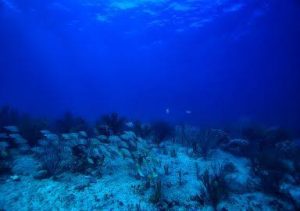
Sangon clan in Arunachal Pradesh has launched an initiative to conserve a Himalayan ray-finned fish Transcaspian marinka (Schizothorax pelzami).
- Transcaspian marinka is a species of ray-finned fish in the genus Schizothorax in the family Cyprinidae.
- It is mainly found in Afghanistan, Turkmenistan and Iran.
- It inhabits freshwater rivers, streams, springs, and qanats, where it occupies a benthopelagic niche.
- It is locally known as Ngarsing in the Nyishi language in Arunachal Pradesh.
- Conservation Status:
- IUCN: Least Concern
- Actinopterygians, or ‘ray-finned fishes,’ are the largest and most successful group of fishes and make up half of all living vertebrates.
- Ray-finned fishes inhabit a variety of extreme environments. These include high altitude lakes and streams, desert springs and subterranean caves.
- Many ray-finned fishes exhibit migratory behavior.
- It perceives the external environment in five major ways – vision, mechanoreception, chemoreception, electroreception and magnetic reception.
SHE-LEAPS Platform:
India’s efforts to strengthen women-led rural entrepreneurship have entered a new phase with the launch of SHE-LEAPS platform.
- SHE-LEAPS stands for ‘Self-Help Entrepreneur-Livelihoods and Enterprise Application for Prosperity and Sustainability’.
- It is a digital platform for empowering women associated with Self-Help Groups (SHGs) across rural India for enterprise creation, monitoring and performance tracking.
- It is designed to strengthen women-led rural enterprises and accelerate the Lakhpati Didi initiative through data-driven entrepreneurship.
- Implemented by: The SHE-LEAPS mobile application is developed by the Digital India Corporation and implemented under the LokOS platform.
- Objectives:
- Empowering rural SHG women entrepreneurs nationwide.
- Creating and strengthening women-led enterprises in rural areas.
- Integrating rural producers with formal value chains
- Enhancing the financial inclusion of SHG households
- Enabling data-driven rural entrepreneurship
- The nationwide rollout of SHE-LEAPS will cover 34 States and Union Territories, supporting State Rural Livelihood Missions in strengthening women-led enterprises.
- It captures real-time operational data across sectors and tracks the complete livelihood journey.
- It supports both farm and non-farm rural enterprises, aiming to build a stronger and more sustainable rural economy.
- It further strengthens digital monitoring, improves governance, and enables better planning, intervention, and informed policy decisions.
Centralised IT-Enabled System (CITES) Project:

The Employees’ Provident Fund Organisation (EPFO) carried out a planned nationwide database consolidation under its Centralised IT-Enabled System (CITES) project.
- Centralised IT-Enabled System (CITES) Project is EPFO’s initiative to modernise its service delivery mechanism through automation and rule-based processing.
- It is designed by the Centre for Development of Advanced Computing (C-DAC).
- Features of Centralised IT-Enabled System (CITES) Project:
- Single Database: CITES provides a single centralised system architecture with one national database.
- Online services: Most of the services, including KYC updates, can be done online using the new platform.
- Faster Service: The new interface simplifies transfers, helps maintain an accurate service history, and enables faster settlements.
- Members or beneficiaries will now be able to approach any PF office across the country for the redress of their queries and for seeking clarifications.
- The current Universal Account Number (UAN) and password created by the member can be used to access the new system.
- It allows members to see all their previous member IDs under the Universal Account Number linked with a single KYC (Aadhaar).
- EPFO offices can process the claims and can raise queries electronically through the system.
UN Sustainable Development Report 2026:
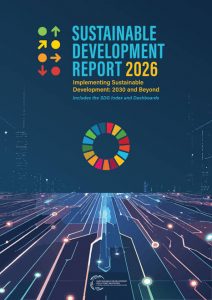
India ranked 94th out of 167 countries in the 2026 UN Sustainable Development Goals (SDG) Index, achieving its highest-ever position with an overall score of 68.3 out of 100, according to the Sustainable Development Report 2026 released by the UN Sustainable Development Solutions Network (SDSN).
Key Findings of the Sustainable Development Report 2026:
- Globally, none of the 17 SDGs are on track to be achieved by 2030.
- Only about 16.5% of individual SDG targets are progressing on track, with nearly half making only marginal progress and 15% actively reversing since 2015.
- Top Performers: Nordic countries continue to lead the global rankings, with Finland securing the top spot, followed closely by Sweden and Denmark.
- At the bottom of the index are Chad, the Central African Republic, and South Sudan due to conflict and instability.
- The goals furthest off track globally are SDG 2 (Zero Hunger), SDG 11 (Sustainable Cities), SDG 14 (Life Below Water), SDG 15 (Life on Land), and SDG 16 (Peace, Justice, and Strong Institutions).
- Barbados ranked first globally in its commitment to UN-based multilateralism, whereas the US ranked last, largely due to its opposition to the 2030 Agenda and withdrawal from international organizations.
India:
- Since the SDGs were adopted in 2015, India has climbed 18 places (from 112th to 94th), making it one of the fastest-improving major economies alongside China.
- However, it still lags behind South Asian neighbors like Bhutan, Maldives, Nepal, and Sri Lanka.
- Only 33.3% of India’s SDG targets are on track to be achieved by 2030, while progress is limited to 42.7% of targets, and 24% have worsened.
- The Hunger Crisis (SDG 2): Zero Hunger remains India’s most pressing challenge.
- Progress is stagnating, with child wasting rising to 19% (the highest globally), child stunting remaining severe at 29.3%, and undernourishment rising to 12%.
- India faces “major challenges” in 7 of the 17 goals, specifically SDG 2 (Zero Hunger), SDG 3 (Good Health and Well-being), SDG 5 (Gender Equality), SDG 11 (Sustainable Cities), SDG 14 (Life Below Water), SDG 15 (Life on Land), and SDG 16 (Peace, Justice, and Strong Institutions).
- Under SDG 16, India’s score on the Press Freedom Index has dropped severely (from 59.51 in 2015 to 31.96 in 2026).
In health (SDG 3), mortality linked to air pollution and non-communicable diseases has worsened. - India is deteriorating on two environmental SDGs—SDG 12 (Responsible Consumption and Production) and SDG 13 (Climate Action).
- The decline in SDG 13 is primarily driven by rising carbon dioxide emissions from fossil fuel combustion and cement production, with per capita CO₂ emissions reaching a record high of 2.21 tonnes.
- The report highlights that India has made significant, notable progress globally in expanding electricity access (SDG 7) and increasing mobile broadband and internet usage (SDG 9).
VB-G RAM G Act, 2025 : In Force From 1st July
The Viksit Bharat – Guarantee for Rozgar and Ajeevika Mission (Gramin) Act, 2025 (VB-G RAM G) came into force across rural India on 1st July 2026, replacing the two-decade-old Mahatma Gandhi National Rural Employment Guarantee Act, 2005 (MGNREGA).
- The VB-G RAM G Act, 2025 replaces MGNREGA with a restructured rural employment framework that expands guaranteed employment to 125 days, promotes durable rural infrastructure, climate resilience, digital governance, and Gram Panchayat-led planning aligned with Viksit Bharat @2047.
- While the Act modernises rural employment, it has raised concerns over the six-fold increase in states’ financial burden, dilution of the demand-driven right to work, centralisation of governance, digital exclusion, and unresolved MGNREGA dues, highlighting the need for stronger cooperative federalism and implementation safeguards.
- The VB-G RAM G Act, 2025 provides a statutory guarantee of wage employment to eligible rural households.
- It aims to strengthen village economies, generate sustainable livelihoods, and align rural development with the vision of Viksit Bharat @2047.
- India’s rural employment initiatives evolved from the Rural Manpower Programme (1960s) and Crash Scheme for Rural Employment (1971) to Jawahar Rozgar Yojana (1993), and Sampoorna Grameen Rozgar Yojana (1999).
- Maharashtra Employment Guarantee Act, 1977 first introduced the statutory right to work, laying the foundation for MGNREGA, 2005, which provided a nationwide legal guarantee for rural employment.
- The Act places Gram Panchayats at the center of rural transformation, emphasizing durable asset creation, natural resource management, water conservation, and women’s empowerment through Self Help Groups (SHGs).
Pradhan Mantri Krishi Sinchayee Yojana : Completed More Than 10 Years
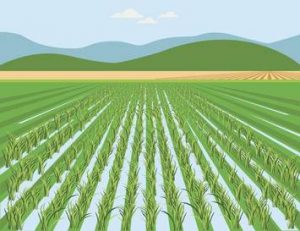
Pradhan Mantri Krishi Sinchayee Yojana has completed more than 10 years of advancing irrigation-led agricultural transformation in India.
- Pradhan Mantri Krishi Sinchayee Yojana was launched in 2015 to enhance access to water for farming, expand the cultivable area under assured irrigation, improve water-use efficiency, and promote sustainable water conservation practices.
- Pradhan Mantri Krishi Sinchayee Yojana is a Centrally Sponsored Scheme classified as a Core Scheme.
- Centre-State sharing is 60:40 for most States, 90:10 for North-Eastern and Himalayan States, and 100% Central funding for Union Territories.
- Pradhan Mantri Krishi Sinchayee Yojana was formulated by amalgamating three major schemes:
- Accelerated Irrigation Benefit Programme (AIBP) of the Ministry of Water Resources,
- River Development and Ganga Rejuvenation, now Ministry of Jal Shakti;
- Integrated Watershed Management Programme (IWMP) of the Department of Land Resources, Ministry of Rural Development, and On-Farm Water Management (OFWM) of the Department of Agriculture and Cooperation.
- The scheme focuses on Jal Sanchay, meaning rainwater storage, and Jal Sinchan, meaning efficient water application. This approach aims to ensure that available water resources are stored, distributed, and used efficiently at the farm level.
- Pradhan Mantri Krishi Sinchayee Yojana is implemented in a decentralized manner through State Irrigation Plans and District Irrigation Plans. These plans help achieve convergence of irrigation investments at the field level and ensure location-specific water-use planning.
- The Government approved the continuation of Pradhan Mantri Krishi Sinchayee Yojana for 2021–26 with an overall outlay of ₹93,068.56 crore.
- The Union Budget 2026–27 allocated ₹6,587 crore to Pradhan Mantri Krishi Sinchayee Yojana for expanding irrigation, improving water-use efficiency, and promoting sustainable water management.
The VIJAY Roadmap:

Just a day after assuming office as the 31st Chief of the Army Staff (COAS), General Dhiraj Seth unveiled an ambitious, high-tech transformation blueprint for the Indian Army titled the “VIJAY” roadmap.
- The “VIJAY” roadmap is an extensive strategic and operational doctrine introduced to modernize the Indian Army’s combat systems. Drawing direct inspiration from the Defence Minister’s vision for the “Decade of Transformation” (2023–2032), it shifts the army away from legacy, single-domain warfare tactics toward a highly digitized, combined-arms fighting framework.
- Developed under the direction of the Chief of the Army Staff (COAS) and executed across all operational commands.
- Aim:
- To build a tech-savvy force capable of fighting across conventional, hybrid, space, cyber, and electronic warfare environments.
- To quicken force structuring, replace outdated technology with modern military hardware, and align operational capabilities with evolving threats.
- To achieve the core goal of “Winning Our Wars with Indigenous Solutions,” breaking reliance on foreign supply loops.
Five-Pillar Architecture:
- V – Vigilance and Readiness: Focuses on continuous border surveillance and high operational preparedness using advanced sensors, night-vision systems, and rapid response mechanisms.
- I – Innovation and Transformation:Promotes adoption of modern technologies such as drones, satellites, AI-enabled systems, and digital warfare capabilities to strengthen military operations.
- J – Jointness and Integration:Encourages seamless coordination among the Army, Navy, Air Force, and civilian agencies through integrated theatre commands and whole-of-nation planning.
- A –Atmanirbharta (Self-Reliance): Prioritises indigenous development and procurement of defence equipment, reducing dependence on foreign imports and strengthening domestic industry.
- Y – Yodha First:Places soldiers at the centre of reforms by improving training, equipment, healthcare, welfare, career progression, and support for veterans and Veer Naris.
The Delegation of Financial Powers to DRDO (DFP-2026):
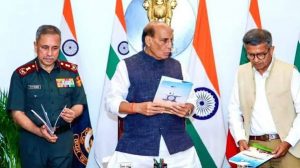
The Ministry of Defence has released the Delegation of Financial Powers to DRDO (DFP-2026) to accelerate defence research and development projects.
- Delegation of Financial Powers to DRDO (DFP-2026) is a revised financial governance framework that grants greater financial autonomy to the Defence Research and Development Organisation (DRDO) for faster approval and execution of defence R&D projects.
- Aim:
- To speed up research, development, testing, and induction of indigenous defence technologies.
- To improve financial efficiency, accountability, and self-reliance in India’s defence ecosystem.
- Key Features:
- Greater Financial Autonomy: Delegates enhanced financial powers to DRDO for quicker approval and execution of research projects.
- Dedicated Funding for Trials: Provides separate financial provisions for testing, evaluation, and trial campaigns of defence systems.
- Support forEarly-Stage Research: Authorises funding for pre-project R&D activities to encourage innovation before formal project approval.
- Separate Funding Channels: Distinct financial schedules for Extra-Mural Research Projects (EMRPs) and Defence Innovation Accelerator–Centres of Excellence (DIA-CoEs) to strengthen industry-academia collaboration.
Miniratna Category-I status to MECON Limited:
The Ministry of Steel has approved the elevation of MECON Limited to Miniratna Category-I status from its previous Category-II standing.MECON Limited (formerly known as Metallurgical & Engineering Consultants Limited) is India’s frontline, frontline multi-disciplinary design, engineering, consultancy, and contracting organization under the administrative control of the Ministry of Steel, Government of India.Established in 1959 as the Central Engineering & Design Bureau (CEDB), functioning initially as the captive design wing of Hindustan Steel Limited (HSL).It was later restructured as an independent public consultancy firm to reduce India’s reliance on foreign technical know-how for large-scale industrial projects.



