
Today’s Current Affairs: 8th January 2026 for UPSC IAS exams, State PSC exams, SSC CGL, State SSC, RRB, Railways, Banking Exam & IBPS, etc
Table of Contents
Open Network for Digital Commerce: In News

The Archaeological Survey of India (ASI) recently enabled online ticket booking for “over 170 centrally protected monuments and museums” on the Open Network for Digital Commerce (ONDC), seeking to expand digital access.
- It is a transformative initiative by the Department for Promotion of Industry and Internal Trade (DPIIT), Ministry of Commerce, Government of India, aimed at democratizing digital commerce.
- It aims at promoting open networks for all aspects of the exchange of goods and services over digital or electronic networks.
- It represents a step toward digital commerce democratization, shifting it from a platform-centric model—where a few e-commerce giants dominate the market—to an open, interoperable platform where buyers and sellers can interact regardless of the platforms they’re using.
- It is based on open-sourced methodology, using open specifications and open network protocols independent of any specific e-commerce platform.
- It envisions creating a level playing field for sellers, buyers, and service providers across India, particularly small and medium enterprises (MSMEs).
Key objectives:- Break the dominance of large e-commerce platforms by enabling interoperability across networks.
- Empower small businesses, retailers, and local artisans to access the digital marketplace.
- Lower the cost of customer acquisition and transaction processing for sellers.
- Bridge regional and linguistic gaps, bringing untapped markets into the fold of digital commerce.
- Increase options for buyers by providing access to a broader array of sellers.
- It offers small retailers an opportunity to provide their services, and goods to buyers across the country through an e-commerce system.
- It enables merchants to save their data to build credit history and reach consumers.
- It is expected to digitise the entire value chain, promote inclusion of suppliers, derive efficiencies in logistics, and enhance value for consumers.
- ONDC protocols would standardize operations like cataloguing, inventory management, order management, and order fulfilment.
PSLV-C62 Mission:
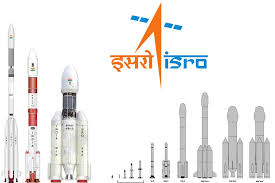
ISRO’s PSLV-C62 rocket is set to lift off from the first launchpad at Sriharikota, marking India’s first space launch of 2026.
- It is a multi-payload mission of the Indian Space Research Organisation (ISRO) that will carry one primary satellite and 18 secondary payloads into space.
- It is ISRO’s first space launch of 2026.
- It is scheduled to lift off from Sriharikota.
- The mission’s primary payload is the earth observation satellite EOS-N1 (codenamed ‘Anvesha’), an hyperspectral imaging satellite developed primarily for the Defence Research and Development Organisation (DRDO) for strategic purposes.
- Unlike conventional imaging satellites, hyperspectral satellites can “see” the Earth in hundreds of wavelengths, allowing them to identify materials and objects with far greater precision.
- This capability makes EOS-N1 a high-value asset for national security, border surveillance and strategic monitoring.
- At the same time, the satellite will also be used for civilian applications such as agriculture planning, urban mapping, mineral detection, and environmental monitoring.
- PSLV-C62 will also carry Europe’s Kestrel Initial Demonstrator (KID), an experimental mission involving a small re-entry capsule developed in collaboration with a Spanish startup.
- The capsule is expected to re-enter Earth’s atmosphere and splash down in the South Pacific Ocean.
- Additionally, commercial payloads from startups and research institutions across India, Mauritius, Luxembourg, the UAE, Singapore, Europe, and the United States are manifested for the PSLV-C62 Mission.
- Several Indian startups and academic institutions are also flying their satellites.
- These include OrbitAID Aerospace’s AayulSAT, CV Raman Global University’s CGUSAT-1, Dhruva Space’s DA-1, Space Kidz India’s SR-2, Assam Don Bosco University’s Lachit-1, Akshath Aerospace’s Solaras-S4, and Dayanand Sagar University’s DSAT-1.
- Bengaluru-based OrbitAID Aerospace’s AayulSAT stands out as a historic first.
- It is India’s maiden on-orbit satellite refuelling payload.
- The mission aims to demonstrate technologies that could extend the operational life of satellites by enabling in-orbit servicing and refuelling.
- Such capabilities are seen as crucial for tackling space debris and improving sustainability in Earth’s increasingly crowded orbital environment.
Sports Authority of India : Four-day Sports Sciences Workshop
The Sports Authority of India (SAI) recently launched a four-day Sports Sciences Workshop for combat sports coaches at its Sports Science Division in New Delhi.
- It is the apex national sports body of India, established by the Ministry of Youth Affairs and Sports, Government of India.
- It was set up in 1984 to carry forward the legacy of the IX Asian Games held in New Delhi in 1982 under the Department of Sports.
- It is a registered society fully funded by the Government of India.
- It has been entrusted with the twin objectives of promoting sports and achieving sporting excellence at the national and international level.
- It’s primary efforts include widespread talent scouting and training of selected individuals by providing vital inputs like coaching, infrastructure, equipment support, sports kits, competitive exposure, etc.
- It has played a significant role in shaping India’s sports development by providing training to elite athletes and at the same time operating a number of schemes for the identification and development of young talent.
- The schemes are being implemented through various regional centres and training centres of SAI spread throughout the country.
- SAI implements the following Sports Promotional Schemes across the country to identify talented sportspersons in various age groups and nurture them to excel at the national and international levels:
- National Centres of Excellence (NCOE)
- SAI Training Centre (STC)
- Extension Centre of STC
- National Sports Talent Contest (NSTC)
Tadoba Andhari Tiger Reserve:

The Tadoba Andhari Tiger Reserve (TATR) recently undertook a sterilisation and vaccination program to deal with the growing menace of stray dogs.
- It is located in the Chandrapur district in Maharashtra.
- It is the largest and oldest tiger reserve in Maharashtra.
- Established in 1955, the reserve consists of Tadoba National Park and Andhari Wildlife Sanctuary.
- The word ‘Tadoba’ is derived from the name of the God “Tadoba” or “Taru,” which is praised by local tribal people of this region, and “Andhari” is derived from the name of the Andhari River that flows in this area.
- It has corridor linkages with Nagzira-Navegaon and Pench Tiger Reserves within the State.
- There are two lakes and one waterway in the reserve: Tadoba Lake, Kolsa Lake, and the Tadoba River.
- Apart from tigers, the reserve is home to Indian leopards, sloth bears, Indian gaur (bison), wild dogs (dholes), striped hyenas, marsh crocodiles, sambar deer, chital (spotted deer), barking deer, and four-horned antelopes (chousingha).
- It is also a birdwatcher’s paradise, with various species of birds, including crested serpent eagles, grey-headed fish eagles, paradise flycatchers, and hornbills.
National Quality Assurance Standards:

A total of 50,373 public health facilities across all States and Union Territories have been certified under the National Quality Assurance Standards (NQAS).
- National Quality Assurance Standards is a comprehensive quality framework established by the Ministry of Health and Family Welfare (MoHFW).
- It is aimed at ensuring and enhancing the quality of healthcare services provided at public health facilities.
- It was initially focusing on District Hospitals to ensure safe, patient-centric, and quality-assured services.
- NQAS are currently available for District Hospitals, Sub-District Hospitals, Community Health Centres, Ayushman Arogya Mandir–PHCs, AAM–UPHCs, and AAM–Sub Health Centres.
- These standards are primarily meant for providers to assess their own quality for improvement through pre-defined standards and to bring up their facilities for certification.
- These are broadly arranged under 8 “Areas of Concern” namely; Service Provision, Patient Rights, Inputs, Support Services, Clinical Care, Infection Control, Quality Management and Outcome.
Bio-Bitumen:
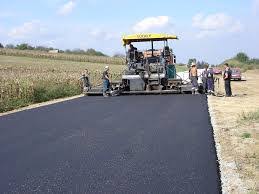
The Union Minister of State for Science and Technology said that India has entered an era of “Clean, Green Highways” following the successful technology transfer of “Bio-Bitumen via Pyrolysis: From Farm Residue to Roads”.
- Bio bitumen is manufactured using renewable organic materials, such as plant-based oils, agricultural waste, or biomass.
- These materials undergo a special processing method to create a high-quality binder that is similar to traditional bitumen.
- It is an alternative to petroleum-based bitumen that lowers both carbon emissions and import dependency,
- Bio-bitumen production involves multiple steps, depending on the source material used. The key processes include:
- Biomass Collection & Processing: Raw materials such as plant-based oils, lignin, or algae are collected and pre-processed.
- Pyrolysis & Bio-Oil Extraction: Thermal decomposition of biomass at controlled temperatures produces bio-oil, which serves as a precursor for bio bitumen.
- Refining & Modification: Bio-oil undergoes refining and polymer modification to enhance its viscosity, thermal stability, and adhesive properties.
- Blending & Finalization: In some cases, bio bitumen is blended with conventional bitumen to improve performance characteristics while maintaining sustainability benefits.
- Its production results in significantly lower carbon emissions, making it ideal for eco-friendly projects.
- Bio-Bitumen via Pyrolysis Technology is an indigenous innovation developed by CSIR‑Central Road Research Institute (CSIR-CRRI) New Delhi and CSIR‑Indian Institute of Petroleum Dehradun (CSIR-IIP)”.
- It involves the collection of post-harvest rice straw, its palletisation, and conversion into bio-oil through pyrolysis, which is then blended with conventional bitumen.
- Extensive laboratory tests have shown that 20–30 per cent of conventional bitumen can be safely replaced without compromising performance.
Dust Experiment:
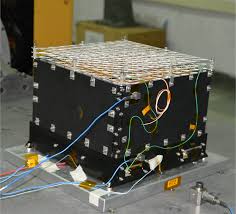
The Indian Space Research Organisation confirmed through it’s first-ever Dust Experiment (DEX) that an interplanetary dust particle enters Earth’s atmosphere approximately every 1,000 seconds.
- It is the first Indian-made instrument to hunt for these high speed Interplanetary Dust Particles (IDPs).
- It is the first-of-its-kind instrument designed to detect such high-transient particles.
- It is developed by the Physical Research Laboratory,
- It was flown on PSLV Orbital Experimental Module (POEM) of the PSLV-C58 XPoSat Mission.
- It is a compact instrument tuned to hear impacts, capturing vital data.
- It is a blueprint of the detector which can study the cosmic dust particle at any planet having atmosphere or no atmosphere.
- Its data redefines our understanding of the universe and charts the path for safe human deep-space missions.
- Understanding and collecting data on interplanetary dust in Earth’s atmosphere will also be valuable for planning Gaganyaan missions.
- Interplanetary dust refers to micrometer-scale particles originating from the solar system.
- These are microscopic shrapnel from comets and asteroids that form our atmosphere’s mysterious “meteor layer”, and show up as “shooting star” in night.
- These can be analyzed to gain insights into their origins, formation mechanisms, and the processes that occurred in early solar and presolar environments.
UN Declares 2026 International Year for Rangelands and Pastoralists:
The United Nations has declared 2026 as the ‘International Year for Rangelands and Pastoralists’, a landmark decision aimed at spotlighting some of the world’s most overlooked yet vital ecosystems. The announcement addresses a critical imbalance in global climate action: while forests receive disproportionate attention and funding, grasslands and savannahs—equally critical for carbon sequestration, biodiversity conservation, and climate resilience—remain marginalized in international climate negotiations and national climate strategies. This UN declaration represents a pivotal moment in rebalancing climate action toward comprehensive ecosystem protection, recognizing that effective climate mitigation requires attention to all biomes, not merely forests
Siddaramaiah Becomes Karnataka’s Longest-Serving Chief Minister:
Karnataka has witnessed history in the making. Chief Minister Siddaramaiah has emerged as the longest serving Chief Minister of the state, a rare achievement in a politically dynamic landscape. His journey reflects resilience, social justice politics, and deep grassroots connect, making his leadership tenure both politically and historically significant.Siddaramaiah has become Karnataka’s longest-serving Chief Minister, surpassing the tenure of Devaraj Urs. He crossed this milestone in January 2026, completing nearly seven years and eight months in office across his tenures.
Haryana to Launch India’s First Hydrogen-Powered Train:
India is preparing to take a major step towards green transportation with the launch of its first hydrogen-powered train in Haryana. The pilot project, led by Indian Railways will operate between Jind and Sonipat and is now in the final stages of commissioning. The initiative highlights India’s growing focus on clean energy and sustainable mobility solutions.Haryana is set to witness the launch of India’s first hydrogen-powered train. The project has reached its final commissioning phase with the hydrogen plant ready at Jind.The hydrogen-powered train is a pilot project of Northern Railway and will run on the Jind to Sonipat route in Haryana.Manufacturing of the hydrogen train-set has been completed and the project is designed to demonstrate the feasibility of hydrogen as a clean fuel for rail transport in India.
New Modern Warfare Force Named Bhairav:
The Indian Army announced a major leap in India’s military modernisation with the creation of a new modern warfare force named ‘Bhairav’. This elite force is designed to integrate drone technology into combat operations, significantly enhancing India’s battlefield capabilities in an era of technology-driven warfare.The newly raised force will comprise over 1 lakh trained drone operatives, making it one of the largest dedicated drone warfare units globally.The Bhairav force represents a new-generation combat unit tailored for the challenges of modern, high-intensity warfare. Every soldier in these battalions is trained in advanced drone operations, enabling real-time surveillance, precision strikes, and battlefield intelligence gathering.
Centre Unveils ₹17 Lakh Crore PPP Project Pipeline for Next Three Years:
To accelerate infrastructure development and crowd in private investment, the Government of India has operationalized a major Budget announcement. A structured, multi-year pipeline of projects under the Public Private Partnership (PPP) model has been created to improve planning certainty, speed up execution, and strengthen India’s infrastructure build-out over the medium term.The Department of Economic Affairs has created a three-year PPP project pipeline in line with the Union Budget 2025-26 announcement. The pipeline covers 852 projects with a combined cost exceeding ₹17 lakh crore across Central ministries, States, and Union Territories.The pipeline is a forward-looking list of identified and proposed PPP projects to be rolled out over the next three years. It provides early visibility to investors, developers, lenders, and contractors, enabling better project preparation, financing, and risk assessment. The initiative is anchored in the Ministry of Finance to ensure coordination and credibility.



