
Today’s Current Affairs: 9th jul 2026 for UPSC IAS exams, State PSC exams, SSC CGL, State SSC, RRB, Railways, Banking Exam & IBPS, etc
Table of Contents
Kwar Hydroelectric Project: In News
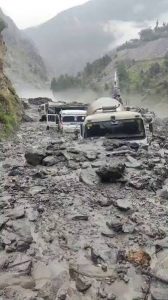
The heavy rainfall triggered a major landslide near the under-construction 540 MW Kwar Hydroelectric Power Project in the Kishtwar district of Jammu and Kashmir recently.
- Kwar Hydroelectric Project is a 540 MW hydropower project located on the Chenab River in the Kishtwar district of Jammu and Kashmir.
- The project is envisaged as a Run of River Scheme.
- The project envisages the construction of a high dam, an underground power house.
- It is expected to generate 1,975 million units (MU) of electricity annually.
- The project is being developed by Chenab Valley Power Projects Private Ltd. (CVPPL).
- CVPPL is a joint venture company between NHPC Ltd and Jammu & Kashmir State Power Development Corporation (JKSPDC) with equity contributions of 51 percent and 49 percent, respectively.
Guwahati Declaration:
The BRICS nations recently adopted the Guwahati Declaration, reaffirming their commitment to strengthen cooperation to prevent and combat illicit drug trafficking and related organised transnational crime.
- Guwahati Declaration was adopted by the BRICS nations to strengthen cooperation against illicit drug trafficking and related transnational organized crime.
- The declaration was adopted at the conclusion of the two-day BRICS Heads of Anti-Drug Agencies Meeting held in Guwahati, Assam.
- It was held under India’s 2026 BRICS chairship, themed “Building for Resilience, Innovation, Cooperation and Sustainability,”.
- The meeting brought together representatives from Brazil, China, Ethiopia, India, Indonesia, Iran, Russia and the United Arab Emirates to discuss coordinated strategies against global drug trafficking.
- The joint declaration calls for greater cooperation through the timely exchange of information, intelligence and best practices, in line with national laws and international obligations.
- It also highlights the importance of using innovative technologies, digital tools and data-driven approaches to improve law enforcement and regulatory measures against drug trafficking.
- The declaration also stresses the need to strengthen efforts to reduce drug demand, promote healthy lifestyles and protect vulnerable groups, especially children and young people, through evidence-based and people-centred strategies.
Bintang Adipurna:
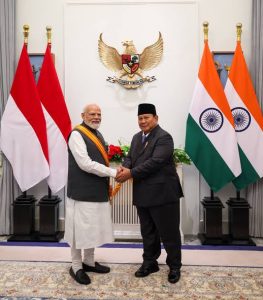
Prime Minister of India was recently conferred with Indonesia’s highest honour ‘Bintang Adipurna of the Republic of Indonesia’ medal for his role in strengthening the ties between both the countries.
- The Bintang Adipurna (First Class of the Star of the Republic of Indonesia) is Indonesia’s highest civilian honor conferred by the President of the Republic of Indonesia.
- It is awarded to individuals who have rendered exceptional service to the unity, continuity, and prosperity of the Republic of Indonesia.
- Foreign officials receiving such an award are recognized by the Republic of Indonesia as contributors to establishing a relationship based on friendship and mutual respect between the two nations.
- The insignia has very distinctive characteristics.
- The decoration consists of a shining gold star with several rays that stand for excellence, honour and distinguished service.
- In the middle of it there is the symbol of Indonesia—the Garuda Pancasila, which stands for the sovereignty of the nation and the five principles of the state.
- It is worn along with a ceremonial sash, the colors of which are red and white – the national colors of Indonesia.
- There is also a star badge that is put on in state ceremonies.
Egyptian Vulture:
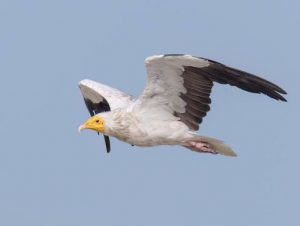
It was observed that once familiar in villages, temple towns, grazing lands and rocky cliffs across Southern India, the Egyptian Vulture (Neophron percnopterus) has almost disappeared from much of its range.
- Egyptian Vulture is one of the world’s smallest vultures.
- It inhabits open, arid areas near humans, with plenty of food options.
- It is distributed across southern Europe, northern and central Africa, the Middle East, Central Asia and the Indian subcontinent.
- These are monogamous, migrating between breeding seasons as a pair. They build a large nest and will constantly replenish it during the breeding season.
- Diverse feeding habit, from carrion to insects, small reptiles and amphibians and mammal faeces
- The loss of habitat, decrease in food supply, collisions with electricity infrastructure and poisoning from the use of agricultural chemicals.
- Conservation status
- IUCN: Endangered
- It plays a vital ecological role by removing animal carcasses from the landscape and helping maintain healthy ecosystems.
Leucine:
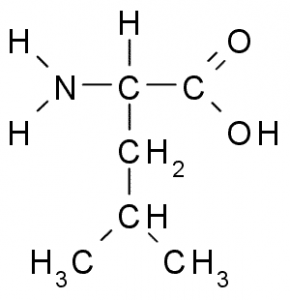
Researchers said that branched chain amino acids leucine acts like a protective shield and inhibits the premature degradation of outer mitochondrial membrane proteins.
- Leucine is an essential amino acid.
- It belongs to the family of branched chain amino acids (BCAA) such as isoleucine and valine.
- These are needed for the growth and functioning of organs such as muscles, nervous system, the heart, and the brain.
- BCAAs are not made in the body and need to be supplied from our diet. Without them, the outer membrane of the mitochondrion cannot be properly constructed or maintained.
- It is involved in muscle growth, tissue repair, and energy production.
- It acts like a protective shield and inhibits the premature degradation of outer mitochondrial membrane proteins.
- This is done by leucine interacting with a protein called SEL1L, which has a role in recognising and pulling out damaged or misfolded proteins.
- Amino acids are molecules that combine to form proteins.
- Amino acids and proteins are the building blocks of life.
- There are 20 different amino acids.
- A protein consists of one or more chains of amino acids (called polypeptides) whose sequence is encoded in a gene.
- Some amino acids can be synthesized in the body, but others (essential amino acids) cannot and must be obtained from a person’s diet.
- The nine essential amino acids are: histidine, isoleucine, leucine, lysine, methionine, phenylalanine, threonine, tryptophan, and valine.
Himalayan Pangolin:
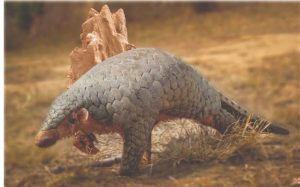
Researchers have revalidated and concluded that the Himalayan pangolin (Manis aurita) is a distinct extant species, separate from the Chinese pangolin (Manis pentadactyla).
- Himalayan Pangolin scientific name is Manis aurita
- It went through a demographic contraction around the 14th century, coinciding with the onset of the Little Ice Age in the Himalayan region.
- It is significantly larger in body size and skull.
- It paradoxically has markedly smaller ears. It also has a shorter and broader nasal bone.
- It has enlarged olfactory bulb and turbinals, using smell to forage for ants and termites.
- Its distribution is restricted to the southern Himalayan foothills, with confirmed populations in Nepal, South Tibet, and Northeast India, including the state of Assam.
- It is facing illegal wildlife trade.
- The products from this species have infiltrated regulated traditional medicine markets.
- It is also facing an internal threat of inbreeding.
World Bank Group Country Income Classifications for Fiscal Year 2027:
World Bank Group Country Income Classifications for Fiscal Year 2027 (released in July 2026) have maintained India’s status as a ‘Lower-Middle-Income’ economy, a status it has held since 2009.
- Sri Lanka (along with Vietnam and the Philippines) was upgraded to the Upper-Middle-Income category this year, successfully bouncing back from its severe 2022 economic crisis.
Key Highlights of the World Bank Country Income Classification for Fiscal Year 2027:
- Upgraded Economies: Six nations crossed into higher income categories this fiscal year. In 1987, nearly 30% of economies were classified as low-income, which declined sharply to 11% by 2026, reflecting a significant shift in the global income landscape.
- Lower-Middle to Upper-Middle Income: Sri Lanka, Vietnam, the Philippines, Jordan, and Micronesia.
- Low to Lower-Middle Income: Togo.
- Diverse Growth Trajectories:
- Vietnam & Philippines: Driven by export-led industrial growth and sustained expansions in Gross National Income (GNI).
- Sri Lanka: Demonstrated notable post-crisis resilience, rebounding via tourism and financial service revivals after its recent sovereign debt default.
- Jordan & Togo: Primarily aided by statistical adjustments, including updated national accounts methodologies and revised census data.
- India’s Position: India remains steady in the Lower-Middle-Income bracket, with a national income (GNI) per capita at USD 2760 in 2025.
Performance Grading Index:

The Union Ministry of Education released the Report on Performance Grading Index 2.0 for States/UTs (PGI-S) and Performance Grading Index for Districts (PGI-D) for 2025-26.
- Performance Grading Index is an index that measures the performance of states in school education undertaken by the Department of School Education &Literacy (DoSEL).
- PGI strives to evaluate the relative performance of all the State/UTs and districts respectively in a uniform scale to encourage them to perform better.
- The PGI 2.0 is constructed based on 73 indicators from 2 Categories containing 6 Domains.
- PGI – States/UTs:
- It is devised by the Department of School Education & Literacy, Union Ministry of Education.
- It evaluates the performance of States and Union Territories by categorizing them into different grades or levels.
- Total weightage: The PGI- States/UTs structure comprises of total weightage of 1000 points across 73 indicators.
- It consists of 2 Categories: Outcome and Governance & Management; comprising six domains:
- Learning Outcomes and Quality
- Access
- Infrastructure & Facilities
- Equity
- Governance Processes
- Teachers Education & Training
- The framework is fully aligned with data from the Unified District Information System for Education Plus (UDISE+), PARAKH Rashtriya Sarvekshan 2024, PM POSHAN Portal, PRABANDH Portal, and Vidyanjali Portal.
- PGI – Districts:
- Assessing districts on a common parameter with attention now shifting towards outcome measurement of educational policies.
- It comprises a total weightage of 600 points across 70 indicators, which are grouped under 6 categories, Outcomes, Effective Classroom Transaction, Infrastructure Facilities & Student Entitlements, School Safety & Child Protection, Digital Learning and Governance Process.
- These categories are further divided into 11 domains
- Learning Outcomes and Quality (LOQ), Access Outcomes (AO), Teacher Availability and Professional Development Outcomes (TAPDO), Learning Management (LM), Learning Enrichment Activities (LEA), Infrastructure, Facilities, Student Entitlements (IF&SE), School Safety and Child Protection (SS&CP), Digital Learning (DL), Funds Convergence and Utilisation (FCU), Attendance Monitoring Systems (AMS) and School Leadership Development (SLD).
- It is drawn from several sources, viz., Unified District Information System for Education Plus (UDISE +), PARAKH Rashtriya Sarvekshan 2024 (PRS 2024) and the PRABANDH Portal.
Norwegian Sea:

UK fighter jets intercepted a Russian maritime patrol aircraft after it “repeatedly approached” a carrier strike group in the Norwegian Sea.
- Norwegian Sea is a marginal sea of the Arctic Ocean, bordered by Norway, Greenland and Iceland.
- The Barents Sea(northeast), separated from the Atlantic Ocean in the southwest by a submarine ridge that spans from Iceland to the Faroe Islands.
- In the north, the Norwegian Sea is separated from the Greenland Sea by the Jan Mayen Ridge.
- It was formed when the Eurasian Plate and the North American Plate began to separate.
- The warm North Atlantic current pushes the warm waters through the Norwegian Sea into the Barents Sea.
- The cold East Iceland Current transfers the cold water from the Norwegian Sea towards Iceland.
- This thermal mixing of the warm and cold currents creates excellent fishing grounds in the Norwegian Sea.
- It acts as a transition zone between boreal and Arctic climatic conditions and therefore its habitat shares the characteristics from both these climates.
Ayushman Bharat Health Accounts (ABHA):

The Ayushman Bharat Digital Mission has achieved a major milestone by linking over 104 crore health records with more than 93 crore Ayushman Bharat Health Accounts.
- The mission is strengthening India’s digital health infrastructure by enabling paperless health records, reducing hospital waiting time, and connecting patients, hospitals, doctors and insurers through a unified digital network.
- The Ayushman Bharat Health Account (ABHA) is a 14-digit unique health identifier created under the Ayushman Bharat Digital Mission (ABDM). It securely links an individual with India’s digital health ecosystem and enables access to digital health services.
- ABHA aims to create a portable, paperless and consent-based digital health record system, allowing citizens to access and share their medical history across ABDM-enabled healthcare facilities.
- ABHA links health records across hospitals, laboratories, insurers and national health programmes with the patient’s consent. It allows individuals to store, access and share their health records digitally. Doctors and healthcare providers can access previous medical records only through revocable and time-bound consent of the patient.
- ABHA enables seamless portability of health records across different healthcare providers and locations, helping patients access services without carrying physical documents.
- Through services like Scan and Share, ABHA enables QR-based OPD registration and digital queue tokens, reducing hospital waiting time from nearly one hour to around 2–5 minutes.
- It connects patients with doctors, hospitals, laboratories, pharmacies, insurers and digital health applications through a unified and interoperable network.
- ABHA also supports integration with the National Health Claims Exchange (NHCX), helping streamline health insurance claims, reduce discharge delays and improve transparency in claim processing.
- ABHA follows a privacy-by-design approach. Health records are not stored on a central government server and can be shared only with the patient’s consent.
- ABHA helps reduce paperwork, avoid duplication of tests, improve continuity of care, support faster service delivery and strengthen India’s movement towards Universal Health Coverage.
BHAVYA Industrial Parks Scheme:
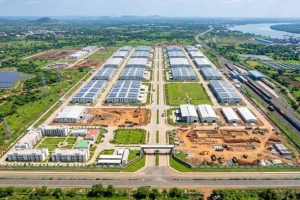
The Union Commerce and Industry Minister chaired the Board of Trade meeting in New Delhi and urged States to prioritise exports, fully utilise the BHAVYA Industrial Parks Scheme, and strengthen India’s export competitiveness through Centre-State-industry coordination.
- The Bharat Audyogik Vikas Yojana (BHAVYA) is a Central Sector Scheme of the Department for Promotion of Industry and Internal Trade (DPIIT) to develop 100 investment-ready, world-class industrial parks across India.
- It aims to strengthen India’s manufacturing ecosystem by creating integrated industrial infrastructure aligned with Make in India, PM Gati Shakti and India’s goal of becoming a globally competitive manufacturing hub.
- The scheme has a total outlay of around ₹33,660 crore and will be implemented over six years from 2026-27 to 2031-32.
- BHAVYA will support both greenfield and eligible brownfield industrial parks, with minimum land requirements of 100 acres for non-hilly states and 25 acres for hilly, Northeastern, Union Territory and smaller states.
- In the first phase, up to 50 industrial parks will be selected through a competitive process based on connectivity, site suitability, infrastructure quality, industrial ecosystem, policy support, digital readiness and sustainability.
- The parks will include plug-and-play facilities, multimodal logistics connectivity, reliable power and water supply, underground utilities, waste management, common effluent treatment plants, testing laboratories, worker housing, renewable energy systems and digital single-window systems.
- Projects will be implemented through Special Purpose Vehicles (SPVs) under the Companies Act, 2013, while the National Industrial Corridor Development Corporation (NICDC) will act as the Project Management Agency for implementation and monitoring.
- BHAVYA is expected to attract large-scale domestic and foreign investment, reduce approval and land-related delays, strengthen supply chains, generate employment, boost exports and enhance India’s integration with global value chains.
UDISE Report 2025–26:
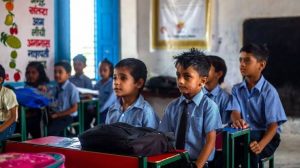
The Union Ministry of Education officially released the comprehensive report on the Unified District Information System for Education Plus (UDISE+) for the academic year 2025-26.
- The Unified District Information System for Education Plus (UDISE+) is one of the largest management information systems in the world, covering more than 14.8 lakh schools, 1.02 crore teachers, and over 26 crore students across India.
- Functioning as the primary, high-fidelity data repository for school education under the Department of School Education and Literacy, it serves as the foundational analytical engine for the government to track educational parameters, allocate fiscal resources, and fine-tune policies in alignment with the National Education Policy (NEP).
Key Indicators and Facts in the 2025-26 Report:
- Dropout rates have declined across key stages, with preparatory-level dropouts falling to 8% and secondary-level dropouts reducing to 7.0%, indicating improved student retention.
- Retention has improved at both middle and secondary levels, while the Gross Enrolment Ratio (GER) at the secondary stage increased to 7%, reflecting wider access to schooling.
- Students are progressing more smoothly between school stages, with transition rates improving from foundational to preparatory, middle, and secondary education, reducing educational discontinuity.
- Teacher strength has increased significantly, resulting in PTRs well below the NEP benchmark of 30:1, enabling better classroom attention and improved learning outcomes.
- The number of single-teacher and zero-enrolment schools has declined through rationalisation, improving resource utilisation and administrative efficiency across the school system.
- More schools now have computers and internet connectivity, strengthening digital learning, online resources, and technology-enabled classroom education.
- Nearly all schools now provide electricity, drinking water, and functional toilets, while women constitute a majority of teachers, supporting gender-inclusive education.
India’s Bid for UNSC Non-Permanent Seat for 2028-29:
India is set to launch its campaign for a non-permanent seat at the United Nations Security Council for 2028-29, reflecting its larger ambition to strengthen its role in global governance and champion the interests of the Global South.India’s campaign for the 2028-29 UNSC non-permanent seat comes amid rising geopolitical instability, including conflicts in West Asia, the Ukraine crisis and growing divisions within multilateral institutions.The bid will test India’s diplomatic outreach across regions, especially among the Global South, OIC members, SCO countries, African states, island nations and major Western partners.It also strengthens India’s broader case for permanent membership in a reformed UNSC.
Climate Change Impact on India’s Dairy Sector:
A study published in Scientific Reports has found that climate change-induced heat stress is significantly reducing milk production in the trans-Gangetic plains of northwestern India, particularly in Haryana, one of India’s major milk-producing regions.Temperatures exceeding 38°C combined with relative humidity above 70% (typical during the July-August monsoon overlap) trigger catastrophic drops in milk yield.Winter temperature fluctuations showed negligible impact, establishing heat stress as the primary threat. PET (a measure of atmospheric moisture demand) emerged as a critical indicator.A single unit increase in PET slashes milk yield by roughly 1.4 liters per buffalo per day. Heat-related stressors are already causing an annual national loss of 3.2 million tonnes of milk, equating to roughly Rs 2,661 crore.Without aggressive adaptation, this loss is projected to hit 15 million tonnes by the 2050s. Corroborating this data, The Lancet has projected that India’s total milk production could plummet by up to 25% by 2085 due to unmitigated thermal stress.
World Zoonoses Day:
The Union Ministry of Health & Family Welfare organized a National Multistakeholder Consultation in New Delhi on the occasion of World Zoonoses Day (6th July) to deliberate on the draft National Action Plan for Prevention and Control of Zoonoses, establishing a comprehensive strategic framework anchored in the One Health Approach.World Zoonoses Day commemorates Louis Pasteur’s successful administration of the first rabies vaccine in 1885. The 2026 theme is “One World, One Health: Prevent Zoonoses.”The proposed National Action Plan will serve as a foundational blueprint, guiding States and Union Territories to formulate context-specific State Action Plans tailored to local ecological and epidemiological realities. Zoonoses are infectious diseases that naturally transmit between vertebrate animals and humans. They can be caused by various pathogens, including viruses, bacteria, parasites, and fungi.
India-Indonesia Bilateral Relations:
Prime Minister of India paid a State Visit to Indonesia, during which India and Indonesia adopted a Joint Statement to deepen their Comprehensive Strategic Partnership across defence, maritime security, trade, technology, connectivity and multilateral cooperation.India and Indonesia share a Comprehensive Strategic Partnership (CSP), established in 2018, built upon centuries-old civilizational, cultural and maritime linkages.The relationship encompasses political dialogue, defence, maritime security, trade and investment, digital economy, energy, space, education, culture, connectivity and multilateral cooperation.Both countries agreed to institutionalise regular summit meetings and strengthen dialogue mechanisms such as the Joint Commission Meeting, Foreign Office Consultations and Parliamentary exchanges to ensure continuous strategic engagement.They also decided to deepen cooperation among think tanks, academic institutions and policy experts, promoting greater policy coordination and long-term strategic understanding.India and Indonesia expanded defence ties through cooperation in the BrahMos Missile System, Air-to-Air Missiles, joint military exercises, defence technology co-production, hydrography,Maritime Domain Awareness (MDA) and capacity building.Both countries renewed the Maritime Safety and Security MoU, while Indonesia stationed an International Liaison Officer (ILO) at India’s IFC-IOR, Gurugram, enhancing information sharing and Indo-Pacific maritime security.
Establishment Of IIM Bangalore’s First Overseas Campus In Indonesia:
Prime Minister Narendra Modi announced the establishment of IIM Bangalore’s first overseas campus in Indonesia during his visit to Jakarta.The campus, to be set up at the SinghasariSpecial Economic Zone (SEZ), will initially offer executive education programmes before expanding to degree courses.The IIM Bangalore (Singhasari) Campus is the first international campus of the Indian Institute of Management Bangalore (IIMB), established in Indonesia to strengthen management education, research, and leadership development across the ASEAN region.Aim is to provide world-class management education and executive leadership programmes for professionals across Indonesia and ASEAN,to deepen India–Indonesia educational cooperation through research, innovation, faculty exchanges, and capacity building.
Mission Drishti: India’s First OptoSAR Earth Observation Satellite
Bengaluru-based space start-up GalaxEye announced that communication with Mission Drishti—the world’s first OptoSAR satellite and India’s largest privately built Earth observation satellite—has been lost.Mission Drishti is a next-generation, high-performance Earth observation satellite designed and engineered entirely within India’s private sector. Weighing 190 kilograms, it represents a major technological milestone as the first operational spacecraft in global history to fuse optical and radar imaging sensors onto a single, compact satellite chassis.Launched By The Manufacturer: Developed by GalaxEye, a deep-tech space start-up incubated out of Bengaluru.Launch Vehicle & Site: Launched into orbit on May 3, 2026, aboard a SpaceX Falcon 9 rocket from the Vandenberg Space Force Base in California, USA.
Aim of the Mission:
To build a sovereign, non-blind satellite network capable of monitoring high-altitude borders and maritime zones without interruptions from weather or nightfall.
To plug critical intelligence gaps for the Indian Armed Forces along borders with China and Pakistan, ending reliance on delayed foreign commercial imagery during strategic standoffs.