
Today’s Current Affairs: 24th December 2025 for UPSC IAS exams, State PSC exams, SSC CGL, State SSC, RRB, Railways, Banking Exam & IBPS, etc
Table of Contents
Chillai-Kalan:
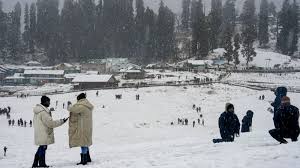
Kashmir braces for a spell of rain and snowfall and the region is also set to enter ‘Chillai Kalan’,
- Chillai-Kalan is the 40-day period of the harshest winter cold in Kashmir region.
- Chillai Kalan is a Persian term which means “Major Cold”.
- The Chillai Kalan (big cold) usually begins on December 21 and will end on January 30.
- Chillai Kalan is followed by ‘Chillai-Khurd’ (small cold)– a 20-day period of moderate winter from January 31 to February 19, and the 10-day ‘Chillai-Bacha’ (baby cold), towards the fag end of the winter season from February 20 to March 2.
- According to Persian tradition, the night of 21st December is celebrated as Shab-e Yalda-“Night of Birth”, or Shab-e Chelleh. – “Night of Forty”.
- During this time Kashmir Valley faces its harshest phase of the winter season, including widespread snowfall, sub-zero temperatures and intense cold waves.
- Traditionally, heavy snowfall during Chillai Kalan replenishes water reservoirs in the higher reaches, sustaining rivers, streams and lakes during the summer months.
Superkilonova:
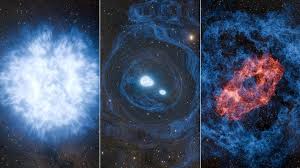
The study by an international research team, including scientists from IIT Bombay and the Indian Institute of Astrophysics, Bengaluru, reports the possible discovery of a superkilonova, a rare and powerful cosmic explosion.
- Kilonova: When two neutron stars collide, they eject heavy radioactive elements such as gold, platinum and neodymium, whose decay produces optical and infrared emissions known as a kilonova.
- Superkilonova: A superkilonova has an additional energy source, as it begins with a supernova explosion that forms two neutron stars (instead of one).
- These neutron stars later spiral inward and merge, producing a kilonova. This results in a stronger and more complex event, with both supernova and kilonova signatures.
- Studies show that a superkilonova produces intense gravitational waves and a powerful electromagnetic blast, appearing brighter and longer-lasting than a normal kilonova.
- Superkilonovae are still a proposed/observationally emerging class of events, not yet as firmly established as kilonova.
World Anti-Doping Agency: Global List Of Offenders
For the third consecutive year, India has topped the World Anti-Doping Agency’s (WADA) global list of offenders.
- World Anti-Doping Agency was established in 1999 as an international independent agency to lead a collaborative worldwide movement for doping-free sport.
- Role is to develop, harmonize and coordinate anti-doping rules and policies across all sports and countries.
- It activities include scientific and social science research; education; intelligence & investigations; development of anti-doping capacity; and monitoring of compliance with the World Anti-Doping Program.
- It is funded equally by the Olympic Movement and Governments of the world.
- Headquarter: Montreal, Canada.
- Governance Structure of World Anti-Doping Agency
- Foundation Board (Board): It is the agency’s highest policy-making body and is jointly composed of representatives of the Olympic Movement (the IOC, National Olympic Committees, International Sports Federations, and athletes) and representatives of governments from all five continents.
- Executive Committee (ExCo): It looks after the management and running of the agency, including the performance of all its activities and the administration of its assets.
Raccoon Roundworm : New Study
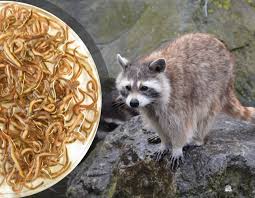
Europe is on alert after a new study revealed the raccoon roundworm, Baylisascaris procyonis, has firmly taken hold in wild raccoons across nine countries.
- The raccoon roundworm (Baylisascaris procyonis) is the common large roundworm or ascarid found in the small intestinal tract of raccoons.
- It infects raccoons in parts of North America, Europe and Japan and less commonly in South America.
- The parasite is indigenous to North America and emerging in Europe and Asia after the introduction of North American raccoons for the commercial fur trade in the early 20th century.
- It can cause severe disease in humans and other animals.
- Primary Hosts of Raccoon Roundworm: Racoons (Procyon lotor), Wild and domestic canids
- Transmission & Life Cycle of Raccoon Roundworm:
- Infection occurs through ingestion of infective eggs or infected paratenic hosts.
- Eggs passed in racoon faeces are shed in the environment and take 2-4weeks to embryonate and become infective.
- Many mammals and birds can become paratenic hosts after consuming the eggs.
- Once infective eggs are ingested, the eggs hatch and larvae penetrate the intestinal wall where they can migrate to various tissues (liver, lungs, eyes, and brain), and infect the host.
- Treatment and Control: Raccoons can be successfully treated with several anthelmintics to kill the adult worms.
Parliamentary Privileges in India:
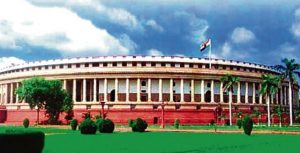
The Lok Sabha Speaker is examining a notice for breach of Parliamentary privilege and contempt of the House over alleged disruptive conduct during the debate on the Viksit Bharat- Guarantee For Rozgar And Ajeevika Mission (Gramin) Bill, 2025. The notice cites the actions as misconduct in the presence of the House, disobedience to the Speaker’s authority, and obstruction of House officers, constituting a collective breach of MPs’ privileges.
- Parliamentary privileges are special rights, immunities, and exemptions enjoyed by each House of Parliament, its committees, and its members.
These privileges extend to the Attorney General of India but do not extend to the President. - They are necessary for the effective discharge of parliamentary functions and exceed those possessed by other bodies or individuals.
- Types of Privileges:
- Collective Privileges: Rights of the House as a whole (e.g., right to regulate proceedings, punish for contempt, exclude strangers).
- Individual Privileges: Rights of members (e.g., freedom of speech in Parliament, freedom from arrest in civil cases).
- Article 105, Article 122, Article 194 and Article 212 provides various types of privileges to Members of Parliament (MPs) and Members of the Legislative Assemblies (MLAs).
- Article 105(3) states that until defined by Parliament by law, privileges shall be those of the British House of Commons as of 1950. No comprehensive law has been enacted, so British precedents largely guide the practice.
- The Code of Civil Procedure, 1908, grants freedom from arrest in civil cases during and around parliamentary sessions.
Constitutional Provisions Related to the Governor:
The Uttarakhand Governor has returned the amendment Bills on the Uniform Civil Code (UCC) and the Freedom of Religion and Prohibition of Unlawful Conversion Act, 2018 citing technical and legal flaws, renewing focus on the scope of the Governor’s powers.
- The Uttarakhand Governor returning amendment Bills on the UCC has brought renewed attention to the constitutional powers of Governors, especially their authority under Article 200 to return or withhold assent to State legislation.
- While the Governor functions as a constitutional head acting mainly on ministerial advice, his legislative and discretionary powers are meant as constitutional safeguards, but their use often sparks debates on federalism, democratic accountability, and Centre–State relations.
- The Governor is the constitutional head of the State under Article 153, with the executive power of the State vested in him under Article 154. He acts as a link between the Union and the State.
- The Governor of a State shall be appointed by the President by warrant under his hand and seal (Article 155).
- A person to be eligible for appointment as Governor should be citizen of India and has completed age of 35 years (Article 157).
- The Governor shall not be a member of the Legislature or Parliament; shall not hold any office of profit, shall be entitled to emoluments and allowances. (Article 158)
- Every Governor and every person discharging the function of the Governor shall make a subscribe an oath or Affirmation (Article 159).
- The Governor has key legislative functions under Articles 174 to 176, including summoning, proroguing, and dissolving the Legislative Assembly, addressing the House, and sending messages to it.
- Under Article 200, the Governor may assent to Bills, withhold assent, return Bills for reconsideration (except Money Bills), or reserve Bills for the President’s consideration.
- The Governor exercises absolute veto by withholding assent and suspensive veto by returning a non-Money Bill for reconsideration. However, the Governor does not have pocket veto.
- Under Article 163, the Governor acts on the advice of the Council of Ministers, except in discretionary matters.
- He appoints the Chief Minister and other Ministers under Article 164, appoints the Advocate General of the State under Article 165, and all executive actions of the State are carried out in the name of the Governor as per Article 166.
- Financial Powers:
- Article 202: Causes the Annual Financial Statement (State Budget) to be laid before the Legislature.
- Article 203(3): No demand for grants without the Governor’s recommendation.
- Article 205: Causes supplementary, additional, or excess grants to be laid before the House.
- Ordinance-Making Power: Under, Article 213 Governor may promulgate Ordinances when the Legislature is not in session and immediate action is required.
- The Governor exercises clemency powers under Article 161, including granting pardons and commutations.
- He is consulted in the appointment of High Court judges, and judges take their oath or affirmation before the Governor under Article 217.
SHAKTI Scholars – NCW Young Research Fellowship:
The National Commission for Women (NCW) has launched ‘SHAKTI Scholars’ – NCW Young Research Fellowship to promote policy-oriented research on women-centric issues.
- SHAKTI Scholars is a six-month, grant-based research fellowship designed to support young scholars and independent researchers in undertaking policy-relevant, multidisciplinary research on issues affecting women in India.
- Launched by: National Commission for Women (NCW)
- Aim:
- Encourage evidence-based research on women-centric challenges.
- Build a pipeline of young researchers contributing to gender-responsive governance.
- Support research that can inform laws, schemes, and institutional reforms.
- Eligibility criteria:
- Nationality: Indian citizens only
- Age: 21 to 30 years
- Minimum qualification: Graduation from a recognised institution
- Preference:Candidates pursuing or having completed post-graduation, M.Phil., or PhD
- Disciplines such as Gender Studies, Law, Social Sciences, Public Policy, Economics, Health, Technology, Development Studies, etc.
- Key features:
- Research grant – ₹1 lakh: The fellowship provides financial support to cover data collection, fieldwork, analysis, and documentation costs.
- Duration – 6 months: A six-month timeframe balances rigorous research with timely policy relevance and feasibility.
- Phased fund release: Grants are disbursed in stages, ensuring accountability and progress-linked research execution.
India–Netherlands Joint Trade and Investment Committee (JTIC):
India and the Netherlands have established the India–Netherlands Joint Trade and Investment Committee (JTIC) to deepen bilateral trade, investment, and economic cooperation.It aims to identify and eliminate trade barriers while promoting two-way investments, particularly for MSMEs.It also seeks to enhance cooperation in key sectors, including the transfer of technical know-how and technological innovation.
India- Ethiopia Relations:
Prime Minister Narendra Modi’s three-nation visit to Jordan, Ethiopia and Oman underscored India’s bid to consolidate its strategic footprint in the Middle East and Horn of Africa. During the Ethiopia leg of the tour, India–Ethiopia relations were elevated to a Strategic Partnership, representing a major upgrade in bilateral ties.The two sides signed eight MoUs and agreements, including for establishing a Data Centre at Ethiopia’s Ministry of Foreign Affairs and for debt restructuring in respect of Ethiopia under the G20 Common Framework. India highlighted that Indian companies have invested over USD 5 billion in Ethiopia, particularly in manufacturing and pharmaceuticals, creating more than 75,000 local jobs. Prime Minister of India addressed a Joint Session of the Ethiopian Parliament, underscoring democratic engagement and people-to-people ties. Both sides emphasised education, capacity building, and cooperation through platforms such as the International Big Cat Alliance (IBCA), Coalition for Disaster Resilient Infrastructure (CDRI), Global Biofuel Alliance (GBA) and International Solar Alliance (ISA). Prime Minister Narendra Modi was conferred Ethiopia’s highest civilian honour – The Great Honor Nishan of Ethiopia.
Internationalisation of Higher Education in India: NITI Aayog Report
NITI Aayog has released a comprehensive policy report on “Internationalisation of Higher Education in India” to operationalise NEP-2020’s vision of internationalisation at home.The report outlines a roadmap to make India a global hub for higher education and research by 2047, aligned with Viksit Bharat @2047.Internationalisation of Higher Education refers to the intentional integration of international, intercultural, and global dimensions into the purpose, curriculum, research, and governance of higher education institutions.
India–New Zealand Free Trade Agreement:
India and New Zealand have concluded negotiations on a comprehensive Free Trade Agreement (FTA) in just nine months, with formal signing expected in 2026.A Free Trade Agreement (FTA) is a bilateral pact where countries reduce or eliminate tariffs and non-tariff barriers on goods and services to boost trade, investment, and economic cooperation.
Targets of the India–New Zealand FTA
- Double bilateral trade from the current level to USD 5 billion within five years, deepening economic engagement.
- Facilitate USD 20 billion in New Zealand investments over 15 years, aligned with Make in India.
- Provide Indian exporters alternative markets amid high tariffs in the US and global protectionism.
- Strengthen services trade and skilled mobility through temporary employment visas and education linkages.
Pa Pa Pagli Project:
Gujarat’s Dahod district has gained attention for a play-based early childhood education model in Anganwadi centres, where the UNICEF-supported “Pa Pa Pagli” initiative has improved learning outcomes and confidence among children aged 3–6 years.“Pa Pa Pagli (First Steps of the Child)” is a play-oriented pre-school education initiative of the Gujarat Women and Child Development Department.It targets children aged 3–6 years enrolled in Anganwadi centres, especially in educationally backward districts like Dahod.
Key features:
- Games-cum-learning model: Learning through structured play, stories, songs, puzzles and movement-based activities.
- Life-skills orientation: Focus on social skills, communication, hygiene and routine habits.
- Anganwadi transformation: Expands Anganwadis beyond nutrition and health to early cognitive development.
- Digital and visual aids: Use of educational videos and activity-based tools.
- Institutional support: Implemented with technical support from UNICEF India for quality standards.
Micrometeoroids and Orbital Debris (MMOD):
Concerns over space debris safety resurfaced after orbital debris damaged a window of China’s Shenzhou-20 crewed spacecraft. The incident has renewed global attention on protecting astronauts and spacecraft from Micrometeoroids and Orbital Debris (MMOD).Micrometeoroids and Orbital Debris (MMOD) refers to a combined threat from naturally occurring space particles and human-made debris orbiting Earth, capable of damaging or destroying spacecraft due to their extremely high velocities.Located in Orbital debris: Concentrated mainly in Low Earth Orbit (LEO) between 200 km and 2,000 km altitude.Present throughout interplanetary space, with slightly higher density near Earth due to gravitational pull.Formed mainly from asteroid collisions in the asteroid belt and debris from comets, travelling at very high speeds.Generated from defunct satellites, exploded rocket stages, accidental collisions, and anti-satellite (ASAT) weapon tests.Collisions between debris create more fragments, potentially triggering a self-sustaining chain reaction of debris generation.
Yellowstone National Park:
The US Geological Survey (USGS) shared footage showing mud erupting from the Black Diamond Pool in Yellowstone National Park, highlighting renewed hydrothermal activity.Yellowstone National Park is the world’s first national park, globally renowned for its geothermal activity, volcanic landscape, wildlife, and intact ecosystems. It hosts about half of the world’s known hydrothermal features, including geysers, hot springs, and mud pools.
Located in: Northwestern United States.Covers about 8,992 sq km (3,472 sq miles).Home to over 10,000 hydrothermal features and more than 300 geysers, including Old Faithful and Steamboat Geyser (world’s tallest).Lies above a mantle hotspot, with magma chambers driving geysers, hot springs, fumaroles, and mud pots.Experiences hundreds of minor earthquakes annually, reflecting active tectonics beneath the park.
Most Polluted Monitoring Stations of 2024 Located in Delhi-NCR:
A new study has once again highlighted the severe air pollution crisis in Delhi-NCR. According to an analysis by the Health Effects Institute (HEI) all of the top 20 most polluted air quality monitoring stations in India in 2024 were located in Delhi and the National Capital Region (NCR).A new study has once again highlighted the severe air pollution crisis in Delhi-NCR. According to an analysis by the Health Effects Institute (HEI) all of the top 20 most polluted air quality monitoring stations in India in 2024 were located in Delhi and the National Capital Region (NCR). This assessment reviewed air quality trends after the launch of the National Clean Air Programme (NCAP) in 2019 and shows that while there are signs of improvement at some locations, absolute pollution levels in Delhi-NCR remain among the highest in the country.



