
Today’s Current Affairs: 1st January 2026 for UPSC IAS exams, State PSC exams, SSC CGL, State SSC, RRB, Railways, Banking Exam & IBPS, etc
Table of Contents
Suspension of Sentence in Child Protection Cases:
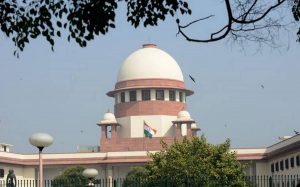
The Supreme Court (SC) stayed the Delhi High Court’s (HC) order suspending the life sentence and granting bail to a former MLA from Unnao (Uttar Pradesh) in the 2017 Unnao rape case, raising critical questions on suspension of sentence, and interpretation of the POCSO Act, 2012.
- The MLA was convicted and sentenced to life imprisonment for the rape of a minor. He was also convicted for the custodial death of the victim’s father.
- Under Section 430 of the Bharatiya Nyaya Sanhita (BNS) 2023, a convict can seek suspension of sentence. However, for serious offences/life imprisonment, suspension is an exception, not the norm.
- It is a discretionary judicial power and suspends only the punishment, not the finding of guilt.
- The HC suspended the sentence primarily holding that an MLA is not a “public servant” under Section 21 of the Indian Penal Code, 1860, and thus the aggravated offence under Section 5(c) POCSO Act, 2012 was prima facie not made out.
- It also considered his over 7 years of incarceration. In Kashmira Singh vs. State of Punjab (1977), the SC held that prolonged incarceration may result in injustice if the conviction or sentence is later modified.
- Bhagwan Rama Shinde Gosai vs. State of Gujarat (1999): The SC held that suspension of a fixed-term sentence under appeal must be exercised liberally.
- Conversely, for serious offences like life imprisonment, as reiterated in Shivani Tyagi Case (2024), suspension is rare and requires an objective assessment of the crime’s nature, gravity, and manner of commission.
- Chhotelal Yadav vs. State of Jharkhand (2025): Suspension in life sentence cases is justified only when there is a palpable or gross error in the trial court judgment indicating possible acquittal.
- Jamna Lal vs. State of Rajasthan (2025): The SC set aside a suspension of a 20-year POCSO sentence, holding that the trial court’s finding that the victim was a minor cannot be lightly unsettled (should not re-examine or reverse factual finding) at the suspension stage.
- Delhi HC’s Controversial Interpretation: The Delhi HC adopted a narrow interpretation, relying on the IPC definition of ‘public servant’ (including judges, military officers, and arbitrators, but excluding legislators).
- This contrasted with the trial court’s broader approach under the Prevention of Corruption Act, 1988, which defines it as any person performing a public duty, a key distinction since such offences attract enhanced punishment.
- Only the IPC defines a public servant. POCSO Act, 2012, does not define a public servant.
- SC’s Stance on Interpretation of POCSO Act, 2012: Precedents like Attorney General for India vs. Satish (2021) (rejecting without direct “skin-to-skin” contact, does not amount to “physical contact” narrow interpretation) and Independent Thought vs. Union of India (2017) (reading down marital exception for rape of a minor wife) affirm that child protection laws must be interpreted purposively, not narrowly or literally.
AI ecosystem:

India is expanding its AI ecosystem through the IndiaAI Mission with over ₹10,300 crore outlay and 38,000 Graphics Processing Units (GPUs) deployed, strengthening indigenous computing infrastructure, startups, skilling, datasets and responsible AI governance.
- IndiaAI mission marks a defining step to position India as a global leader in Artificial Intelligence under the vision ‘Making AI in India and Making AI Work for India’.
- It is implemented by IndiaAI, an independent business division under the Ministry of Electronics and Information Technology (MeitY), to build a comprehensive AI ecosystem that promotes innovation, supports startups, improves data access, and ensures the responsible use of AI for public good.
- Objectives is to build sovereign indigenous AI capability, promote inclusive and affordable access to AI, reduce dependence on foreign platforms and use AI as a growth engine for social and economic development.
- Expansion of high-end computing through 38,000 GPUs, development of Indian foundation models like BharatGen AI, creation of national datasets via AIKosh, and support to AI startups and India-specific applications.
- India’s technology and AI sector is expanding rapidly, with revenues projected to exceed USD 280 billion and employing over 6 million people.
- India has secured the 3rd position globally in Artificial Intelligence competitiveness, according to a report by Stanford University’s 2025 Global AI Vibrancy Tool.
- The country hosts 1,800+ Global Capability Centres, including 500+ AI-focused centres, alongside around 1.8 lakh startups.
- Nearly 89% of startups launched last year have integrated AI into their products or services.
- India scores 2.45 out of 4 on the NASSCOM AI Adoption Index, with 87% of enterprises actively using AI solutions.
- AI adoption is strongest in industrial & automotive, retail, BFSI, and healthcare, contributing about 60% of AI value, while 26% of companies have achieved AI maturity at scale.
India Signs Major Defence Contracts:
India signed defence procurement contracts worth ₹4,666 crore for the induction of modern infantry weapons and advanced naval torpedoes, reinforcing operational preparedness and indigenisation.Over 4.25 lakh Close Quarter Battle Carbines will be procured for the Indian Army and Navy from Bharat Forge Ltd & PLR Systems Pvt Ltd (India) to replace legacy rifles.The carbines offer compact design, high rate of fire and enhanced lethality, boosting effectiveness in urban and confined-space combat.This strengthens Aatmanirbhar Bharat, Make in India, MSME participation and indigenous defence manufacturing.Forty-eight heavyweight torpedoes will be procured from WASS Submarine Systems (Italy) for Kalvari-class (Project-75) submarines, with deliveries scheduled between 2028 and 2030, significantly strengthening India’s underwater warfare capability.
Kalvari-class (Project-75) submarines are India-built Scorpène-class diesel-electric attack submarines of the Indian Navy, strengthening underwater warfare, stealth surveillance, and sea-denial capabilities in the Indian Ocean Region. In FY 2025–26, the Ministry of Defence has signed capital acquisition contracts worth ₹1.82 lakh crore, reflecting sustained focus on defence modernisation and indigenisation.
HAL Launches Dhruv NG for Civil Aviation:
Hindustan Aeronautics Limited (HAL) conducted the maiden flight of the Dhruv–New Generation (NG) in Bengaluru, marking its formal push into the civil and export helicopter markets.The Dhruv Civil NG is being projected as a cost-effective indigenous alternative to imported twin-engine helicopters, with lifecycle support spanning manufacturing, maintenance, and upgrades. HAL plans to ensure higher fleet availability through integrated support models such as Power-By-Hour and performance-based logistics.Dhruv NG is a 5.5-tonne, indigenously developed, twin-engine, multi-role helicopter, capable of day-night, all-weather operations, and derived from the Dhruv ALH Mk-III civil platform.Powered by indigenous Shakti engines with Cat-A performance and AS4-compliant systems, it is suitable for demanding roles including offshore operations of Oil and Natural Gas Corporation (ONGC).HAL secured Directorate General of Civil Aviation (DGCA) type certification for indigenous manufacture of the Shakti civil engine (a national first) and restricted certification from the European Union Aviation Safety Agency (EASA) in 2023.Building on a proven Dhruv platform with over 3.75 lakh flying hours, Dhruv NG strengthens Aatmanirbhar Bharat, reduces import dependence, and anchors India’s indigenous civil helicopter ecosystem.
Ban on 10-minute deliveries:
Gig workers from platforms like Swiggy, Zomato, Blinkit and Zepto went on nationwide strikes on Christmas and New Year’s Eve, demanding a ban on 10-minute delivery models.The 10-minute delivery model promises ultra-fast doorstep delivery of food and groceries through algorithm-driven task allocation.It relies on dense dark-store networks, real-time tracking, and high-speed last-mile delivery, with penalties and incentives linked to time targets.
Market Access Support (MAS) Intervention:
The Government of India has launched the Market Access Support (MAS) Intervention under the Export Promotion Mission to strengthen global market access for Indian exporters, especially MSMEs and first-time exporters.The Market Access Support (MAS) Intervention is a government-backed programme that provides financial and institutional assistance to Indian exporters for accessing and expanding in international markets through curated trade and buyer-engagement activities.Implemented under the NIRYAT DISHA sub-scheme.Part of the Export Promotion Mission (EPM)
Nimesulide:
The Union Government has banned the manufacture, sale and distribution of oral formulations of Nimesulide above 100 mg with immediate effect under Section 26A of the Drugs and Cosmetics Act, 1940.Nimesulide is a non-steroidal anti-inflammatory drug (NSAID) used for the treatment of acute pain and fever. It acts by inhibiting chemical mediators responsible for pain and inflammation.
Reason for the ban:
Oral formulations above 100 mg pose a risk to human health, particularly liver-related adverse effects.
Safer alternative analgesics are available in the market.The ban was imposed under Section 26A of the Drugs and Cosmetics Act, 1940, which empowers the government to prohibit drugs harmful to public health.
Amazon’s Stingless Bees:
Amazonian stingless bees have become the first insects in the world to be granted legal rights after Peruvian municipalities passed a landmark ordinance recognising their right to exist and flourish.Stingless bees are a group of bees that either lack stingers or have non-functional stingers, making them harmless to humans. They are crucial pollinators in tropical ecosystems.Among the oldest bee species on Earth, existing for nearly 80 million years since the time of dinosaurs.Around 500 species globally, with nearly half found in the Amazon.The legal recognition grants stingless bees inherent rights, including the right to exist, maintain healthy populations, regenerate natural cycles, live in pollution-free habitats, and be legally represented when threatened.
Finance Ministry Notifies 100% FDI Rules For Insurance Sector:
India has taken a major reform step in the insurance sector by formally notifying rules to allow 100% foreign direct investment (FDI). The move aims to attract global capital, improve competition and deepen insurance penetration. While easing several governance restrictions for foreign invested insurers, the government has ensured Indian participation at the leadership level.The Ministry of Finance has notified final rules enabling 100% FDI in insurance companies. The rules remove the requirement for majority Indian directors but mandate that at least one top leadership role CEO, MD, or Chairperson must be held by an Indian resident.
Credit Growth Nears 12%:
As per revised RBI data up to December 15, 2025, bank credit growth rose to nearly 12% year-on-year, while deposit growth slowed to 9.35%. This widened the credit–deposit gap to 263 basis points, highlighting pressure on banking system liquidity.In the previous fortnight (ended November 28), credit growth was 11.5%, while deposit growth stood at 10.2%, showing a further slowdown in deposits.
Credit growth: Nearly 12% YoY as of December 15
Deposit growth: Slowed to 9.35% YoY
Credit deposit gap: 263 basis points
ATM Numbers Decline in FY25 as Digital Payments Surge: RBI
India’s banking landscape is undergoing a structural shift. According to the latest RBI report, ATM numbers declined moderately in FY25, reflecting the rapid adoption of digital payment systems such as UPI, while physical bank branches continued to expand, particularly in rural and semi-urban areas.RBI report highlights a structural shift in the banking sector, with ATM numbers declining moderately in FY25 while physical bank branches continue to expand, especially in rural and semi-urban areas.As per the report,The total number of ATMs in India fell from 2,53,417 in FY24 to 2,51,057 in FY25.The decline was largely driven by reduced customer reliance on cash withdrawals due to digital payments.The RBI clearly stated that digitization of payments has reduced the need for ATM-based transactions.
Deepti Sharma highest wicket-taker in Women’s T20:
Indian women’s cricket continues to scale new heights. Deepti Sharma has become the highest wicket-taker in Women’s T20 International cricket. The record reflects her long-term consistency and impact as a match-winner. It is also a proud moment for Indian cricket on the global stage.Deepti Sharma achieved the landmark during the 5th T20I match against Sri Lanka at Thiruvananthapuram. She claimed her 152nd T20I wicket, overtaking Australia’s Megan Schutt, who previously held the record with 151 wickets. With this, Deepti now stands alone at the top of the all-time wicket-takers list in Women’s T20Is.
Centre’s Fiscal Deficit Crosses 62% of FY26 Target:
India’s fiscal position in the first eight months of FY26 reflects a familiar but important trend strong government spending on infrastructure alongside slower growth in tax revenues. Latest official data shows that while capital expenditure has increased significantly to support growth, revenue collections have not kept pace. This has pushed the fiscal deficit to over 62% of the full-year target, raising questions about budget management in the remaining months of the fiscal year.According to data released by the Controller General of Accounts, the Centre’s fiscal deficit stood at ₹9.77 trillion, or 62.3% of FY26 Budget Estimates, during April–November 2025, driven by a 28% rise in capital expenditure and weak net tax revenues.
Nashik Solapur Akkalkot Greenfield Corridor:
The Government of India has taken a major step to strengthen transport infrastructure in Maharashtra. The Union Cabinet has approved a new 6-lane greenfield access-controlled corridor connecting Nashik, Solapur, and Akkalkot. The project aims to improve travel efficiency, logistics, safety, and regional economic growth under the national infrastructure vision.The Cabinet Committee on Economic Affairs, chaired by Narendra Modi has approved the construction of a 374 km long Nashik-Solapur-Akkalkot corridor in Maharashtra at a cost of ₹19,142 crore under the BOT (Toll) model to enhance connectivity and logistics efficiency.The project involves the construction of a 6-lane access-controlled greenfield corridor with a total length of 374 km.
It will be developed under the Build-Operate-Transfer (BOT) Toll mode, allowing private participation.The corridor is designed for high-speed and uninterrupted traffic flow, improving road safety and reducing congestion for both passenger and freight vehicles.
Warren Buffett steps down as CEO of Berkshire Hathaway:
Legendary investor Warren Buffett known worldwide as the Oracle of Omaha has stepped down as Chief Executive Officer of Berkshire Hathaway after nearly six decades. His exit as CEO marks the end of one of the longest and most influential leadership tenures in corporate history, reshaping modern investment philosophy.Warren Buffett has relinquished his role as CEO of Berkshire Hathaway after leading the company since 1965. At the age of 95, he hands over executive control to Greg Abel, while continuing as chairman, ensuring continuity in leadership and investment philosophy.Berkshire Hathaway was originally a struggling textile manufacturer based in New England.Warren Buffett took control of the company in 1965, initially aiming to revive the textile business.Over time he redirected capital into insurance and investments, laying the foundation for a diversified business empire.



