
Tar balls:
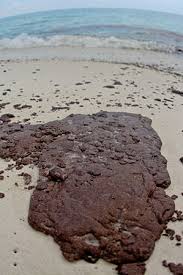
The Ministry of Environment, Forest, and Climate Change has released draft rules aimed at managing ‘tar balls’ to protect the coastline and marine environment from oil spills.
- Tar balls are small, dark, sticky blobs of weathered oil that form in marine environments due to oil spills or natural seeps.
- Tar balls are formed by weathering of crude oil in marine environments. They are transported from the open sea to the shores by sea currents and waves.
- They undergo physical, chemical, and biological processes, resulting in semi-solid or solid lumps that often wash ashore, causing environmental damage and posing risks to human health.
- Some of the balls are as big as a basketball while others are smaller globules.
- These tar balls contain toxic contaminants, such as heavy metals, trace elements, and persistent organic pollutants,
- They often accumulate on beaches and pose a danger to seabirds, fish, and marine animals, such as sea turtles, which may mistakenly ingest them, thinking they are food.
- India’s western coast, particularly the area from Gujarat to Goa, is significantly affected by tar balls, especially during the seasonal period from April to September.