
Today’s Current Affairs: 20th April 2026 for UPSC IAS exams, State PSC exams, SSC CGL, State SSC, RRB, Railways, Banking Exam & IBPS, etc
Table of Contents
What is Fructose?

A recent study presents fructose as a significant biological driver of conditions such as obesity, metabolic syndrome, and related chronic illnesses, challenging conventional understandings of dietary sugars.
- It is a member of a group of carbohydrates known as simple sugars, or monosaccharides.
- It is one of the three most common natural monosaccharides. (The other two are glucose and galactose.)
- Chemical Formula: C₆H₁₂O₆ (same as glucose but with a different structure).
- Fructose is the most water-soluble monosaccharide.
- It is commonly known as fruit sugar. Fructose naturally occurs in fruits, vegetables, honey, sugar cane, and sugar beets.
- Fructose is significantly sweeter than glucose, making it ideal for use in beverages, desserts, and snacks.
- Fructose and glucose combine to form the disaccharide sucrose, which we know as common sugar/table sugar.
- However, fructose needs to be converted into glucose by the liver before it can be used by the body.
- Unlike other sugars, fructose does not require insulin to be absorbed and therefore has a low impact on blood glucose levels.
Kulsi River:
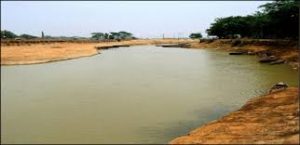
A proposed hydropower project on the Kulsi River is facing opposition from local residents.
- It is a south-bank tributary of the Brahmaputra River.
- It is composed of three rivers, namely Khri, Krishniya, and Umsiri, all of which originate from the West Khasi hill ranges of Meghalaya.
- The river is known as Khri in the upper catchments, and after being joined by two other tributaries, namely Krishniya and Umsiri, within the Khasi hills in Meghalaya, it flows northwest and enters Assam at Ukium.]
- After that it flows north up to Kulsi village through the plains of the Kamrup District of Assam.
- Finally, it outflows into the Brahmaputra near Nagarbera.
- It is considered one of the last refuges of the endangered Gangetic dolphin (Platanista gangetica gangetica) in Assam.
Amchang Wildlife Sanctuary:

The Gauhati High Court recently directed the Assam govt to respond to a petition alleging that the forest department floated an e-tender for felling trees in Amchang Wildlife Sanctuary without obtaining mandatory forest clearance from the central govt.
- It is located in the eastern fringe of Guwahati city in Assam.
- The sanctuary was formed by merging three reserve forest areas: South Amchang Reserve Forest, Amchang Reserve Forest, and Khanapara Reserve Forest.
- It stretches from the Brahmaputra River in the north to the hilly forests of Meghalaya in the south, forming a continuous forest belt through Meghalaya’s Maradakdola Reserve Forests.
- Khasi Hill Sal Forests, East Himalayan Mixed Deciduous Forest, Eastern Alluvial Secondary Semi-evergreen Forests, and East Himalayan Sal Forests.
- The forest is dominated by teak, white iris, axle wood, terminalia, wild java plum, elephant rope tree, beechwood, bitter champa, black dammer tree, cluster fig, and arjun trees.
- Among the mammals found here are Asian elephants, leopards, fishing cat, Asian palm civet, tadpole, different species of monkeys, gaur or Indian bison, sambar, barking deer, porcupines, mongooses, wild pigs, rabbit, flying squirrel, and otter.
- It shelters both resident and migratory birds such a jungle fowl, doves, egrets, teals, partridges, woodpeckers, hornbills, kingfishers, bulbuls, and many others.
- Tree yellow butterflies (gancana harina) are also found at the Amchang wildlife sanctuary. These butterflies are indigenous to Thailand, Malaysia, Singapore, and Northeast India.
Glutathione:
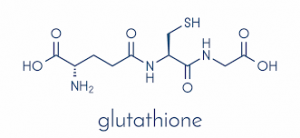
Researchers recently discovered glutathione’s key part in maintaining the smooth operations of a protein-producing hub in the cell called the endoplasmic reticulum (ER).
- Glutathione is an antioxidant produced in the body through enzymatic reactions.
- It is a tripeptide consisting of three amino acids (glutamate, cysteine, and glycine) and is naturally produced in the liver.
- These amino acids that make up glutathione are non-essential amino acids that our body can produce on its own when needed.
- In addition to being produced naturally by the body, glutathione can be given intravenously, topically, or as an inhalant. It’s also available as an oral supplement in capsule and liquid form.
- Some of the most abundant food sources of glutathione include cabbage, Brussels sprouts, garlic, onions, broccoli, and cauliflower.
- Glutathione is often called the “master antioxidant” because of its crucial role in protecting and detoxifying cells.
- It is involved in tissue building and repair, making chemicals and proteins needed in the body, and in immune system function.
- It also can play a role in treating certain genetic conditions.
- Glutathione levels in the body may be reduced by a number of factors, including poor nutrition, environmental toxins, and stress. Its levels also typically decline with age.
Dalma Wildlife Sanctuary: In News
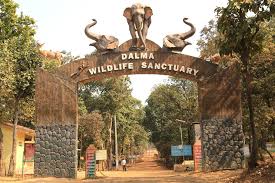
A herd of 38 elephant have returned to the Dalma Wildlife Sanctuary after nearly three years.
- It is located in Jharkhand.
- It is situated around the Dalma Hills on the Chottanagpur Plateau.
- The Sanctuary gets its name from the “Dalma mai” a local goddess who is revered and worshipped by the local people and the people of adjoining villages of Dalma.
- The terrain here is hilly and rocky, with dense forests and grasslands.
- The entire forest of Dalma Sanctuary falls in the catchment of the Subarnarekha River.
- It features two prominent waterfalls, Sitaguldi and Dassam.
- The forests of Dalma come under the category “Dry peninsular Sal” and “Northern dry mixed deciduous Forest”.
- Medicinal plants like Ananatmula, Satawari, Sarpgandha, etc. are abundant in the sanctuary.
- Various types of trees, climbers, herbs, shrubs, and orchids are found here.
- Besides elephants, the sanctuary has a considerable population of other wildlife like barking deer, wild boar, giant squirrel, porcupine, pangolin, sloth bear, etc.
National Mineral Exploration and Development Trust:
In its 23rd report on the National Mineral Exploration and Development Trust (NMEDT), the Standing Committee on Coal, Mines and Steel said offshore exploration presents a “significant opportunity” to harness largely untapped seabed minerals.
- It is set up by the Central Government for the purposes of regional and detailed exploration of minerals using the funds accrued to it and in such manner as prescribed by the Central Government.
- It was established under the Mines and Minerals (Development & Regulation) Amendment Act, 2015, (MMRDA).
- Structure: It has a two-tier structure:
- It is the Governing Body, chaired by the Minister of Mines. It holds the overall control of the Trust.
- It is chaired by the Secretary, Ministry of Mines, administers and manages its activities.
- Funding: To implement mandated activities an NMET Fund has been established.
- The NMET Fund receives money from holders of mining lease or a prospecting license-cum-mining lease, an amount equivalent to two percent of royalty paid in terms of the Second Schedule of the MMDR Act.
- Functions of NMET:
- Funding special studies and projects designed to identify, explore, extract, beneficiate and refine deep-seated or concealed mineral deposits;
- Undertaking studies for mineral development, sustainable mining, adoption of advanced scientific and technological practices and mineral extraction metallurgy;
- Detailed and regional exploration for strategic and critical minerals
Facilitating a national core repository for encouraging research in earth sciences and for evaluation of the mineral prospects.
Bharat Maritime Insurance Pool:
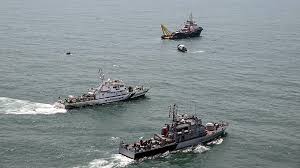
The union government took a decisive step to shield its seaborne trade from global disruptions with the creation of the Bharat Maritime Insurance Pool (BMI Pool).
- Bharat Maritime Insurance Pool is a new domestic maritime insurance scheme designed to safeguard the country’s shipping and trade interests during periods of global instability.
- It is a Centre-backed mechanism designed to ensure uninterrupted and affordable maritime insurance coverage.
- The BMI Pool will provide insurance support to Indian-flagged vessels, Indian-controlled ships, and vessels carrying cargo to or from India, including those passing through volatile maritime routes.
- It will cover a wide range of risks, including hull and machinery, cargo, protection and indemnity, and war risk insurance.
- The BMI Pool will initially run for 10 years, with the possibility of a five-year extension.
- It is expected to strengthen India’s self-reliance in marine insurance, build domestic expertise in underwriting and claims management, and ensure continuity of coverage in case of global disruptions or sanctions.
Dung Beetle:
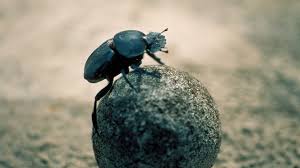
Scientists have discovered that dung beetles roll in remarkably straight lines—even in complete darkness by using the band of light created by our galaxy, the Milky Way.
- The Dung Beetle is scientifically known as the Scarabaeidae family within the Animal Kingdom’s order Coleoptera.
- They are robust, compact insects known for their hard, protective exoskeletons and strong, clawed legs adapted for digging and rolling dung.
- They vary in color, with some species displaying dull, black or brown hues, while others exhibit metallic shades of blue, green, or copper.
- Dung beetles are found worldwide, on every continent except Antarctica.
- They live in habitats that range from desert to forest.
- They feed on the feces of large herbivores during both their larval and adult stages.
- Dung beetles span three main lifestyles: rollers (ball-makers), tunnelers (bury beneath), and dwellers (live in the pat).
- Several dung beetles navigate using celestial cues; some use the Milky Way as an orientation reference during straight-line rolling.
- Many scarabs have fan-like (lamellate) antennae that open to sample odors-useful for locating fresh dung fast.
- They play major ecological roles in nutrient cycling, soil aeration, seed dispersal, and parasite/flies suppression.
Pradhan Mantri Gram Sadak Yojana:
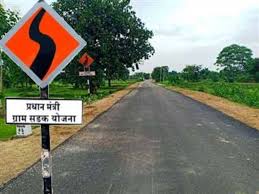
The Union Cabinet has given its approval for the continuation of Pradhan Mantri Gram Sadak Yojana-III (PMGSY-III) beyond March 2025 upto March 2028.
- It is a flagship rural development programme of the Government of India, launched in 2000.
- Objectives is Providing all-weather road connectivity to unconnected habitations in rural areas by way of a single all-weather road, to the eligible unconnected habitations of designated population size.
- The eligibility criteria under the PMGSY scheme were primarily based on population size and connectivity status.
- In plain areas, habitations with a population of 500 or more were eligible, provided they were unconnected.
- For regions in North-Eastern states, Himalayan states, and Himalayan Union Territories, the threshold was reduced to a population of 250 or more, as per the 2001 Census.
- It is implemented by the following agencies:
- State Governments / UT Administrations will designate Executing Agencies to implement the programme.
- At the District level, the programme will be planned, coordinated, and implemented through Programme Implementation Units (PIUs).
- PIUs will be manned by competent technical personnel.
- State Governments will establish suitable linkages with District Rural Development Agencies (DRDAs).
- Funds will be released to DRDAs
- Nodal Ministry: Ministry of Rural Development
River Basin Management Scheme:
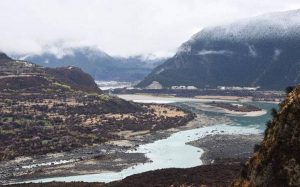
The River Basin Management (RBM) Scheme has been extended for the 16th Finance Commission period spanning 2026–27 to 2030–31, highlighting India’s renewed focus on integrated and sustainable water resource management at the basin level.
- The RBM Scheme is a central sector initiative spearheaded by the Ministry of Jal Shakti (Department of Water Resources, River Development, and Ganga Rejuvenation).
- Its primary goal is to ensure the integrated planning, sustainable use, and protection of surface and groundwater resources at the river basin level.
- Instead of looking at water resources in isolation, the scheme treats an entire river basin, including its rivers, tributaries, lakes, and groundwater, as a single, interconnected ecosystem.
- The RBM Scheme consists of two broad components: the Brahmaputra Board and the Investigation of Water Resources Development Scheme (IWRDS) implemented through the Central Water Commission (CWC) and National Water Development Agency (NWDA).
- Focuses on river basin planning, flood control, erosion management, drainage development, and sustainable water resource management in the North Eastern Region.
- Central Water Commission (CWC): Conducts surveys, investigations, and prepares Detailed Project Reports (DPRs) for water resource projects in remote terrains.
- National Water Development Agency (NWDA): Handles national-level water planning, specifically the preparation of feasibility reports for the Interlinking of Rivers (ILR) programme.
- Geographical Priority: It strategically targets water-rich yet underdeveloped regions that are critical for national security, water security, cross-border management, flood control, and ecological stability.
- Key focus areas include the Brahmaputra, Barak, Teesta, and Indus basins, heavily prioritizing the North Eastern States, Jammu & Kashmir, and Ladakh.
Defeat of the Constitution (131st Amendment) Bill, 2026:
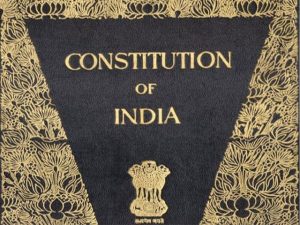
The Lok Sabha failed to pass the Constitution (131st Amendment) Bill, 2026, which aimed to fast-track the implementation of 33% reservation for women in legislatures (introduced by the 106th Constitutional Amendment (2023)) by enabling delimitation based on the 2011 Census.
- The collapse of the constitutional amendment bill necessitated the immediate withdrawal of dependent statutory legislation, specifically the Union Territories Laws (Amendment) Bill, 2026, and the Delimitation Bill, 2026.
- As per Article 368 of the Indian Constitution, the passage of the Bill required a special majority, specifically, a majority of the total membership of the House and a majority of not less than two-thirds of the members present and voting.
- With a House strength of 528, the Bill secured only 298 votes, falling short of the required 352 benchmark.
- The legislation sought to end the freeze on parliamentary constituency boundaries, which has been in place since the 42nd Constitutional Amendment (1976) based on the 1971 Census, by enabling delimitation using the 2011 Census
- This was intended to restore the democratic principle of “one person, one vote, one value” by aligning representation with current population patterns.
- The freeze, originally meant to continue until the first Census after 2000, was later extended by the 84th Constitutional Amendment (2001) until the first Census after 2026.
- The primary legislative roadblock was the demographic disparity between states.
- Opposition members argued that population-based delimitation would penalize Southern states for effective population control, demanding the complete delinking of women’s reservation from the delimitation exercise.
- The 106th Constitutional Amendment, 2023 (Nari Shakti Vandan Adhiniyam): Providing 33% reservation for women in Lok Sabha and State Assemblies, came into force on 16th April 2026.
- However, its actual implementation is deferred because Article 334A links it to a delimitation exercise after the next Census (post‑ 2027), making it unlikely to take effect before around 2034.
- To address this delay, the Constitution (131st Amendment) Bill, 2026, along with allied legislation, was introduced in the Lok Sabha to advance the implementation of women’s reservation to 2029.
RELIEF Scheme Expanded for Export Support:
The government expanded the Resilience & Logistics Intervention for Export Facilitation (RELIEF) Scheme in response to geopolitical tensions and maritime disruptions in West Asia.
- RELIEF is a time-bound initiative under the Export Promotion Mission (EPM) with a ₹497 crore outlay, launched by the Ministry of Commerce and Industry to provide a financial and operational safety net for Indian exporters facing rising maritime risks.
- It seeks to mitigate logistics costs, provide risk protection, ensure supply chain resilience, and maintain export competitiveness during geopolitical disruptions.
- The scheme covers exports to West Asia and Gulf countries such as the UAE, Saudi Arabia, Qatar, Oman, Kuwait, Bahrain, Iraq, Iran and Yemen, along with newly added Egypt and Jordan.
- It is implemented through the Export Credit Guarantee Corporation of India (ECGC), which handles claims, disbursement and monitoring.
- Three-Part Framework:
- Component 1: Supports exporters already holding ECGC Ltd. cover by maintaining pre-disruption premium rates for consignments issued between 14th February and 15th March, 2026, with enhanced cover up to 100% of loss for war-related risks.
- Component 2: Provides up to 95% loss coverage for consignments (16th March–15th June 2026); includes exporters obtaining fresh ECGC Whole Turnover Policies post 16th March 2026.
- Component 3: Specifically targets MSME exporters who lacked prior insurance, offering a cap of Rs 50 lakh per exporter for affected shipments.
FIU-IND & SEBI MoU on Financial Crime:
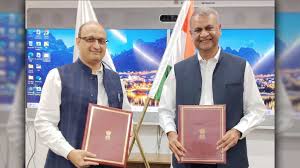
The Financial Intelligence Unit-India(FIU) and Securities and Exchange Board of India (SEBI) signed an MoU to strengthen efforts against money laundering and financial crimes.
- The agreement aims to enhance intelligence sharing, coordination, and enforcement to combat financial crimes and terrorist financing.
- It enables the sharing of financial intelligence and database information between the two agencies, establishing reporting mechanisms under the Prevention of Money-Laundering Rules for regulated entities.
- Includes training and outreach programmes to strengthen Anti-Money Laundering(AML)/Combating the Financing of Terrorism(CFT) capabilities among SEBI-regulated entities.
- Focus on assessment of money laundering and terror financing risks, identification of red flag indicators, and compliance monitoring.
- Ensures regular coordination and alignment with international standards while enabling information exchange with foreign FIUs under the Egmont Principles of Information Exchange.
- FIU-IND is the central national agency responsible for receiving, processing, analysing, and disseminating information relating to suspect financial transactions and coordinating efforts against money laundering and financing of terrorism.
- SEBI is the statutory regulator of securities markets in India, established under the SEBI Act, 1992, to protect investor interests and ensure market integrity.
Subhas Chandra Bose’s Philosophical Foundations:
The life and ideas of Subhas Chandra Bose are being revisited, highlighting his unique attempt to blend Indian spirituality with Western political thought and his vision for a modern, socialist India.Initially influenced by Vedanta and Shankaracharya’s Doctrine of Maya, viewing the world as an illusion.He adopted a pragmatic stance, stating he must discard whatever is “not workable” for a revolutionary.Instead of turning to pure materialism, Bose viewed the world as a real, evolving manifestation of the “Spirit.”For him, the fundamental, guiding essence of the universe and human life was Love.He found the scientific explanation for historical progress in Hegel’s dialectics (a way of understanding how ideas and reality evolve through conflict).Bose believed that society progresses through continuous conflict and resolution (thesis, antithesis, and synthesis), making active participation in this political and social conflict a paramount moral duty.
The River Basin Management Scheme: Strengthening Water Governance:
The Government of India has approved the continuation of the River Basin Management (RBM) Scheme for the period 2026–27 to 2030–31 with a significantly increased outlay of ₹2,183 crore.The RBM Scheme is a scientific and institutional framework under the Ministry of Jal Shakti designed for the integrated management, protection, and sustainable development of India’s river basins. It shifts water governance from localized projects to a basin-level approach, treating entire river systems—including tributaries, groundwater, and ecosystems—as a single hydrological unit. The financial outlay has jumped from ₹1,276 crore in the previous cycle to ₹2,183 crore for the 2026–31 period.The National Water Development Agency (NWDA) has identified 30 river link projects, with Feasibility Reports completed for 26 and Detailed Project Reports (DPRs) for 15.The scheme prioritizes the North Eastern Region and the Indus Basin, focusing on strategic water security in border states.The use of LiDAR and drone-based surveys has improved the accuracy of basin master plans across 11 key sub-sectors.
India’s First Water-Neutral Railway Depot:
Kankaria Coaching Depot in Ahmedabad has become India’s first ‘water-neutral’ railway depot by recycling wastewater used in coach washing and maintenance.The Kankaria Coaching Depot in Ahmedabad, Gujarat, is the first railway depot in India to achieve water neutrality by treating and reusing wastewater generated during routine railway coach cleaning and maintenance.It minimizes freshwater dependency by ensuring that almost all operational water demand is met through recycled water, promoting sustainable railway infrastructure.The depot uses phytoremediation, an eco-friendly process where specially selected plants naturally absorb pollutants and purify wastewater before reuse.
The Lebanon Ceasefire Deal:
A U.S.-backed 10-day ceasefire between Israel and Lebanon officially went into effect at midnight on April 17, 2026.It is a temporary cessation of hostilities designed as a goodwill gesture to enable direct peace negotiations between Israel and Lebanon. While not a permanent peace treaty, it marks the first time in decades that the two technically at-war nations have engaged in direct diplomatic talks to resolve their border and security issues.Nations Involved: Israel and Lebanon.Aim is To stop the devastating aerial bombardments and rocket fire that have displaced hundreds of thousands,To facilitate the broader goal of regional stability, including the reopening of the Strait of Hormuz.
Claude Mythos:
Anthropic has unveiled a preview of Claude Mythos, its most advanced AI system to date, which is capable of autonomously identifying critical software vulnerabilities.Claude Mythos is a next-generation frontier AI model designed with advanced reasoning, coding, and technical problem-solving capabilities that far exceed previous flagship systems.It is specifically engineered to analyze massive, complex codebases and identify security weaknesses that have remained undetected by human researchers for decades.Launched By: Anthropic.Project Glasswing is a cybersecurity-focused initiative aimed at deploying powerful AI tools to defenders before they can be exploited by attackers.