
Vaccinium Piliferum:
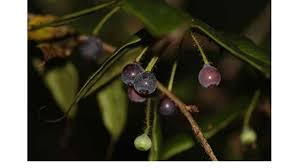
Researchers have rediscovered ‘Vaccinium piliferum’ in the remote forests of Vijoynagar in Arunachal Pradesh’s Changlang district nearly after 188 years.
- Vaccinium Piliferum is a rare and endangered wild relative of blueberry species.
- It belongs to the Ericaceae family, which includes blueberries and cranberries.
- It was rediscovered in the Eastern Himalayan region.
- The plant was originally recorded in 1836 during the colonial period.
- The species was found near tributaries of the Noa-Dihing River in the dense forests
- The International Union for Conservation of Nature has listed ‘Vaccinium piliferum’ as an ‘endangered’ species.
- Blueberries are a member of the Ericaceae or heath family.
- Types of blueberries: Lowbush (Vaccinium angustifolium), Highbush (Vaccinium corymbosum L.) and bilberry or forest blueberry (Vaccinium myrtillus) etc.
- Climate and soil: Blueberry requires relatively cold climate with 150 to 1200 hours of chill units to break dormancy.
- It prefers well-drained, acidic, sandy loam soils with organic matter content greater than 3%.
- Too cold temperature is detrimental and kills blueberry shoots and flower buds.
- They are packed with essential nutrients, including vitamin C, vitamin K, and dietary fiber. They also contain powerful antioxidants that help combat free radicals in the body.



