
Today’s Current Affairs: 6th jun 2026 for UPSC IAS exams, State PSC exams, SSC CGL, State SSC, RRB, Railways, Banking Exam & IBPS, etc
Table of Contents
Nilgiri Tahr : In News
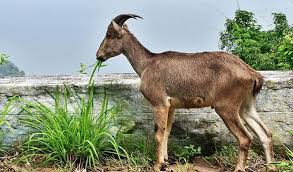
According to the third synchronised population survey the population of the endangered Nilgiri Tahr, has increased to an estimated 1,364.
- Nilgiri Tahr is a mountain ungulate endemic to the southern part of the Western Ghats.
- It is also known by the name Nilgiri Ibex or simply Ibex. Locally the animal is called ‘Varayaadu’.
- It is the only mountain ungulate in southern India.
- It inhabits the open montane grassland habitat of the southwestern ghats montane rain forests Eco region.
- It is found in a roughly 400 km stretch in the Western Ghats, which falls in the states of Kerala and Tamil Nadu.
- The Eravikulam National Park (Kerala) has the highest density and largest surviving population of Nilgiri tahr.
- Features of Nilgiri Tahr:
- These are stocky goats with short, coarse fur and a bristly mane.
- The males are found to be larger than the females, and have a darker color when mature.
- Both sexes have curved horns, which are larger in the males.
- Conservation Status:
- IUCN: Endangered
- Wildlife (Protection) Act of India, 1972: Schedule I.
- Threats: Habitat loss due to rampant deforestation, competition with domestic livestock, hydroelectric projects in Nilgiri tahr habitat, and monoculture plantations.
Solar Cycle:
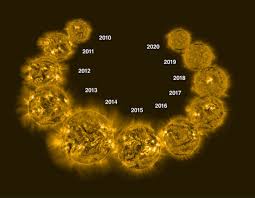
Researchers from the Indian Institute of Astrophysics (IIA) have used over 100 years of observations from the Kodaikanal solar observatory to investigate how large cellular structures known as supergranulations behave during different phases of the solar cycle.
- It describes an approximately 11-year cycle of solar activity driven by the sun’s magnetic field.
- It is indicated by the frequency and intensity of sunspots visible on the surface.
- Every 11 years or so, the Sun’s magnetic field completely flips.
- This means that the Sun’s north and south poles switch places.
- Then it takes about another 11 years for the Sun’s north and south poles to flip back again.
- The solar cycle affects activity on the surface of the Sun, such as sunspots, which are caused by the Sun’s magnetic fields.
- As the magnetic fields change, so does the amount of activity on the Sun’s surface.
- It can be tracked by counting the number of sunspots.
- Cycle Stages:
- Solar minimum: It is the beginning of a solar cycle or when the Sun has the least sunspots.
- Solar maximum: It is the middle of the solar cycle or when the Sun has the most sunspots.
- As the cycle ends, it fades back to the solar minimum, and then a new cycle begins.
- The solar cycle has the potential to impact Earth’s climatic conditions through changes in solar radiation, cosmic rays, and ozone distribution.
- The Sun’s supergranulation refers to a physical pattern covering the surface of the quiet Sun with a typical horizontal scale of approximately 30,000 km and a lifetime of around 1.8 d.
- Supergranulation was discovered by Hart (1954) using Doppler images of the Sun.
Foraminifera:
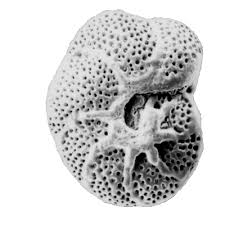
Scientists at Agharkar Research Institute (ARI), Pune have discovered a new species of Foraminifera and named it as Portatrochammina bharatensis.
- Foraminifera is a group of single-celled organisms that have inhabited the world’s oceans for over 500 million years.
- The shells have hundreds of tiny holes called foramen, the Latin word for window.
- They are among the most abundant and ecologically important organisms in the ocean.
- Features of Foraminifera:
- They are generally sand-grain size, measuring between 500 and 50 µm.
- They live in the open ocean, along the coasts, and in estuaries.
- Most have shells for protection and either float in the water column (planktonic) or live on the sea floor (benthic).
- They construct their intricate shells, called “tests,” from materials they scavenge from their surroundings (agglutinating mineral grains).
- The most of foraminifera” ‘crawl around’ using their pseudopodia.
- They don’t have a wall around their cell membranes, they are extremely flexible and can change shape.
- The organism pushes extensions of its cytoplasm called pseudopodia (or false feet) through these holes to gather food.
- Foraminifera eat detritus on the sea floor and anything smaller than them: diatoms, bacteria, algae, and even small animals such as tiny copepods.
- They build complex shells, consisting at their simplest of one chamber (like a vase or tube) to many chambers that coil in elaborate ways.
Eklavya Model Residential Schools:
The National Education Society for Tribal Students (NESTS) has signed a Memorandum of Understanding (MoU) with Learning Links Foundation (LLF) to implement the Amazon Future Engineer (AFE) programme across Eklavya Model Residential Schools (EMRSs) in the country.
- It is a flagship intervention of the Ministry of Tribal Affairs launched in 1998.
- It aims to provide quality residential education to Scheduled Tribes students from Class 6th to 12th in remote areas to enable them to access the best opportunities in education and to bring them at par with the general population.
- The programme was revamped during the year 2018-19 to expand the geographical outreach and enhance the quality of facilities.
- EMRSs to be set up in every block with more than 50% ST population and at least 20,000 tribal persons.
- The National Education Society for Tribal Students (NESTS), an autonomous organization, has been set up under the Ministry of Tribal Affairs to establish and manage EMRS across the country.
- Features of Eklavya Model Residential Schools:
- EMRSs are co-educational residential schools from Class VI to XII.
- Eklavya schools will be on par with Navodaya Vidyalayas and will have special facilities for preserving local art and culture besides providing training in sports and skill development.
- The school infrastructure will include classroom, administrative block, hostels, playground.
- CBSE curriculum is followed in these schools, and education is completely free.
- Each school has a capacity of 480 students with an equal number of seats for boys and girls.
- Non-ST students can be admitted in these schools on seats up to 10% of the total seats.
- And also reservation of 20% of seats under sports quota for deserving ST students who have excelled in the field of sports.
Software Technology Parks of India:
The Software Technology Parks of India (STPI) organised STPI Tech Summit 2026: India’s Next Leap at New Delhi which coincided with its 35th Foundation Day.
- It is a premier Science & Technology organization established in 1991 under the Ministry of Electronics and Information Technology (MeitY).
- STPI’s main objective has been the promotion of software exports from the country.
- It promotes software exports from the country and has been implementing the Software Technology Park (STP) scheme and Electronics Hardware Technology Park (EHTP) scheme for the promotion of the IT/ITES industry.
- STPI helps in facilitating software development, export, and compliance with regulatory requirements, including customs and foreign exchange rules.
- Further, STPI is nurturing pan India start-up ecosystem through its initiatives like Centres of Entrepreneurship (CoEs) & Next Generation Incubation Scheme (NGIS).
- STPI Services:
- Infrastructure Support: Provides plug-and-play office space with IT infrastructure for software exporters.
- Customs Clearances: Facilitates duty-free imports of capital goods, consumables, and other goods necessary for software export.
- Statutory Compliance: Ensures compliance with export regulations and assists companies in meeting their export obligations.
- Consultation and Guidance: Offers advice and support on matters related to exports, tax exemptions, and regulatory issues.
E85 Fuel:

The Union Minister for Petroleum and Natural Gas launched E85 fuel at an IndianOil retail outlet in New Delhi.
- E85 Fuel is a high-ethanol blended fuel comprising 80–85 per cent ethanol and 14–19 per cent petrol, specifically designed for use in flex-fuel vehicles.
- The initiative aims to facilitate the adoption of Flex-Fuel Vehicles (FFVs), which are capable of operating on ethanol blends from E20 to E100, without restricting consumers to a single blend.
- E85 is priced lower than conventional petrol to ensure that the economic benefits of domestically produced ethanol are passed on to consumers.
- Flex-fuel vehicles operating on E85 can reduce lifecycle greenhouse gas emissions by around 61 per cent compared to conventional petrol vehicles.
- With a Research Octane Number (RON) of about 108, ethanol offers superior knock resistance that allows engines to operate at higher compression ratios and optimized ignition timing.
- Higher ethanol blends promote cleaner and more complete combustion, resulting in near-zero particulate matter emissions contributing to improved urban air quality.
Venezuela:

The Prime Minister of India and Venezuela’s acting President held talks on forging a long-term energy partnership and collaboration in pharmaceuticals and critical minerals.
- Venezuela is located on the northern coast of South America.
- It is bounded by Guyana to the east, Brazil to the south, and Colombia to the southwest and west.
- It shares a border with the Caribbean Sea and the Atlantic Ocean to the north.
- Capital: Caracas
- Geographical Features of Venezuela:
- Andes Mountains and Maracaibo Lowlands in northwest; central plains (llanos); Guiana Highlands in southeast
- Rio Negro (it is shared with Colombia and Brazil) and Orinoco (shared with Colombia).
- Lake Guri and Lake Maracaibo (the largest lake in South America).
- Highest Point: Pico Bolivar
- The world’s highest waterfall – the Andes Mountains Angel Falls is located in the Guiana Highlands.
- It is home to the world’s largest oil reserves as well as huge quantities of coal, iron ore, bauxite, and gold.
Jai Prakash Narayan Bird Sanctuary: India’s 100th Ramsar Site
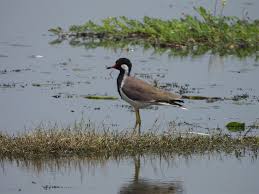
The Jai Prakash Narayan Bird Sanctuary (Surha Tal) designated as India’s 100th Ramsar Site.
- Jai Prakash Narayan Bird Sanctuary is located in the state of Uttar Pradesh.
- The sanctuary is also known as Surha Tal.
- It is a natural perennial oxbow lake which serves as a critical wintering ground for avian species traveling along the Central Asian Flyway.
- It is a freshwater wetland in the middle stretch of the Ganga River basin.
- It was originally formed from a meander of the Ganga and receives freshwater inflow through three channels.
- It is characterized by floodplains, extensive marshes, seasonally flooded areas and rice paddies.
- It attracts several migratory and resident bird species due to its rich avifaunal biodiversity.
- It supports a rich diversity of other species, including various plant, fish, reptile, and amphibian species.
- Notable fish include the vulnerable Wallago attu and Bagarius bagarius.
Jan Samarth Portal : Completes 4 Years

Jan Samarth completes 4 years of its journey and it continues to strengthen financial inclusion through seamless credit delivery.
- Jan Samarth Portal is a unique digital platform for credit-linked government schemes launched in 2022.
- It was conceptualised with the twin objectives of expanding the reach of government-sponsored schemes and streamlining the credit delivery process.
- It facilitates ease of access to all beneficiaries, financial institutions, Central/State Government Agencies, and Nodal Agencies.
- It connects various stakeholders of the financial ecosystem on a single platform and promotes inclusive development and ease of doing business.
- It is available in 8 different languages for ease of access to rural and underprivileged population in the country.
- It is a digital marketplace with front-end user interface for beneficiaries, integrated with a wide range of centralized data sources.
- It eases the loan application and disbursement process as the applicant can upload his application and the rule engine for approval of the applications is inbuilt.
- Applicants can apply for a loan on the portal which is available on a 24/7 basis.
- It provides a single-window facility for 15 Credit-linked Central Government Schemes application submissions and 254 Member Lending Institutions (including all Public Sector Banks) to choose from.
- The portal will check eligibility, give in-principle sanction and send the application to the selected Bank branch.
- It will also keep the beneficiaries updated at each stage of the journey, without necessitating multiple physical visits to bank branches.
- It has a dedicated grievance redressal channel for both beneficiaries and Banks.
World Environment Day 2026:

The Prime Minister of India extended his best wishes to everyone on World Environment Day.
- World Environment Day is observed every year on June 5.
- It is led by the United Nations Environment Programme (UNEP).
- It is an international day dedicated to raising global awareness about environmental issues and encouraging individuals, organisations, and others to take a step towards protecting the planet.
- World Environment Day was established in 1972 during the United Nations Conference on the Human Environment held in Stockholm.
- The UNEP was established in the same year.
- The UN General Assembly officially designated June 5 as World Environment Day.
- It was first celebrated in 1973 with the theme “Only One Earth,”
- Each year, a host nation spearheads the campaign, which raises awareness of a certain issue.
- World Environment Day 2026
- Theme: “Only One Earth”
- This year, Azerbaijan highlights the planetary crises of climate change and ecosystem degradation and their interconnected impacts on people and nature.
Pradhan Mantri Kaushal Vikas Yojana: In News
The Parliament’s Public Accounts Committee (PAC) pulled up the government over its flagship skilling programme the Pradhan Mantri Kaushal Vikas Yojana (PMKVY).
- Pradhan Mantri Kaushal Vikas Yojana is a skill development programme launched by the government of India in 2015.
- It aims to empower the youth of India to engage in industry relevant skill training and secure a better livelihood.
- It is being implemented by the National Skill Development Corporations in partnership with multiple stakeholders.
Eligibility Criteria of Pradhan Mantri Kaushal Vikas Yojana:
- Age Limit: Candidates aged 14 to 35 years are generally eligible for PMKVY training programs.
- Nationality: Applicants must be Indian citizens to qualify for the scheme.
- Educational Qualifications: PMKVY caters to individuals from diverse educational backgrounds, including those without formal education.
- Employment Status: Priority is given to unemployed or underemployed individuals to enhance their employability.
- Aadhar Card: An Aadhar card is often a mandatory requirement for applying to PMKVY programs.
Features of Pradhan Mantri Kaushal Vikas Yojana:
- Updated Skill Training: Industry experts are consulted regularly in order to ensure that updated skill training is provided according to industry demands.
- Short Term Courses: Short term training courses make it easy for people to acquire new skills within a short period of time.
- Recognition to Prior Learning: It is also acknowledged through certification without undergoing the same training.
- Placement Assistance: The scheme also aims to provide placement assistance for all the candidates trained in a certain skill.
Screw Pine:
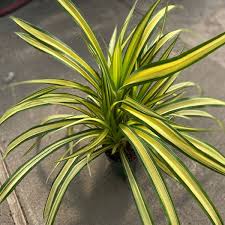
It was observed that farmers in Odisha’s Ganjam district have switched from paddy to kewra cultivation or Screw Pine cultivation due to repeated crop raids by wild boars.
- The Screw Pine or kewra or kewda plant (pandanus odorifer) is a small branched tree or shrub.
- It is a common species of the family Pandanaceae.
- It is a monocot, more closely related to grasses and palms than to conifers.
- It grows naturally in tropical coastal environments.
- It is a small, slender, branching tree with a flexuous trunk supported by brace roots.
- With rosettes of long-pointed, stiffly leathery, spiny, bluish-green, fragrant leaves.
- It is known for its distinctive prop roots and long, narrow leaves.
- It is found wild in southern India, Burma and the Andamans.
- It grows abundantly in the coastal regions of Orissa, especially along the Ganjam coast between Rushikulya river to the north and Bahuda river to the south.
- It requires bright, direct sunlight and thrives in warm, humid conditions.
- It prefers loamy soil that is rich in organic matter and retains moisture well.
- Moderate rainfall (1,500–2,000 mm annually)
- It is widely used to flavour food, in the aromatic, perfumery and cosmetics industry as well as in Ayurvedic medicines.
- The flowers (only male) are used to extract fragrance/oil.
- The leaves of the plant are used to make mats, baskets and bags.
- It plays a vital role in stabilising shorelines and supporting biodiversity — making it a keystone species in Indian coastal ecosystems.
Women’s Welfare to Women-Led Development:
India’s approach to women’s empowerment has shifted from welfare to women-led development. Through interventions in education, health, skills, financial inclusion, and leadership, women are emerging as active contributors to economic growth, governance, and social transformation, making Nari Shakti a key pillar in achieving the vision of Viksit Bharat by 2047.
SkyCast System:
India inaugurated its first SkyCast System at Indira Gandhi International Airport (IGI), New Delhi, with the next facility planned at Jewar Airport and further expansion across other airports in the country.This makes India the 19th country to deploy this integrated atmospheric remote sensing system, joining the 18 existing facilities worldwide.SkyCast provides real-time atmospheric intelligence to pilots and air traffic operators, reducing delays, diversions, and cancellations due to fog, turbulence, and other adverse weather. SkyCast combines multiple atmospheric monitoring instruments, including Radar Wind Profiler, SODAR, Microwave Radiometer, Ground-based Fog Aerosol Spectrometer (GFAS), and CL61 Lidar Ceilometer to monitor atmospheric parameters up to 3 km altitude. The system builds on the Winter Fog Experiment (WiFEX) initiated by IITM (Indian Institute of Technology, Madras) and IMD at IGI Airport in 2015, which studied fog formation, aerosol-cloud interactions, visibility reduction, and urban boundary-layer processes, enabling the development of this operational system.



