
E-Methanol:
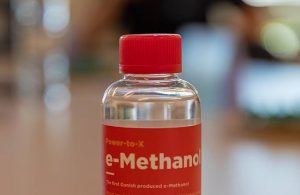
The government laid the foundation stone for its first port-based e-methanol production facility at Kandla, involving an investment of ₹2,300 crore.
- E-Methanol is a low-carbon fuel produced with renewable energy and recycled CO₂.
- E-methanol production typically involves three key steps:
- Green hydrogen generation:Renewable energy-powered water electrolysis creates the hydrogen feedstock. (Here water (H₂O) molecules are split into oxygen and hydrogen.)
- CO2 capture:Carbon dioxide is captured from industrial flue gases (e.g. steel mills or cement plants) or directly from the air, reducing overall emissions at the source.
- Methanol synthesis:The hydrogen and CO2 are combined in a catalytic reactor under pressure, yielding methanol with minimal byproducts.
- It can be used in shipping, heavy industry, and chemical manufacturing.
- Benefits of E-methanol:
- Lower Carbon Emissions: It can significantly reduce lifecycle greenhouse gas emissions when produced using renewable electricity and captured carbon dioxide.
- Reduced Sulfur Emissions:Compared to many conventional fuels, e-methanol produces little to no sulfur emissions during combustion.
- Lower Particulate Matter:Cleaner combustion characteristics can reduce particulate emissions and improve environmental performance.
- Renewable Production Cycle:The use of green hydrogen and renewable energy creates a more sustainable production pathway.



