
11th Review Conference of the Nuclear Non-Proliferation Treaty:
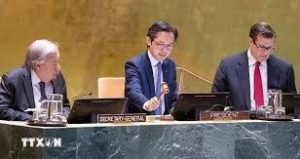
The 11th Review Conference of the Nuclear Non-Proliferation Treaty (NPT) at the UN Headquarters in New York collapsed without reaching a consensus on a final declaration.
- The NPT Review Conference is a high-level plurilateral diplomatic forum held every five years to assess the implementation, structural health, and modernization of the Treaty on the Non-Proliferation of Nuclear Weapons (NPT).
- Initiated in 1975, these month-long sessions bring together nearly 190 signatory states to review past disarmament pledges, inspect safeguard protocols, and address emerging geopolitical flashpoints threatening the global non-proliferation architecture.
Key Features of the NPT Treaty:
- The original 1968 treaty operates on a tripartite pillars framework, structurally bridging three distinct global security objectives:
- The Core Grand Bargain: Establishes an asymmetric legal contract between two blocks: Non-Nuclear Weapon States (NNWS) agree never to acquire nuclear warheads, while Nuclear-Weapon States (NWS) pledge to pursue good-faith atomic disarmament.
- The Sovereign Cut-Off Date: Recognizes only five nations as legitimate Nuclear-Weapon States based on whether they manufactured and exploded a nuclear device prior to January 1, 1967: the United States, Russia (formerly the Soviet Union), China, the United Kingdom, and France (the P5).
- The IAEA Safeguards Matrix: Empowers the International Atomic Energy Agency (IAEA) to run strict, mandatory on-site inspections of NNWS facilities, ensuring that civil nuclear fuel and material cycles are never diverted for weaponization.
- Inalienable Right toPeaceful Nuclear Technology: Guarantees all compliant signatories unfettered access to nuclear fuel, materials, and research for civilian applications, including electricity generation, medical diagnostics, and agricultural mutation breeding.
- Indefinite Legal Extension: Originally drafted to run for a 25-year block, the treaty was extended indefinitely in 1995 during the New York Review Conference, making its commitments permanent for all member states.



