
Battery Energy Storage System:
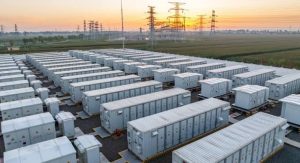
NTPC Ltd recently terminated a ₹ 413.37 crore contract awarded to GR Infraprojects Ltd (GRIL) for a 400 MWh Battery Energy Storage System (BESS) project at its Mouda Super Thermal Power Station in Maharashtra.
- A BESS is a system that stores electrical energy in rechargeable batteries and releases it when power is needed.
- A complete BESS is more than a battery. A complete BESS typically includes: Battery cells or modules, which store the energy
- A Battery Management System (BMS), which monitors cell voltage, temperature, and state of charge to keep the battery safe and efficient
- A Power Conversion System (PCS), often called an inverter, which converts stored DC power to usable AC power (and back again during charging)
- Thermal management, such as cooling or heating systems, to keep the battery within a safe operating temperature range
- A control and monitoring system, sometimes cloud-connected, that manages charging and discharging based on rules, schedules, or grid signals
- An enclosure, ranging from a small wall-mounted box for homes to a shipping-container-sized unit for utility projects.
- It operates by capturing electricity from various sources (either from the grid, from solar panels, from wind turbines, or from any other generation source), storing it, and discharging it when needed.
- BESS technology allows electricity to be stored when supply is abundant, demand is low, or power prices are favorable.
- The system can then discharge during outages, peak demand periods, renewable generation dips, or times when electricity is more expensive.
- This flexibility makes BESS valuable for commercial facilities, industrial sites, utilities, microgrids, and renewable energy projects.
- Battery storage supports peak shaving, load shifting, backup power, renewable energy integration, and grid reliability.
- It also gives operators more control over when electricity is used, which can improve energy economics and reduce strain on the grid.
- BESS are rated on energy storage capacity (kWh), which determines how much energy can be stored, and power rating (kW), which determines how quickly that energy can be delivered.



