
Hatti Tribe : Boda Tyohar
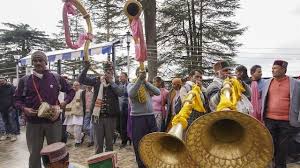
“Boda Tyohar”, the biggest annual festival of the Hati tribe in Himachal Pradesh’s Sirmour and celebrated by over three lakh community members, recently commenced with traditional fervour.
- The Hattis are a close-knit community who take their name from their age-old professional practice of selling their homegrown crops at small markets called ‘Haat’ in nearby cities.
- Hatti men traditionally don distinctive white headgear on ceremonial occasions.
- These tribal people reside in the Himachal-Uttarakhand border in the basin of the Giri and Tons rivers, both tributaries of the Yamuna.
- There are two main Hatti clans: one in the Trans-Giri area of the Sirmaur district in Himachal Pradesh and the other in Jaunsar Bawar of Uttarakhand.
- The two Hatti clans have similar traditions, and intermarriages are common.
- Jodidara is a traditional form of polyandrous marriage practised among the Hatti tribe in Himachal Pradesh, where a woman marries two or more brothers.
- Polyandry is legally recognised in Himachal Pradesh under revenue laws.
- Harris is governed by a traditional council called ‘khumbli’ which decides community matters.
- The Hatti population relies on agriculture for livelihood and bare subsistence since their climate is ideal for growing “Cash Crops.”
- The Indian government has granted Scheduled Tribe (ST) status to the Hatti community in Himachal Pradesh.
- The Jaunsar-Bawar region of Uttarakhand was granted tribal status in 1967.
- Boda Tyohar, also called Magho ko Tyohar, is the biggest annual festival of the Hatti tribe.



