
Nucleic Acid Amplification Testing:
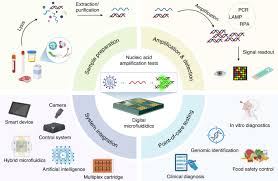
The Supreme Court of India has sought comprehensive details regarding the cost, feasibility, and infrastructure required to implement Nucleic Acid Amplification Testing (NAT) in government hospitals, responding to a Public Interest Litigation (PIL) that advocates for the prevention of transfusion-transmitted infections.
- The PIL, urges the Court to declare the “Right to Safe Blood” as an intrinsic facet of the Right to Life under Article 21 of the Indian Constitution.
- The petition seeks directions to make NAT mandatory across all Indian blood banks.
- This aims to accurately detect Transfusion Transmissible Infections (TTIs), including HIV, Hepatitis B (HBV), Hepatitis C (HCV), malaria, and syphilis, before the blood is transfused.
- Currently, under the Drugs and Cosmetics Act of 1940, mandatory blood screening in India only requires serological testing (such as Enzyme-Linked Immunosorbent Assays).
- Nucleic Acid Testing is not legally mandatory across the country.
- The plea highlights the systemic failure to protect highly vulnerable patients, noting that India is considered the “Thalassemia capital of the world.”
- Thalassemia is an inherited (genetic) blood disorder characterized by the body’s inability to produce sufficient haemoglobin (the protein in red blood cells that carries oxygen).
- Thalassemia patients require life-saving blood transfusions every 15 to 20 days, making them highly susceptible to TTIs if blood is improperly screened.
- The petition highlighted preventable cases in Madhya Pradesh, Jharkhand, and Uttar Pradesh where children contracted HIV and Hepatitis due to unsafe blood transfusions.
Nucleic Acid Amplification Testing (NAT):
- It is a highly sensitive molecular technique that screens blood donations by amplifying targeted regions of viral Ribonucleic Acid or Deoxyribonucleic Acid.
- Traditional serological tests must wait for the human body to produce an immune response (antibodies) before an infection can be detected.
- Nucleic Acid Testing directly detects the virus, drastically narrowing the “window period” (the time between initial infection and detectability) for Human Immunodeficiency Virus, Hepatitis B Virus, and Hepatitis C Virus.
- This advanced testing helps identify “false reactive” blood donations that standard serology methods incorrectly flag as infected.
- This ensures safe blood is not unnecessarily discarded and aids in accurate donor counselling.



