
Vehicle-to-Everything (V2X) Communication:
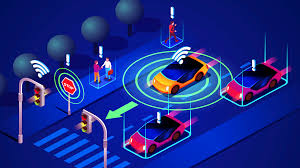
The TRAI has extended the deadline for stakeholders to submit written comments and counter-comments on its Consultation Paper on the Regulatory Framework for Vehicle-to-Everything (V2X) Communication.
- Vehicle-to-Everything (V2X) is an advanced, high-performance wireless communication system that allows smart vehicles to interact in real time with various elements of their surrounding environment.
- Serving as a foundational technology for autonomous driving, V2X expands a vehicle’s situational awareness beyond the physical line-of-sight limits of traditional onboard sensors like radar, cameras, and LiDAR.
- V2X continuously exchanges data—including relative speed, geographic position, and direction—through several interconnected communication modes:
- Vehicle-to-Vehicle (V2V): Vehicles directly share speed, positioning, and braking data with each other to avoid multi-car accidents and generate collision warnings.
- Vehicle-to-Infrastructure (V2I): Vehicles link with roadside infrastructure like traffic lights, smart signs, and embedded road sensors to optimize traffic flow and display real-time signal timing.
- Vehicle-to-Pedestrian (V2P): Enables communication between vehicles and vulnerable road users (pedestrians, cyclists) via smartphones or wearable tech to alert drivers to their presence.
- Vehicle-to-Network (V2N): Connects the vehicle to cloud-based systems and long-range cellular services for real-time navigation mapping, weather updates, and fleet analytics.
- Vehicle-to-Device (V2D): A broader category enabling direct interactions with connected personal devices, such as smart home links and local user hardware.



