
Today’s Current Affairs: 11th February 2026 for UPSC IAS exams, State PSC exams, SSC CGL, State SSC, RRB, Railways, Banking Exam & IBPS, etc
Table of Contents
Mangrove clam:
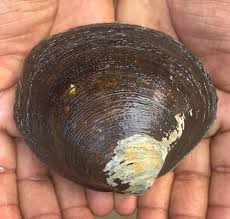
The ICAR–Central Marine Fisheries Research Institute (CMFRI) has successfully achieved captive breeding of the mangrove clam (Geloina erosa).
- Mangrove clams, commonly known as mud clams, locally called ‘Kandal Kakka’ in northern Kerala.
- It belongs to the genus Polymesoda or Geloina.
- They are found in muddy, brackish and even nearly freshwater regions within mangrove swamps.
- These are widely distributed in the Indo-Pacific region.
- It is a burrowing bivalve inhabiting organic-rich muddy substrates in intertidal mangrove ecosystems.
- This species display remarkable tolerance, enabling them to thrive across a broad spectrum of salinity levels.
- It is a filter-feeding species, primarily active during low-tide immersion stages characterized by frequent inundation.
- It plays a crucial ecological role by recycling nutrients, stabilising sediments and strengthening mangrove ecosystems.
- Threats: In India, particularly along the east coast and in island regions, wild stocks have been steadily declining due to indiscriminate harvesting, habitat degradation, pollution and coastal development.
Eritrea:

Ethiopia ordered neighbouring Eritrea to “immediately withdraw its troops” from Ethiopian territory.
- Eritrea is located in the Horn of Africa.
- It is bordered with Ethiopia, Sudan and Djibouti.
- It has an extensive coastline on the Red Sea to the north and east.
- It is a member country of African Union, COMESA(Common Market for Eastern and Southern Africa).
- Capital City: Asmara
- The climate of Eritrea is tropical desert on the coast and the eastern plain, mild semiarid in the mountainous belt and tropical semiarid in the south-west.
- Highest Peak: Mount Emba Soira
- Major Rivers: Tekezé, Mereb, and Barka
- It includes the Dahlak Archipelago and several of the Hanish Islands
- It mainly consists of copper, potash, zinc, oil, natural gas, cement, gypsum, granite, marble, ceramics, limestone, and iron ore.
Copernicus Sentinel-2 Mission:
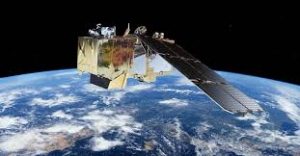
The European Space Agency (ESA)’s Copernicus Sentinel-2 mission recently released a stunning high-resolution image of the 2026 Winter Olympic venues across northern Italy.
- It is an Earth observation satellite mission developed by the European Space Agency (ESA).
- It is part of Copernicus – the European Union’s Earth observation program.
- It aims at monitoring variability in land surface conditions.
- It comprises a land monitoring constellation of two polar-orbiting satellites placed in the same sun-synchronous orbit.
- It delivers high-resolution optical multispectral imagery in the visible to shortwave infrared.
- This data supports a wide range of applications, including precision agriculture, food security, ecosystems monitoring, disaster management (e.g., volcanoes, wildfires, floods, landslides), water quality assessment, and observing anthropogenic methane emissions.
- Copernicus Programme is the Earth observation component of the European Union’s Space programme.
- This initiative is headed by the European Commission (EC) in partnership with the European Space Agency (ESA).
- It offers information services that draw from satellite Earth observation and in-situ (non-space) data.
- The programme consists of a complex set of systems that collect data from multiple sources, including Earth Observation satellites, in-situ sensors like ground stations, and airborne and sea-borne sensors.
- Users have free and open access to a great deal of this data, which is also processed to provide a set of services based on reliable and near-real-time information.
- ESA has developed a new family of satellites, called Sentinels, specifically for the operational needs of Copernicus.
Thwaites Glacier:
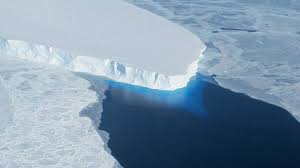
Scientists have raised concerns over the Thwaites Glacier, as it is melting at an unprecedented rate because of climate change fueled by human activities.
- It is a large glacier in West Antarctica, about the size of a large country.
- Scientists have often called it the “Doomsday Glacier”.
- Impact of Melting of Thwaites Glacier:
- It has been becoming thinner, retreating, and contributing to sea-level rise.
- If it weakens beyond a point, other glaciers may lose ice faster as well, further increasing sea-level rise.
- Higher sea levels will cause coasts to flood more easily, worsen erosion, increase storm surges, and threaten cities, low-lying islands, and ports.
- It is one of the most important places on the earth for those trying to understand how sea levels will rise in future.
Indian National Centre for Ocean Information Services : In News
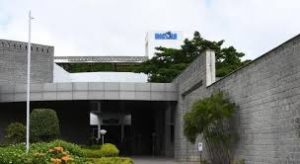
Indian National Centre for Ocean Information Services (INCOIS) will be launching three new ocean information services: JellyAIIP, SAMUDRA 2.0 Mobile App, and SIVAS along with a new logo during the foundation day celebrations.
- It was established as an autonomous body under the Ministry of Earth Sciences (MoES).
- It is mandated to provide ocean information and advisory services to society, industry, government agencies and the scientific community through sustained ocean observations and constant improvements through systematic and focussed research.
- It established the Indian Tsunami Early Warning Centre (ITEWC) which provides tsunami alerts serving India and 28 Indian Ocean countries.
- It is a permanent member of UNESCO’s Intergovernmental Oceanographic Commission (IOC).
- It is located in Hyderabad, Telangana.
- It has developed the Search and Rescue Aided Tool (SARAT) to assist the Indian Coast Guard, Navy and Coastal Security Police, in locating individuals or objects lost at sea.
- INCOIS has also established the SynOPS visualization platform which integrates real-time data to strengthen response coordination during extreme events.
- JellyAIIP (Jellyfish Aggregation Information Interactive Portal): It is a national web-based platform for reporting and visualising jellyfish aggregation, swarming, and stranding events along the Indian coast, with geospatial mapping, hotspot analysis, and multilingual first-aid guidance.
- SAMUDRA 2.0 Mobile App: It is an upgraded multilingual advisory platform delivering ocean information and early warnings to fishermen and maritime users.
- SIVAS: Swell-Surge Inundation Vulnerability Advisory System, is a coastal inundation early warning service designed to provide advance alerts on swell-surge flooding events, currently operational for the Kerala coast, with multilingual forecast bulletins.
RBI’s Credit and Consumer Protection Reforms:
The Reserve Bank of India (RBI) has introduced a series of measures aimed at stimulating key sectors of the economy, like MSMEs, and bolstering consumer protection in the digital age.
Measures Introduced by the RBI to Stimulate Key Sectors of the Economy:
- Doubling Collateral-Free Loans for MSMEs: The limit for collateral-free loans to Micro, Small and Medium Enterprises (MSMEs) has been proposed to be doubled from Rs 10 lakh to Rs 20 lakh. This aims to ease financing constraints for viable small businesses, reduce their dependence on informal credit, and support expansion.
- Permitting Bank Lending to REITs: Banks will now be allowed to extend finance to listed Real Estate Investment Trusts (REITs), a facility previously available for Infrastructure Investment Trusts (InvITs).
- It aligns with the market regulator SEBI’s move to treat REITs as equity, potentially attracting more institutional investment, e.g., mutual funds.
Proposed Customer Protection Frameworks:
- Compensation for Small-Value Fraudulent Transactions: A new framework to compensate customers up to Rs 25,000 for losses incurred in small-value fraudulent digital transactions will be introduced, limiting customer liability in unauthorised electronic banking transactions.
- Guidelines to Curb Mis-selling: Draft instructions will be issued to ensure that all third-party financial products (e.g., insurance, mutual funds) sold at bank counters are suitable for customers’ needs and aligned with their risk appetite.
- Harmonised Rules for Loan Recovery Agents: The RBI will review and harmonise existing instructions on the engagement of recovery agents and conduct related to loan recovery across different regulated entities to ensure fair practices.
- ‘Mission SAKSHAM’ for Urban Cooperative Banks: Mission SAKSHAM (Sahakari Bank Kshamta Nirman) is a sector-wide capacity-building and certification framework for Primary (Urban) Co-operative Banks (UCBs). The mission plans to cover about 1.40 lakh participants through training programs in regional languages.
Mission for Aatmanirbharta in Pulses:
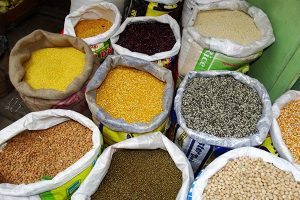
The roadmap for the Self-Reliance (Aatmanirbharta) in Pulses Mission was finalised at the Food Legumes Research Centre (FLRP), Amlaha, Sehore district, Madhya Pradesh.
- Mission for Aatmanirbharta in Pulses announced in the Union Budget 2025–26, the Mission for Aatmanirbharta in Pulses was launched in October 2025.
- It is a centrally sponsored scheme with an outlay of Rs 11,440 crore, aimed at achieving self-sufficiency in pulses over 2025–26 to 2030–31.
- The mission places specific emphasis on Tur (Arhar), Urad, and Masoor, which are critical for daily consumption but currently face production gaps.
- Pulses are a “nutritional powerhouse,” contributing 20-25% of the total protein intake in Indian diets.
- However, per capita consumption falls short of the recommended 85 grams per day, exacerbating protein-energy malnutrition.
- While domestic production rose by 31% (from 192.6 lakh tonnes in 2013-14 to 252.38 lakh tonnes in 2024-25), India still imported 47.38 lakh tonnes in 2023-24 to meet demand.
- Reducing imports is vital to conserve foreign exchange and protect farmers from international price volatility.
- The Mission aims to expand pulses cultivation by additional 35 lakh hectares, raising total area to 310 lakh hectares, and boosting production to 350 lakh tonnes by 2030–31.
- It focuses on reducing imports, improving yields, promoting climate-resilient practices, enhancing farmers’ incomes, and ensuring long-term nutritional security.
Kimberley Process 2026:

India has assumed the chair of the Kimberley Process (KP) for 2026, placing it at the forefront of global diamond governance. Coming at a crucial time for the diamond industry, the role positions India as a key Global South voice and a central hub in the diamond value chain to drive meaningful reforms.
- The Kimberley Process (KP) is an international forum initiated in 2000 by Southern African countries, to regulate the trade in rough diamonds.
- It aims to prevent the flow of conflict diamonds while helping to protect legitimate trade in rough diamonds.
- Conflict diamonds are rough diamonds used by rebel groups or their allies to finance armed conflicts aimed at undermining legitimate governments.
- KP is not a formal international organisation or a legally binding treaty.
- It has no permanent office or staff and functions on burden-sharing contributions from participating countries, with support from industry and civil society.
- Its rules are implemented through national laws, not international legal obligations.
- Today, the KP has 60 participants representing 86 countries. The KP members account for approximately 99.8% of global rough diamond production.
- Kimberley Process Certification Scheme (KPCS) launched in 2003, the KPCS outlines the rules that govern the trade in rough diamonds.
- The KPCS has developed a set of minimum requirements that each participant must meet.
- The KPCS requires that every consignment of rough diamonds crossing an international border be accompanied by a tamper-resistant KP certificate.
- Trade in rough diamonds is permitted only between certified KP members who adhere to the scheme’s minimum requirements.
- Participant countries are legally obliged to share timely and accurate statistical data regarding their diamond production and trade to ensure transparency.
- India is one of the founding members of the Kimberley Process Certification Scheme (KPCS).
- Enforcement is carried out individually by participant countries to ensure that only legitimate, “conflict-free” diamonds enter the supply chain.
India Named Country of the Year at BIOFACH 2026:

India has achieved a major global recognition in sustainable agriculture by being designated the Country of the Year at BIOFACH 2026, the world’s leading trade fair for organic products.
- BIOFACH stands for “Biological + Fachmesse,” which is a German term translating to “Organic Trade Fair
- The event will be held from 10 to 13 February 2026 at Nuremberg, Germany.
- This honour places India at the centre of the global organic movement and reflects its growing strength as a reliable supplier of high-quality organic food products.
- India’s participation will be led by APEDA with a large-scale and high-impact presence.BIOFACH Germany is globally recognized as the most influential exhibition dedicated exclusively to organic food and agriculture.
- Buyers, policymakers, certification bodies, and organic producers from across the world participate in the event.
- Being named Country of the Year at BIOFACH 2026 gives India unmatched visibility and strategic advantage in global organic markets.
- It allows India to shape conversations around sustainability, traceability, and environmentally responsible agriculture at a global level.
- India’s participation at BIOFACH 2026 is being organized by Agricultural and Processed Food Products Export Development Authority under the Ministry of Commerce and Industry.
- APEDA has been participating in BIOFACH for more than a decade.
- However, the 2026 edition marks a significant scale-up, reflecting the rapid growth of India’s organic exports and rising global demand for Indian organic products.
- The India Country Pavilion at BIOFACH 2026 will cover a massive 1,074 square metres, making it one of the largest national pavilions at the event.
- The pavilion will host 67 co-exhibitors, including exporters, Farmer Producer Organisations (FPOs), cooperatives, organic laboratories, state government bodies, and commodity boards.
- This large presence demonstrates India’s institutional strength and coordinated approach in promoting organic agriculture globally.
India’s Balancing Act Between the US and Russia:
The US claims that India has “agreed to stop buying Russian oil” under the 2026 India–US trade understanding. The statement has revived questions about how India balances its long-standing partnership with Russia amid mounting geopolitical and economic pressure from the US.The US claim on ending Russian oil imports has sharpened India’s strategic dilemma of balancing deep defence and energy ties with Russia against growing economic, trade, and geopolitical pressure from the US.India’s response reflects pragmatic multi-alignment: gradually diversifying energy and defence sources while leveraging US trade, technology, and Indo-Pacific partnerships, without formally abandoning Russia.
Supreme Court Bars Stem Cell Therapy for Autism:
The Supreme Court ruled that stem cell therapy cannot be offered as a clinical service for Autism Spectrum Disorder (ASD) outside approved clinical trials and directed the Union Government to create a dedicated regulatory authority for stem cell research.The Court held that such therapy lacks established evidence on safety and efficacy and therefore fails the reasonable standard of care owed by doctors to patients.Stem cells are unique cells that generate specialized cells like blood, bone, and muscle, playing a vital role in tissue repair and bodily functions.Stem Cell Therapy: It is also called regenerative medicine, aims to repair damaged or diseased tissues by using stem cells or their derivatives.In India, stem cell-based treatments are permitted only within approved clinical trials, as their safety, efficacy, and long-term effects are not yet fully established for many diseases. In India stem cell therapy is governed by the National Guidelines for Stem Cell Research 2025, which were jointly drawn up by the Indian Council of Medical Research (ICMR) and the Department of Biotechnology (DBT).
India Semiconductor Mission 2.0:
The Union Budget 2026–27 marked a decisive step in India’s technology strategy with the announcement of India Semiconductor Mission (ISM) 2.0. Building on the ecosystem created under ISM 1.0, the new phase reflects a transition from policy formulation and capacity creation to consolidation, technological depth, and global integration. ISM 2.0 aims to position India as a reliable and competitive player in the global semiconductor value chain while advancing the goals of Aatmanirbhar Bharat and Make in India–Make for the World. A budgetary provision of ₹1,000 crore has been made for FY 2026–27 to support this objective.
Network Readiness Index Report 2025:
India has improved its digital readiness by four ranks to 45th position in the Network Readiness Index (NRI) 2025, released by the Portulans Institute, a non-profit research institute based in Washington, DC.The index maps the network-based readiness of 127 economies across 53 indicators grouped under four pillars: Technology, People, Governance, and Impact.India improved its overall score from 53.63 in 2024 to 54.43 in 2025.India ranked 1st globally on key indicators such as annual investment in telecommunication services, AI scientific publications, ICT services exports, and e-commerce legislation. India secured 2nd rank on indicators including Fibre-To-The-Home (FTTH)/building internet subscriptions, mobile broadband internet traffic, and international internet bandwidth, and 3rd rank on indicators related to domestic market scale and income inequality.India is ranked 2nd among lower-middle-income countries, after Vietnam, performing better than expected in network readiness relative to its income level.
India’s Next-Generation Tsunami Warning System:
India plans to establish a ₹300-crore Regional Service Centre (RSC) in the Andaman and Nicobar Islands to strengthen its tsunami monitoring and early warning system.The proposed Regional Service Centre (RSC) will be established at Vijaynagar on Swaraj Dweep in the Andaman and Nicobar Islands and will also provide tsunami warning services to Indian Ocean countries such as Sri Lanka.India’s existing tsunami warning system largely detects earthquake-triggered tsunamis, despite nearly one-fifth of global tsunamis being caused by non-seismic events like submarine landslides and volcanic activity.The upgraded system will detect both seismic and non-seismic tsunamis, enhancing the speed, accuracy and reliability of warnings across the Indian Ocean region.The project includes laying about 270 km of sub-sea cables along tectonic subduction zones, enabling faster acoustic signal detection and reducing data gaps caused by damage or loss of surface buoys and satellite limitations.It is led by the Indian National Centre for Ocean Information and Services (INCOIS), which operates the Indian Tsunami Early Warning Centre (ITEWC).
China’s Panda Diplomacy:
China recalled its giant pandas Xiao Xiao and Lei Lei from Japan ahead of schedule amid rising bilateral tensions, highlighting how panda diplomacy is increasingly constrained by geopolitics, nationalism, and animal-welfare controversies.Panda diplomacy refers to the practice by China of gifting (earlier) or long-term leasing (now) giant pandas to foreign countries to build goodwill, enhance cultural influence, and symbolise friendly ties.
Lyriothemis keralensis:
Researchers have discovered and formally described a new dragonfly species from Kerala, named Lyriothemis keralensis, highlighting the State’s rich but underexplored biodiversity.It is a newly described species of dragonfly (Order: Odonata) endemic to Kerala, scientifically identified and named to reflect the State’s biodiversity.It is Found in vegetated pools and irrigation canals.
International Day of Women and Girls in Science 2026:
International Day of Women and Girls in Science is observed every year on 11 February. The United Nations marks this day to promote equal participation of women and girls in science, technology, engineering and mathematics. Despite progress in education, gender gaps still exist in STEM careers and research fields. The 2026 theme focuses on combining AI, social science, STEM and finance to build inclusive futures. The day highlights why equal access to science education and scientific careers is essential for sustainable development and economic growth.The theme for International Day of Women and Girls in Science 2026 is “Synergizing AI, Social Science, STEM and Finance: Building Inclusive Futures for Women and Girls.”This theme highlights how Artificial Intelligence, STEM education, social sciences and financial investment can work together.AI is transforming sectors like healthcare and climate research, but women remain underrepresented in these fields. Social science ensures policies remain inclusive. Finance supports women-led startups and research.
Kerala’s First Woman Judge with Disability:
Kerala is on the verge of creating history in its judicial system. In a powerful example of inclusion and determination, Thanya Nathan, a young lawyer with visual impairment, has topped the Civil Judge (Junior Division) examination merit list among candidates with benchmark disabilities. Her achievement goes beyond personal success. It reflects India’s evolving approach towards an inclusive judiciary, where merit, not disability, defines capability.Thanya Nathan is a 24-year-old lawyer from Kannur district, Kerala. Born blind, she grew up in Mangad and completed her schooling in both specialised and mainstream institutions.
R Vijay Anandh Named CEO of City Union Bank:
Reserve Bank of India (RBI) has approved the appointment of R Vijay Anandh as the new Managing Director and Chief Executive Officer (MD & CEO) of City Union Bank. The decision was communicated through an RBI letter dated February 9, 2026, and the appointment will take effect from May 1, 2026. This marks a leadership transition at one of India’s prominent private sector banks.The Reserve Bank of India has granted approval for R Vijay Anandh to take charge as MD & CEO of City Union Bank for a three-year term starting May 1, 2026.The bank disclosed this information through an exchange filing. The appointment, however, will be subject to the approval of shareholders, as per regulatory norms governing senior management appointments in banks.
Manu Bhaker Clinches Silver in 25m Pistol at Asian Shooting Championships 2026:
India’s ace shooter Manu Bhaker staged a strong comeback by winning the silver medal in the 25m pistol event at the Asian Shooting Championships 2026 in New Delhi. This came just five days after she finished seventh in the 10m air pistol final. Showing resilience and mental strength, Manu fought through a tense final and a double shoot-off to secure second place, marking her first-ever individual silver in the 25m pistol event.In the 25m pistol final, Manu Bhaker delivered a composed performance despite a slow start.She qualified comfortably with a score of 584, underlining her strong form.
The final turned intense as Manu finished with 35 points, tied with Vietnam’s Thuy Trang Nguyen.The contest went into a shoot-off twice, where Manu narrowly missed out on gold after dropping three targets in the second shoot-off, settling for silver in a closely fought battle.



