
Today’s Current Affairs: 13th February 2026 for UPSC IAS exams, State PSC exams, SSC CGL, State SSC, RRB, Railways, Banking Exam & IBPS, etc
Table of Contents
Bhakra Dam:

Amid rising incidents of landslides during the monsoon season, a comprehensive geological study of the hillocks surrounding the Bhakra Dam is likely to be undertaken by the Geological Survey of India (GSI).
- It is a concrete gravity dam across the Sutlej River, in the Bilaspur district of Himachal Pradesh.
- It is near the border between Punjab and Himachal Pradesh.
- It is the highest straight gravity dam in the world.
- It is Asia’s second tallest dam, next to the Tehri Dam.
- Operation and maintenance of the Bhakra dam is done by the Bhakra Beas Management Board (BBMB).
- The dam created the massive Gobind Sagar reservoir and plays a crucial role in irrigation, flood control, and hydroelectric power generation for Punjab, Haryana, Rajasthan, Himachal Pradesh, and Chandigarh.
- In terms of storage of water, it is the second largest reservoir in India, the first being Indira Sagar Dam in Madhya Pradesh.
- Nangal Dam is another dam downstream of Bhakra Dam.
- Nangal Dam is an earthen dam.
- It serves as an auxiliary dam to channel the water released from Bhakra Dam to two powerhouses.
Air-Ships Based High-Altitude Pseudo-Satellite:

The Defence Acquisition Council recently granted Acceptance of Necessity to the procurement of Air-Ships Based High-Altitude Pseudo-Satellite (AS-HAPS) for the Indian Air Force.
- HAPS are solar-powered unmanned aerial vehicles designed to operate in the stratosphere nearly double the cruising altitude of commercial aircraft.
- Unlike conventional satellites that orbit at least 200 km above Earth and require expensive rocket launches, HAPS platforms can remain airborne for months or even years using solar power during the day and high-density batteries at night.
- This gives them satellite-like capabilities at a fraction of the cost, hence the term “pseudo satellite.”
- HAPS hovers persistently over specific locations, providing real-time monitoring of border areas to detect changes or movements.
- Equipped with high-definition optical and infrared cameras, state-of-the-art sensors, these aerial platforms are suitable for round-the-clock missions, border patrolling, target tracking, maritime surveillance and navigation, and even missile detection.
- India has been developing indigenous HAPS capability through the National Aerospace Laboratories in Bengaluru.
Quorum Sensing:
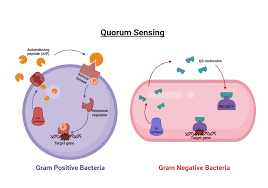
The phenomenon of bacterial communication, or “quorum sensing” could indeed be a game changer for medicine, by opening new avenues to develop anti-quorum sensing therapies instead of antibiotics.
- Quorum Sensing is a mechanism by which bacteria regulate gene expression in accordance with population density through the use of signal molecules.
- Quorum sensing allows bacteria populations to communicate and coordinate group behaviour and commonly is used by pathogens (disease-causing organisms) in disease and infection processes.
- Standard quorum-sensing pathways consist of bacteria populations, signal molecules, and behavioral genes.
- The signal molecules, known as autoinducers, are secreted into the environment by bacteria and gradually increase in concentration as the bacteria population grows.
- After reaching a certain concentration threshold, the molecules become detectable to bacteria populations, which then activate corresponding response genes that regulate various behaviours, such as virulence, horizontal gene transfer, biofilm formation, and competence (the ability to take up DNA).
- Since many of these processes are effective only at certain population sizes, quorum sensing is a key behaviour-coordination mechanism in many microbes.
- Although quorum sensing is common among bacteria, the precise sensing system and class of quorum-sensing compounds used may differ.
- In addition, the manner in which different types of bacteria apply quorum sensing varies
- For example, the bacterium Pseudomonas aeruginosa, which can cause pneumonia and blood infections, uses quorum sensing to regulate disease mechanisms.
- In other organisms, quorum sensing is used for symbiotic processes and cell growth; an example is the nitrogen-fixation mechanism of the bacterium Rhizobium leguminosarum.
Himalayan Tahr:
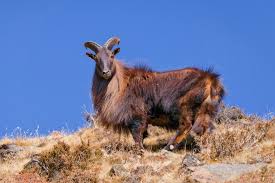
From alpine slopes to waste sites: Garbage is an emerging threat to the Himalayan Tahr in the Himalayas.
- It is a large hoofed mammal that lives in the Himalayas.
- Scientific Name: Hemitragus jemlahicus
- It is found in southern Tibet, northern India, western Bhutan, and Nepal.
- Their horns are different between males and females.
- Their bodies are perfect for the cold Himalayan weather. They have thick, reddish wool coats and thick undercoats.
- As an ungulate, the Himalayan tahr has an even number of toes. They can grip both smooth and rough surfaces.
- Conservation Status: IUCN Red List: Near Threatened.
National Medicinal Plants Board:

The National Medicinal Plants Board (NMPB), under the Ministry of Ayush organised a one-day Chintan Shivir at Vigyan Bhawan in New Delhi.
- It is working as a section of Ministry of AYUSH (Ayurveda, Yoga & Naturopathy, Unani, Siddha & Homoeopathy).
- Mandate to develop an appropriate mechanism for coordination between various ministries/ departments/ organizations in India and implements support policies/programs for overall growth of medicinal plants sector both at the Central /State and International level.
- Main objective is the development of medicinal plants sector through developing a strong coordination between various ministries/ departments/ organizations for implementation of policies / programs on medicinal plants.
- It focuses on in-situ & ex-situ conservation and augmenting local medicinal plants and aromatic species of medical significance.
- It also promotes research & development, capacity building through trainings, raising awareness through promotional activities like creation of Home/School herbal gardens.
- It encourages the protection of patent rights and IPR.
- Identification, Inventorisation and Quantification of medicinal plants is its function.
Sangtam community:

The apex body of Nagaland’s Sangtam community has passed a resolution to protect pangolins.
- The Sangtam tribe is a major tribe of Nagaland.
- There are six major clans amongst the Sangtams- Dhongru, Jingru, Langtidhongru/ Langkidhongru, Mungzaru, Anaru/Yingphidhongru and Rudidhongru clans.
- The common dialect of the Sangtams is known as Sangtamyu which is spoken by around 90% of the population.
- The Sangtam people traditionally practice jhum cultivation (shifting agriculture), which remains central to their livelihood.
- They follow a patriarchal system of lineage and inheritance as well.
- Festivals celebrated by Sangtams: Mongmong, Tsohsuh, Hünapungbi.
Asian Rifle/Pistol Championship 2026:
India delivered a dominant performance at the Asian Rifle/Pistol Championship 2026, held at the Dr Karni Singh Shooting Range, finishing at the top of the medal table with an impressive haul of 94 medals.The championship marked a successful outing for Indian shooters, showcasing strength in individual and team events.
India’s Medal Tally:
- 51 Gold
- 23 Silver
- 20 Bronze.
Indian Army to Host First International Military Adventure Challenge Cup (IMACC) 2026:
The Indian Army will host the first-ever International Military Adventure Challenge Cup (IMACC) 2026 from 18 to 23 February 2026 in the foothills of the Eastern Himalayas. The event aims to strengthen military cooperation and test soldiers’ endurance and operational capabilities in demanding terrain. According to the Ministry of Defence, IMACC 2026 will bring together military teams from India and friendly foreign nations for a week-long series of adventure and endurance-based competitions.Teams from seven friendly foreign countries will participate: Bhutan.Brazil, Kazakhstan, Kyrgyzstan, Nepal
, Sri Lanka, Saudi Arabia. Indian participants include teams from:Indian Army, Indian Air Force, Indian Coast Guard, Indo-Tibetan Border Police (ITBP)
Uday Kotak Appointed Chairman of GIFT City:
The Gujarat government has appointed Uday Kotak, founder of Kotak Mahindra Bank, as the new Chairman of GIFT City (Gujarat International Finance-Tec City), located in Gandhinagar.He replaces Hasmukh Adhia, who previously served as the non-executive chairman. The appointment order was issued by the Urban Development and Urban Housing Department of the Gujarat government.GIFT City is India’s first operational Smart City,India’s maiden International Financial Services Centre (IFSC). A flagship financial hub envisioned during Prime Minister Narendra Modi’s tenure as Gujarat Chief Minister
RBI Approves 3-Year Extension for Sanjay Agarwal as MD & CEO of AU Small Finance Bank:
AU Small Finance Bank has announced that the Reserve Bank of India (RBI) has approved the reappointment of Sanjay Agarwal as Managing Director (MD) and Chief Executive Officer (CEO) for a further period of three years. The new tenure will be effective from April 19, 2026.The RBI’s nod marks his third consecutive term after AU’s transition into a Small Finance Bank in 2017.



