
Today’s Current Affairs: 14th February 2026 for UPSC IAS exams, State PSC exams, SSC CGL, State SSC, RRB, Railways, Banking Exam & IBPS, etc
Table of Contents
AgriStack:
The Finance Minister announced the launch of Bharat-VISTAAR, a multilingual AI tool to integrate the AgriStack portals and the ICAR package on agricultural practices with AI systems.
- AgriStack is a Digital Public Infrastructure (DPI) for the farm sector.
- It is an initiative under the Digital Agriculture Mission (DAM).
It comprises three foundational registries or databases in the agriculture sector, all created and maintained by the State Governments or Union Territories. - Under the AgriStack, farmers are given digital identities (Farmer ID) which are linked dynamically to the State’s land records, livestock ownership, crops sown, demographic details, family details, schemes and benefits availed.
- Crop Sown Registry includes details on crops planted by farmers.
- This is recorded through mobile-based Digital Crop Surveys on the ground each season.
- Geo-referenced Village Maps data comprises geographic information of land records linked with their locations (latitudes and longitudes).
Ayushman Sahakar Scheme:
The Union Minister for Home and Cooperation informed the Rajya Sabha about the Ayushman sahakar scheme.
- It is a scheme of the National Cooperative Development Corporation for financial assistance to cooperatives on holistic healthcare infrastructure, education and services.
- Objectives of the Ayushman Sahakar Scheme:
- To assist provision of affordable and holistic healthcare through hospitals / healthcare / education facilities by cooperative societies,
- To assist promotion of AYUSH facilities by cooperative societies,
- To assist cooperative societies meet the objectives of National Health Policy,
- To assist cooperative societies participate in the National Digital Health Mission
- Features of Ayushman Sahakar Scheme:
- Eligibility: Any Cooperative Society registered under any State/ Multi State Cooperative Societies Act in the country, with suitable provision in the bye-laws to undertake services related to hospital/ healthcare/ health education.
- Loan Period: Up to 8 years, including 1 – 2 years moratorium on payment of principal, depending on the type of project and its ability to generate revenue.
- Incentive: 1 % interest rebate in case of borrower cooperative society where women members are in majority.
- Support the modernisation of cooperative healthcare facilities.
- Support the establishment of healthcare infrastructure
Vidyanjali Initiative:
The Union Minister of State for Education informed the Rajya Sabha that Vidyanjali initiative has on boarded over 8.5 lakh schools and 5 lakh volunteers.
- It was launched in 2021 in alignment with the National Education Policy 2020.
- It aims to strengthen government schools through community and private sector participation, enabling greater support for students’ holistic development and improved learning outcomes.
- It is an initiative of Department of School Education and Literacy, Ministry of Education, for facilitating the community and volunteers to directly connect with the government and government-aided schools to contribute their services and/or assets/ materials/equipments through a dedicated portal.
- The platform connects volunteers, alumni, institutions, civil society organisations and CSR partners directly with schools based on their identified needs.
- Salient features of the platform:
- Create an interface between volunteers and schools to bridge the gap between them
- Help school students in getting exposure other than academic activities
- Enable schools to share their activities for Volunteer-ship, where volunteers can participate by performing various activities
- Enable Ministry to view various reports like Schools on-boarded, Volunteers, Activities performed etc.
- Facilitate the participation of Citizens/Volunteers/Alumni’s to contribute services at schools and their management.
Idukki Hydroelectric Project:
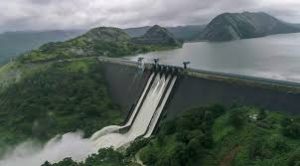
As the Idukki hydroelectric project, Kerala’s largest hydel power project, marks a historic 50-year milestone, the Moolamattom power plant has recorded a total generation of 115,852.672 million units (MU) over the past five decades.
- It is built across the Periyar River in the Idukki district of Kerala.
- It is the largest hydroelectric project in Kerala.
- The powerhouse at Moolamattom is the longest underground power station in India, and the pressure shaft is the largest in the country.
- There are three dams associated with this project. They are: Idukki Arch Dam, Cheruthoni Dam & Kulamavu Dam.
- The Idukki dam is one of the highest ten arch dams in the world and the third highest in India after the Tehri Dam (Uttarakhand) and Bhakra Nangal Dam (Himachal Pradesh).
- It is the first dam in Asia that is constructed in a double-curvature arch dam type and the second in the world.
What is a Mud Volcano?
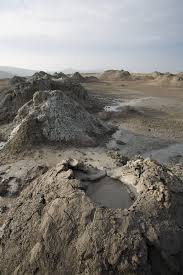
A mud volcano suddenly erupted in Diglipur, Andaman Islands, recently.
- It is a mound of mud heaved up through overlying sediments.
- The craters are usually shallow and may intermittently erupt mud.
- These eruptions continuously rebuild the cones, which are eroded relatively easily.
- Some mud volcanoes are created by hot-spring activity where large amounts of gas and small amounts of water react chemically with the surrounding rocks and form a boiling mud.
- Other mud volcanoes, entirely of a nonigneous origin, occur only in oil-field regions that are relatively young and have soft, unconsolidated formations.
- Mud volcanoes, also known as “sedimentary volcanoes” or “gas-oil volcanoes,”.
- Mud volcanoes also exist on the floor of the sea and can form islands and banks that alter the topography and shape of the coastline.
- In India, the only mud volcano lies in Baratang Island, a part of the Andaman chain of islands.
Kapilash Wildlife Sanctuary:

The standing committee of the National Board for Wildlife (NBWL) recently gave its nod for the use of 4.68 hectares of forest land from the Kapilash wildlife sanctuary for the much-awaited 111 km six-lane capital region ring road (CRRR) project to pass.
- It is located in the Dhenkanal district of Odisha.
- It is classified as an Eastern Highlands moist deciduous forest
- It is dominated by sal trees and a rich variety of flora like amla, teak, and kadamba
- It is home to diverse wildlife, including elephants, jungle cats, sloth bears, spotted deer, jackals, and various species of birds such as peacocks, junglefowl, and kingfishers.
- It also supports several reptiles and unique species like pangolins and porcupines.
Science Based Targets initiative (SBTi):
India has the scale and momentum to influence how global business responds to climate risk, top executives of the Science Based Targets initiative (SBTI) said recently.
- It is a corporate climate action organization that enables companies and financial institutions worldwide to play their part in combating the climate crisis.
- Mission: To drive science-based climate action in the corporate sector consistent with limiting warming to 1.5°C.
- SBTi develops standards, tools, and guidance which allow companies to set GHG emissions reduction targets.
- The SBTi validates companies’ targets and assists other industry leaders in creating the best practice for their organisations with targets in line with the Paris Agreement.
- The SBTi was formed as a collaboration between the World Resources Institute, CDP, the United Nations Global Compact, and the World Wide Fund for Nature (WWF).
- The SBTi also helps companies and financial institutions worldwide to improve their risk management, attract investors, gain a competitive advantage, and become leaders in sustainability.
Valley of the Kings:
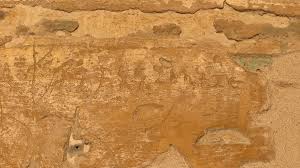
Two researchers recently identified close to 30 inscriptions in Tamil Brahmi, Prakrit and Sanskrit at tombs in the Valley of the Kings in Egypt.
- It was the burial site of pharaohs, or kings, of ancient Egypt.
- It was part of the ancient city of Thebes.
- These pharaohs ruled from 1539 to 1077 BC, during the period of Egyptian history known as the New Kingdom.
- The tombs in the Valley of the Kings were carved into rocky hillsides with only a doorway marking their location.
- In 1979 UNESCO made the Valley of the Kings part of the World Heritage site of ancient Thebes.
Continental Mantle Earthquakes:

Recently the Stanford researchers have produced the first global map of a rare type of earthquake i. e Continental mantle earthquakes.
- These are seismic events which originate in the mantle beneath continents.
- These earthquakes often occur more than 80 km below the Mohorovicic discontinuity (boundary between the crust and the mantle).
- They are too deep to cause much shaking or danger at Earth’s surface.
- They occur worldwide but are regionally clustered, particularly beneath the Himalayas in southern Asia and the Bering Strait between Asia and North America.
- The new map will help scientists learn more about the mechanics of mantle earthquakes.
- Mohorovicic discontinuity is the boundary lying between the crust and the mantle of the earth across which seismic waves change velocities.
Rashtriya Karmayogi Large Scale Jan Seva Programme:
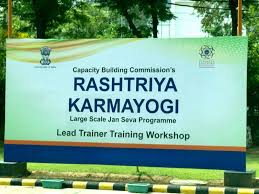
The Ministry of Personnel, Public Grievances and Pensions said that 10.5 lakh govt servants trained under Rashtriya Karmayogi Large Scale Jan Seva Programme.
- It is a national behavioural transformation initiative for civil servants.
- It is launched by the Capacity Building Commission (CBC).
- It was designed to emphasize upon the deeper sense of Seva Bhav (spirit of service) and Svadharma (duty aligned with personal purpose) among Government servants, with the objective of strengthening citizen-centric governance.
- It is focused on improving quality of service delivery, enhancing responsiveness and collaboration across governance structures, and fostering greater engagement and satisfaction among officers.
- Capacity Building Commission is the executive body of the Mission Karmayogi framework, to drive civil service reforms through capacity building and competency-based learning.
- It works to strengthen the human resource foundations of the government by focusing on developing individual and institutional capacities, promoting citizen-centric governance, future readiness.
- It fosters a culture of lifelong learning across all levels of public administration.
- The Commission designs frameworks, sets standards, and encourages collaboration to make governance more transparent, accountable, citizen-centric, and future-ready.
Consumer Price Index (CPI) Base 2024=100:
MoSPI has released the first CPI (Base 2024=100) press note on 12 Feb 2026, reporting Jan 2026 retail inflation at 2.75%.Consumer Price Index (CPI) measures the change in retail prices of a fixed basket of goods and services consumed by households, and is India’s headline retail inflation indicator (YoY % change in CPI).Published by: Ministry of Statistics & Programme Implementation (MoSPI) through NSO (National Statistical Office). Price collection is done by the Field Operations Division (NSO).Weights source: Household Consumption Expenditure Survey (HCES) 2023–24.
Base year:
New base: 2024 = 100
Earlier base: 2012 = 100
Privilege Notice:
The Union Government has announced that it will move a Privilege Notice against Leader of Opposition for allegedly making baseless and misleading statements during the Budget discussion in the Lok Sabha.A Privilege Notice is a formal complaint raised by a Member of Parliament (MP) alleging that a breach of privilege or contempt of the House has occurred.Parliamentary privilege refers to certain special rights and immunities enjoyed by Parliament and its members to ensure they can perform their duties without obstruction or intimidation.If these rights are violated, it may amount to a breach of privilege and can be punished by the House.
Articles Associated:
Article 105 – Powers, privileges and immunities of Parliament and its Members (for Parliament).
Article 194 – Similar provisions for State Legislatures.
Article 122 – Courts cannot question the validity of parliamentary proceedings on grounds of procedural irregularity.
Article 105(2) provides immunity to MPs for anything said or any vote given in Parliament.
Tangkhul Hui and Kombai to be added to Assam Rifles dog squad:
Assam Rifles is planning to induct two indigenous dog breeds—Tangkhul Hui (Manipur) and Kombai (Tamil Nadu) into its dog squad, aiming to reduce dependence on foreign breeds over the long term.Assam Rifles (India’s oldest paramilitary force) runs a dedicated Assam Rifles Dog Training Centre (ARDTC), Jorhat, where trained dogs support operations as:Trackers follow human or animal trails across difficult terrain during operations,Guard dogs provide security to camps, convoys, and border posts, Detection dogs assist in identifying hidden arms, explosives, or narcotics.Tangkhul Hui (Haofa) is an indigenous working dog traditionally raised by the Tangkhul people in Ukhrul district (Manipur), historically used for hunting.The Tangkhul Hui breed has already been part of a pilot project since 2022, with six dogs already trained and deployed in narcotics detection.Kombai is a strong, indigenous working dog from Tamil Nadu (Theni district; named after Kombai town), traditionally kept for guarding and protection and sometimes used for hunting.The Kombai breed has not been added yet; the first batch (2 males, 8 females) is scheduled for induction in April 2026. Full integration of both breeds is expected by March 2027.
Dornier 228 Aircraft:
The Ministry of Defence has signed a ₹2,312 crore contract with Hindustan Aeronautics Limited (HAL) to procure eight Dornier 228 aircraft for the Indian Coast Guard.The Dornier 228 is a twin-engine, turboprop Short Take-Off and Landing (STOL) utility aircraft designed for passenger, cargo, and special mission operations. It is widely used for maritime patrol, border surveillance, search and rescue, and transport roles.Manufactured By: Originally developed by Dornier GmbH (Germany) in the early 1980s.License-produced and currently manufactured in India by Hindustan Aeronautics Limited at its Kanpur facility.
Seva Teerth:
Prime Minister Narendra Modi inaugurated Seva Teerth in New Delhi on February 13, 2026, marking a major milestone in India’s administrative reforms. The newly built complex now houses the Prime Minister’s Office (PMO), the National Security Council Secretariat (NSCS), and the Cabinet Secretariat under one roof. The government stated that Seva Teerth represents a modern, efficient, and citizen-centric governance ecosystem designed to streamline top-level administration.Seva Teerth is a newly developed administrative complex in Delhi that centralises key government offices. Earlier, the PMO, NSCS, and Cabinet Secretariat were located in separate buildings across different locations.
Sthree Suraksha Scheme : Kerala
Kerala Chief Minister Pinarayi Vijayan officially launched the Sthree Suraksha Scheme on February 11, 2026, providing a monthly pension of ₹1,000 to economically backward women and transwomen. The first month’s pension was credited to 10,18,042 beneficiaries whose applications were verified and approved. The scheme aims to support unemployed and financially vulnerable women aged 35 to 60 years who are not receiving benefits from any other social welfare pension programme. The launch ceremony was held at Malayinkeezhu in Thiruvananthapuram.The Sthree Suraksha Scheme is designed to ensure economic independence and dignity. The assistance is directly transferred to beneficiaries’ bank accounts after detailed scrutiny of applications.
It includes:
₹1,000 monthly pension
Target group: Economically backward women and transwomen
Age group: 35–60 years
First phase beneficiaries: 10,18,042
Direct Benefit Transfer (DBT) model
India Hosts First BRICS Sherpas Meeting 2026:
India formally began its BRICS Chairship 2026 by hosting the first meeting of BRICS Sherpas and Sous Sherpas in New Delhi from February 9-10, 2026. The meeting marked the start of a year-long engagement under India’s leadership, guided by the theme “Building for Resilience, Innovation, Cooperation and Sustainability.” The discussions set the roadmap for cooperation across economic, security, climate and people-centric tracks.The meeting was chaired by Sudhakar Dalela, India’s BRICS Sherpa and Secretary (Economic Relations), supported by Shambhu L. Hakki, India’s BRICS Sous Sherpa.Representatives from all BRICS members and partner countries participated, including, Brazil,China,Egypt,Ethiopia,Indonesia,Iran,Russia,Saudi,Arabia,South Africa,UAE



