
Today’s Current Affairs: 15th April 2026 for UPSC IAS exams, State PSC exams, SSC CGL, State SSC, RRB, Railways, Banking Exam & IBPS, etc
Table of Contents
Lake Neuchatel:
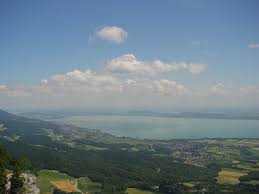
In an amazing find for archaeology, over 1,000 Roman artefacts have been recently uncovered in Lake Neuchâtel in Switzerland, offering an insight into life at the time of the Roman Empire.
- It is the largest lake entirely within Switzerland.
- It is nestled at the foot of the Jura Mountains.
- It was formed during the last Ice Age.
- The Thiele River enters at its southwestern end and issues from it at its northeastern end. The lake also receives the Areuse and Broye rivers.
- The northwestern shore (Neuchatel canton) is the most thickly settled, and the slopes are covered with vineyards.
- On the north shore is La Tene, famous for prehistoric finds, which gives its name to the late Iron Age culture.
Baisakhi Festival:
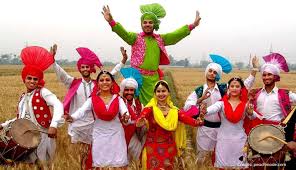
The festival of Baisakhi is being celebrated in Punjab with devotion, enthusiasm and brotherhood.
- Baisakhi, also known as Vaisakhi, is the popular spring harvest festival which is celebrated in Northern India, especially by the Sikh/Punjabi community.
- It is traditionally observed on the first day of the month of Vaishakha in the Hindu solar calendar, which falls in April.
- The annual festival is observed on April 13 or 14. It marks the Sikh New Year.
- It is primarily a harvest festival, where farmers express gratitude for a good crop yield. It symbolizes prosperity, hard work, and new beginnings.
- It holds special importance for the Sikh community, as in 1699, the foundation of the ‘Khalsa Panth’ or the ‘order of the free/pure ones’ was laid down on Baisakhi by the tenth Guru of Sikhism, Guru Gobind Singh.
- The Khalsa was founded by him at Anandpur Sahib, Punjab, in front of thousands.
- However, as it coincides with the Hindu New Year for many communities that follow the solar calendar, variations of the festival are observed in other regions across India. For instance, we will find Baisakhi being celebrated as
- Pohela/Poila Boishakh or Nobo Borsho as the Bengali New Year
- Vishu marking the end of the spring equinox in Kerala
- Bohag Bihu in Assam
- Puthandu as the Tamil New Year
- Vaishakha in honor of Surya, the Sun God in Bihar.
Arachnids : Study

A fossil harvestman identified using advanced imaging techniques shows that extinct arachnid lineages once lived in Europe.
- Arachnids are chelicerates, one of the five groups of the phylum Arthropoda, which loosely means ‘jointed foot’.
- These arthropods are primarily carnivorous, wingless, and have 8 legs.
- Like all arthropods, arachnids have segmented bodies, tough exoskeletons, and jointed appendages.
- Comprising around 100,000 species, there are more arachnids than all vertebrate animals (e.g., mammals, birds, fish, reptiles, and amphibians) combined.
- They encompass various orders, including spiders, scorpions, ticks, and mites, making arachnids prevalent in terrestrial habitats across all continents, with some found in freshwater environments.
- They are notable for their anatomical adaptations, such as specialized mouthparts for prey capture and unique respiratory structures, like book lungs and tracheal tubes.
- Arachnids lack jaws and, with only a few exceptions, inject digestive fluids into their prey before sucking its liquefied remains into their mouths.
- They exhibit various lifestyles, including free-living, predatory, and parasitic
- Noteworthy members include highly venomous species, such as the black widow spider and certain scorpions, which can pose risks to humans.
- At a glance, insects and arachnids are easy to mistake for one another. The two easy-to-spot differences between the two are:
- Body segments: While arachnids have two body segments, insects have three body segments.
- Number of legs: Insects have six legs compared to arachnids’ eight legs.
Bankey Bihari Temple:
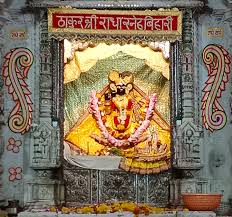
The Supreme Court recently made it clear that it would not make “any structural changes” to the present arrangement with regard to religious practices at the famous Bankey Bihari temple in Vrindavan.
- It is a Hindu temple dedicated to Lord Krishna.
- It is located in the holy city of Vrindavan in the Mathura District of Uttar Pradesh.
- At this temple, the primary deity is presented in the ‘tribhanga’ posture, gracefully tilted at three angles. This distinctive pose, where Lord Krishna is bent at three places, earns Him the beloved name “Banke.”
- It was established by Swami Haridas, a guru of the famous singer Tansen.
- This is one of the highly regarded shrines, and is one out of the seven temples of ‘Thakur of Vrindavan’, along with Shri Govind Dev Ji, Sri Radhavallabh Ji, and four others.
- The present temple complex housing ‘Banke Bihari’ was constructed in 1864 and is a unique example of Indian craftsmanship.
- Architecture of the temple is influenced by the Rajasthani style, with arches and pillars adding to its magnificence.
- In this temple, from the walls to the ceiling, the pictures of the deities have been painted through oil paintings.
- One unique feature of the Banke Bihari temple is that there are no bells or conchs on the premises.
- In the freedom struggle, this temple was the main center of revolutionary activities; from here, the revolutionary newspaper “Bundelkhand Kesari” was published secretly.
Bonus Issue : LIC
India’s largest insurer, Life Insurance Corporation of India, recently announced the first ever bonus issue.
- A bonus issue, also known as a scrip issue or a capitalization issue, occurs when a company listed on a stock exchange decides to offer free additional shares to the existing shareholders.
- The company decides the number of bonus shares to be allotted to every individual investor for holding a certain number of shares over a set period of time and accordingly rewards them.
- For example:
- In a 2:1 bonus issue, you get two extra shares for every one share you already own.
- If you had 10 shares, after the bonus, you’ll hold 30 shares.
- However, the share price will drop proportionally so that your total investment remains the same.
- This bonus issue aims to attract further investment and reward its existing shareholders as it improves the entity’s market image.
- A bonus issue of shares will increase a company’s share capital but not its market capitalisation.
- Market capitalisation is calculated by multiplying the company’s current stock price and the total number of outstanding shares. Share capital is the amount that the company raises by issuing shares.
- By issuing bonus shares, the number of outstanding shares increases with a proportional decrease in the value of each share, ensuring no change in the market capitalization. However, the face value of the shares remains unchanged.
- Bonus shares do not dilute shareholders’ equity because they are issued in a constant ratio that keeps the relative equity of each shareholder the same as before the issue.
- The important thing to note is that companies issue bonus shares from their reserves or retained profits. Instead of paying out cash, they convert their saved earnings into shares and distribute them among shareholders.
- The issuance of bonus shares is not taxable; however, shareholders must still pay capital gains tax if they sell them for a net gain.
Stock Split:
- A stock split is an action taken in which a company divides its existing shares into multiple shares to boost the liquidity of shares.
- A split is usually undertaken when the stock price is high, making it pricey for investors to acquire.
- It brings down the share price as the number of shares increases.
- The market cap of the firm and the value of each shareholder’s investment stay unchanged after a stock split.
Cyrtodactylus raimonaensis:

New species of bent-toed gecko has been discovered in Assam and reseaechers named it as “Cyrtodactylus raimonaensis”.
- It is a species of bent-toed gecko.
- It belongs to the Cyrtodactylus genus which is amongst the largest groups of geckos worldwide.
- It has been found near Raimona National Park in Kokrajhar district, Assam and named after the park itself.
Raimona National Park:
- It is located in the north-western part of Assam.
- It lies along the India-Bhutan border and is situated at the foothills of the Eastern Himalayas.
- It is connected with Phibsoo Wildlife Sanctuary and Jigme Singye Wangchuck National Park.
- The Sankosh River flows along the western boundary.
- The Saralbhanga River lies on the eastern side.
- Pekua River forms the southern boundary.
- Moist Sal forests, Sub-Himalayan semi-evergreen forests, Moist mixed deciduous forests, Savannah forests.
- Flora: Many orchid species and Riverine grasslands
- It is famous for the Golden Langur, Asian Elephant and Bengal Tiger
Millipede:

A recent study has revealed the self-cleaning mechanism similar to the famous ‘lotus effect’ (the natural self-cleaning property of lotus leaves) to stay clean by green pill millipede, a species endemic to the Western Ghats.
- Millipedes are cylindrical or slightly flattened invertebrates.
- They constitute the class Diplopoda within the subphylum Myriapoda.
- The name ‘millipede’ derives from the Latin words ‘mille’, meaning thousand, and ‘pes’, meaning foot.
- They are slow-moving arthropods having long, segmented bodies, with most segments bearing two pairs of legs attached to the underside of the body.
- Their exoskeleton is typically brown to black in color, and thus, they can easily remain camouflaged in the soil
- Their highest diversity is found in the tropical region, where they inhabit moist microhabitats on the forest floor, including leaf litter, dead wood, and soil.
- These arthropods are found on all continents except Antarctica.
Features: - They lack speed or the ability to bite or sting, their primary defensive mechanism is curling into a coil, exposing their protective exoskeleton to the predator.
- Most species are typically detritivores, feeding on rotting leaves, wood, and other decomposing plant debris.
- They act as decomposers, conserving soil erosion and nutrient cycling, and are among the greatest vital foliage litter creatures.
e-SafeHER Initiative:
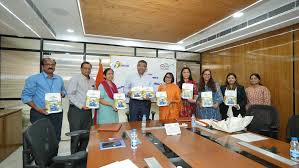
The e-SafeHER Cyber Security Awareness Programme was launched to enable one million women in rural India to safely participate in the digital ecosystem strengthening inclusive and secure digital access.
- It is a cybersecurity training initiative aimed at building a gender-responsive, community-led model of digital safety and inclusion, particularly targeting rural women.
- Anchored under the Ministry of Electronics and Information Technology’s Information Security Education and Awareness (ISEA) Programme, it is implemented by the Centre for Development of Advanced Computing (C-DAC) in partnership with Reliance Foundation.
- Objective is to develop “Cyber Sakhis”, trained women who promote safe digital practices, cybersecurity awareness, and confidence in online transactions within their communities.
- The initiative aims to reach one million women over three years, with phased scaling up to 2029 through multi-stakeholder partnerships.
- It follows a community-based, peer-led approach through women’s Self-Help Groups (SHGs), focusing on last-mile cybersecurity awareness and digital empowerment.
- The programme will begin in Madhya Pradesh and Odisha and expand nationwide in a phased manner.
- Designed for scalability and sustainability, the initiative integrates cybersecurity awareness into existing women empowerment and digital literacy programmes, ensuring continuity without parallel infrastructure.
- It is expected to enhance cyber risk awareness, promote safe digital transactions, and strengthen digital confidence among rural women.
9th Indian Ocean Conference:

At the 9th Indian Ocean Conference in Mauritius, India reaffirmed its firm opposition to the targeting of civilians, infrastructure, and commercial shipping amid the escalating 2026 West Asia conflict, while calling for de-escalation and stability.
- No delegate attended from the Maldives, as diplomatic ties between Mauritius and the Maldives have been suspended over territorial differences related to the Chagos Islands.
- Meanwhile, Bangladesh emphasized the need to “revitalise SAARC” to strengthen regional cooperation.
- Impact on the Indian Ocean Region (IOR): India highlighted the severe economic implications of the West Asia conflict on energy security, trade, and fertilizer supply chains across the IOR, stressing the absolute necessity of maintaining safe and unimpeded maritime navigation.
- India-Mauritius Energy Pact: To safeguard against regional volatility, India is finalizing an agreement to supply oil and gas to Mauritius, strategically bolstering the island nation’s energy security.
- Indian Ocean Conference: It was launched in 2016 by the India Foundation in collaboration with regional think tanks and has grown into a key consultative platform with participation from over 40 countries.
- It serves as a flagship forum for discussing regional affairs in the IOR and promotes cooperation under the vision of Security and Growth for All in the Region (SAGAR).
- Indian Ocean Region (IOR): It is a vast maritime region spanning over 70 million sq. km, stretching from Africa to Australia and covering nearly 20% of the world’s water surface.
- It is a vital global trade hub where half of the world’s container ships, one-third of bulk cargo, and two-thirds of oil shipments pass through.
- The region connects 35+ littoral states and is home to nearly 40% of the global population, highlighting its immense strategic and economic significance.
- India plays a critical role in the IOR as a net security provider and primary stabilizing force, driven by the SAGAR (Security and Growth for All in the Region) vision.
Government Notifies Startup India FoF 2.0:
The government notified Startup India Fund of Funds (FoF) 2.0 with a ₹10,000 crore corpus to mobilise capital for startups and strengthen India’s innovation ecosystem.
- It builds on the earlier Fund of Funds for Startups (FFS 1.0, 2016) under the Startup India Action Plan to address funding gaps.
- Objective is to catalyse domestic capital and support startups across key sectors, especially where private funding remains limited.
- The fund will invest in SEBI-registered Alternative Investment Funds (AIFs), which in turn invest in startups.
- It follows a segmented approach focusing on deep tech, early-stage, innovative manufacturing, and technology-driven startups.
- It also provides higher contribution for capital-intensive sectors and flexibility for larger corpus and longer-duration AIFs.
- SIDBI (Small Industries Development Bank of India) will operationalise the scheme with provision for an additional implementing agency.
- Selection of AIFs will be undertaken by a Venture Capital Investment Committee (VCIC), with monitoring and oversight by an Empowered Committee (EC).
- Investments will be spread across 16th and 17th Finance Commission cycles.
- The scheme acts as an umbrella framework for co-investment by government and institutional investors, and includes provisions for ecosystem support such as capacity building, mentorship, and regulatory assistance.
Deposit Tokens and Asset Tokenisation:

As global finance rapidly shifts toward programmable, always-on settlement systems, discussions have emerged on how India can safely modernize its banking sector, highlighting deposit tokens and real-world asset tokenisation as the next evolutionary steps beyond its successful digital public infrastructure (like UPI).
- These are digital representations of bank deposits issued on permissioned blockchain networks, fully backed by traditional deposits and subject to regulation, enabling real-time settlement, programmability, and no additional credit risk.
- Unlike private cryptocurrencies, deposit tokens are direct claims on a bank’s balance sheet.
- They extend the regulated banking framework into a programmable digital layer, enabling near-instant settlement, atomic delivery versus payment (DvP), and automated reconciliation without introducing new credit or liquidity risks.
- For Indian banks, the adoption of deposit tokens means interbank settlements, treasury operations, and large-value corporate payments can transition from delayed batch-based processes to real-time, instantaneous rails.
- It also promises to make cross-border transactions faster, cheaper, and more transparent.
- It involves converting real-world assets like real estate, gold, and infrastructure into digital tokens.
- It addresses India’s liquidity constraints by allowing traditionally illiquid assets to be fractionalised, transferred, and used efficiently as collateral.
- When tokenised assets are paired with bank-issued deposit tokens, trades can settle instantly in regulated digital money.
- This drastically reduces counterparty risk, lowers operational costs, and broadens market participation under clear regulatory guardrails.
- Currently, many tokenisation initiatives are confined to regulatory sandboxes.
- To scale this, India urgently needs regulatory clarity around foreign exchange (Forex) laws, Anti-Money Laundering (AML), KYC norms, and cross-jurisdictional compliance for blockchain-based instruments.
- By proactively establishing frameworks for regulated digital money, especially for trade finance and institutional settlements, India has the strategic opportunity to shape global standards.
- Delaying this transition risks capital and innovation migrating to other, more technologically integrated jurisdictions.
Birth Anniversary of Dr. Bhimrao Ramji Ambedkar:
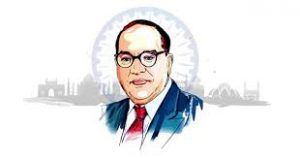
On 14th April 2026, the nation celebrates the 135th Birth Anniversary of Dr. Bhimrao Ramji Ambedkar, the chief architect of the Indian Constitution, a pioneering social reformer, an eminent jurist, and a towering intellectual who dedicated his life to the eradication of social inequality in India.
- Dr. B.R. Ambedkar born on 14th April 1891, in Mhow, Central Provinces (now Madhya Pradesh), into the Mahar caste. He faced severe socio-economic discrimination from a young age.
- He was a brilliant scholar, earning doctorates in economics from both Columbia University (USA) and the London School of Economics (UK).
- He served as the First Law Minister of Independent India and was the Chairman of the Drafting Committee of the Constituent Assembly.
- Dr. B. R. Ambedkar founded key organizations such as the Bahishkrit Hitakarini Sabha (1924) for socio-economic upliftment of depressed classes, the Independent Labour Party (1936) for workers’ rights, and the Scheduled Castes Federation (1942) to advocate for Dalit rights.
- He also used print media through journals like Mooknayak (1920), Bahishkrit Bharat (1927), Samatha (1929), and Janata (1930) to spread social awareness.
- His major works, including Annihilation of Caste (1936), The Untouchables (1948), Buddha or Karl Marx (1956), and The Buddha and His Dhamma (1957), remain foundational texts on social justice and equality.
- Posthumous Honor: He was awarded India’s highest civilian honor, the Bharat Ratna, in 1990.
- He led the Mahad Satyagraha to assert the rights of the untouchables to draw water from the public Chavdar tank in Mahad, Maharashtra.
- He actively led movements advocating for the right of marginalized castes to enter Hindu temples (e.g., Kalaram Temple entry movement, 1930).
- Poona Pact (1932): Following Mahatma Gandhi’s fast unto death against the Communal Award (which granted separate electorates for depressed classes), Ambedkar signed the Poona Pact, securing reserved seats for the depressed classes within the general Hindu electorate.
- As Chairman of the Drafting Committee, he ensured that the Constitution incorporated robust safeguards for minorities, marginalized sections, and women.
- Ambedkar believed India’s foundation should rest on liberty, equality, and fraternity, inspired by the French Revolution (1789-1799).
- Article 32: He famously called Article 32 (Right to Constitutional Remedies) the “heart and soul” of the Indian Constitution.
- The conceptual framework for the Reserve Bank of India (RBI) was based on the guidelines presented by him to the Hilton Young Commission, derived from his book “The Problem of the Rupee: Its Origin and Its Solution.”
- As the Labour Member of the Viceroy’s Executive Council, he introduced significant reforms including the reduction of factory working hours (from 14 to 8 hours), equal pay for equal work irrespective of gender, and maternity benefits.
- He introduced the Hindu Code Bill in the Parliament to grant women equal rights in inheritance, marriage, and divorce.
- When the bill was stalled due to orthodox opposition, he resigned from his post as the Law Minister in 1951.
- Navayana (New Vehicle) Buddhism, founded by B.R. Ambedkar in 1956, is a reinterpretation of Buddhism that emphasizes social equality and class struggle over traditional spiritual doctrines.
- It rejects core Buddhist doctrines like the Four Noble Truths, karma, rebirth, nirvana, and monasticism, considering them pessimistic and irrelevant to social justice.
- Dhammachakra Pravartan Din is observed annually on 14th October to commemorate the historic mass conversion of B. R. Ambedkar and his followers to Buddhism at Deekshabhoomi, Nagpur, in 1956.
10 Years of the Unified Payments Interface:
India marked the 10th anniversary of the Unified Payments Interface (UPI), highlighting its journey from a nascent platform in 2016 to a global digital payments leader in 2026. It has transformed India “from queues to QR codes (Quick Response codes),” emerging as the backbone of the country’s digital financial ecosystem.UPI in 10 years has transformed India’s digital economy by enabling fast, low-cost, and inclusive payments, driving financial inclusion, formalization, and global leadership in real-time transactions.However, challenges like cyber fraud, market concentration, infrastructure strain, and micro-debt risks require stronger regulation, financial literacy, and sustainable ecosystem reforms.UPI is an advanced version of Immediate Payment Service (IMPS). It is a round-the-clock real-time payment system that facilitates inter-bank peer-to-peer (P2P) and person-to-merchant (P2M) transactions.It was developed by the National Payments Corporation of India (NPCI), an umbrella organization for operating retail payments and settlement systems, initiated by the Reserve Bank of India (RBI) and the Indian Banks’ Association (IBA).
Komorebi:
The Japanese word Komorebi has recently gone viral globally, trending across social media platforms for its poetic expression of sunlight filtering through tree leaves.Komorebi is a beautiful Japanese word that refers to the dappled sunlight that passes through the leaves and branches of trees. It is not merely a visual description, but also captures the emotional calm, serenity, and reflective mood associated with such a moment.It reflects the close relationship between language and natural surroundings in Japanese culture.There is no exact English equivalent, making it an example of a culturally rich untranslatable word.It is increasingly associated with slow living, calmness, aesthetic minimalism, and emotional healing.
India’s retail inflation rises to 3.4% in March 2026 : NSO
India’s retail inflation edged up to 3.4% in the Month of the March 2026 which compared to 3.21% in February. This data are released by the the National Statistics Office (NSO). The increase in the inflation is moderate but reflects the rising prices of key food items and the external global pressures. The new numbers are based on the new CPI series with base year as 2024 and offered the insights on consumer price trends.
Samrat Choudhary to take oath as Bihar CM:
Nitish Kumar Chief Minister of Bihar have resigned from the post on the 14th April , 2026. This resignation marks the important political turnout in the state history. After serving as the Chief Minister for over the two decades his departure signal the end of the era in Bihar politics. With this new transition to be formed in Bihar as the Current Deputy CM Samrat Choudhary will take oath as the New Bihar Chief Minister.Current Deputy CM of the State Samrat Choudhary will be the new CM of the State. As of now the BJP have elected the leader of the legislature house and it marks the historic shift as the State of Bihar will get first CM of the BJP. With the support of MLAs the coalition will claim to form the new government in the upcoming days.
Susan Coyle appointed first female Army Chief of Australian Defence Force:
Australia has appointed the Susan Coyle as the first-ever female Army Chief. This announcement was made in the month of the April, 2026. She will officially take the charge in the July 2026. The historic move comes at the Australian Defense Force (ADF) as it undergoes into the leadership reshuffle and it seeks to address the long-standing issues related to the gender representation.Lieutenant General Susan Coyle brings the decades of experience to her new role. She is currently serving as the Chief of Joint Capabilities. She has held the multiple senior command positions since the joining the army in 1987.



