
Today’s Current Affairs: 21st April 2026 for UPSC IAS exams, State PSC exams, SSC CGL, State SSC, RRB, Railways, Banking Exam & IBPS, etc
Table of Contents
International Air Transport Association:

As per IATA’s Global Feedstock Assessment for SAF Production Outlook to 2050, India, U.S., Brazil and Europe were likely to dominate Sustainable Aviation Fuel (SAF) biomass feedstock for SAF with 105 million tonne (mt) available by 2030 and 154 mt by 2050 out of a total requirement of 500 mt.
- It is the global trade association of airlines (for both freight and passenger carriers) that regulates the aviation industry by developing standards, procedures, and practices.
- It was founded in Havana, Cuba, on 19 April 1945.
- It is the successor to the International Air Traffic Association, founded in the Hague in 1919.
- It was created with the goal of promoting cooperation among airlines, as well as facilitating the development of regulations and procedures that ensure the safety, efficiency, and sustainability of air transport.
- Although the formal regulation of international civil aviation is the responsibility of bodies such as the International Civil Aviation Organization (ICAO), IATA acts primarily as an industry association that develops operational standards and best practices widely adopted by airlines and logistics operators.
- In practice, its activity focuses on three main areas:
- Standardization of processes and documentation used in international air transport.
- Development of technical regulations for the transport of goods, especially in sensitive areas such as dangerous goods or perishable products.
- Financial cooperation and settlement systems that enable airlines to operate global transportation networks.
- At its founding, IATA had 57 members from 31 nations, mostly in Europe and North America.
- Presently, it has airline members in 126 countries and territories, comprising around 82 percent of total air traffic.
- Head Office: Montreal, Canada.
Umiam Lake:

The Meghalaya government recently announced that Lumpongdeng Island in the middle of Umiam Lake will be kept out of the proposed luxury resort project, following protests and concerns raised by local stakeholders.
- Umiam Lake, also known as Barapani Lake, is a man-made reservoir in Meghalaya.
- It is encircled by East Khasi hills.
- It was created in 1965 as part of the Umiam Umtru Hydroelectric Power Project, which was the first hydroelectric project in Northeast India.
- The project was initiated by the Assam State Electricity Board (ASEB) with the assistance of the Government of India and the Canadian International Development Agency (CIDA).
- The project involved the construction of a dam across the Umiam River, which is a tributary of the Brahmaputra
- The confluence of the two streams, Umkhrah and Umshvrpi, forms the Wah Ro-ro stream in the northwest of the town and joins River Umiam, the main source of water for the lake.
- It is a popular venue for the water sport and adventure facilities.
Scarlet Fever:
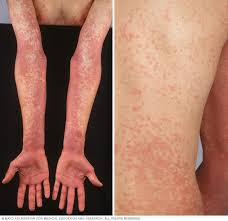
A DNA analysis of pathogens from a pre-Hispanic mummy revealed that the bacterium that causes scarlet fever and strep throat was present in the Americas prior to European colonization.
- Scarlet fever, also known as scarlatina, is a bacterial infection caused by group A streptococci bacteria — the same type of bacteria that cause ‘strep throat’, skin infections (impetigo), wound infections, and rheumatic fever.
- It is most common in children 5 to 15 years of age.
- If left untreated, scarlet fever can result in more-serious conditions that affect the heart, kidneys, and other parts of the body.
- The bacteria that cause scarlet fever are contagious (spread from person to person).
- People who are infected can easily spread it by coughing or sneezing, which sends tiny droplets that contain the bacteria into the air.
- People can get scarlet fever more than once.
- There is no vaccine to prevent scarlet fever.
- It is treated with antibiotics (usually penicillin).
- The fever will usually subside within 24 hours of starting antibiotics, but it is important to take the whole course to completely clear the germs from your throat.
Salween River:
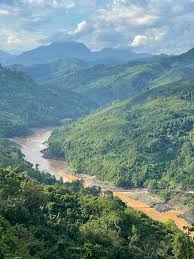
Recent discoveries have indicated severe arsenic pollution along the Salween River, with unregulated mines in Myanmar, especially Shan State, being the prime suspects.
- The Salween River, also known as the Nu River in China and Thanlwin River in Myanmar, is a transboundary river in Asia, shared by China, Thailand, and Myanmar.
- It is the longest undammed/free-flowing river in mainland Southeast Asia.
- The Salween River originates in the Tibetan range of the eastern Himalayas.
- The river passes through western Yunnan, China, Myanmar, and then forms the border between Myanmar and Thailand before it turns west and drains into the Gulf of Martaban in the Andaman Sea.
- The upstream portion of the Salween flows in parallel with two of Asia’s mightiest rivers, the Mekong and the Yangtze.
- The location where three gorges carved by these rivers come together – the Three Parallel Rivers of Yunnan – was designated as a World Heritage Site by the UN in 2003.
- Since Salween flows primarily through rugged terrain with dangerous rapids along its course, only small parts of the river are navigable by large water vessels.
- Its major economic use is in floating teak logs from the forests of southeastern Myanmar to the sea.
- Some of the major ethnic groups in the region include the Shan, Karen (or Kayin), Karenni (or Kayah), Wa, Lisu, Lahu, Kokang, Akha, and Hmong.
R-37M Missile:
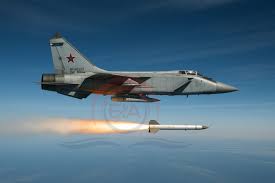
In a major development for India’s air superiority, Moscow recently greenlit the sale of its formidable R-37M ultra-long-range air-to-air missile to New Delhi.
- The R-37M missile, known by its NATO reporting name AA-13 Axehead, is a long-range air-to-air missile developed by Russia.
- It is designed to eliminate enemy fighter jets and drones beyond visual range (BVR).
- People often call the R-37M an “AWACS Killer” because it can go after large and important enemy aircraft. These include radar planes like AWACS, refuelling tankers, and even jamming aircraft that help enemy fighters.
- Indian engineers expect the missile to fit smoothly onto the IAF’s Su-30MKI fighters because the weapon is already approved for the Russian Su-30SM, which is almost the same type of aircraft.
- R-37M carries a 60-kilogram high-explosive fragmentation warhead intended for large airborne targets.
- Its guidance architecture combines inertial navigation, mid-course data-link updates, and active radar homing during the terminal phase, allowing the launching aircraft to adjust targeting information dynamically.
- It also employs a lofted trajectory profile, enabling the missile to climb before descending toward its target, thereby conserving energy and extending effective engagement range.
- It features a jettisonable rocket booster that allows it to achieve a range of 300 to 400 kilometers, making it one of the longest-reaching air-to-air missiles in service globally.
- Its speed can reach hypersonic levels, up to Mach 6, which is crucial for intercepting fast-moving targets. It is the world’s fastest known air-to-air missile class.
SMILE Scheme: Data
Recent data shows that for 2021-2026, ₹390 crore was allotted by the government for the SMILE scheme.
- The Support for Marginalized Individuals for Livelihood and Enterprise scheme (SMILE) scheme is a Central Sector Scheme launched on 12th February 2022.
- It includes two sub-schemes:
- Central Sector Scheme for Comprehensive Rehabilitation for Welfare of Transgender Persons’
- ‘Central Sector Scheme for Comprehensive Rehabilitation of persons engaged in the act of Begging’.
- This umbrella scheme covers comprehensive measures including welfare measures for both transgender persons and persons who are engaged in the act of
- Features of the SMILE Scheme
- Scholarships: It provides Scholarships for Transgender Students studying in IX and tillpost-graduation to enable them to complete their education.
- Skill Development and Livelihood: It has provisions for Skill Development and Livelihood under the PM-DAKSH scheme.
- Composite Medical Health: Through Composite Medical Health it provides a comprehensive package in convergence with PM-JAY supporting Gender-Reaffirmation surgeries through selected hospitals.
- Garima Greh: It provides shelter homes provide safe, dignified accommodation to transgender persons who face homelessness as a result of family rejection or social stigma.
- Transgender Protection Cells: These cells in each state will monitor cases of offences and to ensure timely registration, investigation and prosecution of offences.
- National Portal & Helpline: It will provide necessary information and solutions to the Transgender community and the people engaged in the act of begging when needed.
Japan : Earthquake
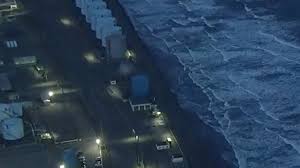
Japan issued a special advisory warning of an increased risk of earthquakes at magnitude 8.0 or stronger.
- Japan is an island nation in East Asia, situated in the Northwestern Pacific Ocean.
- It is bordered by the Pacific Ocean (East), Sea of Okhotsk (North), Sea of Japan (West East) and East China Sea (Southwest).
- Capital City: Tokyo
- Geographical Features of Japan:
- Climate: It ranges from subarctic in the north to humid subtropical in the south.
- Main Islands (north to south): Hokkaido, Honshu, Shikoku, and Kyushu.
- Terrain: Over 80% mountainous, with rugged terrain.
- Volcanic activity: It is located on the Pacific Ring of Fire – a major zone of earthquakes and active volcanoes.
- Highest peak: Mount Fuji (3,776 m), which is a strato volcano.
- Major mountain ranges: Japanese Alps.
- Major rivers: Shinano River (longest), Tone River, Kiso River.
- Natural Resources: Coal, iron ore, zinc, lead, copper, sulfur, gold, and silver.
Vishwa Sutra Initiative:
The Ministry of Textiles has launched an initiative called ‘Vishwa Sutra – Weaves of India for the World’.
- It has been developed by the Office of the Development Commissioner (Handlooms) in collaboration with the National Institute of Fashion Technology.
- It aims to present Indian handlooms in a contemporary global design framework.
- Under this initiative, 30 distinct handloom weaves from across the country have been brought together, each representing a different state.
- These weaves have been creatively reinterpreted with design inspirations drawn from 30 countries, reflecting diverse cultures and modern fashion sensibilities.
- It also reflects the depth and continuity of India’s handloom traditions—techniques preserved and refined across generations
- Odisha Ikat with Greek forms, Kanchipuram with Norwegian lines, Muga with Egyptian elements, Patola with Spanish influences, and Banarasi with UAE-inspired ensembles.
- It reflects the Government of India’s commitment to transforming traditional industries into globally competitive sectors.
- 5F framework: It supports Farm to Fibre to Factory to Fashion to Foreign.
Market Intervention Scheme:
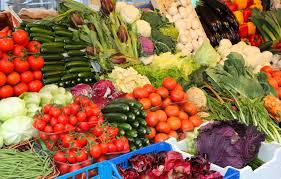
The Union Agriculture Ministry announced the procurement of 20 lakh metric tonnes (LMT) of potatoes under the Market Intervention Scheme (MIS).
- It is a component of the Pradhan Mantri Annadata Aay Sanrakshan Abhiyan (PM-AASHA).
- It is implemented on the request of the State/UT Government for the procurement of various perishable agricultural commodities such as Tomato, Onion and Potato etc. for which Minimum Support Price (MSP) is not fixed.
- Objective is to intervene the market to protect the growers of their commodities from making distress sale in the event of a bumper crop during the peak arrival period when the prices tend to fall below economic levels and cost of production.
- The amount of loss is shared on 50:50 basis between the Central government and the State government (on 75:25 basis in case of North-Eastern States)
- Implementation: By Department of Agriculture and Farmers Welfare
- MIS will be implemented only when:
- There is a minimum reduction of 10% in the prevailing market price as compared to the previous normal year.
- The procurement/coverage limit of production quantity of crops is 25 percent.
Startup India’s Record Growth in FY 2025–26:

The government reported that over 55,200 startups were recognized in FY 2025–26, the highest ever in a single year since the launch of the Startup India initiative, reflecting strong growth in innovation, funding and employment.
- Total recognized startups have crossed 2.23 lakh, generating over 23.36 lakh direct jobs.
- Startup recognition grew by 51.6%, while employment increased by 36.1% in FY 2025–26.
- Startup India Initiative launched on 16th January 2016, the Startup India Initiative aims to support entrepreneurs, strengthen the startup ecosystem, and shift India from a job-seeking to a job-creating economy.
- A startup is a small, new, or young company founded by entrepreneurs to introduce a new product or service, disrupt an existing market, or even create a new one.
- The Startup India Initiative is implemented by a dedicated Startup India team under the Department for Promotion of Industry and Internal Trade (DPIIT).
- Key Objectives is to nurture innovation, promote entrepreneurship by easing regulations and supporting founders, enable access to investment, and drive sustainable economic growth with large-scale job creation.
Bharat Maritime Insurance Pool:
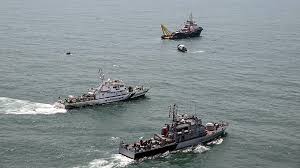
The Union Cabinet has approved the creation of the ‘Bharat Maritime Insurance Pool (BMI Pool)’, a domestic insurance pool with a sovereign guarantee of Rs 12,980 crore to ensure continuous and affordable maritime insurance coverage amid global uncertainties.
- Objective is to reduce dependence on foreign insurers such as the International Group of Protection and Indemnity Clubs, ensure continuity of maritime trade, and enhance sanctions resilience and sovereign control during geopolitical instability.
- The pool covers major maritime risks, including Hull and Machinery, Cargo, War risk, and Protection and Indemnity (P&I), which includes third-party liabilities such as oil pollution, wreck removal, cargo damage and crew injury.
- Coverage is provided for Indian flagged or controlled vessels, as well as any vessel carrying cargo from international origins to Indian ports (and vice-versa), including transits through volatile maritime corridors.
- Policies will be issued by insurers who are members of the pool, leveraging a combined underwriting capacity of around Rs. 950 crore.
- A newly constituted Governing Body will oversee the pool.
- This initiative aims to develop specialized marine underwriting, claims management, and legal expertise locally, directly aligning with the vision of self-reliance (Atmanirbhar Bharat).
- Strengthens economic security and ensures continuity of maritime trade by reducing dependence on foreign insurers in a sector handling over 70% of India’s trade by volume and 95% by value, while aligning with global best practices followed by countries like the United Kingdom, Japan and South Korea.
Indigenous 1000-kg Aerial Bomb for IAF:
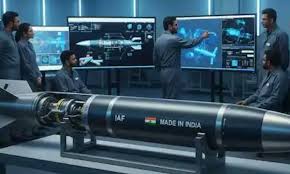
The Ministry of Defence initiated the indigenous design and development of a 1,000-kg aerial bomb (similar to Mk-84) for the Indian Air Force (IAF), which currently relies on imported Mk-84 class general-purpose bombs.
- The project aims to boost Aatmanirbhar Bharat in defence and reduce dependence on foreign Original Equipment Manufacturers (OEMs).
- The project is being executed under Defence Acquisition Procedure (DAP) 2020 through the Make-II (industry-funded) route, followed by procurement under the Buy (Indian–Indian–Indigenously Designed, Developed and Manufactured) category, ensuring a clear development-to-procurement linkage.
- The project mandates at least 50% indigenous content and is open to Indian private industry, with provisions for technology transfer, joint ventures and foreign collaboration under defined conditions.
- The bomb will be a high-calibre, natural fragmentation munition with high blast effect and significant peak over-pressure capability, designed to be compatible with both Russian and Western-origin aircraft used by the IAF.
- The project is estimated to be completed in ~2.5 years from Expression of interest to contract finalisation, including trials and evaluation.
New Deportation Policy for Illegal Migrants:
The Union Ministry of Home Affairs (MHA) has formulated a new comprehensive deportation policy to expedite the identification and deportation of illegal migrants, particularly from Bangladesh and Myanmar. The new deportation policy focuses on faster identification and removal of illegal migrants through institutional mechanisms, but faces challenges like identification issues, diplomatic constraints, and human rights concerns.
The Immigration and Foreigners Act, 2025 consolidates India’s immigration laws, strengthens monitoring of foreigners, and introduces stricter penalties and enforcement mechanisms, including statutory backing to the Bureau of Immigration.States must set up a special task force in each district to detect, identify, and deport undocumented migrants.They are required to submit a monthly status report on foreigners missing or overstaying their visas. An upper limit of 90 days has been fixed to verify the antecedents of suspected Bangladeshi or Myanmarese nationals, particularly if they claim residency in another State.
Vice President of India’s Visit to Sri Lanka:
The Vice President of India, Shri C.P. Radhakrishnan, embarked on a two-day visit to Sri Lanka, marking the first-ever visit by an Indian Vice President to the island nation.India announced the extension of Overseas Citizen of India (OCI) eligibility, along with discussions on key bilateral issues such as energy cooperation, trade, and fishermen’s concerns. India has extended the OCI scheme to the fifth and sixth generations of the Indian diaspora in Sri Lanka.Previously limited to the fourth generation, this move will specifically benefit the Indian Origin Tamil (Malaiyaha Tamil) community.To ease administrative hurdles, the application process will be simplified. OCI cards will now be issued based on documents and certificates provided directly by the Sri Lankan government. Discussions highlighted the handover of the final tranche of houses under Phase III of the Indian Housing Project, which is part of India’s commitment announced in 2010 to construct 50,000 houses in Sri Lanka.
Harnessing Gene Drives for Malaria Control:
A research shows that genetically modified mosquitoes using gene drives can suppress malaria transmission in real-world conditions, offering a potential breakthrough in global malaria control.Despite interventions like bed nets and medicines, malaria continues to cause over 5 lakh deaths annually worldwide, compounded by growing drug and insecticide resistance.Malaria is a vector-borne infectious disease caused by the Plasmodium parasite and transmitted to humans through the bite of infected female Anopheles mosquitoes.The parasite enters the bloodstream through a mosquito bite, travels to the liver to mature, and then infects red blood cells, continuing the transmission cycle.
Aoleang Festival:
The Konyak community celebrated the Aoleang festival in Kohima (Nagaland), showcasing vibrant tribal culture and traditions.Aoleang (Aoleang Monyu) is the premier festival of the Konyak tribe, celebrated annually in the first week of April (1st–6th).It marks the end of the old year and the beginning of the New Year with the onset of spring, after the completion of sowing activities.It is celebrated across Nagaland, especially in Mon district (home of the Konyak tribe), with cultural events also held at the Kisama Heritage Village in Kohima.It is a pre-harvest festival where the community seeks blessings from the Almighty for good health and a bountiful harvest. Rituals include offerings and symbolic practices in jhum fields, reflecting the tribe’s deep connection with agriculture and nature.The festival spans six days, each with distinct cultural significance. The initial days involve hunting, the collection of food items and preparations. The main celebrations include feasts, folk songs, dances and community gatherings and later days involve ritual feasts and remembrance of ancestors. The final day is marked by cleaning of houses and village, symbolizing closure and renewal.The festival features traditional attire, ornaments, log drum performances, dances and communal feasting. It acts as a vital institution for preserving cultural heritage, reinforcing social bonds and transmitting traditions to younger generations.



