
Today’s Current Affairs: 27th February 2026 for UPSC IAS exams, State PSC exams, SSC CGL, State SSC, RRB, Railways, Banking Exam & IBPS, etc
Table of Contents
Avoidant/Restrictive Food Intake Disorder:

ARFID is a genuine health issue—not stubbornness, attention-seeking or a passing problem—and with proper support, individuals can recover, live healthy and confident lives, and maintain a good relationship with food.
- It is a mental health condition that causes one to limit the amount and type of food one eats.
- It isn’t the result of a distorted self-image or an attempt to lose body weight, which is common among other eating disorders.
- The eating problems seen in ARFID stem from other factors, such as:
- Aversions to certain food groups or textures of foods
- Lack of appetite
- Preferences for specific colors of foods
- Fears of vomiting or choking after eating
- Although ARFID can occur at any age, it most commonly develops during infancy or early childhood and may persist into adulthood.
- In children, ARFID occurs more frequently in males than females.
- People with ARFID often have anxiety disorders, neurodevelopmental disorders such as autism spectrum disorder and attention-deficit/hyperactivity disorder (ADHD), and developmental and/or intellectual disabilities.
- Additionally, there is likely a genetic component, as ARFID commonly runs in families.
- As well as being selective about food, someone with ARFID might not eat (consume) enough calories to grow and develop.
- In children, this may cause stalled weight gain, weight loss, or even stalled vertical growth (growing taller).
- It may lead to life-threatening complications if left untreated.
- The main treatment is cognitive behavioral therapy.
Sky Sting Missile:
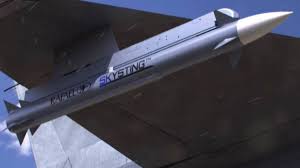
As Prime Minister pays his second state visit to Israel, India is keen to take forward the talks on acquiring the Israeli-origin ‘Sky Sting’ beyond-visual-range air-to-air missile (BVRAAM) for the Indian Air Force (IAF).
- It is a 6th-generation beyond-visual-range air-to-air missile (BVRAAM).
- It is being developed by Rafael Advanced Defense Systems Ltd., an Israeli defense technology company.
- It is light enough to be carried by aircraft such as the Tejas Mk1A, while also being compatible with Su-30MKI
- It boasts a range of 250 km, with a three-pulse solid-fuel rocket motor enabling end-game speeds exceeding Mach 5.
- Its radio-frequency seeker, supported by AI-driven target discrimination and jam-resistant technology, allows precise early lock-on and robust electronic counter-countermeasures.
- A two-way data link ensures real-time communication between the pilot and the missile during engagements.
- Designed to provide air forces with a significant tactical edge by allowing pilots to neutralise threats from a safe distance, Sky Sting addresses modern challenges like stealth targets and electronic warfare.
Vikko Sat-1:

In an impressive display of scientific skill, 13 students from the Class XI batch of Ariyakudi Government Higher Secondary School in Tamil Nadu’s Sivagangai district have successfully launched a 600 gram mini satellite named Vikko Sat-1.
- It is a mini satellite.
- It was developed by a group of students from the Class XI batch of Ariyakudi Government Higher Secondary School in Tamil Nadu’s Sivagangai district.
- It was specifically designed to detect fungal spores in the stratosphere using five specialised sensors.
- These biological particles play a crucial role in agricultural health and environmental cycles, and their presence in the upper atmosphere can impact crops if they descend.
- By sending a compact device into the stratosphere via a helium balloon, the students aimed to collect real-time data that is often difficult to obtain through ground-based observations.
- The students developed the mini satellite themselves over a period of six months, equipping it with specialised adhesive surfaces to capture the samples.
- The mini satellite ascended to a height of 22 km, entering the stratosphere, which is the second layer of the atmosphere.
- At this altitude, the onboard sensors worked to identify how fungal spores behave in thinner air and lower temperatures.
- The payload was recovered intact after its descent, ensuring the air samples remained safe for analysis in the school’s control room.
India and Sweden deepen AI partnership:

India and Sweden deepen AI partnership through Sweden–India Technology and Artificial Intelligence Corridor (SITAC) Framework.
- It is a Northern European country located on the Scandinavian Peninsula.
- It is bordered with Finland (east), Norway (north and west).
- It is bounded by the Gulf of Bothnia and the Baltic Sea in the east and south; and by the Skagerrak and Kattegat straits in the southwest.
- Capital city: Stockholm
- It is a member country of EU and NATO.
- Geographical Features of Sweden:
- Terrain: Sweden is rugged with snow-covered mountains and thick forests.
- Climate: It can experience quite temperate weather.
- Rivers: Angerman, Eman, Indal, Lagan etc
- Natural Resources: It includes uranium, copper, lead, and zinc.
Moist Heatwave:
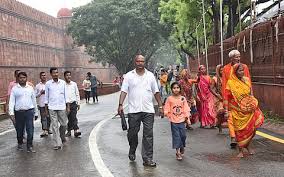
Research showed that timings and locations of the moist heatwaves are controlled by the active and break periods of the southwest monsoon (SWM) season and can be predicted weeks in advance.
- Moist heatwaves are triggered by a combined impact of high temperatures and elevated humidity levels in the atmosphere.
- The best way to measure the combined effect of humidity and temperature is ‘wet bulb temperature’.
- Wet bulb temperature is the lowest temperature to which air can be cooled by the evaporation of water into the air at constant pressure.
- This is a process happening on human skin when people sweat.
- The globally accepted level for wet bulb temperature that forms the limit of human survivability is 35°C.
- When air is already humid, sweat cannot evaporate from skin, leaving the body unable to cool itself. This can lead to heat exhaustion and fatal heatstroke within hours.
- It is because high humidity impairs evaporation, limiting the human body’s ability to dissipate metabolic heat and regulate core temperature.
- In such circumstances, the physiological strain on the human body intensifies, exacerbating the risks of cardiovascular and respiratory illnesses.
- A thermoregulatory failure can lead to hyperthermia, heat exhaustion, and fatal heatstroke in extreme cases.
State Innovation Mission:
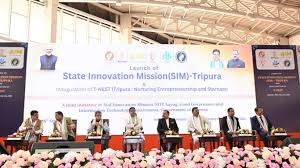
The Atal Innovation Mission (AIM) under NITI Aayog launched the country’s first State Innovation Mission (SIM) in Tripura.
- It is part of the approved Atal Innovation Mission (AIM 2.0) programme, under the aegis of NITI Aayog’s State Support Mission (SSM).
- It is designed as a long-term institutional mechanism to support States and Union Territories in building robust, inclusive, and context-specific innovation ecosystems aligned with national priorities and local strengths.
- Under SIM, AIM will work closely with the Government of Tripura to:
- Design and implement a long-term innovation strategy
- Strengthen policy frameworks and regulatory support
- Enable partnerships between government, academia, industry, and civil society
- Facilitate peer learning and national-level collaboration
- Support startups with infrastructure, mentorship, and access to funding
- The Mission emphasises inclusion, regional balance, and capacity building across the entire innovation lifecycle — from school education to advanced entrepreneurship.
- Atal Innovation Mission is a flagship initiative set up by the NITI Aayog in 2016.
- Objective is to create and encourage an environment of innovation and entrepreneurship across schools, educational organisations, research institutes, and industries, including MSMEs.
- AIM has two functions:
- Promote entrepreneurship by encouraging innovators to become entrepreneurs through financial support as well as mentorship.
- Promote innovation by creating a platform where ideas are generated through like-minded individuals.
International Climate Initiative:
India and Germany launched a new Large Grant project for India, which has a funding volume of up to EUR 20 million under the International Climate Initiative.
- It is an important part of the German government’s international climate finance commitment.
- It was established in 2008.
- It operates within the framework of the United Nations Framework Convention on Climate Change (UNFCCC) and the Convention on Biological Diversity (CBD).
- It finances climate change mitigation and biodiversity conservation in developing, emerging and transition countries to implement and ambitiously develop the Nationally Determined Contributions (NDCs) anchored in the Paris Agreement.
- The IKI priority countries include Brazil, China, Colombia, Costa Rica, India, Indonesia, Mexico, Peru, the Philippines, South Africa, Thailand, Türkiye, Ukraine and Viet Nam.
- The funding programme combines the following four funding areas:
- Mitigating greenhouse gas emissions: Setting the course for global climate neutrality by 2050;
- Adaptation to the impacts of climate change: Strengthening resilience, making use of interconnections with mitigation and biodiversity approaches;
- Preserving and restoring carbon sinks: Combating the causes of global warming and the destruction of natural ecosystems;
- Conserving biological diversity: Implementing the Global Biodiversity Framework
e- Railway Claims Tribunal system:
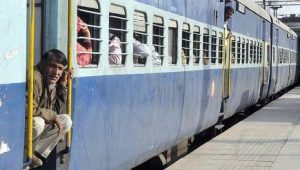
The Union Minister for Railways launched the e- Railway Claims Tribunal system as reform number four under Indian Railways’ flagship “52 Reforms in 52 Weeks” initiative.
- It will enable end-to-end computerisation and digitisation of the Railway Claims Tribunal.
- It will transform the filing, processing and adjudication of claims by making the process faster, more transparent and accessible from anywhere in the country.
- Under the new system, aggrieved passengers will be able to file claims electronically, irrespective of their location, even while travelling or upon reaching their destination.
- The entire process, from e-filing to case information systems will be digitised and AI-enabled.
- The platform comprises three core components
- E-Filing: It helps in 24×7 online filing of claims and legal documents from any location and uploading of petitions, affidavits, annexures and supporting records.
- Case Information System (CIS): It is a centralised database of all cases for auto-allocation, case registration and real-time tracking from filing to final to final disposal.
- Document Management System (DMS): It is the digital storage of pleadings, notices, summons, orders and judgements along with digitally signed records.
Agreements on Reciprocal Trade:
The US administration has aggressively pursued “Agreements on Reciprocal Trade” (ARTs) with developing nations such as Bangladesh, Malaysia, Cambodia, and El Salvador, alongside an interim framework with India.Negotiated under the threat of sweeping punitive tariffs, these ARTs mark a fundamental departure from the rules-based multilateralism of the World Trade Organization (WTO).For developing countries, this shift from “fair-play” global rules to “power-based” bilateral negotiations carries profound economic, strategic, and legal implications.US-led Agreements on Reciprocal Trade (ARTs) bypass WTO rules, weakening MFN principles, dispute settlement, and collective bargaining, thereby exposing developing countries to coercive market access, digital sovereignty risks, and fragmented global trade.India is strengthening FTAs, supply chain resilience, and Global South cooperation while protecting digital sovereignty and advocating WTO reforms to preserve a rules-based, inclusive multilateral trading system.
CBDC Pilot for Food Subsidy Distribution:
India has launched a Central Bank Digital Currency (CBDC)-based food subsidy distribution pilot under Pradhan Mantri Garib Kalyan Anna Yojana (PMGKAY) in Puducherry, marks a significant reform in the delivery of food subsidy through the Public Distribution System (PDS) by integrating the Digital Rupee (e₹) into the Direct Benefit Transfer (DBT) framework.A defining feature of this initiative is that the Subsidy is credited as programmable CBDC tokens directly into beneficiary wallets.They are redeemable exclusively for the purchase of entitled foodgrains at authorized Fair Price Shops (FPS), ensuring targeted usage and completely eliminating the possibility of fund diversion.This digital cash mechanism is instant, highly secure, and fully traceable, which significantly reduces friction, plugs leakages, and enhances accountability in the national food security ecosystem.The pilot is being implemented in coordination with the Government of Puducherry, Reserve Bank of India, Public Financial Management System (PFMS), and Canara Bank.Following its rollout in Puducherry, the initiative will be expanded in phases to other Union Territories and beneficiaries.
Reserve Bank of India’s Switch Auction:
The Reserve Bank of India (RBI) has announced a Rs 25,000 crore switch auction of Government Securities (G-Secs) to manage debt maturity and reduce redemption pressure in FY27, after earlier conducting two such operations totaling Rs 84,804 crore.Redemption pressure is defined as the financial burden on the government when a large volume of bonds or debt instruments mature at the same time, requiring repayment or refinancing. Switch Auction is a debt management tool used by the RBI to help the government manage its repayment burden. In this process, the government replaces short-term bonds that are nearing maturity with new long-term bonds, thereby postponing repayment obligations.The recent Rs 25,000 crore switch auction aims to reduce the heavy redemption pressure in FY27, when Rs 5.47 lakh crore worth of bonds are due.By extending maturities beyond FY32, the RBI helps smooth the government’s debt profile, reduce refinancing risks, and maintain fiscal stability.Given that the government’s gross market borrowing is already budgeted at a substantial 17.2 lakh crore rupees, utilizing switch auctions helps to seamlessly ease the maturity profile and manage repayment obligations without requiring immediate, large-scale cash liquidity.
India-Sweden SITAC Partnership:
The IndiaAI Mission and Business Sweden signed a Statement of Intent (SoI) on the sidelines of the India AI Impact Summit 2026 to strengthen bilateral cooperation in Artificial Intelligence (AI) and digital technologies.The partnership will establish the Sweden–India Technology and Artificial Intelligence Corridor (SITAC). This will serve as the flagship platform for structured engagement between government agencies, industry, startups, and academic institutions of both nations.The collaboration emphasizes the development and deployment of AI solutions for real-world industrial and societal outcomes, leveraging AI for innovation, economic growth, and sustainable development while addressing associated risks.The partnership aligns the IndiaAI Mission’s goal of building a national AI ecosystem (through access to compute, data, and talent) with Sweden’s strengths in industrial innovation, advanced R&D, and responsible AI implementation.
India-Israel Bilateral Relations:
Prime Minister of India conducted a historic state visit to Israel, where both nations elevated their ties to a Special Strategic Partnership for Peace, Innovation, and Prosperity.India and Israel share a multi-dimensional relationship characterized by deep security cooperation, a knowledge-hub partnership in technology, and a shared vision for regional stability. The relationship has evolved from hesitant diplomatic beginnings to a robust, open alliance based on mutual strategic interests and civilizational ties.Over 1 million Indian farmers have been trained across 35 operational Indo-Israel Centres of Excellence.Joint research contributions increased from million to million each for the India-Israel Joint Research Calls (IIJRC).A goal to deploy 50,000 additional Indian workers in Israel over the next five years in sectors like construction and nursing.Negotiations for a Free Trade Agreement (FTA) have been fast-tracked following the 2025 Bilateral Investment Agreement. The I4F fund has become a primary driver for industrial R&D, facilitating dozens of high-tech joint ventures.
New GDP Series (Base Year FY23):
The Ministry of Statistics and Programme Implementation (MoSPI) has officially overhauled India’s national accounts, shifting the GDP base year from 2011-12 to 2022-23 and introducing significant methodological shifts to improve accuracy.The GDP base year is a standard reference point used by economists to calculate Real GDP.By using prices from a specific stable year (now 2022-23), the effect of inflation is removed, allowing the government to measure the actual increase in production and output of the economy.
New Base Year:
- Current: 2011-12
- Revised: 2022-23 (FY23)
- Frequency: India periodically updates this to align with the International System of National Accounts (SNA).
The Druzhba Oil Pipeline:
The Druzhba oil pipeline is at the center of a geopolitical standoff following a complete halt in flows due to drone attacks, leading Hungary and Slovakia to veto new EU sanctions on Russia.The Druzhba Pipeline (translating to Friendship in English) is one of the world’s longest and largest crude oil pipeline networks.Established during the Soviet era, it serves as the primary artery for transporting Russian and Kazakh oil to the industrial heartlands of Central and Eastern Europe.The network originates in Almetyevsk, Tatarstan (Russia), where it collects oil from Western Siberia, the Urals, and the Caspian Sea.It spans approximately 4,000 kilometers, crossing the Russia-Belarus border before splitting into two massive branches.



