
Today’s Current Affairs: 9th jun 2026 for UPSC IAS exams, State PSC exams, SSC CGL, State SSC, RRB, Railways, Banking Exam & IBPS, etc
Table of Contents
e-Jagriti Platform:

The e-Jagriti platform has been awarded the Silver Award at the prestigious National Awards for e-Governance (NAeG) 2026.
- e-Jagriti Platform is a flagship initiative by the Department of Consumer Affairs, Ministry of Consumer Affairs, Food & Public Distribution.
- It was launched on 1 January 2025.
- It is aimed at strengthening the consumer dispute redressal system across the country.
- NRIs and citizens can file and manage cases from any location, with secure end-to-end encryption and role-based permissions.
- Features like multilingual interfaces and accessibility tools make it user-friendly for diverse demographics.
- It has unified four legacy applications Online Case Monitoring System (OCMS), e-Daakhil, NCDRC CMS and CONFONET into a single AI-enabled, paperless platform.
- It has case filing, online fee payment, case monitoring modules for seamless disposal of cases by all the Commissions, has Smart search facility on archived consumer complaints / cases / judgements using AI technology for metadata and keyword creation, and Voice-to-text conversion of judgements, case history and other details using AI / ML technology.
- It enabled consumers to file complaints, track case statuses, and access judgments online.
- The platform played a vital role in digitizing consumer commissions and empowering citizens by providing easy access to legal remedies.
- It provides simple, fast and a more cost-effective consumer disputes redressal software solution at all levels.
Bascanichthys chepakakiensis : New Species Of Snake Eel
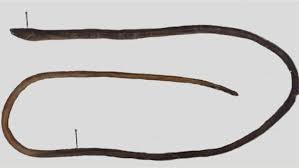
Marine scientists have discovered a new species of snake eel lurking in the shallow waters of the Bay of Bengal and officially named as Bascanichthys chepakakiensis.
- It is a new species of snake eel discovered in Kakinada fishing harbour in Andhra Pradesh.
- The specific name, chepakakiensis, is a combination of two words from the regional Telugu language: chepa, which means “fish,” and “kaki, a shortened nickname for Kakinada.
- It is the only second time a species of this snake-eel genus has been described from Indian waters.
- It has a distinct bicoloured body.
- It has a noticeably shorter snout, a different tooth arrangement in its jaws, and fewer vertebrae before its anal fin.
- It also possesses incredibly tiny, flap-like pectoral fins that are barely visible.
- Snake eels are members of the family Ophichthidae, and are named for their snake-like appearance
- These eels mainly live in sandy areas in shallow seas, however some live in depths to 800m.
- They are found in both tropical and temperate waters in oceans around the world.
- The snake eel uses its tail to burrow backward into the sea bottom, creating a protective burrow.
Pyroprocessing:
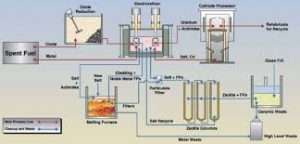
Pyroprocessing is being used in many sectors across the globe.
- Pyroprocessing is a way to change a solid material physically or chemically using high temperature.
- It is a dry process and very energy-intensive. Three sectors that use it most are cement-making, metallurgy, and nuclear power.
- Applications of Pyroprocessing:
- Cement Making:
- This sector uses pyroprocessing the most and it involves
- First, finely ground limestone, clay and iron — the raw materials — are fed into a rotary kiln.
- As the temperature increases to 900° C, the limestone loses its carbon dioxide, and at around 1,450° C, the mix partly melts to form marble-sized nodules called clinker.
- The clinker is then ground to produce cement.
- Metallurgy Sector:
- Pyroprocessing is used to extract metals from their ores in multiple stages.
- For example, sulphide ores are heated in air, or roasted, to convert them into metal oxides, like zinc sulphide.
- Smelting melts an ore to separate the metal from waste impurities called slag.
- Nuclear industry:
- It uses pyroprocessing to reprocess spent nuclear fuel.
- First, used nuclear fuel is broken up into pieces and placed in a salt bath — usually a mixture of lithium and potassium chlorides at 500° C or more.
- Then, an electric current is passed through the salt bath, causing different elements to become separated depending on their electrochemical properties.
- Operators then recover the elements of interest in separate streams.
- Cement Making:
Bhakra Dam : In News
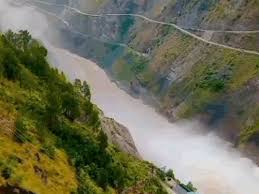
The Bhakra Beas Management Board (BBMB) recently commissioned an emergency study after detecting that the main wall of the Bhakra dam on the Sutlej river along the Punjab-Himachal Pradesh border is tilting outward beyond permissible limits.
- It is a concrete gravity dam across the Sutlej River.
- It is located at a gorge near the upstream Bhakra village in the Bilaspur district of Himachal Pradesh.
- It is near the border between Punjab and Himachal Pradesh.
- It is the highest straight gravity dam in the world, with a height of about 207.26 meters.
- It is Asia’s second tallest dam, next to the Tehri Dam.
- The Bhakra Dam is one of the earliest river valley development schemes undertaken by India after independence.
- The construction of this dam started in 1948, when Jawahar Lal Nehru, the first prime minister of India, poured the first bucket of concrete into the foundations of Bhakra.
- The dam was completed by the end of 1963.
- Bhakra Dam was described as the ‘New Temple of Resurgent India’ by Jawaharlal Nehru.
- Operation and maintenance of the Bhakra dam is done by the Bhakra Beas Management Board (BBMB).
- The dam created the massive Gobind Sagar reservoir and plays a crucial role in irrigation, flood control, and hydroelectric power generation for Punjab, Haryana, Rajasthan, Himachal Pradesh, and Chandigarh.
- It is the second largest reservoir in India, the first being Indira Sagar Dam in Madhya Pradesh with a capacity of 12.22 billion cu m.
- Nangal Dam is another dam downstream of Bhakra Sometimes both the dams together are called the Bhakra-Nangal Dam, though they are two separate dams.
- It serves as an auxiliary dam to channel the water released from Bhakra Dam to two powerhouses.
- The installed capacity of Bhakra Right Bank Power House is 785 MW, and that of Bhakra Left Bank Power House is 630 MW.
Land Port Management System:
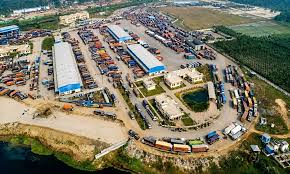
The Union Home Minister is going to launch the Land Port Management System (LPMS) in New Delhi.
- It is a state-of-the-art digital platform designed to integrate operations across Land Ports into a unified system.
- It enables secure, real-time exchange of logistics and regulatory information, bringing land ports at par with digital systems operational at airports and seaports.
- LPMS will facilitate seamless coordination among various stakeholders, including government agencies and private operators,
- The system introduces end-to-end digital workflows for cargo and passenger processing, including slot booking, payments, tracking, and single-window clearances.
- It is fully integrated with key national platforms such as ICEGATE, ULIP, and the motor vehicle ecosystem.
- LPMS will enable interoperable, efficient, and transparent border management.
- It reduces delays and enhancing operational efficiency.
Land Ports Authority of India (LPAI):
- It is a statutory body under the Department of Border Management, Ministry of Home Affairs.
- It is responsible for developing and managing land ports to facilitate trade, connectivity, and regional cooperation.
- Currently, LPAI operates 15 land ports across India’s international borders:
- India-Pakistan Border (2): Attari (Punjab) and Dera Baba Nanak (Punjab)
- India–Nepal Border (3): Rupaidiha (Uttar Pradesh), Raxaul (Bihar) and Jogbani (Bihar)
- India–Bhutan Border (1): Darranga (Assam)
- India–Bangladesh Border (8) : Petrapole (West Bengal), Dawki (Meghalaya), Sutarkandi, Golakganj and Mankachar (Assam), Agartala, Srimantapur and Sabroom (Tripura)
- India–Myanmar Border (1): Moreh (Manipur)
Kirthai-II Hydroelectric Project:
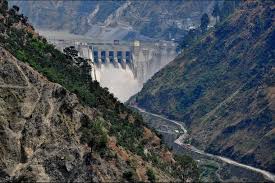
A year after placing the Indus Water Treaty (IWT) in abeyance, the government recently revived the long-stalled Kirthai Stage II Hydroelectric Project on the Chenab river in Kishtwar district of Jammu and Kashmir.
- Kirthai-II Hydroelectric Project is a 930 MW hydropower project planned on the Chenab River in the Kishtwar district of Jammu and Kashmir.
- The project is being developed by Chenab Valley Power Projects.
- NHPC and Jammu and Kashmir State Power Development currently own the project having ownership stakes of 51% and 49%, respectively.
- It is a run-of-river project. The hydro reservoir capacity is planned to be 51.26 million cubic meters.
- Chenab River is a tributary of the Indus River.
- It is formed by the confluence of two streams, Chandra and Bhaga, in the Lahaul and Spiti Districts of Himachal Pradesh.
- In its upper reaches, it is also known as the Chandrabhaga.
- It flows through the Jammu and Kashmir union territory, Himachal Pradesh, and after receiving the Jhelum River near Trimmu, the Chenab empties into the Sutlej River.
- Major Tributaries:
- Left Bank: Niru, Tawi, Neeru, and Liddrari
- Right Bank: Ans, Bhut Nalla, Bichleri, Kalnai Marusudar, and Miyar Nalla.
- Major Dams on Chenab River: Salal (rockfill dam), Aalal (concrete dam), Baglihar, and Dul.
Autoimmune Blistering Diseases:

A joint study by Punjabi University, Patiala, and PGIMER, Chandigarh, has developed artificial intelligence-based methods to aid diagnosis of Autoimmune Blistering Diseases (AIBDs).
- Autoimmune Blistering Diseases (AIBDs), also called autoimmune bullous disorders, are a group of rare skin diseases.
- They happen when immune system attacks skin and mucous membranes — the lining inside mouth, nose, and other parts of body. This causes blisters to form.
- The places on body where blisters form depend on which disorder one has.
- Some AIBDs cause blisters to grow on the skin.
- Other types cause them to form in the mucous membranes that line the mouth, nose, throat, eyes, and genitals.
- They can be painful or itchy. They can break open and leave a sore.
- Although rare, AIBDs can be severe and even life-threatening if untreated because of:
- Extensive skin loss
- Secondary infections
- Nutritional deficiencies
- Damage to mucous membranes and eyes
- Treatment aims to suppress the abnormal immune response and prevent new blister formation:
- Corticosteroids
- Immunosuppressive drugs
- Biologic therapies such as Rituximab
- Wound care and infection prevention
Jhajjar-Bachauli Wildlife Sanctuary:
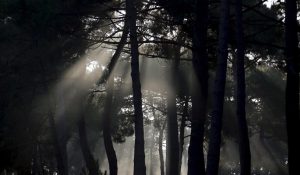
The Punjab forest department recently prepared a ₹5.36-crore development plan for the Jhajjar-Bachauli Wildlife Sanctuary in Rupnagar district.
- Jhajjar-Bachauli Wildlife Sanctuary is located in the Rupnagar district of Punjab.
- It lies near the Sutlej (Satluj) River in the foothills of the Shivalik Range.
- The sanctuary is characterized by dry deciduous forests.
- The sanctuary boasts a vibrant array of plant life, such as Eucalyptus, Khair, Neem, Shisham, and Amla, many of which hold medicinal properties.
- It shelters various wildlife including Sambar deer, Barking deer, Hare, Jackal, migratory Leopards, Blue Bull (Nilgai), Mongoose, Jungle Cat, Porcupine, Pangolin, Wild Boar, and a variety of birds and reptiles like Python, Cobra, and Monitor Lizard.
- In January 2026, the Punjab State Board for Wildlife approved renaming the sanctuary as Sri Guru Tegh Bahadur Wildlife Sanctuary in honor of Guru Tegh Bahadur.
India–South Africa Technology Partnership and Africa Strategy:

In June 2026, India and South Africa upgraded their 31-year-old science and technology partnership (established under the 1995 S&T Agreement) from research-focused cooperation to industrial co-production.
- The partnership was further strengthened through a Telangana–South Africa collaboration framework, highlighting the growing strategic depth of India–Africa ties and their role as a source of “stability in a turbulent world.”
- India and South Africa have upgraded their partnership from traditional research cooperation to technology-driven industrial co-production, focusing on AI, DPI, critical minerals, healthcare, green energy, and advanced manufacturing, while strengthening India–Africa strategic ties.
- India’s broader Africa strategy is shifting from credit-led development to economic integration and supply-chain resilience, leveraging regional trade blocs, AfCFTA, critical mineral partnerships, and Global South cooperation to enhance trade, investment, and geopolitical influence.
Major Abhilasha Barak conferred with the UN Military Gender Advocate of the Year Award:
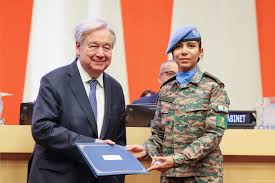
Prime Minister of India congratulated Major Abhilasha Barak on being conferred the prestigious United Nations Military Gender Advocate of the Year Award.
- The United Nations Military Gender Advocate of the Year Award is an international honor that recognizes the dedication and frontline efforts of an individual military peacekeeper in promoting and implementing the principles of UN Security Council Resolution 1325 (UNSCR 1325) on Women, Peace, and Security.
- The annual award was created in 2016 by the Office of Military Affairs within the UN Department for Peace Operations (DPO).
- The objective of the award is to incentivize and honor military personnel who successfully integrate gender dynamics and perspectives into field-level peacekeeping activities, ensuring that the unique protection, security, and humanitarian needs of local women and girls are met.
Key Features of the Award:
- Rigorous Selection Pool: Awardees are chosen from a highly competitive pool of candidates nominated directly by Force Commanders and Heads of Mission from all active UN peace operations worldwide.
- Focus on Inclusivity: The evaluation places heavy emphasis on practical field innovations, such as launching mixed-gender patrols, conducting local gender-responsiveness training, and building trusted networks with localized women’s groups.
- Platform for Advocacy: Winning the award provides the recipient with a global platform to share their field methodologies, helping mainstream gender-sensitive strategic planning across all UN military components.
Lake Chad Basin:
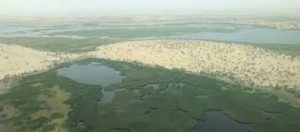
The Islamic State West Africa Province (ISWAP) has emerged as the most powerful jihadist organisation in the Lake Chad basin, overtaking Boko Haram in influence and capability.
- The Lake Chad Basin is a major transnational drainage basin in Central and West Africa, covering nearly 8% of Africa’s land surface and extending across parts of Nigeria, Niger, Chad, Cameroon and Benin.
- The basin contains extensive wetlands and floodplains, especially along the Chari, Logone and Yobe rivers, including sites such as Yaeres, Sategui-Deressia and Hadejia-Nguru.
- The basin has faced severe droughts, shrinking lake area, reduced river flows, falling groundwater levels, soil erosion, invasive weeds, loss of plant species and declining wildlife populations.
- Lake Chad is a major freshwater lake and an important wetland in the Sahel region
- It is shared by Nigeria, Cameroon, Niger and Chad, with the Nigerian section mainly in Borno and Yobe States.
- It is a shallow endorheic lake, fed mainly by the Logone-Chari and Komadougou rivers, with no outlet to the sea.
- It supports rich biodiversity, including migratory birds, hippopotamus, Nile crocodile, Nile monitor, tortoise, otter, giraffe and ostrich.
- The region has a Sahelian climate, with low rainfall, a short rainy season and a long dry season.
- Lake Chad has been linked to the ancient Sao civilisation and continues to support communities such as the Kotoko, Kanembou, Barma, Boulalan and Hausa through fishing, farming, cattle rearing and trade.
Maulana Barkatullah Bhopali:
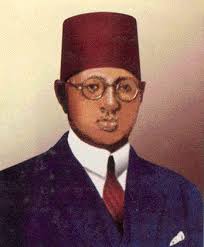
The Executive Council of Bhopal’s Barkatullah University has passed a proposal to rename the institution Vagdevi Bhojpal University.
- Maulana Barkatullah Bhopali (July 7, 1854 – September 1927) was a legendary anti-colonial revolutionary, scholar, and fiery journalist who served as the Prime Minister of India’s first Government in Exile, established in 1915.
- He spent the entirety of his adult life operating from international soil, building global anti-imperial networks to secure India’s complete independence from British rule.
- Born in Bhopal, Madhya Pradesh, he was a highly meritorious student who mastered multiple languages. He moved to Bombay and later to London for advanced studies.
- While teaching Arabic and Persian in Liverpool, England, he crossed paths with active Indian revolutionaries. His regular anti-British articles and fiery public speeches quickly made him a prime target for British intelligence, forcing him to flee to the United States in 1899.
- Barkatullah was a staunch believer in absolute Hindu-Muslim solidarity.
- In his personal letters to fellow freedom fighter Maulana Hasrat Mohani, he highlighted that the brutal famines and economic starvation orchestrated by the British crushed both Hindus and Muslims equally, concluding that India could never achieve true sovereignty unless all religious communities fought shoulder to shoulder against the divide-and-rule strategy.



