
Today’s Current Affairs: 29th November 2025 for UPSC IAS exams, State PSC exams, SSC CGL, State SSC, RRB, Railways, Banking Exam & IBPS, etc
Table of Contents
Ningaloo Reef:
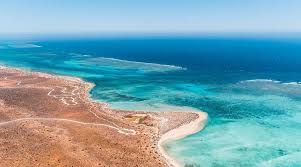
A new survey finds nearly 70% of corals at UNESCO-listed Ningaloo Reef have died.It is located on Western Australia’s remote coast along the East Indian Ocean.
- It is Australia’s largest fringing coral reef, extending across 300 kilometres of coastline.
- It is one of the world’s most pristine, longest, and largest coral reefs.
- The reef sustains both temperate and tropical marine life, including mammals and reptiles.
- Some of the mega marine species found here are manta rays, whale sharks, humpback whales, potato cod, dugongs, and sea turtles.
- It is a UNESCO World Heritage Site.
Obstructive Sleep Apnea: New findings
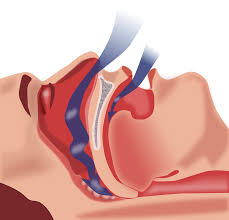
New findings reveal that untreated obstructive sleep apnea can significantly raise the likelihood of developing Parkinson’s disease.
- Obstructive Sleep Apnea (OSA) is the most common sleep-related breathing disorder.
- People with OSA repeatedly stop and start breathing while they sleep.
- These breath pauses are known as apneas.
- There are several types of sleep apnea. OSA occurs when the throat muscles relax and block the airway.
- This happens off and on many times during sleep.
- Loud snoring is a telltale symptom of OSA.
- Anyone at any age can have OSA. But it’s most common in middle-aged and older adults.
- This condition has significant implications for cardiovascular health, mental well-being, quality of life, and driving safety.
- Treatment for OSA may include:
- Making lifestyle changes like sleeping position adjustments (not sleeping on your back) or maintaining a weight that’s healthy for you.
- Using a continuous positive airway pressure (CPAP) machine.
- Wearing oral appliances (mouthpieces).
- Undergoing surgery.
- Parkinson’s Disease is a progressive neurodegenerative disorder that primarily affects movement.
- It causes nerve cells (neurons) in parts of the brain to weaken, become damaged, and die, leading to symptoms that include problems with movement, tremor, stiffness, and impaired balance.
- As symptoms progress, people with PD may have difficulty walking, talking, or completing other simple tasks.
- Although many brain areas are affected in Parkinson’s disease, the most common symptoms result from the loss of neurons in an area near the base of the brain called the substantia nigra.
- The disease usually occurs in older people, but younger people can also be affected.
- Men are affected more often than women.
- The cause of PD is unknown but people with a family history of the disease have a higher risk.
- Exposure to air pollution, pesticides, and solvents may increase risk.
- People with PD often develop a “parkinsonian gait.”
- This includes a tendency to lean forward, taking small, quick steps as if hurrying (called festination), and reduced swinging in one or both arms.
- They may have trouble initiating movement (called “start hesitation”) and stop suddenly as they walk, freezing in place.
- Currently, no blood laboratory or radiological tests are available to diagnose Parkinson’s disease.
- There’s no cure for this disease, but treatments can help significantly improve your symptoms.
Operation Pawan:
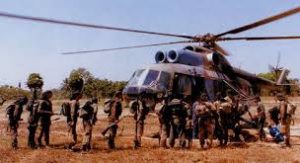
Chief of the Army Staff (COAS) of India has recently paid homage to soldiers who laid down their lives during Operation Pawan, the 1987 Indian Peace Keeping Force (IPKF) mission in Sri Lanka.
- Operation Pawan was launched by the Rajiv Gandhi government in 1987, sending the Indian Peace Keeping Force (IPKF) to Sri Lanka to help quell the civil war between the Tamil and Sinhala communities.
- It was India’s first major overseas military campaign post-Independence.
- It was launched under the Indo-Sri Lanka Accord, 1987.
- It involved sending Indian troops into Sri Lanka to disarm the Tamil militant groups, including the Liberation Tigers of Tamil Eelam (LTTE), and restore peace.
- One of the most notable martyrs of Operation Pawan was Major Ramaswamy Parameswaran, a Param Vir Chakra recipient.
- ‘Operation Pawan’ formally ended in 1990 with the withdrawal of the IPKF.
- Although Sri Lanka has constructed a memorial acknowledging the IPKF’s role, the operation did not receive formal commemoration at the National War Memorial (Rashtriya Samar Smarak) in New Delhi.
- For decades, veterans and families sought formal recognition. In 2025, the Army finally acknowledged their long-overlooked sacrifice.
Young Stellar Objects:
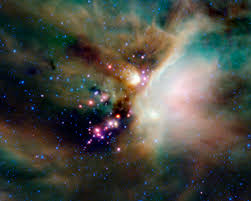
A team of researchers has decoded the early lives of young stars called Young Stellar Objects (YSO) using a decade of data from NASA satellites Wide-field Infrared Survey Explorer (WISE) and its extended mission NEOWISE.
- These are stars in the earliest stages of their lives where stars stably fuse hydrogen in their cores.
- This is the stage before the stars enter the main sequence of what is called the Hertzsprung-Russell diagram (a plot showing stars in various stages of evolution based on their temperature and brightness).
- These objects typically reside within dense molecular clouds rich in gas and interstellar material.
- YSOs form from the collapse of dense molecular clouds, triggered by events like nearby supernova explosions, stellar radiation, or turbulence in the interstellar medium.
- There are two principal kinds of YSOs: Protostars and Pre-main sequence stars.
- Stages of Young Stellar Objects:
- Class 0 and Class I phases: These are mostly visible in infrared and radio wavelengths due to their thick dust envelopes.]
- Class II and Class III: In this phase object becomes visible in optical wavelengths as it clears away its surrounding envelope.
- They provide Insights into the processes that lead to star formation, including magnetic activity, stellar winds, and outflows.
- They help in understanding the conditions that lead to planet formation and the early solar system.
Scheme to Promote Manufacturing of Sintered Rare Earth Permanent Magnets:

The Union Cabinet approved the ‘Scheme to Promote Manufacturing of Sintered Rare Earth Permanent Magnets’ with a financial outlay of Rs.7280 crore.
- It aims to establish 6,000 Metric Tons per Annum (MTPA) of integrated Rare Earth Permanent Magnet (REPM) manufacturing in India.
- It will support the creation of integrated REPM manufacturing facilities, involving conversion of rare earth oxides to metals, metals to alloys, and alloys to finished REPMs.
- Features of Scheme to Promote Manufacturing of Sintered Rare Earth Permanent Magnets:
- Duration: 7 years (2 years for setting up an integrated REPM manufacturing facility + 5 years incentive disbursement on the sale of REPM.)
- With this initiative, India will establish its first ever integrated REPM manufacturing facilities in India.
- Rare Earth Magnets are a type of permanent magnet made from alloys of rare earth elements.
- Exceptional magnetic strength, high energy density, and superior performance compared to other types of magnets.
- Types: Neodymium (Nd-Fe-B) and Samarium Cobalt (SmCo) are the two most common types of rare earth magnet materials. Both types are extremely strong.
- Neo magnets are composed primarily of neodymium, boron and iron, and samarium cobalt is composed of samarium and cobalt.
- These are used in electric vehicles, renewable energy, electronics, aerospace, and defence applications.
Entrepreneur-in-Residence Programme:
The Union Minister of State for Science & Technology said that Entrepreneur-in-Residence (EIR) Programme is gaining popularity among young startups, innovators.
- Entrepreneur-in-Residence Programme is one of the programs introduced under National Initiative for Developing and Harnessing Innovations (NIDHI).
- It aims to encourage graduates to take to entrepreneurship as a prospective career option by providing financial and non-financial support in the form of a fellowship.
- Features of Entrepreneur-in-Residence (EIR) Programme:
- Financial Support: Recipient is eligible to get financial support of up to INR 30,000/- monthly.
- It is offered to graduate students for a maximum period of 12 months.
- The Programme includes access to the infrastructure facilities at the TBI, mentoring support and guidance, technical and financial advice, industry connections.
- It is implemented by the Department of Science and Technology, Government of India in association with NCL Venture Centre, Pune.
- NIDHI Programme : National Initiative for Developing and Harnessing Innovations (NIDHI) as an umbrella programme for nurturing ideas and innovations (knowledge-based and technology-driven) into successful startups.
Bnei Menashe:
Israel’s government recently approved a proposal to bring all the remaining 5,800 Jews from India’s north-eastern region, commonly referred to as Bnei Menashe, over the next five years.
- Bnei Menashe is an ethnic community that hails from the northeastern states of Mizoram and Manipur.
- They claim to be the descendants of the biblical tribe of Manasseh, considered one of the “lost tribes” of Israel.
- They are Christians converted into Jews and observe traditional Jewish practices and celebrate holidays such as Sukkot.
- Historians believe this community may have arrived in India within the last 300–500 years.
- Their ancestors were exiled long before the Roman dispersion, but they continued to practice Judaism across the generations, even if not in a contemporary Orthodox way.
- Once they came into contact with Israel and global Jewry in the 1980s, they embraced modern Jewish learning and practice.
- Nearly half of the ‘Bnei Menashe’ population migrated to Israel over a period of time and became its citizens.]
- According to the recent Israeli Government plan, approximately 1,200 community members are expected to immigrate to Israel by the end of 2026.
- A second stage, slated for completion by 2030, will bring an additional people, effectively completing the arrival of the entire community.



