
Halma Tradition:
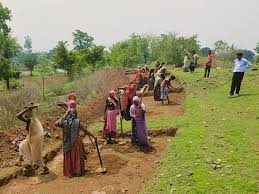
In Borpada village in Madhya Pradesh’s Jhabua district, residents revived the Bhil tradition of Halma to clean and restore a public well.
- Halma is an old collective tradition practiced by the Bhil tribal community of Madhya Pradesh.
- Its direct meaning is: to work together without wages or contract, sustained by mutual obligation and belonging.
- At its heart, Halma represents a profound tradition of voluntary collective labour.
- The roots of this tradition reach back to an era when these communities had neither large resources, nor government support, nor a marketplace.
- When an individual or family faces a significant task, be it constructing a home, repairing agricultural embankments, restoring a water body, or organizing a major communal event, they invoke Halma.
- In response, scores, sometimes hundreds, of community members assemble, bringing their own tools, food, and labour, and work collectively until the task is accomplished.
- There is no formal leader and no grand announcement. There is only work, done side by side.
- No monetary compensation is expected. Participation arises not from obligation enforced by external authority but from ethical commitment, ancestral values, and the assurance that when needed, the favor will be returned.
- In recent years, Halma has been revitalized to address common challenges such as:
- Restoration of traditional water bodies
- Afforestation of barren hills
- Construction of contour trenches for rainwater conservation
- Revitalization of biodiversity and soil health



