
Sulphur:
The West Asia conflict disrupts supply chains, deeper shocks emerge and Sulphur may not grab headlines like oil, but it quietly powers industry and agriculture.
- Sulphur (identified by the letter S) is a non-metallic chemical element.
- It can be found as a pure element or as sulphate or sulphide minerals.
- It occurs naturally in the environment and is believed to be the thirteenth most abundant element in the earth’s crust.
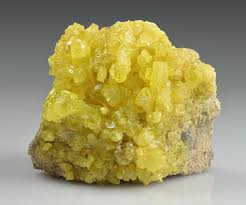
- In its pure form, sulphur is a tasteless, odorless, brittle solid with a pale yellow color.
- It’s a poor conductor of electricity that doesn’t dissolve in water.
- It combines directly with almost all the elements with the exception of gold, platinum and the noble gases.
- Distribution of Sulphur in India: Puga Valley, Barren Island of Bay of Bengal, Andhra Pradesh, Kerala and Himachal Pradesh
- Sulphur is an essential raw material for many chemical industries and is essentially used for the production of sulphuric acid.
- Sulphuric acid is a strong mineral acid which is used in ore processing, fertilizer manufacturing, oil refining, waste water processing and chemical synthesis.
- Powdered form of sulphur produced by sublimation process is generally used in rubber vulcanisation, agricultural dusts, pharmaceutical products and stock feeds.
- Sulphur is used as a light-generating medium in the rare lighting fixtures known as “sulphur lamps”.
- Sulphur compounds are also used in detergents, fungicides, dyestuffs and agrichemicals.