
What is the Captagon?
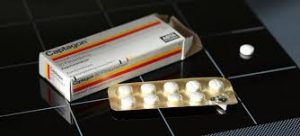
The Narcotics Control Bureau (NCB) has intensified its crackdown on transnational drug syndicates, culminating in Operation RAGEPILL, which resulted in India’s first-ever seizure of the psychotropic substance Captagon.
- The agency arrested the kingpin of an India-Myanmar drug network in Delhi and promoted Himachal Pradesh’s ‘anti-heroin’ model, highlighting India’s shift from local policing to targeting transnational narcotics networks.
- Captagon is a highly addictive psychotropic substance and central nervous system (CNS) stimulant.
- Captagon was originally the brand name for Fenethylline, a synthetic stimulant developed in the 1960s to treat conditions like ADHD, narcolepsy, and depression.
- The illicit Captagon circulating now is a clandestine cocktail of amphetamines, methamphetamine, caffeine, and other chemical fillers.
- The “Jihadi Drug” earned this moniker (along with “Captain Courage”) because it is heavily consumed by extremist and militant groups, such as ISIS, in conflict zones.
- Fighters use it to induce a state of euphoria, block out trauma, stay awake for days, and completely suppress fear, fatigue, and hunger.
- It is widely abused across the Middle East (especially in Saudi Arabia and the Gulf states) as a cheap recreational drug.
- Syria is currently recognized as the global epicenter for illicit Captagon production, with the trade forming a multi-billion-dollar shadow economy that heavily funds regional conflicts.
- Due to its high potential for abuse, Captagon was banned in most countries in the 1980s.
- It is tightly regulated under Schedule II of the UN Convention on Psychotropic Substances, 1971.
- The International Narcotics Control Board (INCB) stated that legitimate industrial manufacture of fenetylline (Captagon) ceased globally in 2009
- It is illegal and regulated under the Narcotic Drugs and Psychotropic Substances (NDPS) Act, 1985.



