
Today’s Current Affairs: 16th January 2026 for UPSC IAS exams, State PSC exams, SSC CGL, State SSC, RRB, Railways, Banking Exam & IBPS, etc
Table of Contents
Finke River:
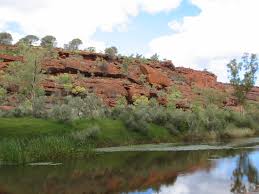
The Finke River, known to the Arrernte people as Larapinta, is believed to be the world’s oldest river system.
- It is a major but intermittent river of central Australia
- It starts in the MacDonnell Ranges in the Northern Territory.
- The river forms where two smaller creeks, Davenport and Ormiston, meet.
- It is often called “the oldest river in the world.”
- A combination of geological records, weathering profiles, and radionuclide measurements in the surrounding sediments and rocks has enabled scientists to date this river system to the Devonian (419 million to 359 million) or Carboniferous (359 million to 299 million) period.
- Most of the time, the Finke River looks like a series of waterholes. But after heavy rains, it can turn into a powerful, fast-flowing river.
- During big floods, its water can even reach the Macumba River and eventually Lake Eyre.
- Some of its main smaller rivers that flow into it are Ellery Creek and the Palmer and Hugh Rivers.
RBS-15 Missile:
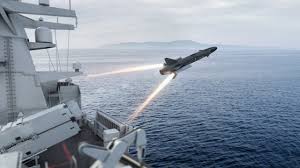
Swedish aerospace and defence company, Saab, has showcased the capabilities of its RBS-15 missile to destroy the components of the Russian S-400 system.
- The RBS-15 (Robotsystem 15) is a fire-and-forget surface-to-surface and air-to-surface anti-ship missile with land attack capability.
- The missile was developed by the Swedish company Saab Bofors Dynamics.
- It can hit targets up to 200 km, moving at a subsonic speed of Mach 0.9.
- It is a low sea-skimming missile performing unpredictable evasive manoeuvres.
- The RBS15 guidance and control system includes an inertial navigation system and a GPS receiver, a radar altimeter, and a Ku-band radar target seeker.
- The missile features a low radar cross section and IR signature.
- It has sophisticated target discrimination and selection capabilities.
- It is extremely resistant to chaff, active jammers, decoys, and other electronic countermeasures (ECM).
- The missile engagement planning system (MEPS) provides an advanced user interface for generating plans for different scenarios.
Kawal Tiger Reserve:
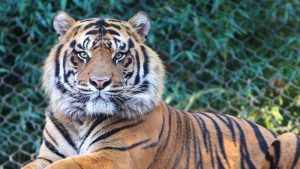
Forest officials are gearing up to conduct the wildlife census at the Kawal Tiger Reserve.
- It is located in the state of Telangana.
- It is along the banks of river Godavari, forming part of the Deccan peninsula-central highlands.
- The reserve is nestled in the Sahyadri Mountain Ranges.
- The government of India declared Kawal Wildlife Sanctuary a Tiger Reserve in 2012.
- The reserve is the catchment for the rivers Godavari and Kadam, which flow towards the south of the sanctuary.
- Geographically, the reserve is situated at the southernmost tip of the Central Indian Tiger Landscape, having linkages with the Tadoba-Andhari (Maharashtra) and Indravati (Chhattisgarh) tiger reserves.
- It has diverse habitats comprising dense forests, grasslands, rivers, streams and water bodies.
- It consists of teak along with Bamboo and other species like Anogeissus latifolia, Mitragyna parviflora, Terminalia crenulata, Terminalia arjuna, Boswellia serrata, etc.
- It includes Nilgai, chousinga, chinkara, black buck, sambar, spotted deer etc.
Jamma Bane Lands:
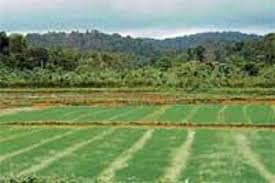
The Karnataka government has amended its land revenue law to modernise an age-old system of land records called Jamma Bane lands.
- The word Jamma means hereditary.
- The Jamma Bane tenure is a form of land holding prevalent in Kodagu district of Karnataka.
- It is distinctly different from other classes of land holdings in the state.
- These lands were originally granted by erstwhile kings of Coorg and the British to local communities in return for military service.
- These lands comprise both wetlands, used for paddy cultivation, and forested highlands, which have transformed into the now-famous coffee estates of Coorg.
- The Coorg Land Revenue and Regulations Act, 1899 was in place to govern land ownership in the region till the introduction of the Karnataka Land Revenue Act, 1964.
- The Jamma Bane land ownership is registered in the name of the original pattedar from a family.
- Over generations, the names of the new owners are added alongside the name of the pattedar.
- The land ownership name could not be changed to reflect new owners.
Vrindavani and Karan Fries Cattle breeds:
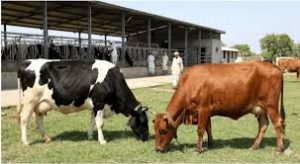
India has registered two high-yielding synthetic cattle breeds namely are Karan Fries and Vrindavani.
- Karan Fries is developed by the National Dairy Research Institute (NDRI) in Karnal, Haryana.
- It is a cross between indigenous Tharparkar cows and Holstein-Friesian bulls.
- The synthetic Karan Fries cow breed combines high productivity with resilience, delivering peak daily milk yields of up to 46.5 kg.
- Vrindavani
- It is developed by ICAR-Indian Veterinary Research Institute (IVRI) in Bareilly, Uttar Pradesh.
- It is a blend of exotic breeds – Holstein-Friesian, Brown Swiss, and Jersey – with the indigenous Hariana cattle.
- Indian Council of Agricultural Research is an autonomous organisation under the Department of Agricultural Research and Education (DARE), Ministry of Agriculture and Farmers Welfare.
- It is the apex body for coordinating, guiding, and managing research and education in agriculture, including horticulture, fisheries, and animal sciences, throughout the country.
- Formerly known as the Imperial Council of Agricultural Research, it was established on 16 July 1929 as a registered society under the Societies Registration Act, 1860, in pursuance of the report of the Royal Commission on Agriculture.
- Headquarters: New Delhi.
Voyager 1:
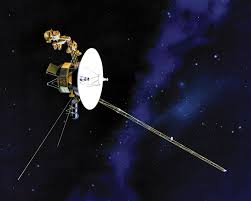
Voyager 1 is expected to become the first human-made object to reach a distance of one light-day from Earth.
- It is a space probe launched by NASA in 1977.
- Objective is to explore the outer planets in our solar system.
- It is the first spacecraft to travel beyond the solar system and reach interstellar space.
- It is currently the most distant human-made object from Earth.
- Voyager 1’s mission has included flybys of Jupiter and Saturn, with the goal of studying their moons, rings, and magnetic fields.
- Instruments of Voyager 1: Cosmic Ray Subsystem, Plasma Wave Subsystem, Infrared Interferometer Spectrometer and Radiometer (IRIS) etc.
- Voyager 1 was the first spacecraft to cross the heliosphere, the boundary where the influences outside our solar system are stronger than those from our Sun.
- It crossed into interstellar space in 2012, making it the first human-made object to venture out of the solar system.
- It discovered a thin ring around Jupiter and two new Jovian moons: Thebe and Metis.
- It also found five new moons and a new ring called the G-ring at Saturn
Pufferfish : In News:

Scientists have confirmed India’s first case of freshwater pufferfish poisoning.
- Pufferfish belong to the order Tetraodontiformes.
- They are locally known by names such as toadfish, patkafish, balloonfish and fugu.
- Pufferfish are omnivorous and benthic in habitat.
- It is primarily found in the Western Ghats and major basins such as the Ganga, Brahmaputra and Mahanadi.
- Freshwater pufferfish species reported from India are often endemic to specific geographical areas and serve as indicators of healthy river ecosystems.
- They can inflate into a ball shape to evade predators.
- Conservation Status of Pufferfish:
- IUCN: Vulnerable
- Pufferfish Poisoning: Some puffer fish carry tetrodotoxin (TTX) which is one of the most potent neurotoxins known in nature.
- Tetrodotoxin blocks nerve sodium channels and can cause paralysis, respiratory failure and death.
- Evidence suggests that pufferfish do not synthesise the toxin themselves.
- TTX is believed to originate from symbiotic or ingested bacteria such as Vibrio, Pseudomonas, Aeromonas and Bacillus.
Convergence of MSME Schemes : NITI Aayog Report
NITI Aayog has released a report titled “Achieving Efficiencies in MSME Sector through Convergence of Schemes”, outlining a strategic roadmap to strengthen the effectiveness of government support for India’s Micro, Small and Medium Enterprises (MSMEs).
- It recommends a two-pronged approach for convergence of 18+ MSME schemes, comprising information convergence and process convergence.
- The first integrates central and state data for better decisions. The second unifies schemes to reduce redundancy and streamline service delivery, fostering a cohesive MSME ecosystem.
- NITI Aayog advocates converging 18+ MSME schemes to eliminate fragmentation.
- The sector is vital, contributing ~30% to GDP and 45% to exports.
- Fragmented schemes across ministries reduce efficiency and outreach.
- NITI Aayog’s convergence framework integrates data and processes to create a simplified, efficient, and outcome-driven MSME support system.
- MSMEs are businesses defined and categorized based on their investment in plant, machinery, or equipment and their annual turnover and are the foundation stone of India’s economic framework.
- Government spending on the MSME sector has risen sharply to Rs 22,094 crores in 2023-24 from Rs 6,717 crores in 2019-20.
- The MSME sector is classified in accordance with the Micro, Small and Medium Enterprises Development (MSMED) Act, 2006, based on investment in plant and machinery and turnover, with a revised classification effective from 1st April, 2025.
- The MSME sector contributes between 27% and 30% to India’s GDP, employs 62% of the country’s workforce (approximately 28.13 crores), and accounts for about 45% of the country’s exports.
- The sector grew at an average of 8.6% between 2000 and 2016, outperforming the industrial sector (7.6%), and has the capacity to produce 6,000 distinct products.
- Over 90% of MSMEs in India continue to operate in the informal sector, with only 9% transitioning from unregistered status. To promote formalization, the government has introduced the Udyam Registration Portal and the Udyam Assist Platform (UAP).
Prime Minister’s Internship Scheme:

Data from the Controller General of Accounts show severe underutilisation of funds under the Prime Minister’s Internship Scheme (PMIS), pointing to weaknesses in the scheme’s design, demand, and implementation barely a year after its launch.
- The PMIS, under the Ministry of Corporate Affairs, announced in the Union Budget 2024–25, aims to provide one crore internship opportunities over five years in top 500 companies to enhance the employability of youth aged 21–24 years.
- The scheme offers a Minimum Stipend of Rs 5,000 per month, a One-Time Grant of Rs 6,000, and Insurance Coverage under PM Jeevan Jyoti Bima Yojana and PM Suraksha Bima Yojana, along with exposure to diverse sectors and leading companies.
- The internship lasts 12 months, with at least half of the period spent in real workplace or job-based experience, not classroom training.
- Candidates must be 21–24 years old, possess Minimum Class 10 Qualification or above (ITI, Polytechnic, Graduation etc.), and should not be engaged in Full-Time Employment or Regular Education (distance or online education allowed).
- Graduates from IITs, IIMs, NLUs, IISERs, holders of professional or postgraduate degrees (CA, CMA, CS, MBA, MBBS, etc.), candidates trained under National Apprenticeship Promotion Scheme (NAPS)/ National Apprenticeship Training Scheme (NATS).
- Income of any family member exceeds Rs 8 lakh for FY 2023-24 , families with regular government employees, and applicants already in any government skill, apprenticeship, or internship programme are ineligible.
- PMIS aims to enhance employability by providing structured, real-world industry exposure to youth.
- Bridge the education–industry gap through hands-on training in top companies.
- Expand access to internships beyond elite institutions and urban centres.
- Support youth from low-income households with financial assistance during internships.
- Build a skilled workforce aligned with industry needs and national economic growth.
The Global Risks Report 2026:

The World Economic Forum’s Global Risks Report 2026 has ranked geoeconomic confrontation as the world’s top short-term risk, overtaking armed conflict, reflecting rising trade wars, sanctions, and weaponization of economic tools.
The Global Risks Report 2026:
- The Global Risks Report 2026 is the 21st annual assessment published by the World Economic Forum, drawing on the Global Risks Perception Survey (GRPS) of leaders from government, business, academia, civil society and international organisations.
- It evaluates 33 global risks across 2-year (short-term) and 10-year (long-term) time horizons.
- Geo-economic confrontation ranks 1 risk in the 2-year horizon, defined as the use of trade, tariffs, sanctions, investment restrictions and resource controls as strategic tools.
- Extreme weather events fall from 2nd place (2025 report) to 4th place in the short-term risk ranking.
- Pollution drops from 6th to 9th place in the 2-year horizon, indicating reduced short-term salience.
- Biodiversity loss and ecosystem collapse and critical changes to Earth systems decline in short-term rankings but remain among the top risks in the 10-year horizon.
- Adverse outcomes of AI technologies rank 30th in the 2-year horizon but rise sharply to 5th place in the 10-year horizon.
- The survey reflects concern that weak governance of AI could affect jobs, social cohesion, mental health and security, including its use in warfare.
India–Israel Joint Declaration on Fisheries and Aquaculture:
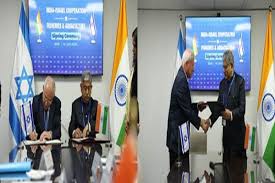
India and Israel signed a Joint Ministerial Declaration of Intent to deepen cooperation in fisheries and aquaculture during the Global Summit on Blue Food Security 2026 in Eilat.A bilateral declaration between India and Israel to strengthen collaboration in fisheries and aquaculture through technology transfer, joint research, innovation, and capacity building, aligned with sustainable and climate-resilient development goals.
Key features:
- Advanced aquaculture technologies: Cooperation on RAS, biofloc, cage culture, aquaponics, mariculture, seaweed farming, and aquarium systems.
- Genetic & seed improvement: Joint work on high-yield species, pathogen-free seed, brood stock development, and genetic enhancement programmes.
- Water & resource efficiency: Adoption of Israeli water-saving and water-management technologies in aquaculture systems.
- Innovation & startups: Promotion of startups and R&D ecosystems to advance the Blue Economy.
- Monitoring & traceability: Technology-driven fisheries monitoring, data systems, transparency, and traceability for responsible fishing.
- Capacity building: Training in deep-sea fishing, vessel design, coastal aquaculture, processing, marketing, and infrastructure (harbours, landing centres).
78th Army Day:
The Indian Army marked its 78th Army Day on 15th January 2026 with a historic parade in Jaipur, Rajasthan, emphasising the force’s shift towards modern, agile, and technology-driven warfare.This was the 4th Army Day Parade held outside Delhi, following events in Bengaluru (2023), Lucknow (2024), and Pune (2025), and marked the first instance it was organised outside a cantonment.The day commemorates 15th January 1949, when Field Marshal KM Cariappa became the first Indian Commander-in-Chief, marking full military sovereignty.Currently, the President of India serves as the Supreme Commander of the Indian Armed Forces, including the Army, Navy, and Air Force. The 2026 theme is “Year of Networking and Data Centricity” that highlighted the Army’s push for digital transformation, AI-driven warfare, cyber resilience, and integrated battle management systems.
Japan’s Deep-Sea Rare Earth Mining Initiative:
Japan has embarked on the world’s first experimental attempt to extract rare earth elements from the deep-sea at a depth of about 6,000 metres, using its deep-sea scientific drilling vessel Chikyu.The initiative is driven by Japan’s effort to reduce heavy dependence on China, which accounts for nearly two-thirds of global rare-earth mining and over 90% of refined output.The test mission is being conducted near Minami Torishima, a remote island located within Japan’s Exclusive Economic Zone (EEZ) in the Pacific Ocean.The area around Minami Torishima is estimated to contain over 16 million tonnes of rare-earth deposits, including reserves sufficient for 730 years of dysprosium and 780 years of yttrium, both critical for electric vehicles, electronics, wind turbines, and defence systems.Deep sea mining involves extracting mineral deposits, from ocean depths below 200 metres, an area that covers two-thirds of the world’s seafloor,for industrial use.
Traditional Indelible Ink:
Maharashtra’s State Election Commission has decided to revert to traditional indelible ink for zilla parishad and panchayat samiti elections after complaints that marker-pen ink used in municipal polls could be wiped off.Indelible ink is a permanent marking ink applied on a voter’s finger after voting to indicate that the person has already exercised their franchise and cannot vote again.India began using indelible ink in 1962 (Third General Election) as a simple, low-cost and effective method to prevent impersonation and repeat voting.The ink is manufactured exclusively by Mysore Paints and Varnish Limited, a Karnataka government undertaking, using a closely guarded formula developed by India’s National Physical Laboratory. Aim is to prevent multiple voting,to ensure the integrity and credibility of elections, especially in large-scale polls with millions of voters.
Kruger National Park:
Kruger National Park was temporarily shut to day visitors after severe flooding caused multiple rivers to overflow due to prolonged heavy rainfall.Kruger National Park is South Africa’s largest and oldest national park, and one of Africa’s most renowned wildlife reserves, globally famous for conservation and eco-tourism.It lies in northeastern South Africa, spanning the provinces of Limpopo and Mpumalanga, bordering Mozambique and Zimbabwe.
Yemen PM Resigns, Foreign Minister Appointed as New Prime Minister:
Yemen has witnessed a significant political development in January 2026. The country’s Saudi-backed leadership accepted the resignation of its Prime Minister and swiftly appointed a new head of government. The leadership transition comes at a time of renewed regional tensions and continuing instability linked to Yemen’s prolonged civil war and Gulf geopolitics.Yemen’s Presidential Leadership Council has accepted the resignation of Prime Minister Salem bin Breik and appointed Shaya Mohsen Zindani, the country’s foreign minister, as the new Prime Minister.
MS Dhoni Appointed Goodwill Ambassador for Pune Grand Tour 2026:
India is set to make a historic entry into global professional cycling with the Pune Grand Tour 2026. Former Indian cricket captain MS Dhoni has been appointed as its Goodwill Ambassador. The five-day international road cycling race will be held in Pune from January 19 to 23, 2026, marking a milestone for Indian sports beyond cricket.The Pune Grand Tour 2026 will be India’s first-ever Union Cycliste Internationale (UCI) 2.2 category Continental Road Cycling Race for men.The event places India on the official global cycling calendar of the Union Cycliste Internationale. Conducted over five stages, the race will cover a total distance of 437 kilometres, testing endurance, strategy, and technical skill at an international level.
Centre Appoints Shatrujeet Singh Kapoor as ITBP Chief; Praveen Kumar to Head BSF:
The Union government has announced important leadership changes in India’s border security forces. Senior IPS officer Shatrujeet Singh Kapoor has been appointed as the new Director General of the Indo-Tibetan Border Police, while the current ITBP chief Praveen Kumar will take charge as Director General of the Border Security Force. These appointments are part of routine administrative restructuring to ensure continuity and effectiveness in internal security.
World Bank Raises India’s GDP Growth Forecast to 7.2% for FY26:
The World Bank has raised India’s GDP growth projection to 7.2% for FY26 in its Global Economic Prospects report, citing strong domestic demand and tax reforms. Growth is expected to moderate to 6.5% in FY27, even as India remains the fastest-growing major economy.According to the World Bank, India’s economy is expected to grow by 7.2% in FY 2025–26 (April 2025 to March 2026). This upward revision of 0.9 percentage points reflects stronger-than-expected economic momentum.However, growth is projected to moderate to 6.5% in FY 2026–27, mainly due to global uncertainties and a high base effect.The report also projects growth to edge up again to 6.6% in FY 2027–28, supported by services and investment recovery.
Andhra Pradesh to Host World’s Largest Green Ammonia Project at Kakinada:
Andhra Pradesh will host the world’s largest green ammonia project at Kakinada, with AM Green investing $10 billion to build 1.5 MTPA capacity by 2030. The project supports India’s first green ammonia exports and aligns with the National Green Hydrogen Mission.The project is being developed by AM Green through the conversion of an existing ammonia-urea complex at Kakinada.With a total planned investment of $10 billion, the facility will have a final production capacity of 1.5 million tonnes per annum (MTPA).Phased commissioning is planned, with 0.5 MTPA by 2027, 1.0 MTPA by 2028, and full capacity by 2030, making it the largest such project globally.
Bharat Electricity Summit 2026:
The Bharat Electricity Summit 2026 will be held from 19-22 March 2026 at Yashobhoomi, New Delhi, as announced by Union Power Minister Manohar LalBharat Electricity Summit 2026 is a global conference-cum-exhibition for the power and electricity sector.It is being organised to showcase India’s leadership in the global energy transition while addressing challenges across generation, transmission, distribution, storage and smart consumption.
The summit will bring together stakeholders from government, industry, academia and civil society, providing a common platform to deliberate on the future of electricity systems and sustainable energy pathways.The theme of the summit is “Electrifying Growth. Empowering Sustainability. Connecting Globally.”It highlights India’s commitment to sustainable development and resilient power infrastructure.The discussions will focus on clean energy deployment, energy efficiency, grid resilience, battery storage, energy transition technologies and global partnerships. By linking domestic capabilities with international expertise, the summit aims to strengthen cooperation and innovation in the global electricity sector.



