
Today’s Current Affairs: 26th December 2025 for UPSC IAS exams, State PSC exams, SSC CGL, State SSC, RRB, Railways, Banking Exam & IBPS, etc
Table of Contents
K-4 Missile:
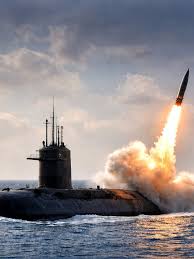
India tested an intermediate-range ballistic missile called K-4, which is designed to hit targets 3,500-km away, from the nuclear-powered submarine INS Arighaat in the Bay of Bengal recently.
- Kalam-4 or K-4 Missile, is a nuclear-capable intermediate-range submarine-launched ballistic missile (SLBM) designed mainly for deployment on Arihant-class submarines.
- Each Arihant-class submarine can carry four K-4 missiles.
- K-4 was indigenously developed by the Defence Research and Development Organisation (DRDO).\
- The missile has a two-stage solid-fuel system.
- It has a range of around 3,500 km.
- One of its key features is its ability to be cold-launched from underwater, which allows the missile to be ejected from the submarine before the engine ignites.
- It is guided by an advanced inertial navigation system supported by GPS and India’s NavIC system.
- This combination ensures high accuracy.
- The missile is also equipped with manoeuvring features that help it evade missile defence systems.
Samudra Pratap:

The Indian Coast Guard inducted the first in-built Pollution Control Vessel (PCV), Samudra Pratap under the 02 PCV project of Goa Shipyard Limited.
- It is the first indigenously designed and built Pollution Control Vessel of the Indian Coast Guard.
- It is the largest ship in the ICG fleet, significantly enhancing the Coast Guard’s operational reach and capability.
- The vessel is equipped with state-of-the-art technology, including stabilised remote-controlled guns with integrated fire control systems.
- It consists of Integrated Bridge System, Integrated Platform Management System, Automated Power Management System, and a high-capacity external firefighting system.
- It is the first Indian Coast Guard ship to be equipped with Dynamic Positioning capability (DP-1), with FiFi-2 / FFV-2 notation certificate.
- It is equipped with advanced systems to detect oil spills.
- It is capable of high precision operations, recover pollutants from viscous oil, analyse contaminants, and separate oil from contaminated water.
Long-billed Vulture:
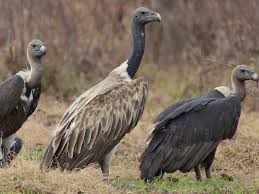 The Bombay Natural History Society (BNHS), along with the Maharashtra Forest Department, successfully carried out the tagging of 15 long-billed vultures at Melghat Tiger Reserve.
- It is an old World vulture native to the Asian region.
- They are also known as Indian long-billed vultures due to their comparatively longer beak.
- It is a medium-sized and bulky scavenger feeding mostly on the carcasses of dead animals.
- Females of this species are smaller than males.
- They are usually found in savannas and other open habitats around villages, cities, and near cultivated areas.
- These are native to India, Pakistan, and Nepal.
- Conservation status
- IUCN Red List: Critically Endangered
- Melghat Tiger Reserve is located in Maharashtra.
PM-SETU Scheme: In News
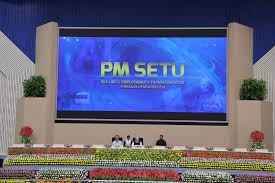
The Ministry of Skill Development and Entrepreneurship has invited industry leaders to participate in the PM-SETU scheme.
- Pradhan Mantri Skilling and Employability Transformation through Upgraded ITIs (PM-SETU) is a Centrally Sponsored Scheme launched to strengthen India’s vocational training ecosystem.
- It aims to modernise the ITI ecosystem by upgrading 1000 government ITIs across India into modern, industry-aligned training institutions
- It is implemented as a hub-and-spoke model.
- Each hub will be equipped with advanced infrastructure, innovation and incubation centres, production units, training of trainer facilities, and placement services, while the spokes will extend access and outreach.
- Nodal Ministry: Ministry of Skill Development and Entrepreneurship
- Components of PM-SETU Scheme:
- Introduce new, demand-driven courses and revamp existing ones in collaboration with industry;
- Special Purpose Vehicles: Set up Special Purpose Vehicles (SPVs) with credible Anchor Industry Partners to manage clusters and ensure outcome-based training;
- Create pathways for long-term diplomas, short-term courses, and executive programs;
- Strengthen 5 National Skill Training Institutes in – Bhubaneswar (Odisha), Chennai (Tamil Nadu), Hyderabad (Telangana), Kanpur (Uttar Pradesh), Ludhiana (Punjab), as Centres of Excellence with global partnerships.
- The initiative is backed by global co-financing from the World Bank and Asian Development Bank.
Pradhan Mantri Rashtriya Bal Puraskar 2025:
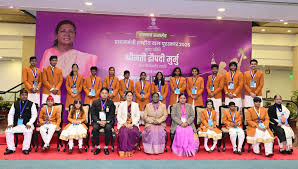
President of India to confer the Pradhan Mantri Rashtriya Bal Puraskar (PMRBP) to children who have demonstrated outstanding achievements in diverse fields on ‘Veer Bal Diwas’.
- It is a prestigious national honour conferred annually by the Government of India.
- It is awarded to children for exceptional excellence in Bravery, Art & Culture, Environment, Social Service, Science & Technology, and Sports.
- The Pradhan Mantri Rashtriya Bal Puraskar organized by the Ministry of Women and Child Development Government of India.
- Eligibility for Pradhan Mantri Rashtriya Bal Puraskar
- A child should be an Indian Citizen.
- Age: A child above the age of 5 years and not exceeding 18 years (as of 31st July of respective year).
- The act/incident/achievement should have been within 2 years of the last date of receipt of application/nomination for the year of consideration.
- The number of awards will be 25, however, any relaxation to this maximum number may be permitted at the discretion of the National Selection Committee.
- Each awardee will receive a medal, certificate and citation booklet.
Haka Dance:
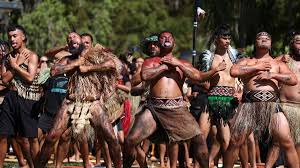
A Sikh Nagar Kirtan or religious procession in South Auckland, New Zealand, was protested in the form of a traditional tribal “haka” dance recently.
- It is a traditional dance of the indigenous Māori people of New Zealand.
- It is known for its powerful energy, fierce facial expressions (pukana), and physical movements like stamping, hand gestures, and chanting.
- Haka varies by tribal region, with many haka telling the story of significant events in a tribe’s history.
- Traditionally, the haka was performed for war, to celebrate achievements, or to welcome guests.
- Today, it is performed at important occasions like sporting events, weddings, and funerals.
- It symbolizes tribal pride, strength, and unity.
Bezymianny Volcano:
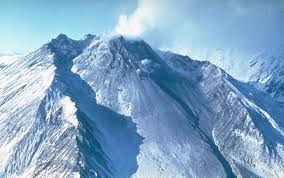
The Bezymianny volcano that once blew itself apart in a massive explosion is now rising from the ashes—faster than scientists expected.
- It is a cone-shaped stratovolcano on the Kamchatka Peninsula in the Russia.
- Stratovolcano is a tall, steep, and cone-shaped type of volcano.
- Unlike flat shield volcanoes, they have higher peaks.
- They are typically found above subduction zones, and they are often part of large volcanically active regions, such as the Ring of Fire that frames much of the Pacific Ocean.
- Stratovolcanoes comprise the largest percentage of the Earth’s individual volcanoes, and most are characterized by eruptions of andesite and dacite, lavas that are cooler and more viscous than basalt.
- These more viscous lavas allow gas pressures to build up to high levels. Therefore, these volcanoes often suffer explosive eruptions.
- They are usually about half-half lava and pyroclastic material, and the layering of these products gives them their other common name of composite volcanoes.
- At the peak, stratovolcanoes usually have a small crater.
Primary Sclerosing Cholangitis:
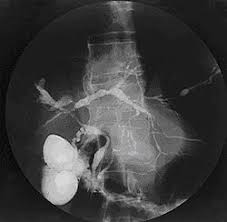
A new monoclonal antibody treatment has shown promising results for a rare liver disease called primary sclerosing cholangitis (PSC).
- It is a rare, long-term disease of the liver caused by inflammation of tubes in the liver called bile ducts.
- These ducts carry bile (a fluid that helps to digest fats) from the liver, where bile is produced, to the gallbladder, where it is stored, and to the small intestine, where it aids in digestion.
- Scarring and narrowing of bile ducts leads to liver damage.
- Over time, the liver loses its ability to filter blood and support digestion.
- People with PSC are at higher risk of liver failure and cancers of the bile ducts, gallbladder, and colon.
- It’s not entirely clear what causes PSC, but it appears to involve a combination of factors, including:
- Genetics
- Immune system problems
- Changes to the bacteria in your gut microbiome
- Environmental factors
- Symptoms: Itchy skin,Extreme tiredness (fatigue),Belly pain,Yellowing of the skin and eyes, called jaundice,Chills and fever from infection of bile ducts.
- Treatment:
- Care focuses on monitoring liver health and managing symptoms.
- Procedures can temporarily open blocked ducts, but liver transplant is the only cure for advanced disease.
Thanjavur Painting:

The Department of Posts successfully undertook the transmission of a priceless Thanjavur painting of the Shri Ram from Bengaluru to Ayodhya using its Logistics Post service.
- It is a classical South Indian art form originating in the town of Thanjavur (Tanjore), Tamil Nadu, around 1600 AD.
- Tanjore or Thanjavur paintings are created on wooden panels, commonly known as palagai padam.
- It was flourished under the Nayakas of Thanjavur.
- Tanjore paintings are traditionally created on canvas affixed to wooden planks, typically made from jackfruit or teak, and bound with Arabic gum.
- These paintings are known for their vibrant colors. They often use bright shades of red, blue, green, and gold leafwork to create an opulent effect.
- It is one of the unique features of Tanjore paintings is the use of gesso work. Gesso is a mixture of chalk, gypsum, and glue applied to the surface to create embossed patterns and motifs.
- Tanjore paintings typically depict Hindu gods and goddesses, especially figures like Lord Krishna, Lord Ganesha, and Goddess Lakshmi.
- Gold Leaf: Gold foil or leaf is extensively used in Tanjore paintings to embellish the artwork.
- It has received the Geographical Indication tag.
India’s Largest Circular Stone Labyrinth:
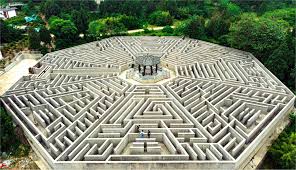
Archaeologists recently discovered a remarkable circular stone labyrinth in the Boramani grasslands of Solapur, Maharashtra, identified as the largest of its kind ever recorded in India.
- India’s Largest Circular Stone Labyrinth was discovered in the Boramani grasslands of Solapur, Maharashtra.
- It is formed from small stone blocks.
- The rings guide movement inward toward a tightly coiled spiral at the center, creating a design that reflects both precision and symbolic intent.
- This structure is linked to Indo-Roman trade during the Satavahana dynasty period.
- The presence of soil accumulation between the stone rings shows that this structure has remained untouched for several centuries.
- Its design resembles classical labyrinth forms found in Mediterranean cultures, including motifs seen on Roman-era coins, while also incorporating a central spiral associated in India with the concept of the Chakravyuh.
- The Chakravyūha is a complex military formation described in the Hindu epic Mahabharata, designed to encircle and overwhelm enemies through multiple defensive layers.
- Before this discovery, the largest known circular labyrinth in India had 11 circuits, making the Solapur example unprecedented in terms of circular complexity.
- Although there is a larger square labyrinth in Gedimedu in Tamil Nadu, this newly documented site is the largest circular stone labyrinth identified in the country to date.
Akash-NG Missile System:
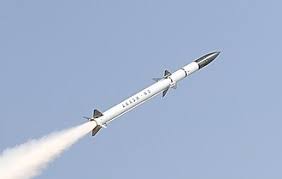
The Defence Research and Development Organisation (DRDO) has successfully completed the User Evaluation Trials of the Next Generation Akash missile (Akash-NG) system recently.
- Akash Next Generation (Akash-NG) is a state-of-the-art Surface-to-Air Missile (SAM) defence system.
- It was developed by the Defence Research and Development Organisation (DRDO) and produced by Bharat Dynamics Limited (BDL).
- It is designed to protect vulnerable areas and points from air attacks.
- It succeeds the original Akash missile system, which has been operational with the Indian Air Force since 2014 and the Army since 2015.
- The next-generation variant is lighter.
- It consists of several advanced features, including an indigenous Radio Frequency (RF) seeker, dual-pulse solid rocket motor, and fully homegrown radars and Command, Control, and Communication (C2) systems.
- These features enable the system to detect and engage high-speed, low-altitude, and long-range high-altitude targets with high precision.
- It is designed to engage multiple targets simultaneously, with a range of up to 30 km and an altitude of 18 km.
- It has the ability to engage up to 10 targets simultaneously, with a firing rate of one missile every 10 seconds.
- The system can also be deployed in various configurations, including mobile and fixed installations.
Artificially Intelligent Lab Assistant:
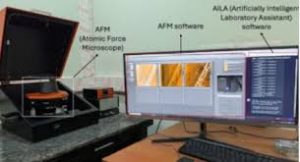
IIT Delhi researchers recently developed an AI- Agent AILA- Artificially Intelligent Lab Assistant.
- Artificially Intelligent Lab Assistant (AILA) is an AI agent which can independently run complex scientific experiments, analyse results, and make decisions in real time.
- It was developed by IIT Delhi researchers in collaboration with scientists from Denmark and Germany.
- Unlike earlier AI tools that mainly helped with writing or data analysis, AILA works directly with laboratory instruments.
- It can operate real scientific equipment, particularly the Atomic Force Microscope (AFM), one of the most delicate and complex instruments used to study materials at the nano scale.
- When AILA is instructed to perform an experiment, it writes the necessary code, operates the scientific instrument, collects data, and analyses the results on its own.
- The entire scientific workflow, data generation, processing, and interpretation, is automated through AILA.
- It performs experiments much like a trained scientist.
Godavari Estuary to Witness 40th Asian Waterbird Census:
The 40th Asian Waterbird Census (AWC) along with the 60th International Waterbird Census (IWC) will be conducted in January 10 and 11, 2026. The Census will conducted at the Godavari estuary, including the ecologically rich Coringa Wildlife Sanctuary in Andhra Pradesh. This large scale biodiversity exercise highlights India’s growing role in wetland conservation, migratory bird monitoring, and global ecological research. The census is especially significant as the Godavari estuary is one of the rare sites in India where two globally endangered migratory birds the Indian Skimmer and the Great Knot can be sighted together, making it a priority landscape for avian conservation.
Government Set to Introduce India’s First Anti-Terror Policy:
India is on the verge of introducing its first comprehensive anti terror policy, a landmark step in strengthening national security architecture. The policy currently in its final stages, is expected to offer a unified framework for states and central agencies to prevent, investigate, and respond to terror-related incidents more effectively. The move reflects India’s evolving security challenges, including online radicalisation, cross border threats, and the need for stronger coordination among intelligence and law enforcement agencies
Santhali Joins the Constitutional Languages:
Honorable President of India Droupadi Murmu released the Constitution of India in the Santhali language at a special function held at Rashtrapati Bhavan on December 25, 2025. The Constitution has been published in Ol Chiki script, enabling Santhali speaking citizens to read, understand, and connect with India’s supreme law in their mother tongue. This initiative reflects India’s constitutional commitment for inclusive governance, cultural respect and accessibility of democratic institutions to all communities especially tribal populations.
Prime Minister to Chair Fifth National Conference of Chief Secretaries in Delhi:
Prime Minister Narendra Modi will chair the Fifth National Conference of Chief Secretaries in New Delhi on December 27 and 28, 2025. The conference will be held under the overarching theme “Human Capital for Viksit Bharat” reflecting the government’s emphasis on transforming India’s population into a skilled productive and future-ready workforce. The event aims to deepen structured Centre–State collaboration on key development priorities critical to India’s long-term growth trajectory.The central theme underscores a shift in policy thinking from viewing India’s population merely as a demographic dividend to developing citizens as human capital.The discussions will focus on creating systems that nurture skills, productivity, innovation and employability to support India’s aspiration of becoming a developed nation.The emphasis is on inclusive, sustainable and future-oriented growth driven by people-centric development.
Armenia Introduces Official Butterfly Logo for COP17 Conference:
Armenia has officially unveiled the logo for the 17th Conference of the Parties (COP17) to the Convention on Biological Diversity. At the centre of the emblem is a rare blue butterfly Polyommatus eriwanensis, commonly known as the Erivan Anomalous Blue, a species found only in and around Yerevan. The logo is accompanied by the slogan “Taking action for nature”, sets the tone for COP17, which will be hosted by Armenia in October 2026.
R Praggnanandhaa and Anish Giri Clinch Global Chess League 2025 Title:
R Praggnanandhaa and Anish Giri guided Alpine SG Pipers to victory in the Global Chess League 2025 Season 3. The finals which was held in Mumbai saw the Pipers defeat defending champions Triveni Continental Kings, marking their first ever GCL title. This win is significant not only for the team but also for Indian chess which continues to produce world-class talent capable of performing under high-pressure international formats.



