
Today’s Current Affairs: 4th December 2025 for UPSC IAS exams, State PSC exams, SSC CGL, State SSC, RRB, Railways, Banking Exam & IBPS, etc
Table of Contents
Bonda Tribe:
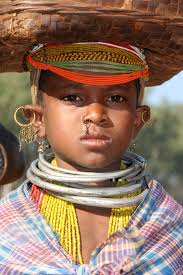
Members of the Bonda community in Odisha’s Malkangiri district are set to transition from fragile thatched huts to permanent pucca houses under the Union government’s PM-Janman scheme.
- The Bondas are exclusively found in the Malkangiri district of Odisha and are mostly concentrated in the Khairaput block of the district.
- It is a particularly vulnerable tribal group (PVTG) and one of the oldest tribes of India.
- They are also known as Bondo, Bondas, Bonda Paraja, and Bhonda.
- They are considered one of the first settlers in India, with their lineage tracing back to the Austroasiatic race.
- The Bonda people speak Remo, a language belonging to the Austroasiatic linguistic family.
- This is distinct from mainstream Indian languages, making it difficult for outsiders to communicate with them.
- The Bondas are divided into two groups because of their distinct cultural practices:
- The Lower Bondas, who live in the Malkangiri district in south Odisha and border Andhra Pradesh and Chhattisgarh, and
- The Upper Bondas, who live in the remote villages of the district’s hilly terrain.
- The social organization is hierarchical, with a council of elders that makes important decisions for the community.
- The Bonda people live in small villages organized around communal spaces where ceremonies and meetings take place.
- Bonda architecture is characterized by mud and thatched-roof houses, designed to adapt to the mountainous environment and climatic conditions.
- The art of the Bonda is expressed mainly through the creation of decorative tools and utensils, in addition to their colorful fabrics and jewelry.
- They have an interesting dressing style – ladies are semiclad and wear different sorts of rings and pieces of jewelry around their bodies, while the men wear deadly attires.
- The religion of the Bonda people is animistic, focused on the worship of nature and ancestral spirits.
- Their economy is based mainly on subsistence agriculture, hunting, and gathering.
- They are known for their unique practice of shifting cultivation called dangar chas.
- They grow crops like paddy, millet, pulses, and vegetables.
- Only 6% of Bondas are literate. The life expectancy of the tribe is so low they are nearly extinct.
Cold Wave:
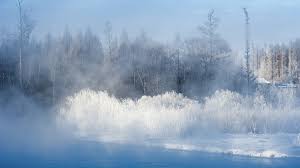
Higher than normal cold wave days are expected to impact parts of central India as well as some regions in northwest and northeast India, according to the India Meteorological Department (IMD).
- Cold waves are unusual weather occurrences caused by extremely low temperatures in the near-surface atmosphere.
- Their duration can range from several days to a few weeks, contingent upon the geography and climatic conditions of the region.
- The India Meteorological Department (IMD) defines a cold wave as a rapid fall in temperature within 24 hours.
- This is distinguished by a marked cooling of the air, or with the invasion of very cold air, over a large area.
- As per IMD, a cold wave is considered when the minimum temperature of a station is 10°C or less for plains and 0°C or less for hilly regions.
- A cold wave and severe cold wave is considered a negative departure from normal i.e., 4.5°C to 6.4°C and more than 6.4°C in hill stations,
- Similarly, the departure in minimum temperature of ≤ 04°C and ≤ 02°C for plains is considered a cold wave and severe cold wave, respectively.
- Cold waves are predominantly experienced during the period December-February, when minimum temperatures drop to very low levels, especially over the northern parts of India.
- Exposure to extreme cold can lead to frostbite, hypothermia, and other cold-related illnesses.
- Non-freezing cold injuries, such as Immersion Foot—caused by prolonged exposure to cold, wet conditions—are also a risk.
- In extreme cases, cold exposure may result in fatalities if adequate precautions are not taken.
Chaprala wildlife sanctuary:
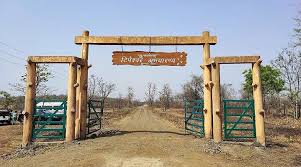
A rare striated grassbird was recently recorded in Chaprala wildlife sanctuary in Gadchiroli district, marking a major range extension for the species in Maharashtra.
- It is located in the Gadchiroli district of Maharashtra.
- The Markhanda and Pedigundam hills flank the sanctuary from northeast and south, and the Pranhita River flows along its western boundary.
- It is located on the bank of the confluence of the Wardha and Wainganga rivers.
- During the monsoons, river water swells and enters the sanctuary.
- Additionally, several water bodies, including the Murgikunta, Raikonta, and Komatkunta tanks, further contribute to the sanctuary’s biodiversity.
- It is dominated by southern tropical dry deciduous forests interspersed with grasslands.
- The dominant tree species include teak, Arjun, salai, mahua, bel, dhawada, tendu, sissoo, and semal.
- It is inhabited by Tiger, Leopard, Wild boar, Sloth bear, Wild dogs, Langurs, Blackbuck, Spotted Deer, Sambar, Jackal, Mongoose, etc.\
- The sanctuary also features a distinctive riparian ecosystem that supports a diverse aquatic fauna, including fish, prawns, and turtles.
- Striped Grassbird is a species of bird in the Locustellidae family.
- Scientific Name: Megalurus palustris
- It is widely found across South and Southeast Asia, including China, India, Pakistan, Cambodia, Laos, Vietnam, Thailand, Philippines, Malaysia and Indonesia.
- Conservation Status: IUCN Red List: Least Concern.
Bitra Island:
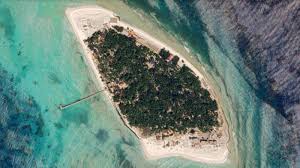
The Chief of Staff of the Southern Naval Command recently said the Navy is setting up a detachment in Bitra Island, which “is more or less completed”.
- Bitra Island is located in the northern region of Lakshadweep in the Arabian Sea.
- It is the smallest inhabited island in the territory.
- The climate of Bitra is similar to the climatic conditions of Kerala. March to May is the hottest period of the year.
- It is strategically important to India, as it lies in a key position in the Arabian Sea.
- Bitra would become the third island in the archipelago with a defence establishment – two Indian naval bases in the archipelago are INS Dweeprakshak in Kavaratti, the capital of the UT, and INS Jatayu in Minicoy.
Rock Eagle Owl:
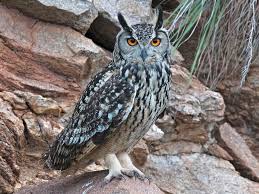
A Rock Eagle Owl nest prompted the Telangana forest department to halt quarrying operations for over a month.
- It is also called Indian eagle-owl (Bubo bengalensis) or Bengal eagle-owl.
- It is a large-horned owl species native to hilly scrub forests in India.
- It was earlier treated as a subspecies of the Eurasian eagle-owl.
- It is especially found near rocky places within the mainland of the Indian Subcontinent south of the Himalayas.
- It avoids humid evergreen forests and extremely arid areas.
- It is mainly found in South Asian countries like India, Nepal, Pakistan.
- Conservation Status:
- IUCN: Least Concern
- CITES: Appendix II.
National Centre for Polar and Ocean Research: Celebrated its Silver Jubilee
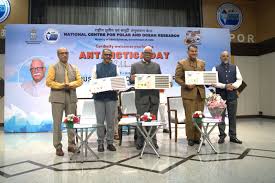
The National Centre for Polar and Ocean Research (NCPOR) celebrated its Silver Jubilee and also released commemorative postage stamps.
- It was established as an autonomous Research and Development Institution on the 25th May 1998.
- It was formerly known as the National Centre for Antarctic and Ocean Research (NCAOR).
- It has been at the forefront of leading India’s scientific expeditions and research programmes in the Polar regions and the Southern Ocean.
- Nodal Ministry: Ministry of Earth Sciences Government of India
- Location: Vasco da Gama, Goa.
- Mandate and Functions of National Centre for Polar and Ocean Research:
- It is designated as the nodal organization for the co-ordination and implementation of the Indian Antarctic Programme, and executing polar expeditions in the Antarctic, Arctic, Southern Ocean, and Himalayas.
- It also works on strategically vital projects like: Mapping of Exclusive Economic Zone (EEZ), Continental shelf surveys, and the Deep Ocean Mission.
- It has established and operationalised permanent Indian research stations — DakshinGangotri, Maitri, and Bharati in Antarctica, and Himadri in the Arctic, along with the Himalayan station Himansh.
Chaolung Sukapha:
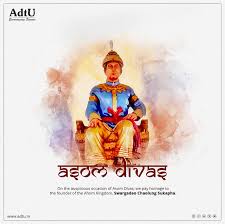
The Union Minister of Ports, Shipping & Waterways led a vibrant celebration of Assam Day and paid rich tributes to Chaolung Sukapha.
- Chaolung Sukapha was a 13th-century ruler who founded the Ahom kingdom that ruled Assam for six centuries.
- He is widely referred to as the architect of “Bor Asom” or “greater Assam”.
- It was in Charaideo he established his first small principality, sowing the seeds of further expansion of the Ahom kingdom.
- He divided the kingdom into territorial units called khels or phoids, each under an officer responsible for supplying a fixed number of paiks.
- Paiks are the able-bodied male population who owed labour and military service to the state.
- Every adult male between sixteen and fifty was registered as a paik and served the king for part of the year in agriculture, construction, or war. In return, he was allotted land for personal cultivation.
- He emphasized guerrilla tactics suited to the terrain of rivers, jungles, and hills.
- Sukapha’s significance lies in his successful efforts towards assimilation of different communities and tribes.
- He adopted a policy of conciliation and assimilation rather than annihilation.
- Sukapha developed very amiable relationships with the tribal communities living in Assam — especially the Sutias, the Morans and the Kacharis.
Alaknanda Galaxy:

Researchers at National Centre for Radio Astrophysics – Tata Institute of Fundamental Research (NCRA–TIFR), Pune, have discovered a well-structured spiral galaxy named Alaknanda, dating back to just 1.5 billion years after the Big Bang.
- Found using the NASA’s James Webb Space Telescope (JWST), this finding challenges current models, which state that well-structured galaxies do not form so early in the universe’s history
- Alaknanda is located about 12 billion light-years away and shows a textbook spiral structure. It formed when the universe was only about 10% of its current age, roughly 1.5 billion years old.
- It has two clear spiral arms and a bright central bulge, strikingly similar to the Milky Way.
- Named after the Himalayan river Alaknanda, considered the sister river of Mandakini, which is also the Hindi name for the Milky Way.
- The name reflects its resemblance to a distant sister of the Milky Way.
- Early galaxies were expected to be chaotic, clumpy, hot, and unstable, but Alaknanda stands out as a mature and well-ordered spiral system.
- Its structure adds to growing evidence that the early universe was far more evolved than previously believed.
- The galaxy’s unexpected maturity suggests that complex galactic structures began forming much earlier than current models predict.
WHO’s Global Guideline on GLP-1 Medicines:
The World Health Organization (WHO) has released its first-ever global guideline on the use of GLP-1 receptor agonist medicines for the long-term treatment of obesity.
- A new WHO policy framework offering evidence-based recommendations for using GLP-1 therapies to treat obesity as a chronic, relapsing disease requiring lifelong management.
Key Guidelines Issued:
- Conditional recommendation for long-term use in adults: GLP-1 medicines (semaglutide, tirzepatide, liraglutide) may be used for sustained obesity management—except in pregnant women.
- Must be combined with behavioural interventions: WHO emphasizes that GLP-1 therapy should be paired with structured diet plans, physical activity, and counselling for best outcomes.
- Equity and system readiness: WHO warns that rapid adoption without affordability and access policies could widen health disparities, as <10% of those who need GLP-1 are expected to access them by 2030.
GLP-1 Medicines:
- GLP-1 receptor agonists are a class of drugs originally developed for type-2 diabetes that mimic a natural hormone called Glucagon-Like Peptide-1 involved in appetite regulation and insulin control.
- It Reduce appetite and slow stomach emptying → lower calorie intake.
- Increase insulin secretion and reduce blood sugar.
- Improve metabolic health, reducing cardiovascular and kidney complications.
- Lead to significant and sustained weight loss when used long-term.
Inclusive Growth and Disability Rights:
The International Day of Persons with Disabilities highlighted the WHO’s call for inclusive and equitable health financing for persons with disabilities. Inclusive growth and disability rights aim to ensure persons with disabilities (PwDs) participate fully in society through accessible infrastructure, livelihoods, education and legal safeguards, eliminating structural barriers to equality and dignity.
Current Status in India:
- Population size: India has 2.68 crore PwDs (2011 Census) constituting 2.21% of the population, requiring targeted rights-based frameworks for equal participation.
- Legal identity systems: The UDID programme now enables nationwide disability certification, improving transparency and access to benefits.
- Expanding disability categories: The RPwD Act 2016 recognises 21 disabilities, expanding coverage beyond the earlier seven categories for more inclusive service delivery.
Child Marriage Hotspot:
Child marriages in Madhya Pradesh have risen sharply by 47% since 2020, with Damoh district emerging as the worst hotspot in 2025. Parliamentary data shows 538 cases recorded this year, the highest in five years. A persistent cluster of districts reporting disproportionately high child marriages, mainly in Bundelkhand, central MP, Gwalior–Chambal and tribal belts, indicating entrenched socio-economic vulnerabilities. MP saw cases rise from 366 (2020) to 538 (2025) — a 47% increase despite awareness campaigns.Damoh alone accounts for 21% of all child marriages in 2025, jumping from 33 cases in 2024 to 115 in 2025. Bundelkhand, tribal and economically backward districts dominate the list, signalling poverty-linked, region-specific persistence.
INS Aridaman:
India is set to commission INS Aridaman, its third indigenous nuclear-powered ballistic missile submarine (SSBN), with Navy Chief Admiral Dinesh K. INS Aridaman is India’s third indigenously built SSBN, part of the Arihant-class nuclear submarines under the Strategic Forces Command, designed to provide assured retaliatory capability under India’s no-first-use nuclear doctrine. Constructed under the Advanced Technology Vessel (ATV) Project, led by: Ship Building Centre, Visakhapatnam, It integrates over 90% indigenous components, including its nuclear reactor.
Opium Poppy Cultivation:
A new UNODC report shows that Myanmar’s opium poppy cultivation has surged 17%, reaching the highest level in a decade at 53,100 hectares, driven by conflict, economic distress, and rising opium prices.Opium poppy (Papaver somniferum) is a flowering plant cultivated for the latex-rich capsules that produce opium and its derivatives. It is the world’s primary natural source for morphine, codeine, thebaine, and other alkaloids used in medical and illicit drug markets.In India, opium production became a government-controlled monopoly under the East India Company and later the British, with major factories at Ghazipur and Patna.After Independence, cultivation and manufacturing came under the Central Government (1950).
India regulates all activities through the NDPS Act, 1985, and is the only country producing licit opium gum for pharmaceuticals.
World Summit on Disaster Management (WSDM) 2025:
At the World Summit on Disaster Management (WSDM) 2025 in Dehradun, Dr. Jitendra Singh announced major upgrades to Uttarakhand’s early-warning systems, including six weather radars, 33 observatories, and 142 AWS stations.WSDM 2025 is a global platform on disaster resilience, bringing together scientists, policymakers, practitioners, and industry leaders to discuss future-ready strategies for disaster risk reduction in a changing climate.
Held in: Dehradun, Uttarakhand. Theme: “Strengthening International Cooperation for Building Resilient Communities.Aim is to enhance global disaster collaboration, share scientific insights, strengthen early-warning infrastructure, and promote resilient development, especially in fragile ecosystems like the Himalayas.



