
Exclusive Economic Zone:
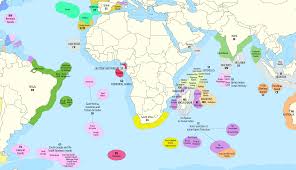
Fisher-folk recently urged the Centre to include their representatives in policymaking bodies so that their practical expertise can be utilized, without which the goal of responsible fishing in the Exclusive Economic Zone (EEZ) cannot be achieved.
- An EEZ is an area of the ocean, generally extending 200 nautical miles (230 miles) beyond a nation’s territorial sea, within which a coastal nation has jurisdiction over both living and nonliving resources.
- The concept of an exclusive economic zone (EEZ) was adopted through the 1982 United Nations Convention on the Law of the Sea.
- Under international law, within its defined EEZ, a coastal nation has:
- Sovereign rights for the purpose of exploring, exploiting, conserving, and managing natural resources of the seabed, subsoil, and waters above it.
- Jurisdiction as provided for in international law with regard to the establishment and use of artificial islands, installations, and structures; marine scientific research; and the protection and preservation of the marine environment.
- Other rights and duties provided for under international law.
- UNCLOS (United Nations Convention on the Law of the Sea) indicates that the coastal state determines the acceptable level of fishing quotas in its EEZ, with a focus on sustainable management.
- The coastal state is entitled to fish the entire quota or to award the surplus to other countries.
- Provisions under UNCLOS also provide for the regular exchange of information about the populations of resources in an EEZ in order to promote international scientific cooperation.
- EEZs have also been used to determine which country is responsible for removing marine hazards such as space debris.
- UNCLOS establishes rights for how other countries may access the waters in an EEZ.
- The territorial sea (also called territorial waters), under the UNCLOS, is that area of the sea immediately adjacent to the shores of a country and subject to the territorial jurisdiction of that country.
- The territorial sea extends to a limit of 12 nautical miles from the baseline of a country’s coast.



