
Today’s Current Affairs: 9th January 2026 for UPSC IAS exams, State PSC exams, SSC CGL, State SSC, RRB, Railways, Banking Exam & IBPS, etc
Table of Contents
W Ursae Majoris Star:
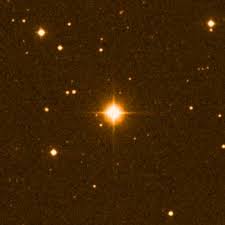
Astronomers from Aryabhatta Research Institute of Observational Sciences used data from Devasthal Fast Optical Telescope and NASA’s TESS space telescope to create detailed light curves of the W Ursae Majoris (W UMa) star.
- It is also known as a low mass contact binary, is a type of eclipsing binary variable star.
- They share a single outer atmosphere and they orbit around each other.
- W UMa stars are easily recognized by their light curves with near equal minima and continuous light variation.
- Their variability ranges from a few tenths to slightly over a magnitude.
- The periods are typically short and range between 25 days to around 1.0 days.
- The traditional theory explaining the origin of contact binaries is W UMa systems form from detached binaries of that comparable periods through orbital decay by angular momentum loss.
- The idea of the contact binary seems to have been first introduced by Kuiper (1941).
- They assist in precise determinations of fundamental stellar parameters such as masses, radii, and temperatures, crucial for testing theories about how stars evolve over time.
- It was found that stars share their outer layers, their orbits shift slightly over time, as if tugging and pulling on one another
- Some stars appear lopsided—brighter on one side than the other.
- It is found that there is an uneven brightness point at dark magnetic star spots similar to star spots.
- These spots rotate in and out of view, creating bumps in the light curves.
- This also suggests the stars have strong magnetic activity.
- Scientists also found specific light signals (called H-alpha and H-beta) that clearly show activity in the star’s outer layer, which is linked to magnetic events like star spots and stellar flares.
SHINE Scheme:
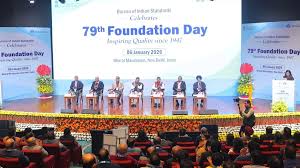
At the 79th Bureau of Indian Standards foundation Day union minister launch SHINE scheme in New Delhi.
- The Standards Help Inform & Nurture Empowered Women (SHINE) is a new scheme of the Bureau of Indian Standards.
- It places women, at the center of India’s quality journey.
- Through structured training, grassroots partnerships with NGOs and SHGs, and practical, locally delivered programmes.
- It empowers women with knowledge that protects families and strengthens livelihoods.
- Through this BIS spreads awareness about standards, safety, and quality within households, self-help groups, and communities.
- It is the National Standard Body of India established under the BIS Act 2016.
- It was established for the harmonious development of the activities of standardization, marking, and quality certification of goods and for matters connected therewith or incidental thereto.
- It is the successor of the Indian Standards Institution (ISI), which was created in 1947 to ensure quality control and competitive efficiency in the rapid industrialization era.
- BIS represents India in International Organization for Standardization (ISO) and International Electrotechnical Commission (IEC).
- It is functioning under the administrative control of the Ministry of Consumer Affairs, Food and Public Distribution.
- It is headquartered in New Delhi and maintains regional and branch offices throughout the country.
Katydids:
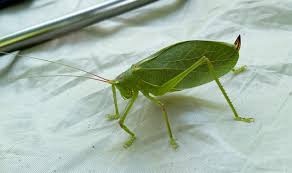
Researchers recently identified three previously unknown species of meadow katydids, or long-horned grasshoppers, named Conocephalus usmanii, Conocephalus nagariensis, and Conocephalus ganderbali, in Jammu and Kashmir.
- Katydids found on every continent except Antarctica, Katydids are a family of primarily nocturnal insects.
- They belong to the family Tettigoniidae.
- Grasshoppers, locusts, crickets, and katydids belong to a group of insects known as orthopterans (meaning ‘straight wings’).
- They closely resemble grasshoppers and used to go by the name long-horned grasshoppers.
- However, in reality, they are more closely related to crickets, hence their other common name, the bush cricket.
- They are famous for their ability to blend into their surroundings.
- They are mostly herbivores, feeding on leaves, flowers, and fruit, but some eat small insects.
- Meadow Katydids are a group of species of slender, small-to medium-sized katydids found in grassy meadows near lakes and ponds.
- When disturbed, they enter the water, cling to underwater plants, and can remain submerged for several minutes.
- Abundant and widespread, meadow katydids have large orange eyes and a body that is brown on top and green on the bottom.
- They produce a song, consisting of clicks and buzzes, during the day or at night.
- Conocephalus nagariensis, Conocephalus ganderbali and Conocephalus usmanii are katydids.
Apparel Export Promotion Council:

A Sakthivel has been recently appointed as the chairman of the Apparel Export Promotion Council (AEPC), marking his fifth term at the helm of the organization.
- It was established in 1978 under the provisions of the Foreign Trade (Development and Regulation) Act of 1992.
- It is the official body of apparel exporters in India.
- It operates under the aegis of the Ministry of Textiles, Government of India.
- Its primary objective is to promote and support the export of Indian garments and textiles to the global market.
- AEPC is the most significant body representing apparel exporters in India and works towards improving the competitiveness of the Indian apparel sector.
- It acts as a bridge between the government, Indian apparel exporters, and international customers.
- It comprises various stakeholders, including:
- Central Government representatives
- Exporters
- Industry Associations
- Government Bodies
- AEPC’s decision-making process involves inputs from these sectors to make informed decisions for the development of the industry.
- Its governing body is led by an elected chairman, supported by regional and sectoral committees, along with professionals and experts in the field of textile and apparel export.
- Functions:
- Promoting Apparel Exports: Facilitates the export of Indian-made garments worldwide.
- Market Research & Development: Conducts research to understand global trends, market demands, and opportunities.
- Organizing Trade Fairs: AEPC organizes national and international trade fairs to showcase Indian apparel.
- Policy Advocacy: Acts as a liaison between the government and exporters to address issues in the export sector.
- Skill Development: Provides training programs and workshops for improving the skills of the workforce in the apparel sector.
- Certification and Standards: Works to ensure that apparel exports meet international quality standards and certifications.
- Data Collection: Gathers and disseminates data on market trends, industry reports, and export statistics.
- It also organizes the India International Garment Fair twice a year.
- It has its headquarters in Gurgaon, Haryana.
Wangchhu Hydroelectric Project:

The Adani Group recently commenced the 570 MW Wangchhu Hydro Electricity Project in Bhutan.
- It is a 570 MW run-of-river hydropower project being built on the Wangchu River/basin in Chukha District, Bhutan.
- The Wangchu River (also called Raidāk River in India) is a significant tributary of the Brahmaputra
- It is being developed by Wangchhu Hydroelectric Power Limited (WHPL), a joint venture company formed by India’s Adani Power Limited (APL) and Bhutan’s state-owned Druk Green Power Corporation Ltd (DGPC) following a shareholders’ agreement.
- It will be implemented on a build, own, operate, and transfer (BOOT) basis.
- The facility will function as a peaking run-of-river plant, helping Bhutan manage seasonal fluctuations in hydropower generation.
Weimar Triangle:
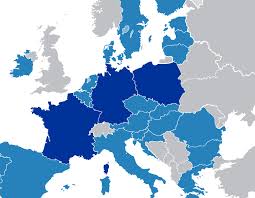
India’s External Affairs Minister recently participated in India’s first-ever engagement in the Weimar Triangle, with French and Polish counterparts along with German representatives.
- Weimar Triangle is a regional political grouping of France, Germany and Poland.
- It was formed by a joint declaration issued in Weimar, Germany, by the Foreign Ministers of the three countries.
- It had three objectives:
- To involve France in German-Polish reconciliation by building on the Franco-German experience;
- To strengthen dialogue and political cooperation between the three countries.
- To support Poland in its process of integration into NATO and the European Union (EU).
- Regular meetings at levels including heads of government, foreign ministers, and European affairs ministers have enabled coordination on EU policies, with notable outcomes including Poland’s accession to NATO in 1999 and the European Union in 2004.
- Although the Weimar Triangle still has no institutional structure, it remains a framework of reference at the political level.
- Beyond diplomacy, it encompasses civil society efforts like youth exchanges, academic collaborations, and business networks to promote intercultural dialogue and mobility.
Long Range Anti-Ship Missile:

India’s indigenous LR-ASHM missile will be on display at the Republic Day parade on January 26, highlighting the country’s growing maritime strike capability.
- It is a hypersonic glide missile developed by the Defence Research and Development Organisation (DRDO).
- Hypersonic glide vehicles (HGVs) like the LRAShM differ from traditional ballistic missiles, which follow a fixed trajectory.
- HGVs are launched on a rocket, ascend to the upper atmosphere, and then glide towards their target in an unpredictable manner.
- This combination of exceptional speed and maneuverability makes them extremely difficult to intercept with existing air defense technologies.
- It outperforms similar missiles like China’s DF-17 in terms of range and technology.
- It is being built for anti-ship roles (to target enemy warships and carrier groups) and may also evolve into a land-attack variant.
- The missile’s standout feature is its incorporation of a delta-wing hypersonic glide vehicle (HGV), which allows it to follow highly complex and adaptive flight paths.
- It is reported to have a range of over 1,500 kilometers.
- This missile operates at 10 Mach, making it 10 times faster than the speed of sound.
- The missile’s radio frequency (RF) seeker, designed to operate effectively at hypersonic speeds, ensures accurate strikes against moving targets, such as warships, a capability that very few weapons possess.
- It is configured for launches from both land-based platforms and naval vessels, offering versatility in combat scenarios.
- It is capable of carrying various payloads, including both conventional and nuclear warheads,
- The incorporation of special heat-resistant materials ensures the missile can withstand extreme temperatures without disintegrating during flight, setting a new benchmark in scramjet and glide technology.
Vera C.Rubin Observatory:

Scientists analyzing the first images from the Vera C. Rubin Observatory recently discovered the fastest-spinning asteroid in its size class yet named 2025 MN45.
- It is located atop the Cerro Pachón mountain in the Chilean Andes, where dry air and dark skies provide one of the world’s best observing locations.
- It is named after American astronomer Vera C. Rubin, who provided evidence about dark matter for the first time in the 1970s.
- It is jointly funded by theS. National Science Foundation and the U.S. Department of Energy’s Office of Science.
- The observatory has four main scientific goals:
- Understand the nature of dark matter and dark energy.
- Create an inventory of the asteroids, comets, and other objects in the solar system.
- Map the Milky Way and help reconstruct its history.
- Explore objects — like exploding stars and black holes — that change position or brightness over time.
- The centrepiece of the observatory is the Simonyi Survey Telescope.
- It has the world’s largest digital camera.
- It is the fastest-slewing telescope in the world and takes just five seconds to move and settle from one target to another.
- This speed is due to the telescope’s compact structure (owing to the three-mirror design) and its mount, which floats on a film of oil.
- This observatory will provide comprehensive images of the night sky unlike anything astronomers have seen before.
- It will constantly scan the sky of the southern hemisphere, creating an ultra-wide, ultra-high-definition time-lapse record of the universe.
- The amount of data gathered by Rubin Observatory in its first year alone will be greater than that collected by all other optical observatories combined.
- 2025 MN45 is a newly discovered asteroid.
- It resides in the main asteroid belt between Mars and Jupiter.
North Island:
A magnitude 5.5 earthquake struck the North Island region of New Zealand recently.North Island is one of the two main islands of New Zealand in the South Pacific Ocean.It is separated from the South Island by Cook Strait.Many important cities are found on the North Island.These include Auckland, which is the largest city.The capital city of New Zealand, Wellington, is also located here.Other major cities are Hamilton, Tauranga, and Rotorua.
Doomsday Glacier (Thwaites Glacier):
A new scientific study has found rapidly increasing ice fractures in the Thwaites Glacier, indicating possible destabilisation pathways for the West Antarctic Ice Sheet.The Thwaites Glacier, popularly called the “Doomsday Glacier”, is one of the largest and fastest-changing glaciers on Earth. It acts as a critical outlet glacier draining ice from the West Antarctic Ice Sheet into the ocean.Situated in West Antarctica, flowing into the Amundsen Sea
Forms part of the West Antarctic Ice Sheet, one of the most unstable ice masses globally.



