
Today’s Current Affairs: 3rd February 2026 for UPSC IAS exams, State PSC exams, SSC CGL, State SSC, RRB, Railways, Banking Exam & IBPS, etc
Table of Contents
16th Finance Commission:
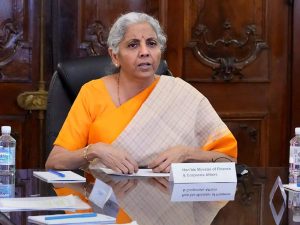
Finance Minister Nirmala Sitharaman tabled the 16th Finance Commission (FC) report in Parliament on February 1, 2026, alongside the Union Budget. The government has accepted its key recommendation to maintain the states’ share in central taxes at 41% for the period of 2026-31.
- The states’ share in the divisible pool of central taxes remains unchanged at 41%, consistent with the 15th Finance Commission.
- Calculated after excluding cesses, surcharges, and the cost of collection from the Centre’s gross tax revenue.
- Ensures stability in resource transfer to states, maintaining the foundational framework of fiscal federalism.
- Based on per capita GSDP gap with top-3 states (avg. of 2018-19 & 2023-24, excluding 2020-21).
- New 10% weight to reward states for their economic output, calculated using the square root of GSDP.
- Now more comprehensive, considering increase in forest area (2015-23) and including open forests.
- Shift from Total Fertility Rate (TFR) to population growth between 1971-2011.
- Grants-in-Aid to States & Local Bodies (Total: ₹9.47 Lakh Crore)
- The Commission has streamlined grants, discontinuing revenue deficit, sector-specific, and state-specific grants.
- Local Body Grants (₹7,91,493 crore)
- Rural Local Bodies:₹4.35 lakh crore
- Urban Local Bodies:₹3.56 lakh crore.
- 80% Basic Grant (50% tied to water/sanitation) + 20% Performance Grant.
- Special Infrastructure Grant (₹56,100 cr):For wastewater management in cities (10-40 lakh population).
- Urbanisation Premium (₹10,000 cr):One-time grant for merging peri-urban areas and formulating rural-urban transition policies.
- Conditionality:Tied to timely State Finance Commissions, audited accounts, and proper constitution of local bodies.
- Corpus for State Disaster Relief & Management Funds (SDRF/SDMF).
- Centre-State Cost Sharing:90:10 for Northeastern & Himalayan states, 75:25 for all other states.
Basic Customs Duty : Union Budget 2026
Bringing immediate relief to patients with cancer and rare diseases, Union Budget 2026-27 proposed a full exemption of basic customs duty on 17 cancer-related drugs and medicines.
- BCD is a type of tax imposed on goods imported into India.
- It is levied on imported items under the Customs Act, 1962. The tax rate is levied as per the First Schedule to Customs Tariff Act, 1975.
- Purpose is To protect domestic industries from foreign competition, regulate trade, and generate revenue for the government.
- BCD is calculated as a percentage of the value of the imported goods, determined based on the customs tariff, i.e., it is fixed based on the ad-valorem.
- It can significantly impact the total landed cost of the imported items.
- The Central Government holds the power to exempt specific goods from tax.
- The calculation of BCD involves several steps:
- Classification of Goods: Imported goods are classified under specific Harmonized System (HS) codes, which determine the applicable duty rate.
- Assessment of Value: The value of the goods is assessed based on the transaction value, including the cost of goods, insurance, and freight (CIF).
- Application of Duty Rate: The BCD Tax rate is applied to the assessed value to determine the duty payable.
Securities Transaction Tax : Union Budget 2026
The Finance Minister recently proposed to raise the Securities Transaction Tax (STT) on both futures and options by up to 150%.
- It is a direct tax levied on the purchase and sale of securities listed on recognised stock exchanges in India.
- It is levied and collected by the Central Government.
- It is applied irrespective of the profit or loss made in the transaction. It is levied directly on the value of the transaction.
- STT operates similarly to Tax Deducted at Source (TDS) in that it is deducted at the time of the transaction itself.
- The tax is paid directly to the government through the stock exchanges or other intermediaries involved in the transaction.
- Introduced through the Finance Act of 2004, STT was designed to simplify taxation on securities trading and curb tax evasion in the capital market.
- STT is governed by the Securities Transaction Tax Act (STT Act), and STT Act has specifically listed various taxable securities transactions, i.e., transactions on which STT is leviable.
- Taxable securities include equities, derivatives, or equity-oriented mutual funds investment units (excluding commodities and currency).
- It also includes unlisted shares sold under an offer for sale to the public included in IPO and where such shares are subsequently listed in stock exchanges.
- STT is not applicable to off-market transactions or to commodity or currency transactions.
- The rate of taxation is different for different types of securities.
- The government has the authority to revise STT rates periodically.
SHE Marts : Union Budget 2026
The Finance Minister recently announced SHE-Mart, a new platform for women entrepreneurs.
- SHE (Self-help Entrepreneur) Marts are planned as community-owned retail outlets that will be set up within cluster-level federations through enhanced and innovative finance instruments.
- It aims to provide women entrepreneurs with better market access, branding opportunities, and sustainable income avenues, while strengthening grassroots institutions such as self-help groups (SHGs).
- The proposal builds on the success of the Lakhpati Didi programme and signals a policy shift from micro-credit-led livelihoods to structured, women-owned enterprises.
- SHE Marts are meant to:
- Provide permanent retail points for SHG-made goods.
- Improve direct market access.
- Support value-added and processed products.
- Be backed by enhanced and innovative financing instruments.
- Lakhpati Didi Programme run by the Ministry of Rural Development, the Lakhpati Didi programme seeks to support rural women by helping members of SHGs start small businesses and earn a steady income of at least Rs 1 lakh a year.
- Under this scheme, women will be trained in various skills, such as plumbing, LED bulb making, drone operation and repair, and tailoring and weaving.
- After completing the training, women will be provided with opportunities to earn income using their skills.
- The programme aims to help them become financially independent.
Mahatma Gandhi Gram Swaraj Initiative : Union Budget 2026
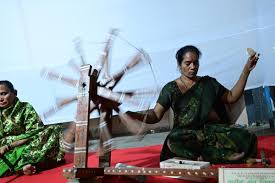
In the Union Budget 2026-27 presented recently, the Finance Minister announced the launch of the Mahatma Gandhi Gram Swaraj Initiative aimed at strengthening Khadi, handloom, and handicrafts.
- It was announced in the Union Budget 2026-27 to strengthen India’s traditional craft sectors.
- It is a major initiative to strengthen the khadi, handloom, and handicrafts sector by improving global market access, branding, and market linkages.
- It is aimed at making traditional rural industries more competitive while ensuring sustainable livelihoods for artisans and weavers.
- The programme mainly targets weavers, village industries, beneficiaries of the One District One Product (ODOP) initiative, and rural youth, and MGGSI aims to address structural challenges.
- These include fragmented supply chains, inconsistent quality standards, and limited market connectivity.
- MGGSI encourages artisans to adopt modern production methods. This would be done while preserving traditional craftsmanship.
- The initiative also focuses on improving market access by better branding and marketing to enable artisans to reach organised retail, export markets, and online platforms.
- It aligns with the “Vocal for Local” philosophy and efforts to strengthen micro, small, and medium enterprises (MSMEs).
- By reinforcing traditional industries, the initiative seeks to generate sustainable employment, reduce rural distress, and promote locally produced goods, thereby aligning with the broader vision of Atmanirbhar Bharat.
Guru Ravidas Jayanti:

The Prime Minister recently inaugurated the Adampur Airport in Punjab and renamed it after Sri Sant Guru Ravidas Ji in a bid to honour the revered saint and social reformer on his birth anniversary.
- Guru Ravidas (1377-1527 C.E.) was a renowned saint known for his contributions to the Bhakti movement.
- His devotional songs and verses made a lasting impact upon the Bhakti Movement.
- Guru Ravidas is also known as Raidas, Rohidas, and Ruhidas.
- His birthplace is a special place known as Shri Guru Ravidass Janam Asthan.
- His birthday is celebrated as Ravidas Jayanti.
- Ravidas is traditionally seen as a student of the bhakti-poet Ramananda.
- He is also thought to have lived around the same time as Kabir, another famous poet-saint.
- He was a well-known poet. His poems, written in local languages, inspired many people.
- Many of his devotional songs and poems are found in the Sikh holy book, the Guru Granth Sahib.
- Many of his poems are also in the Panch Vani text of the Dadu Panthi tradition within Hinduism.
- The core of Guru Ravidas’s philosophy was the rejection of the caste system and the promotion of human rights and dignity.
- He envisioned a society called ‘Beghumpura’ (a city without sorrow), where there is no suffering, no fear, and no discrimination.
- He also became a symbol of opposition to untouchability in society by the higher caste people for the lower caste people.
- He emphasised the philosophy of spiritual freedom.
- He abandoned the saguna (with attributes, image) forms of supreme beings and focussed on the nirguna (without attributes, abstract) form of supreme beings.
- Meera Bai, a revered figure in Hindu spiritualism, is said to have considered Guru Ravidas as her spiritual Guru.
- The Guru’s teachings now form the basis of the Ravidassia religion.
- Ravidassias believe that Guru Ravidas should be treated as a saint just like the other gurus, as he lived before the first Sikh Guru, and his teachings were studied by the Sikh Gurus.
- The Ravidassia community adopted the Amrit Bani Guru Ravidass as its holy book and established its own symbols and rituals.
Carbon Capture Utilisation and Storage : Union Budget 2026

The Finance Minister proposed an outlay of Rs 20,000 crore over the next five years in Carbon Capture Utilisation and Storage (CCUS) technologies.
- It is a suite of technologies that enable the mitigation of carbon dioxide (CO2) emissions from large point sources such as power plants, refineries and other industrial facilities, or the removal of existing CO2 from the atmosphere.
- It consists of three stages: capture, transport and storage (or usage) of CO2.
- The main methods for capturing CO2 are: post-combustion; pre-combustion; and oxy-fuel combustion.
- Post-combustion technology: It separates CO2 from the flue gas, by using a chemical solvent for instance, after the fuel is burnt.
- Pre-combustion methods: It involves converting the fuel into a gas mixture consisting of hydrogen and CO2 before it is burnt.
- Oxy-fuel Combustion: Oxy-fuel technology involves burning a fuel with almost pure oxygen to produce CO2 and steam, with the released CO2 subsequently captured.
- CCUS can play a strategic role in global decarbonisation efforts in a number of ways.
- Reducing emissions in ‘hard-to-abate’ industries
- Producing low-carbon electricity and hydrogen, this can be used to decarbonise various activities
- Removing existing CO2 from the atmosphere.
Bharat-VISTAAR : Union Budget 2026
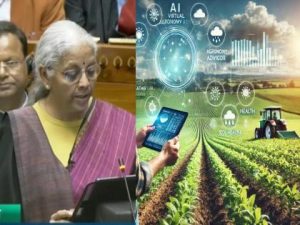
The Union Finance Minister proposed Bharat VISTAAR tool for agriculture sector.
- ‘Bharat-VISTAAR’(Virtually Integrated System to Access Agricultural Resources) is a multilingual AI tool.
- It shall integrate the AgriStack portals and the ICAR package on agricultural practices with AI systems.
- It will enhance farm productivity, will lead to better farmer decision making and reduce risk through customized advisory support for the farmer
- Agri Stack is the digital foundation being set up by the government to make it easier to bring various stakeholders together to improve agriculture in India.
- It enables better outcomes and results for the farmers by using data and digital services.
- Agri Stack aims to make it easier for farmers to get easier access to cheaper credit, higher-quality farm inputs, localized and specific advice, and more informed and convenient access to markets.
- It also focuses to make it easier for governments to plan and implement various farmer and agriculture-focused benefit schemes.
Divyangjan Kaushal Yojana : Union Budget 2026
The Union Minster of Finance announced Divyangjan Kaushal Yojana and Divyang Sahara Yojana during union budget 2026-2027.
- It is launched for persons with disabilities.
- It is aimed at training them for “dignified livelihood opportunities”.
- Under this scheme “industry-relevant, customised training, specific to each divyang group” will be provided for creating “dignified livelihood opportunities”
- Sectors Covered: Information Technology, Animation, Visual Effects, Gaming, and Comics (AVGC), Hospitality, and Food and Beverages, which offer “task-oriented and process-driven roles”.
Biopharma SHAKTI : Union Budget 2026

The Union Minister for Finance announced the launch of Biopharma Shakti initiative in budget 2026-27.
- ‘Biopharma SHAKTI (Strategy for Healthcare Advancement through Knowledge, Technology & Innovation)’ is designed to develop India into a global biopharmaceutical manufacturing hub.
- This will build the ecosystem for domestic production of biologics and biosimilars.
- It will include a Biopharma-focused network with 3 new National Institutes of Pharmaceutical Education and Research (NIPER) and upgrading 7 existing ones.
- It will also create a network of India Clinical Trials sites.
- This initiative will catalyse investments in advanced biomanufacturing infrastructure, promote innovation and enhance India’s capabilities in high-value, next-generation therapies.
- It will focus on building a biopharma-centric innovation and manufacturing network, responding to India’s rapidly changing disease profile marked by a rising burden of non-communicable diseases such as diabetes, cancer and autoimmune disorders.
Tax Reforms under Union Budget 2026-27:
The government replaces the existing Income Tax Act, 1961 with a new, simplified Income Tax Act, 2025, effective from 1st April 2026.
- Tax Rates: No changes to the tax slabs for FY 2026-27; stability maintained.
- Tax Collected at Source (TCS) on overseas tour packages and remittances for education/medical purposes under LRS is reduced to a uniform 2% (without any threshold).
- To remove ambiguity, Tax Deduction at Source (TDS) on the supply of manpower services is fixed at 1% (for Individuals/HUF) or 2% (for others).
- Non-production of books of accounts and failure to pay TDS (where payment is made in kind) will be decriminalized.
- The tariff rate on goods imported for personal use is reduced from 20% to 10%.
- Customs duty is fully exempted on 17 cancer drugs and medicines/foods for 7 rare diseases.
- Securities Transaction Tax (STT): Marginally increased (from 0.1% to 0.15% in certain segments) to curb excessive speculation in equity markets.
- The Union budget also proposes to provide exemption from Minimum Alternate Tax (MAT) to all non-residents who pay tax on presumptive basis.
- The Budget proposes a Joint Committee of Ministry of Corporate Affairs and Central Board of Direct Taxes for incorporating the requirements of Income Computation and Disclosure Standards (ICDS) in the Indian Accounting Standards (IndAS), eliminating separate ICDS-based accounting from tax year 2027–28, and rationalising the definition of accountant under the Safe Harbour Rules to simplify compliance.
- Non-disclosure of foreign assets worth less than Rs 20 lakh will be granted immunity from prosecution (retrospective effect from 1st October 2024).
- Share buybacks will now be taxed as Capital Gains in the hands of the shareholder (shifting the burden from the company to the recipient).
- Foreign companies providing global cloud services via Indian data centers will receive a tax holiday until 2047.
- IFSC (GIFT City): Tax holiday extended from 10 to 20 years for Offshore Banking Units.
- Customs duty exemptions granted on capital goods required for the processing of critical minerals (Lithium, Cobalt, etc.) and manufacturing of Lithium-ion cells.
- The threshold for availing “Safe Harbour” rules for IT services is enhanced to Rs 2,000 crore, with a unified category for software development and KPO services.
- Duty-free import limits for inputs in Marine, Leather, and Textile sectors have been increased to boost export competitiveness.
- Aviation & Defence: Duty exemptions provided for parts/components used in the manufacture and MRO (Maintenance, Repair, Overhaul) of aircraft.
- Ease of Doing Business: The Budget streamlines trade through a single digital window for cargo clearance, instant customs clearance for non-compliant goods, rollout of the Customs Integrated System (CIS), and expanded AI-based container scanning.
- It makes Exclusive Economic Zone (EEZ) or on the High Seas fish catch duty-free, revises duty-free baggage allowances, and allows dispute settlement for honest taxpayers with a reduced penalty.
Buddhist Circuit in Northeast: Union Budget 2026

In the Union Budget 2026–27, Finance Minister Nirmala Sitharaman announced a new scheme to develop a Buddhist Circuit in the Northeast to preserve temples and monasteries and promote tourism.
- The Buddhist Circuit (Northeast) is a heritage–tourism initiative aimed at conservation, connectivity, and promotion of Buddhist monasteries and pilgrimage sites across northeastern States, integrating culture with livelihoods and regional development.
- Buddhist Circuit (Northeast): New scheme to preserve and develop temples and monasteries.
- Tourism infrastructure: Creation of five tourism destinations in Purvodaya States and deployment of 4,000 e-buses for tourist mobility.
- Regional growth: ₹5,000 crore allocated over five years for CITY Economic Regions (CERs) to boost urban–industrial ecosystems.
- Connectivity thrust: Complemented by the East Industrial Corridor to link tourism with logistics and markets.
Highlights of the Union Budget 2026-27:

The Union Minister of Finance and Corporate Affairs presented the Union Budget 2026–27 in Parliament, marking the first Budget prepared in the newly inaugurated Kartavya Bhawan.The budget framed as a Yuva Shakti-driven Budget, is anchored in the vision of Viksit Bharat and reflects the guiding principles of Action over Ambivalence, Reform over Rhetoric, and People over Populism.The Budget is guided by three Kartavyas (duties) aimed at accelerating economic growth, building people’s capacities, and ensuring inclusive development.
Three Kartavyas:
- Sustain Economic Growth: To enhance productivity, competitiveness, and build resilience against volatile global dynamics.
- Fulfill Aspirations: To build the capacity of the youth and citizens, making them strong partners in India’s prosperity.
- Sabka Saath, Sabka Vikas: To ensure every family, community, region, and sector has access to resources and opportunities, focusing on the “Last Mile.”
First Kartavya: Accelerate & Sustain Economic Growth
- Manufacturing & Industry (Strategic Sectors): To position India as a global manufacturing hub, the budget focuses on 7 Strategic and Frontier Sectors:
- Biopharma SHAKTI: To position India as a global hub, the Government proposed the “Biopharma SHAKTI” (Strategy for Healthcare Advancement through Knowledge, Technology and Innovation) mission with an outlay of Rs 10,000 crore over five years to develop India as a global biopharma manufacturing centre.
- It focuses on biologics and biosimilars, supported by 3 new National Institutes of Pharmaceutical Education and Research (NIPERs), upgradation of 7 existing institutes, and strengthening of CDSCO to global standards.
- India Semiconductor Mission 2.0: Building on ISM 1.0, the Union Budget 2026–27 announces India Semiconductor Mission (ISM) 2.0 to advance technological sovereignty.
- It focuses on manufacturing semiconductor equipment and materials and strengthening resilient supply chains, with industry-led R&D and training centres to create a skilled workforce critical for economic and national security.
- Electronics Components Manufacturing: The Electronics Components Manufacturing Scheme outlay is increased from Rs 22,919 crore to Rs 40,000 crore to deepen domestic value chains and boost electronics manufacturing.
- Rare Earth Corridors & Chemical Parks: The Budget proposes Rare Earth Corridors in Odisha, Kerala, Andhra Pradesh, and Tamil Nadu for mining, processing, and manufacturing of Rare Earth Permanent Magnets (REPM), along with three Chemical Parks under a cluster-based, plug-and-play model to reduce import dependence.
- Capital Goods & Container Manufacturing: The Budget announces Hi-Tech Tool Rooms by Central Public Sector Enterprises (CPSEs), a Construction and Infrastructure Equipment (CIE) Scheme, and a Rs 10,000 crore Container Manufacturing Scheme to strengthen domestic capital goods and logistics manufacturing.
- Textile Sector Push: An Integrated Textile Programme comprising the National Fibre Scheme, Samarth 2.0, Tex-Eco Initiative, and cluster modernisation is launched, along with Mega Textile Parks to promote technical textiles and value addition.
- Gram Swaraj & Sports Goods: The Mahatma Gandhi Gram Swaraj initiative aims to strengthen khadi, handloom, and handicrafts, while a sports goods manufacturing initiative seeks to position India as a global hub for affordable, high-quality sports equipment.
- Rejuvenating Legacy Industrial Sectors: A Scheme to revive 200 legacy industrial clusters announced, to improve their cost competitiveness and efficiency through infrastructure and technology upgradation.
- Champion MSMEs: A dedicated Rs 10,000 crore “SME Growth Fund” will be launched to incentivize high-potential firms and create “Champion MSMEs” that can compete globally.
- The Self-Reliant India Fund will get an additional Rs 2,000 crore to continue supporting micro enterprises and ensure steady access to risk capital, with ‘Corporate Mitras’ envisioned as key enablers to mentor, guide, and integrate these enterprises into larger value chains.
- Infrastructure as “Growth Connectors”:
- High-Speed Rail: 7 High-Speed Rail corridors between cities – Mumbai-Pune, Pune-Hyderabad, Hyderabad-Bengaluru, Hyderabad-Chennai, Chennai-Bengaluru, Delhi-Varanasi, Varanasi- Siliguri will be developed as “Growth Connectors” to spur economic activity.
- Sustainable Movement of Cargo: To promote environmentally sustainable cargo movement, new Dedicated Freight Corridors will connect Dankuni to Surat, alongside the operationalisation of 20 National Waterways over the next five years.
- A Coastal Cargo Promotion Scheme will incentivise a shift from road and rail to waterways and coastal shipping to raise their share from 6% to 12% by 2047.
- The Seaplane VGF Scheme will support indigenised seaplane manufacturing and operations to improve last-mile connectivity and promote tourism.
- Infrastructure Risk Guarantee Fund: The Budget proposed an Infrastructure Risk Guarantee Fund to offer prudently calibrated partial credit guarantees to lenders during the infrastructure development and construction phase.
- City Economic Regions (CER): The Government proposed “City Economic Regions” (CERs), a new initiative to map cities based on specific growth drivers.
- An allocation of Rs 5,000 crore per CER over 5 years is proposed to be implemented via a “challenge mode.”
- Carbon Capture (CCUS): A scheme for Carbon Capture, Utilization, and Storage launched to decarbonize hard-to-abate sectors (Steel, Cement).
Second Kartavya: Fulfill Aspirations & Build Capacity
- AVGC Content Creator Labs: Recognizing the potential of the “Orange Economy”, the Government will support the Indian Institute of Creative Technologies, Mumbai, in setting up “Animation, Visual Effects, Gaming and Comics (AVGC) Content Creator Labs in 15,000 secondary schools and 500 colleges.
- National Institute of Hospitality: A proposal was made to set up this institute by upgrading the existing National Council for Hotel Management and Catering Technology, bridging the gap between academia and the tourism industry.
- Khelo India Mission: Building on the Khelo India programme, the Budget launches a Khelo India Mission to transform the sports sector through integrated talent development, coach capacity building, sports science integration, competitive leagues, and expanded sports infrastructure.
- Medical Value Tourism: The Government proposed establishing five Regional Medical Hubs in partnership with the private sector to boost India’s status as a wellness and medical tourism destination, with integrated facilities including AYUSH Centres, diagnostics, post-care, and rehabilitation services.
- Women in STEM: To support girl students in STEM, one girls’ hostel will be established in every district through Viability Gap Funding (VGF) or capital support.
Third Kartavya: Sabka Saath, Sabka Vikas
- Bharat-VISTAAR: To revolutionize agriculture, the “Bharat-VISTAAR” (Virtually Integrated System to Access Agricultural Resources) tool will be launched.
- This multilingual AI platform will integrate AgriStack and ICAR data to provide customized advisory to farmers.
- SHE Marts: Building on the success of the “Lakhpati Didis”, community-owned retail outlets named “SHE Marts” (Self-Help Entrepreneur Marts) will be set up within cluster federations.
- Mental Health Infrastructure: Reaffirming its commitment, the Government announced the setting up of “NIMHANS-2” and proposed upgrading institutes in Ranchi and Tezpur to “Regional Apex Institutions”.
- Buddhist Circuits: A specific scheme will be launched to develop “Buddhist Circuits” in the North East Region (e.g., Arunachal Pradesh, Sikkim, Assam, Manipur, Mizoram and Tripura).
- East Coast Industrial Corridor: Proposed the development of an East Coast Industrial Corridor with a well-connected node at Durgapur (West Bengal), creation of five tourism destinations in five Purvodaya States.
- Divyangjan Support: Targeted efforts will be made to empower the differently-abled through schemes like “Divyang Sahara Yojana” (implied in welfare focus).
National Leprosy Day:
On National Leprosy Day (last Sunday of January), the Ministry of Health and Family Welfare conducted an Information, Education and Communication (IEC) outreach programme to promote awareness, early detection, and stigma reduction related to leprosy.Leprosy is a chronic infectious disease caused by Mycobacterium leprae (bacteria), affecting skin and peripheral nerves, transmitted via droplets from untreated cases, and is curable with Multidrug Therapy (MDT) provided free by WHO.India attained national leprosy elimination status (prevalence rate <1/10,000) in 2005 and sustained it. As of 2025, PR is 0.57 nationally.Key Symptoms: Reddish skin patches with sensory loss, thickened nerves, and resulting numbness that can lead to ulcers, muscle weakness, and paralysis (e.g., claw hand, foot drop).Advanced cases may present with facial nodules, nasal bleeding, and deformities such as loss of eyebrows.
NASA announced the open-source release of ExoMiner++:
NASA announced the open-source release of ExoMiner++ advancing the search for planets beyond our solar system.
About: ExoMiner++ is a deep-learning AI model developed by NASA to detect exoplanets from space-telescope data, serving as the advanced successor to the earlier ExoMiner system.It analyses stellar brightness over time, identifying characteristic dips caused when a planet transits in front of its host star.A key challenge it addresses is distinguishing real planetary signals from false positives, such as binary stars or background objects that can mimic planetary transits..Unlike black-box AI models, ExoMiner++ is explainable, providing astronomers with a confidence score and clear reasoning behind each classification.ExoMiner++ is trained on both Kepler Space Telescope and the Transiting Exoplanet Survey Satellite (TESS) datasets, allowing it to analyse many more stars simultaneously and significantly scale up detection capability.
RBI–ESMA Memorandum of Understanding:
The Reserve Bank of India (RBI) signed a Memorandum of Understanding (MoU) with the European Securities and Markets Authority (ESMA) during the visit of the President of the European Council and the President of the European Commission to India.The MoU will enable formal recognition of the Clearing Corporation of India Ltd. (CCIL) and other RBI-regulated Central Counterparties (CCPs) by ESMA, allowing them to operate smoothly with European market participants.It will make it easier for European banks and investors to access India’s financial markets by lowering regulatory and operational hurdles.Both authorities will consult, cooperate, and exchange information to monitor compliance of the covered CCPs with ESMA’s recognition conditions.ESMA will rely on RBI’s regulatory and supervisory framework, while RBI will remain responsible for the resilience of CCPs in India.The MoU is a non-binding statement of intent, creating no legal obligations, conferring no enforceable rights, and not superseding domestic laws.
Record Allocation for defence:
In the Union Budget 2026–27, Finance Minister Nirmala Sitharaman announced a record ₹7.85 lakh crore allocation for defence, the highest ever.The defence allocation for 2026–27 represents a strategic fiscal push to modernise the armed forces, meet post-operation requirements, and accelerate Aatmanirbhar Bharat in defence manufacturing.The government proposed to exempt basic customs duty on components and engines required for the manufacture of civilian and training aircraft.Basic customs duty is exempted on raw materials imported for the manufacture of aircraft parts to be used in Maintenance, Repair, or Overhaul (MRO) requirements by Public Sector Units in the Defence sector.A new scheme for the Enhancement of Construction and Infrastructure Equipment (CIE) was introduced, which includes support for tunnel-boring equipment essential for building high-altitude strategic roads and infrastructure.
Rare Earth Corridors : Union Budget 2026
The Union Budget 2026–27 announced the establishment of dedicated Rare Earth Corridors in four coastal states to strengthen India’s critical minerals ecosystem.Rare Earth Corridors are integrated, state-anchored industrial value chains designed to link mining, processing, research and manufacturing of rare earth elements (REEs), particularly rare earth permanent magnets (REPMs), within defined geographic clusters.The corridors will be established in mineral-rich coastal states with significant beach sand mineral (BSM) deposits:Odisha,Kerala,Andhra Pradesh,Tamil Nadu.These states host monazite-bearing beach sands, the principal source of rare earths in India.
Moltbook Platform:
A new online platform called Moltbook, has drawn global attention after AI agents began independently posting, debating, forming communities, belief systems and governance models.Moltbook is an AI-only social media platform where verified AI agents interact exclusively with other AI agents, while humans can only observe. It resembles Reddit in structure, with topic-based communities called submolts, but no human participation in conversations.AI agents powered by advanced large language models (such as GPT, Claude and Gemini families) interact via APIs, not keyboards.
Each agent can post, comment, debate, organise communities, and create narrativesInteractions are driven by context windows, probabilistic reasoning, and training data patterns, without consciousness or intent.