
Today’s Current Affairs: 9th February 2026 for UPSC IAS exams, State PSC exams, SSC CGL, State SSC, RRB, Railways, Banking Exam & IBPS, etc
Table of Contents
Seychelles:
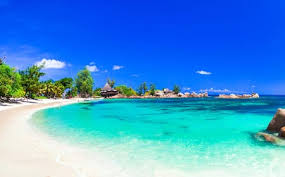
India and Seychelles explored opportunities to deepen cooperation in maritime trade, blue economy sectors and sustainable development at an Indo-Seychelles Business Roundtable, held in Mumbai.
- It is an archipelagic island country located in the western Indian Ocean.
- It is located to the northeast of Madagascar and east of mainland Africa.
- Other major islands near Seychelles include Comoros, Mauritius and Maldives.
- Capital City: Victoria.
- The climate is tropical oceanic, with little temperature variation during the year.
- It is composed of two main island groups: the Mahé group which are mountainous granitic islands and a second group are coralline islands.
- The highest point in Seychelles is Morne Seychellois.
Eurasian Otter:
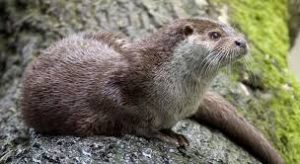
The Eurasian Otter, once believed to have disappeared from Jammu and Kashmir, has been recorded recently in the Sindh River in Ganderbal district.
- It is also known as the European Otter, common otter, and Old-World Otter.
- It is a semiaquatic carnivorous mammal native to Eurasia.
- It lives in highland and lowland lakes, rivers, streams, marshes, swamp forests, and coastal areas, independent of their size, origin, or latitude.
- It is mainly found in the Middle-East, Europe, Northern Africa, across to Eastern Russia, China, and other Asian countries.
- In India, it occurs in northern, northeast and southern India.
- Eurasian Otter is an elusive, solitary Otter.
- Adaptations for an aquatic lifestyle include webbed feet, the ability to close the small ears and the nose when under water, and very dense, short fur that traps a layer of air to insulate the animal.
- Threats: Water pollution and hunting of the mammal for its fur.
- Conservation Status of Eurasian Otter:
- IUCN: Near threatened
- CITES: Appendix I
- Wildlife Protection Act, 1972: Schedule II
Bharat GenAI:
The Ministry of Science & Technology informed that Bharat GenAI Large Language Model will complete text models in all 22 scheduled languages this month
- BharatGen is the first government supported national initiative to develop a range of sovereign foundational AI models tailored to Indian languages and societal contexts.
- BharatGen aims to revolutionize AI development across India’s linguistic and cultural spectrum.
- It spans multiple modalities, including text (via Large Language Models), speech (Text-to-Speech and Automatic Speech Recognition), and vision-language systems.
- It is developed under the National Mission on Interdisciplinary Cyber-Physical Systems(NM-ICPS) and implemented through TIH Foundation for IoT and IoE at IIT Bombay.
- It is being executed through a network of 25 Technology Innovation Hubs (TIHs), four of which have been upgraded to Technology Translational Research Parks (TTRPs).
- The Mission’s four pillars include technology development, entrepreneurship, human resource development, and international collaboration.
- It has four key Features:
- Multilingual and multimodal models
- Bhartiya dataset-based training
- Open-source platform
- Generative AI research ecosystem in India
Titanidiops kolhapurensis:New Species Of Trapdoor Spider
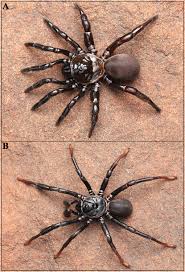
A new species of trapdoor spider named Titanidiops kolhapurensis has been recently discovered in the grasslands of Kolhapur district by a joint team of researchers from the Thackeray Wildlife Foundation and Shivaji University, Kolhapur (SUK).
- It is a new species of trapdoor spider.
- This spider builds vertical or slanted burrows in flat or sloping grassy meadows.
- These entrances are masterfully camouflaged to blend with the soil, making them nearly invisible to the naked eye.
- Trapdoor Spiders are a unique group of large-bodied, burrowing spiders found across several taxonomic families.
- They construct burrows in the ground, the entrance of which features a silken-hinged door.
- The reclusive spider feeds by quickly opening the trapdoor and grabbing an insect or other arthropod that is passing close by.
Reticulated Python:
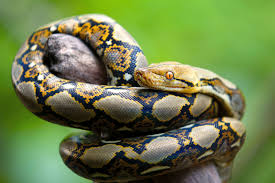
A giant female reticulated python discovered deep in the forests of the Indonesian island of Sulawesi late last year is now believed to be the longest measured snake in the world at 7.22 metres (23 feet 8 inches), the Guinness Book of World Records has confirmed.It is a giant constricting snake belonging to the python family.
- Scientific Name: Malayopython reticulatus
- It is the longest snake in the world and the third heaviest after the green anaconda and the Burmese python.
- Like all pythons, it is a non-venomous constrictor.
- It is native to South and Southeast Asia.
- It inhabits tropical forest regions in India, Indonesia, the Philippines, and other parts of Southeast Asia.
- Conservation Status: IUCN Red List: Least Concern
INS Arnala:
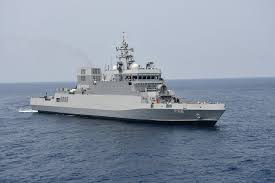
INS Arnala, the Indian Navy’s first indigenously designed and built Anti-Submarine Warfare Shallow Water Craft (ASW-SWC), marks a significant milestone in India’s transition from a “Buyer’s Navy” to a “Builder’s Navy”.
- It is the first of the eight ASW SWCs (Anti-Submarine Warfare Shallow Water Craft) built for the Indian Navy.
- It is the Indian Navy’s first indigenously designed and built ASW SWC.
- It is named after the historic fort ‘Arnala’ in Maharashtra.
- It the largest Indian Naval warship to be propelled by a Diesel Engine-Waterjet combination.
- The ship has been designed for underwater surveillance, search & rescue operations, and Low Intensity Maritime Operations (LIMO).
- The ship is capable of undertaking Anti-Submarine Warfare (ASW) in coastal waters, along with advanced mine-laying capabilities.
Bailey Bridge:
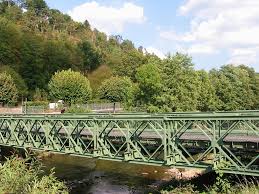
India has sent Bailey bridge materials to Sri Lanka for post-Cyclone reconstruction.
- It is a type of modular bridge whose parts are pre-built, so they can be put together quickly as needed.
- It is preferred because these bridges are designed for rapid construction in difficult conditions without the need for heavy equipment or sophisticated construction methods.
- The design supports heavy loads, including tanks and other military vehicles.
- Bailey bridge assembly covers a small area, which can avoid the situation that large hoisting equipment cannot enter the construction site.
- It is generally used in terrains that span rivers, valleys, and spans that are not very large.
New Marine Worm Species:
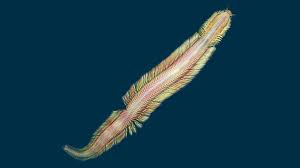
Researchers from the Zoological Survey of India (ZSI) have uncovered two new marine worm species (polychaetes) namely Namalycastis solenotognatha and Nereis dhritiae of from the Nereidid family coasts of West Bengal.
New Marine Worm Species:
- Namalycastis solenotognatha: Ideal conditions for its survival are extreme environments, sulfide-rich, foul-smelling mudflats, and they are mostly found on decomposing mangrove wood and hardened clay.
- Nereis dhritiae: This species was found living inside wooden dock piles on sandy beaches, which are submerged during times of high tide.
- They help maintain coastal health, and they play a major role in nutrient cycling and sediment aeration.
- These species of marine worms were found in areas that were heavily impacted by human activities and subject to pollution.
- These worms can serve as vital bioindicators and help in monitoring coastal health.
Peregrine Falcon:
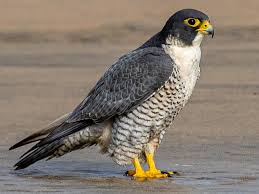
A wildlife researcher has made a historic sighting of a Siberian peregrine falcon in Central Australia, where this subspecies has never been recorded before.
- It is a large cosmopolitan raptor in the family Falconidae.
- They prefer open habitats, such as grasslands, tundra, and meadows.
- They are most common in tundra and coastal areas and rare in sub-tropical and tropical habitats. They nest on cliff faces and crevices.
- It is found on all continents except Antarctica, and on many oceanic islands.
- It is renowned for its speed during its characteristic hunting stoop (high-speed dive), making it the fastest bird in the world, as well as the fastest member of the animal kingdom.
- They are active during the day.
- They are high level predators, peregrine falcons play an important role in regulating populations of their prey, particularly pigeons and doves.
- Conservation status: IUCN Red List: Least Concern.
Model Context Protocol:
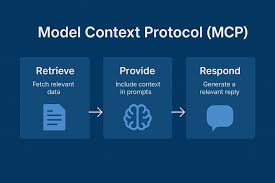
The National Statistics Office under Ministry of Statistics and Programme Implementation (MoSPI) launched the beta version of its Model Context Protocol (MCP) server for eSankhyiki portal.
- It is a technology that allows users to connect directly with datasets through their own AI tools and applications.
- It is a standard way to make information available to large language models (LLMs).
- Using MCP, AI applications can connect to data sources (e.g. local files, databases), tools (e.g. search engines, calculators) and workflows (e.g. specialized prompts)—enabling them to access key information and perform tasks.
- eSankhyiki portal provides real-time inputs for planners, policy-makers, researchers and the public at large.
- The objective of this portal is to establish a comprehensive data management and sharing system for ease of dissemination of official statistics in the country.
- It has two modules namely:
- Data Catalogue Module: This module catalogues the major data assets of the Ministry at one place for ease of access.
- Macro Indicators Module: This module offers time series data of key macro indicators with features for filtering and visualizing data enabling ease of access for the users.
Agni-3 Missile:
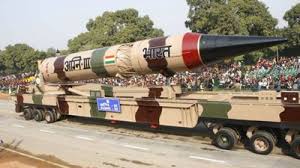
The Intermediate Range Ballistic Missile ‘Agni-3’ was successfully test-fired from the Integrated Test Range, Chandipur, Odisha.It is an indigenously developed intermediate-range ballistic missile (IRBM).
- It is a surface-to-surface ballistic missile.
- The missile is two-stage and solid-fuelled, capable of carrying a 1,500 kg payload.
- Range: 3,000–3,500 km
- It is designed primarily as a nuclear delivery system, with an estimated warhead yield of 200–300 kilotons.
Vayu Shakti 2026:
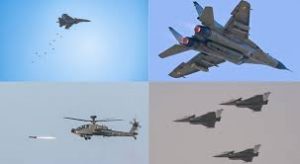
The Indian Air Force will conduct Vayu Shakti 2026, a major air combat exercise near the Pakistan border, showcasing its full spectrum of offensive and defensive capabilities in a simulated war environment.
- It is a major air combat exercise of the Indian Air Force (IAF).
- It will be held Pokaran Field Firing Range in Rajasthan’s Jaisalmer district and is expected to be the IAF’s largest air combat drill of the year.
- Almost all frontline fighter aircraft and air defence systems that were part of Operation Sindoor will be deployed during the exercise.
- These include Rafale, Su-30 MKI, Tejas, MiG-29, Jaguar, Mirage-2000 and Hawk aircraft, which will be seen engaging ground and aerial targets with precision.
- The exercise will be conducted in a simulated wartime scenario and monitored through the IAF’s Integrated Air Command and Control System (IACCS), which enables real-time tracking and coordination of air operations.
SPHEREx Mission:
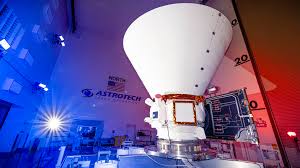
NASA’s SPHEREx mission turned its infrared gaze on interstellar comet 3I/ATLAS recently, adding to the deep pool of information, the agency has gathered on what is only the third such object to be discovered passing through our solar system.The Spectro-Photometer for the History of the Universe, Epoch of Reionization and Ices Explorer (SPHEREx) telescope is a megaphone-shaped telescope.
- It is a NASA Astrophysics mission launched in 2025.
- It will survey the sky in optical as well as near-infrared light, which, though not visible to the human eye, serves as a powerful tool for answering cosmic questions.
- Over a two-year planned mission, the SPHEREx Observatory will collect data on the other galaxies along with Milky Way in order to explore the origins of the universe.
- With this capability, SPHEREx will produce a three-dimensional map of the universe.
- Scientists will use this map to answer big questions about the early universe, the history of galaxies, and the prevalence of life-sustaining molecules in planet-forming regions of space.
- It also will identify targets for more detailed study by future missions, such as NASA’s James Webb Space Telescope and Wide Field Infrared Survey Telescope.
What is Rat-hole Mining?
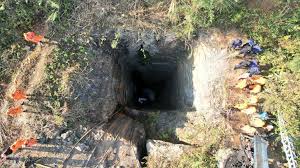
A major disaster has unfolded in Meghalaya’s East Jaintia Hills, where at least 18 workers died following an explosion in an illegally operating rat-hole coal mine.
- The incident once again exposed the continued prevalence of rat-hole mining despite long-standing bans by the National Green Tribunal(NGT) and the Supreme Court (SC) of India.
- The recent rat-hole mining tragedy in Meghalaya exposes the continued prevalence of illegal, unsafe coal extraction despite bans by the National Green Tribunal and the Supreme Court, driven by thin coal seams, livelihood dependence and weak enforcement under Sixth Schedule autonomy.
- Rat-hole mining causes severe human rights violations and environmental damage, including deaths from flooding and suffocation, acid mine drainage, deforestation and river pollution, highlighting the need for stronger surveillance and sustainable livelihood alternatives.
- Rat-hole mining is a primitive and hazardous method of coal extraction in which very narrow tunnels are dug just large enough for a person to crawl through.
- The tunnels are typically 3–4 feet high, forcing miners to work in squatting or crawling positions with basic tools.
- Rat-hole Mining involves no scientific planning, ventilation, or structural support, making it extremely dangerous.
- While predominantly practised in Meghalaya, reports of rat-hole mining have surfaced in other northeastern states of India as well.
Michelangelo:
A foot sketch by Michelangelo was recently sold for £16.9 million, exceeding expectations.Michelangelo (1475 – 1564) was an Italian Renaissance sculptor, painter, architect, and poet.He is recognized as one of the most creative and influential artists in the history of Western art.His most celebrated creations have become icons of world culture: the monumental marble David in Florence; the Sistine Chapel ceiling; and the soaring dome of Saint Peter’s Basilica, both in Rome.
Mt Aconcagua:
The Defence Minister flagged off a joint mountaineering expedition to Mount Aconcagua in Argentina from New Delhi.Mt Aconcagua: is located in Argentina (near the border with Chile).It is the highest mountain in South America and the tallest mountain outside of Asia.It is one of the mountains in the Principle Cordillera, a mountain range in the Andes making up the boundary between Argentina and Central Chile.It is considered as one of the world’s “Seven Summits” (each of the seven tallest mountains in each continent). Aconcagua is of volcanic origin.It is a folded mountain composed of sedimentary and metamorphic rock.
India and the Gulf Cooperation Council (GCC) have signed the Terms of Reference for a Free Trade Agreement:
Gulf Cooperation Council is a regional political and economic alliance established in 1981.It comprises Bahrain, Kuwait, Oman, Qatar, Saudi Arabia, and the United Arab Emirates (UAE).Objective is to foster economic, security, cultural, and social cooperation among its members.Headquarters: Riyadh, Saudi Arabia.Key exports from India to GCC include engineering goods, rice, textiles, machinery, gems and jewelry.Key sectors of imports from GCC primarily comprise crude oil, LNG, petrochemicals, and precious metals such as gold.
Lake Urmia:
After the communal prayer in Tehran, the government mounts cloud seeding in the lake Urmia basin.It is one of the largest inland lakes located in Iran.
It is one of the largest hypersaline lakes in the world.The main affluents are the Talkheh River in the northeast and the twin rivers Zarīneh and Sīmīneh in the south.It is designated as is a Ramsar Site and part of UNESCO’s Man and the Biosphere Programme (MAB).
Sarus crane:
According to government census conducted across 68 forest divisions of Uttar Pradesh, the population of sarus cranes in the state has gone up by 634 or 3.1% in a year.It is the tallest flying bird in the world.They live mainly in wetlands such as canals, marshes, and ponds, sometimes near humans.
Distribution: They live in Southeast Asia, northern India, and northern Australia.In India, most sarus cranes are widely distributed along the Gangetic plain and in eastern Rajasthan in the northern states of India. Population densities decrease going to the south.This species is not known to be migratory.It has a predominantly grey plumage with a naked red head and upper neck and pale red legs.They are regarded as the least social crane species, found mostly in pairs or small groups of three or four.They are monogamous birds and pairs mate for life.Nests are constructed on water in natural wetlands or in flooded paddy fields.It has been estimated that cranes in general can live 30 to 40 years.
Conservation Status of Sarus Crane:
- IUCN: Vulnerable
- CITES: Appendix II
- Wildlife (Protection) Act 1972: Schedule IV
RBI MPC Keeps Repo Rate Unchanged:
The Reserve Bank of India’s (RBI) Monetary Policy Committee (MPC), in its February 2026 meeting, kept the repo rate unchanged at 5.25%, following a 25 basis point cut in December 2025.The decision implies no immediate change in lending and deposit rates. EMIs on repo-linked loans (home, personal loans) are expected to remain stable.The committee chose to retain the “neutral” monetary policy stance. This indicates the RBI is not committed to a future rate hike or cut and will act based on incoming data.The RBI raised its GDP growth projection for FY26 to 7.4% from the earlier estimate of 7.3%.The RBI marginally increased its retail inflation projection for FY26 to 2.1% from the earlier 2.0%.
What are Chemical Parks?
The Union Budget 2026–27 announced India’s first dedicated budgetary support for chemical park infrastructure, proposing a ₹600 crore, challenge-based scheme to help States establish three Chemical Parks.Chemical Parks are planned industrial clusters designed specifically for chemical and petrochemical manufacturing, where multiple units operate together using shared infrastructure and common facilities.The parks will follow a cluster-based, plug-and-play model, offering ready industrial land, common utilities, logistics support, and standard environmental compliance facilities such as waste treatment and safety systems.The initiative builds on successful cluster models such as Plastic Parks, Bulk Drug Parks, and Petroleum, Chemicals and Petrochemical Investment Regions(PCPIRs), which have demonstrated the benefits of shared infrastructure, economies of scale, and faster project execution.The initiative aims to strengthen domestic chemical manufacturing, reduce import dependence, improve supply-chain integration, and enhance India’s global competitiveness in bulk and specialty chemicals.India’s chemical industry is a core pillar of manufacturing, supplying key inputs to agriculture, pharmaceuticals, textiles, automobiles and construction, contributing about 7% to GDP, ranking sixth globally and third in Asia.
Frontier Nagaland Territorial Authority:
The Union Government, Nagaland State Government, and the Eastern Nagaland People’s Organisation (ENPO) have signed a historic tripartite agreement to establish the Frontier Nagaland Territorial Authority (FNTA), aimed at fulfilling the political and developmental aspirations of Eastern Nagaland.This marks one of 12 important agreements signed in the Northeast since 2019, contributing to a dispute-free region.ENPO (apex body representing eight recognised Naga tribes of the six eastern districts of Nagaland) had been demanding a separate state since 2010, citing prolonged neglect, lack of development, and socio-economic backwardness compared to the rest of the state.Instead of dividing the state, the Centre proposed the FNTA to provide financial autonomy and enhanced decision-making while keeping the geographical integrity of Nagaland intact.The FNTA covers six eastern districts of Nagaland (Tuensang, Mon, Kiphire, Longleng, Noklak, Shamator).
Tamil Nadu Urban Greening Policy 2026:
Tamil Nadu Urban Greening Policy 2026 was launched by Tamil Nadu CM to enhance urban green cover and build climate-resilient cities.The TN Urban Greening Policy 2026 is a comprehensive state policy framework to systematically expand and manage green spaces in urban areas, integrating climate action, biodiversity conservation, and urban livability.
Key features:
- Urban Local Bodies (ULBs) to maintain at least 15% green cover, contributing to the state’s long-term 33% greening goal.
- Creation of a dedicated Urban Forest Wing under the Municipal Administration & Water Supply Department and a state-level coordination committee.
- Promotion of urban forests (kurunkadugal), micro-forests, biodiversity parks, mangroves, and agroforestry within urban and peri-urban areas.
- Preparation of city biodiversity plans, urban greening micro-plans, geospatial mapping, carbon accounting, and real-time dashboards.
- Provision for green fees, incentives based on Urban Greening Factors, and integration of greening into all departmental projects.
- Adoption of Urban Green Livability Guidelines (Nature-based Solutions Institute, Sweden) and the City Biodiversity Index (Singapore Index).



