
80 Years of the RIN Revolt:
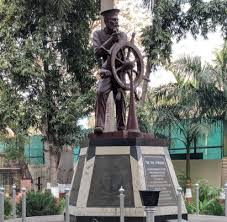
18th February, 2026 marks the 80th anniversary of the Royal Indian Navy (RIN) Revolt of 1946, a short-lived but momentous armed uprising, symbolising militant anti-colonial resistance and rare Hindu-Muslim unity in the final phase of British rule.
- It was a large-scale insurrection, with over 20,000 naval ratings participating.
- It involved 78 ships and 20 shore establishments, including HMIS Talwar in Bombay, and spread to naval bases in Karachi, Madras, Cochin, Vishakhapatnam, Calcutta, and the Andaman Islands.
- Sympathetic strikes also occurred in the Royal Indian Air Force in Bombay, Poona, Calcutta, Jessore, and Ambala.
- The revolt was sparked by ratings at HMIS Talwar in Bombay over poor food quality, low wages, racial discrimination, abuse by superior officers, and the arrest of a rating for scrawling ‘Quit India’ on the ship.
- A Naval Central Strike Committee was formed, and they protested against the trials of Indian National Army (INA) prisoners of war and the use of Indian troops to restore French and Dutch colonial rule in Vietnam and Indonesia
- The British held the first trial at the Red Fort in Delhi in November 1945, putting a Hindu (Prem Kumar Sehgal), a Muslim (Shah Nawaz Khan), and a Sikh (Gurbaksh Singh Dhillon) in the dock together.
- At its September 1945 Bombay session, Congress passed a strong resolution supporting the INA cause. The defence was organized by Bhulabhai Desai, Tej Bahadur Sapru, Kailash Nath Katju, Jawaharlal Nehru, and Asaf Ali.
- The campaign saw participation from diverse groups, including the Muslim League, Communist Party of India, Unionists, Akalis, Justice Party, Ahrars, RSS, Hindu Mahasabha, and the Sikh League. Even loyalists and government employees collected funds.
- During the uprising, naval ratings organized a procession carrying a portrait of Subhas Chandra Bose.
- On the mast of the rebel fleet, they defiantly hoisted the flags of the Congress, the Muslim League, and the Communist Party (hammer and sickle) together.
- The peaceful hunger strike transformed into an armed uprising when British military forces opened fire on the naval ratings.
- In response, ratings inside the barracks waged a pitched battle with firearms, and rebel ships in the harbour manned their guns, threatening a full-scale military conflict to defend their comrades on shore.
- The revolt triggered a popular uprising in Bombay.
- Hindu and Muslim protesters jointly took to the streets, observing a hartal. The crowd raided post offices, dug up tram tracks, set up barricades with boulders and barrels, lit bonfires, and torched buses and military vehicles.
- Bombay’s mill district emerged as the epicentre.
- All textile mills, railway workshops, and factories were closed.



