
Today’s Current Affairs: 29th December 2025 for UPSC IAS exams, State PSC exams, SSC CGL, State SSC, RRB, Railways, Banking Exam & IBPS, etc
Table of Contents
Shipbuilding Financial Assistance Scheme:
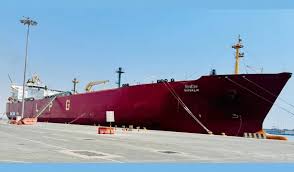
The Ministry of Ports, Shipping & Waterways (MoPSW) notified the operational guidelines for two major shipbuilding initiatives—the Shipbuilding Financial Assistance Scheme (SBFAS) and the Shipbuilding Development Scheme (SbDS).
- It is aimed at strengthening India’s domestic shipbuilding capacity and improving global competitiveness.
- Time Period: It will remain valid until 2036.
- Nodal Ministry: Ministry of Ports, Shipping & Waterways
- Features of Shipbuilding Financial Assistance Scheme:
- The government will provide financial assistance depending on the vessel category.
- The scheme introduces graded support for small normal, large normal and specialised vessels, with stage-wise disbursement linked to defined milestones and backed by security instruments.
- Under this, ship owners scrapping vessels at Indian yards will receive a credit equivalent to 40% of the scrap value.
- It provides for the establishment of a National Shipbuilding Mission to ensure coordinated planning and execution of shipbuilding initiatives.
- Shipbuilding Development Scheme:
- It focuses on long-term capacity and capability creation.
- It provides for the development of greenfield shipbuilding clusters, expansion and modernisation of existing brownfield shipyards.
- It is to be established under the Indian Maritime University to support research, design, innovation and skills development.
- Greenfield shipbuilding clusters will receive 100% capital support for common maritime and internal infrastructure through a 50:50 Centre–State special purpose vehicle.
- Brownfield expansion will be eligible for 25% capital assistance for brownfield infrastructure such as dry docks, shiplifts etc.
- The scheme also includes a Credit Risk Coverage Framework, offering government-backed insurance for pre-shipment, post-shipment and vendor-default risks.
Plasser’s Quick Relaying System:
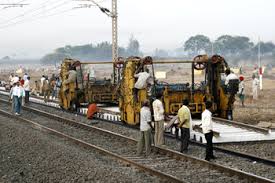
The Northeast Frontier Railway (NFR) has achieved a major milestone in mechanised track renewal by recording its highest-ever single-day output of 1,033 track metres using Plasser’s Quick Relaying System.
- It is a modern semi-mechanized system automatic machine used for quick railway track replacement.
- It aims to speed up track renewal while minimizing traffic disruption, enhancing safety, reliability, and maintenance efficiency.
- It consists of self-propelled cranes which move on an auxiliary track having the same centre line as that of track to be relayed.
- These portal cranes are capable of self-loading and unloading from Bogie Flat Wagons.
- The system is widely used for new track construction as well as the modernisation of existing track infrastructure.
- It helps longer track lengths to be renewed within shorter traffic blocks
- It is cost effective, as it reduces manual labor and lifecycle maintenance costs.
Exclusive Economic Zone:
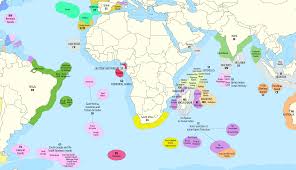
Fisher-folk recently urged the Centre to include their representatives in policymaking bodies so that their practical expertise can be utilized, without which the goal of responsible fishing in the Exclusive Economic Zone (EEZ) cannot be achieved.
- An EEZ is an area of the ocean, generally extending 200 nautical miles (230 miles) beyond a nation’s territorial sea, within which a coastal nation has jurisdiction over both living and nonliving resources.
- The concept of an exclusive economic zone (EEZ) was adopted through the 1982 United Nations Convention on the Law of the Sea.
- Under international law, within its defined EEZ, a coastal nation has:
- Sovereign rights for the purpose of exploring, exploiting, conserving, and managing natural resources of the seabed, subsoil, and waters above it.
- Jurisdiction as provided for in international law with regard to the establishment and use of artificial islands, installations, and structures; marine scientific research; and the protection and preservation of the marine environment.
- Other rights and duties provided for under international law.
- UNCLOS (United Nations Convention on the Law of the Sea) indicates that the coastal state determines the acceptable level of fishing quotas in its EEZ, with a focus on sustainable management.
- The coastal state is entitled to fish the entire quota or to award the surplus to other countries.
- Provisions under UNCLOS also provide for the regular exchange of information about the populations of resources in an EEZ in order to promote international scientific cooperation.
- EEZs have also been used to determine which country is responsible for removing marine hazards such as space debris.
- UNCLOS establishes rights for how other countries may access the waters in an EEZ.
- The territorial sea (also called territorial waters), under the UNCLOS, is that area of the sea immediately adjacent to the shores of a country and subject to the territorial jurisdiction of that country.
- The territorial sea extends to a limit of 12 nautical miles from the baseline of a country’s coast.
Anopheles stephensi:
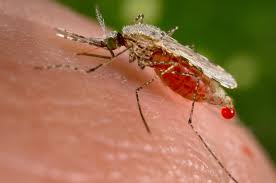
Urban malaria, driven largely by the spread of invasive vector Anopheles stephensi in metropolitan areas like Delhi, has emerged as a national concern threatening India’s goal of eliminating the mosquito-borne disease by 2030, according to the Health Ministry’s recently released Malaria Elimination Technical Report, 2025
- It is an invasive mosquito species originating from parts of Southeast Asia and the Arabian Peninsula.
- It is a major malaria vector.
- It has recently spread to parts of Africa, posing a growing public-health concern.
- Unlike most malaria vectors, it is adept at colonizing urban environments.
- It can breed in tiny amounts of water year-round and has made a comfortable home in urban areas
- Throughout its natural range, Anopheles stephensi is an important vector for both Plasmodium falciparum and Plasmodium vivax.
- In urban areas, An. stephensi is found throughout the year but is most abundant in the summer months (between June and August), which coincides with the peak period of malaria transmission.
Global Capability Centres:

Global Capability Centres (GCCs) are now the primary engine sustaining India’s technology job market, contrasting sharply with the hiring slowdown witnessed by large IT firms in the country.
- Global Capability Centres (GCCs), or Captive Centres, are offshore offices or subsidiaries set up by multinational corporations (MNCs) to handle various business processes and services.
- GCCs connect organizations to a global pool of top-tier talent, equipped with the latest technology and training needed to stay ahead of industry trends, continually innovate, and create sustained growth.
- These centres are responsible for a wide range of tasks, including IT support, research and development (R&D), data analytics, finance, human resources, and other back-office functions.
- Over time, many GCCs have evolved from being simple support centres to becoming strategic hubs that drive innovation and high-value business functions.
- GCCs in India:
- Earlier, GCCs were established in India primarily to reap cost benefits.
- Customer support, data processing, and IT services that these centres mainly focused on.
- Due to its abundant skilled labour force and lower operational cost, India proved to be an ideal location for setting up GCCs.
- However, GCCs have evolved over time to expand massively and now include critical business functions such as R&D, analytics, digital transformation, and innovation.
- Key GCC hubs are located in Bengaluru, Hyderabad, Pune, Chennai, Mumbai, and the National Capital Region (NCR).
National Council for Cement and Building Materials:

The Global Cement and Concrete Association (GCCA) India–NCB Carbon Uptake Report was released on the occasion of the 63rd Foundation Day of the National Council for Cement and Building Materials (NCB).
- It was established in 1962 as an apex research and development organization.
- Objective is to promote research and scientific work connected with cement and building materials trade and industry.
- It functions under the administrative control of Department for Promotion of Industry and Internal Trade (DPIIT), Ministry of Commerce and Industry, Government of India.
- Functions of National Council for Cement and Building Materials:
- NCB’s areas of work span over the entire spectrum of cement manufacturing and usage.
- It serves as the nodal agency for providing the Government the necessary support for formulation of its policy and planning activities related to growth and development of cement industry.
- It is devoted to protect the interests of consumers of cement and concrete in the country.
- It has its corporate centre and main laboratories located at Ballabgarh (near New Delhi).
- It has well established regional centre at Hyderabad and a Centre at Ahmedabad (Gujarat) &
T Chamaeleontis:

Astronomers used archival spectroscopic data from NASA’s James Webb Space Telescope Mid Infrared Instrument (MIRI) to study polycyclic aromatic hydrocarbons (PAHs) in the spectrum of the young star T.Chamaeleontis.
- T Chamaeleontis is a young but sun-like star in the small southern constellation of Chamaeleon.
- It is located about 350 light-years from Earth.
- It can be found in southern celestial hemisphere.
- It is approximately 70 % of the size of Sun and temperature on its surface is around 4838 °C.
- It is surrounded by a planet-forming disk called circumstellar disk that contains a wide gap, likely carved out by an emerging protoplanet.
- Normally, the dense inner regions of such disks act like a protective wall or veil blocking much of the star’s ultraviolet light from reaching the colder, outer regions.
- This gap makes the system a key target for studying how young planets interact with their natal disks and shape their surrounding environments during the early stages of planet formation.
ISRO’s Heaviest Launch: BlueBird Block-2
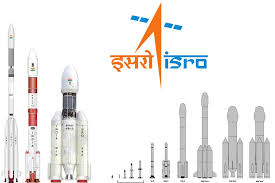
ISRO marked a major milestone by launching its heaviest satellite, BlueBird Block-2 (6,100 kg, by the US firm AST SpaceMobile), using the Launch Vehicle Mark-3 (LVM3) rocket, showcasing India’s strong heavy-lift launch capability.
- The BlueBird Block-2, is the heaviest payload ISRO has placed into orbit, surpassing the previous record of 5,700 kg (OneWeb satellites).
- The satellite was injected into a Low Earth Orbit (LEO) of approximately 520 km altitude.
- It will provide direct-to-mobile connectivity, enabling 4G and 5G connectivity directly to mobile phones without requiring specialized ground stations.
- This is ISRO’s 3rd commercial mission using LVM-3, following two OneWeb satellite launches in 2022 and 2023.
- Despite global alternatives like SpaceX’s Falcon-9 and the ESA’s Ariane 6, the LVM-3 underscores ISRO’s capacity for heavy launches at much lower cost.
Reservation for Agniveers in CAPFs:
The Union Home Ministry has decided to increase reservation for ex-Agniveers in Group C posts of Central Armed Police Forces (CAPFs) from 10% to 50%, marking a major policy shift under the Agnipath scheme.
- Ex-Agniveers will be exempted from Physical Standard Test (PST) and Physical Efficiency Test (PET). However, they must appear for written examinations like other candidates.
- Agnipath Scheme Launched in June 2022, is a short-term military recruitment programme. Recruits under this scheme are called Agniveers, and the objective is to maintain a young, agile, and technology-oriented force while optimising defence personnel expenditure.
- Applicants must be Indian citizens and meet prescribed educational, physical, and medical standards of the respective service.
- The age limit was 17.5–23 years for the 2022 intake, and 17.5–21 years for subsequent intakes, reflecting the scheme’s focus on youth induction.
- Agniveers are enrolled for a fixed tenure of four years.
- They will be recruited as personnel below officer (PBOR) rank in the army, air force and navy for four years, including six months of training.
- Up to 25% of each Agniveer batch may be absorbed into the regular cadre based on performance, without any right to selection, while the remaining personnel receive skill certification to support post-service employability.
- Agniveers earn Rs 30,000–Rs 40,000 per month over four years, contribute 30% of pay to a Agniveer Corpus Fund matched by the government, and receive a tax-free Seva Nidhi package of about Rs 11.71 lakh on exit, with no pension or gratuity.
- Rs 48 lakh non-contributory life insurance cover is provided during service.
Rabies : Data
According to a paper published in One Health, of the 59,000 rabies-mediated human deaths in the world every year, India represents a third, around 20,000, and more than any other country.Rabies is a vaccine-preventable, zoonotic, viral disease.It is caused by the Rabies virus (RABV) which affects the central nervous system.It infects mammals, including dogs, cats, livestock and wildlife.It is one of the Neglected Tropical Diseases (NTD)that predominantly affects already marginalized, poor and vulnerable populations.It spreads to people and animals via saliva, usually through bites, scratches, or direct contact with mucosa (e.g. eyes, mouth, or open wounds).
Infrastructure Bonds:
State-run Bank of India (BoI) has raised ₹10,000 crore through infrastructure bonds, witnessing strong investor demand as bids worth over ₹15,300 crore were received against a base issue size of ₹5,000 crore.Infrastructure Bonds are long-term debt securities — a way for governments or companies to borrow money from investors to fund large infrastructure projects (like roads, airports, power plants, railways, water systems, etc.).
When someone invests in these bonds, they’re essentially lending money to the issuer and in return receive fixed interest (coupon) payments and your principal back at maturity. (RBI) permits banks to issue infrastructure bonds with a minimum maturity of seven years, with typical terms often extending to 10-15 years. Public Sector Banks (PSBs) remain the dominant issuers of infrastructure bonds due to regulatory incentives.
OMO Purchases and Dollar–Rupee Swap:

The Reserve Bank of India (RBI) has announced a dual intervention comprising Open Market Operation (OMO) purchases of government securities and a Dollar-Rupee buy/sell swap auction.
Open Market Operations :
- It refer to the buying and selling of government securities by the Reserve Bank of India (RBI) in the open market to regulate liquidity and money supply in the economy.
Types:
- OMO Purchase: RBI buys G‑secs → injects rupee liquidity (expansionary).
- OMO Sale: RBI sells G‑secs → absorbs rupee liquidity (contractionary).
A Rupee–Dollar swap:
- It is a foreign exchange tool used by the RBI in which it exchanges US dollars for rupees with banks, with an agreement to reverse the transaction at a future date.
Structure:
- Buy/sell swap: RBI buys dollars now (gives rupees) and agrees to sell the same dollars later → injects rupee liquidity now, withdraws it at maturity.
- Sell/buy swap: RBI sells dollars now (absorbs rupees) and buys them back later → sucks out rupee liquidity now, re‑injects later.
The RBI uses both tools simultaneously because they serve different but complementary purposes in managing liquidity, interest rates, and exchange rate stability.
- OMO helps RBI fine-tune liquidity permanently, while rupee–dollar swaps provide durable but reversible liquidity for longer periods.
- Using swaps allows RBI to inject rupee liquidity without directly altering domestic bond yields, while OMO directly influences the government securities market.
- Rupee–dollar swaps help stabilise the exchange rate and optimise forex reserves, while OMO focuses purely on domestic monetary conditions.
- Together, they give RBI greater operational flexibility to control liquidity surplus/deficit without overusing a single instrument.
Anu Garg to Become Odisha’s First Woman Chief Secretary:
Odisha is set to create history as senior Indian Administrative Service (IAS) officer Anu Garg assumes charge as the state’s first woman Chief Secretary from January 1, 2026. Her appointment marks a significant milestone in the administrative history of Odisha, reflecting growing representation of women in the country’s top bureaucratic positions.Anu Garg is a 1991-batch IAS officer of the Odisha cadre with more than three decades of service.She will succeed Manoj Ahuja, who is due to retire on December 31, 2025.
Vaibhav Suryavanshi Receives PM Rashtriya Bal Puraskar from President of India:
Cricketer who is 14 years old prodigy Vaibhav Suryavanshi has been awarded the Pradhan Mantri Rashtriya Bal Puraskar by President Droupadi Murmu for his outstanding achievements in domestic and Under 19 cricket. The award is India’s highest civilian honour for children aged 5 to18 recognizing excellence in fields such as sports, art, science, social service, environment and bravery.



