
Today’s Current Affairs: 6th February 2026 for UPSC IAS exams, State PSC exams, SSC CGL, State SSC, RRB, Railways, Banking Exam & IBPS, etc
Table of Contents
El Chichon Volcano:

Unusual changes inside the crater of Chichón volcano in southern Mexico have raised fresh concerns among volcanologists.
- El Chichón, also known as Chichonal, is a stratovolcano in Mexico.
- This volcano is made up of several lava domes and a tuff ring.
- A tuff ring is a low, wide ring of volcanic ash and rock.
- El Chichón sits between two larger volcanic areas: the Trans-Mexican Volcanic Belt and the Central America Volcanic Arc.
Hakki Pikki Tribe : In News

Eight members of Karnataka’s Hakki Pikki tribal community, who had travelled to Central Africa for the sale of herbal products, are now facing a serious crisis after their visas expired.
- ‘Hakki-Pikki’ is one of the major tribal communities in Karnataka.
- In Kannada, the word ‘Hakki’ stands for ‘bird’ and ‘Pikki’ stands for the verb ‘to catch’.
- Therefore, the community is known as the ‘bird catcher,’ which is their traditional occupation.
- They are recognized as a Scheduled Tribe in India.
- Despite being surrounded by Dravidian languages and living in southern India, the community speaks an Indo-Aryan language.
- Their mother tongue was designated ‘Vaagri’ by scholars.
- They communicate in ‘Vaagri’ at home but speak in Kannada when conducting daily business.
- UNESCO has listed ‘Vaagri’ as one of the endangered languages.
- The tribe follows Hindu traditions and celebrates Hindu festivals.
- They follow a clan-based social structure and practice endogamy within their clan.
- The tribe prefers cross-cousin marriages.
- The society is matriarchal, where the groom gives dowry to the bride’s family.
Denotified, Nomadic and Semi-Nomadic Tribes:

Denotified tribes, nomadic tribes, and semi-nomadic tribes across the country are coming together to push for a “separate column” for themselves in the 2027 Census.
- Denotified Tribes (DNTs) are those communities which were once notified under the Criminal Tribes Acts, enforced by the British Raj between l871 and I947.
- Once a tribe becomes “Notified” as criminal, all its members were required to register with the local magistrates, failing which they would be charged with a ‘crime’ under the Indian Penal Code.
- After Independence, this Act was repealed in 1952, and the communities were “denotified”, hence the name.
- The DNTs are among the most neglected, marginalised, and economically deprived communities, with most living a life of destitution.
- Historically, these communities never had access to private land or home ownership and used forests and grazing lands for their livelihood and residential use.
- In India, roughly 10 percent of the population are DNTs.
- In 2014, the Ministry of Social Justice and Empowerment constituted a National Commission for De-notified, Nomadic, and Semi-Nomadic Tribes (NCDNT) for a period of three years-
- to prepare a state-wise list of castes belonging to DNTs
- to suggest appropriate measures in respect of Denotified and Nomadic Tribes that may be undertaken by the Central Government or the State Government.
- The Ministry constituted the Development and Welfare Board for Denotified, Nomadic, and Semi-Nomadic Communities (DWBDNCs) in 2019.
- The Board has been mandated to formulate and implement welfare and development programmes for these communities.
- The Renke Commission (2008) was earlier commissioned to identify and list the DNT communities.
Nalsarovar Bird Sanctuary: Study

Nalsarovar Bird Sanctuary has recorded over five lakh birds across 200 species in its latest census, a sharp 21% jump from 4.12 lakh in 2024, largely due to the absence of boating, reduced tourist movement, and minimal noise pollution over the past two years.
- It is located in Gujarat.
- Nal Sarovar literally translates to ‘Tap Lake’.
- It is declared as a Ramsar site.
- The common aquatic plants are Cyperus sp., Scirpus sp., Typha ungustata, Eleocharis palustris, Ruppia, Potamogeton, Vallisnaria, Naias, Chara, etc.
- It also includes locally famous ‘pilu’ trees which harbor a red berry type edible fruit.
- It is home to various species of birds, including migratory birds that travel from places as far away as Europe and Siberia.
- Apart from these, typical species like pelicans, ducks, herons, and storks can be found easily.
AI Stack:
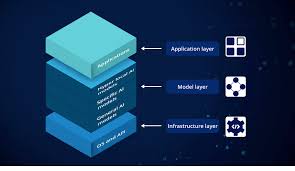
India is anchored in the vision of AI for Humanity and building a robust AI stack is both a technological priority and a social commitment for India.
- An AI stack is the complete set of tools and systems that work together to build and run AI applications.
- It makes artificial intelligence work in the real world, from the apps people use every day to the data, computing power, networks etc.
- It is made up of five layers:
- Application Layer:
- It represents the user-facing component of the AI stack.
- It includes AI-powered apps and services such as health diagnostic tools, farming advisory platforms, chatbots, and language translation applications.
- This layer turns complex AI processes into simple, user-friendly services that people can easily use.
- AI model layer:
- It acts as the brain of AI systems. AI models are trained on data to recognize patterns, make predictions, and take decisions.
- It is the core intelligence that determines how effectively applications can understand, predict, and respond to real-world needs.
- Example: They help detect diseases from X-rays, predict crop yields, translate languages, or answer questions through chatbots.
- Compute layer:
- It provides the computing power required to train and run AI models. During training, compute processes vast amounts of data so the model can learn and improve.
- It is the critical enabler that determines the scale, speed, and sophistication of AI innovation.
- Data Centres and Network Infrastructure Layer:
- Data centres are where AI systems are stored and operated, while networks like the internet, broadband, and 5G move data between users, computers, and AI models.
- The data centres and network infrastructure layer provides the foundational backbone that enables AI systems to operate at scale and in real time.
- Energy Layer: It keeps the entire AI stack running. AI data centres consume large amounts of electricity because powerful computers are needed to train and operate AI systems.
NDMA Guidelines for Disaster Victim Identification:
The National Disaster Management Authority (NDMA) has released India’s first-ever national guidelines and Standard Operating Procedures (SOPs) for Disaster Victim Identification (DVI) to ensure scientific identification and dignified handover of human remains during mass fatality incidents.
- Titled “National Disaster Management Guidelines on Comprehensive Disaster Victim Identification and Management”, the document was released, marking 25 years since the 2001 Gujarat earthquake.
Key Provisions of NDMA Guidelines on Disaster Victim Identification:
- The guidelines became urgent after a series of major disasters including the Air India crash (Ahmedabad), the Sangareddy chemical factory explosion (Telangana), flash floods (Uttarakhand), and the Delhi’s car bomb blast near Red Fort where victim identification proved difficult.
- The absence of Standard Operating Procedures (SOPs), shortage of trained manpower and infrastructure, and limitations of traditional identification methods highlighted the need for advanced forensic techniques.
- Most importantly, the guidelines address the humanitarian and legal imperative of ensuring dignity of the dead, timely legal closure, and emotional closure for affected families.
Key Provisions of NDMA DVI Guidelines:
- The guidelines mandate a systematic, four-step protocol for identification to ensure accuracy and prevent mix-ups:
- Systematic Recovery: Careful retrieval of human remains from the disaster site.
- Post-Mortem Data Collection: Gathering data (fingerprints, DNA, dental, physical markers) from the recovered remains.
- Ante-Mortem Data Collection: Collecting medical records, dental history, and physical descriptions from the victims’ families.
- Reconciliation: Scientifically matching the post-mortem data with ante-mortem records to confirm identity before releasing the body.
- A major recommendation is the creation of a dental registry, allowing authorities to use teeth and jaws (which are highly durable) to identify victims when other methods fail.
- The guidelines incorporate forensic archaeology to identify human remains even months or years after a disaster, and strengthen forensic odontology by using dental records as a key tool for accurate victim identification.
- In mass fatality events, the guidelines advise against conducting physical autopsies on all victims.
- The process must respect the community customs of the victims and include emotional support and counseling for families.
- The NDMA has laid out a robust plan to operationalise the guidelines nationwide by establishing specialised state-level forensic teams to handle disaster victim identification.
- It also emphasises targeted training of experts from relevant forensic fields to manage complex scenarios, such as landslides where passenger manifests or records are unavailable.
Circular Economy:
NITI Aayog launched three thematic reports on Enhancing Circular Economy in End-of-Life Vehicles (ELVs), Waste Tyres, E-waste, and Lithium-ion Batteries at the International Material Recycling Conference (IMRC) organised by the Material Recycling Association of India (MRAI) in Jaipur.The reports outline challenges and policy pathways to strengthen India’s circular economy ecosystem.
- The Circular Economy refers to an economic model whose objective is to produce goods and services in a sustainable way, by limiting the consumption and waste of resources (raw materials, water, energy) as well as the production of waste.
- Unlike the linear economy (take–make–dispose), the circular economy includes 6 R’s – Reduce, Reuse, Recycle, Refurbishment, Recover, and Repairing of materials.
Key Highlights of the NITI Aayog Reports on Circular Economy in the Mobility:
- Rapid urbanisation and rising vehicle ownership, including the surge in electric vehicles, are accelerating the generation of ageing vehicles in India.
- Electric Vehicles (EV) sales increased from 50,000 in 2016 to 2.08 million in 2024, with the government targeting 30% EV share in total vehicle sales by 2030, increasing future ELV volumes.
- The number of End-of-Life Vehicles is projected to rise from 23 million in 2025 to 50 million by 2030, intensifying environmental and material recovery challenges.
- Limited availability of Automated Testing Stations (ATS) and Registered Vehicle Scrapping Facilities (RVSFs) constrains formal scrappage and circular economy outcomes.
- Weak financial viability of formal scrappage units, procedural delays, and low consumer awareness sustain informal dismantling practices.
- Growth in vehicle ownership and EV adoption is driving higher tyre consumption, leading to a sharp increase in End-of-Life Tyres (ELTs).
- The tyre recycling ecosystem remains fragmented, with poor traceability, lack of standards, and dominance of informal recyclers.
- High-value recycling pathways such as recovered Carbon Black (rCB) and tyre retreading remain underutilised due to weak standards and market mandates.
- Downcycling of tyre waste leads to missed opportunities for import substitution and green job creation.
- Digitalisation and the clean energy transition are rapidly increasing E-waste and Lithium-ion battery waste in India.
- E-waste generation is expected to rise from 6.19 MMT (million metric ton) in 2024 to 14 MMT by 2030, significantly increasing recycling and environmental management pressures.
- Demand for Lithium-ion batteries is projected to grow from 29 GWh in 2025 to 248 GWh by 2035, driven by EV adoption and energy storage needs.
- Informal recycling using unsafe methods dominates the sector, causing pollution, health risks, and economic losses.
- Extended Producer Responsibility (EPR) for E-waste covers only a few metals, while weak monitoring allows fake recyclers and fraudulent certifications.
- Inefficient recycling deepens India’s dependence on imported critical minerals, affecting long-term energy security.
India-USA Trade Deal 2026:

India and the US have reached a landmark trade deal in February 2026, significantly reducing tariffs to 18% and ending a period of intense trade friction between the two nations.
- The India-USA Trade Deal 2026 is a strategic economic reset announced by President Donald Trump and Prime Minister of India on February 2, 2026.
- This reciprocal agreement aims to de-escalate the trade war triggered in late 2025, providing Indian exporters a competitive edge in the American market while securing massive energy and agricultural commitments for the United States.
Key Features of the Deal:
- The US has slashed effective tariffs on Indian goods from a peak of 50% down to 18%.
- The additional 25% penalty—previously imposed due to India’s Russian oil imports—has been scrapped.
- India has agreed to significantly reduce or halt Russian oil purchases, shifting procurement to the US and potentially Venezuela.
- India has pledged to purchase $500 billion worth of US energy, agriculture, coal, and technology products (likely over a multi-year period)
- India will work toward reducing its own tariffs and non-tariff barriers on US industrial goods toward zero.
- India has successfully excluded sensitive dairy and core agricultural sectors (like staple crops) from the deal to protect domestic farmers.
- The deal leverages India’s SHANTI Act, 2025, allowing US firms greater access to India’s civil nuclear and data center markets.
- India now enjoys a tariff rate (18%) better than regional competitors like Vietnam, Bangladesh, and Pakistan (facing 19–20%).
Bharat Taxi at Vigyan Bhavan, New Delhi:
The Union Cooperation Minister will launch India’s first cooperative-based ride-hailing platform, “Bharat Taxi,” at Vigyan Bhavan, New Delhi.Bharat Taxi is India’s first cooperative-led ride-hailing platform registered under the Multi-State Cooperative Societies Act, 2002.It is a government-supported initiative developed under the Union Ministry of Cooperation and the National e-Governance Division (NeGD).It is India’s first cooperative taxi network, allowing drivers to become shareholders and co-owners.It is being jointly promoted by leading cooperative and financial institutions including NCDC, IFFCO, AMUL, KRIBHCO, NAFED, NABARD, NDD Band NCEL.Drivers can purchase shares and become cooperative members, giving them transparency and decision-making power.Unlike private cab aggregators that take a large cut, Bharat Taxi transfers the full fare to the driver.Transparent, No-Surge Pricing: Fares will remain predictable, with no surge charges.Integration of the Bharat Taxi platform with national digital platforms such as DigiLocker, UMANG, and API Setu.
BRICS Centre for Industrial Competencies:
India joined the BRICS Centre for Industrial Competencies (BCIC) at Vanijya Bhavan, New Delhi.It was launched in partnership with the United Nations Industrial Development Organization (UNIDO).It serves as a one-stop centre providing integrated support services to manufacturing companies and Micro, Small and Medium Enterprises (MSMEs) across BRICS countries.It is a network-driven initiative under UNIDO, supporting SMEs, industrial modernization, and digital transformation in BRICS.It focuses on strengthening Industry 4.0 competencies.Implementation: The National Productivity Council (NPC) has been designated as the India Centre for BRICS Industrial Competencies.
Miniratna Status for Yantra India Limited:
The Defence Minister granted Miniratna Category-I status to Yantra India Limited, recognising its swift transformation into a profit-making Defence Public Sector Undertakings (DPSUs) within four years.Yantra India Limited is one of the seven new DPSUs created after the corporatisation of the erstwhile Ordnance Factory Board on 1st October 2021, and functions under the Department of Defence Production.The company manufactures carbon fibre composites, glass composites, aluminium alloys, and assembly products for medium and large calibre ammunition, armoured vehicles, artillery guns and main battle tanks, placing it in critical defence production segments.The status empowers YIL’s Board to incur capital expenditure up to ₹500 crore on new projects, modernisation and equipment purchase without prior government approval, enabling faster decisions and accelerated expansion.The approval reinforces the Aatmanirbhar Bharat vision by supporting indigenisation, reduced import dependence, higher defence exports, greater industry participation, and India’s emergence as a global defence manufacturing hub.
NBDSA Flags Communal Code Violations:
Data revealed that nearly 60% of orders passed by the News Broadcasting & Digital Standards Authority (NBDSA) over the past three years cited violations of the communal harmony code by private TV and digital news broadcasters.News Broadcasting & Digital Standards Authority (NBDSA) is an independent self-regulatory body set up by the News Broadcasters & Digital Association (NBDA), representing private TV and digital news broadcasters in India, and is funded by its members.It enforces standards of objectivity, impartiality, fairness, decency, and responsible journalism under the News Broadcasting & Digital Standards Regulations, 2008, with a focus on communal harmony and ethical reporting.NBDSA adjudicates complaints against news broadcasts, may act suo motu or on complaints from individuals or government bodies, and can issue warnings, censures, direct content modification or removal, impose penalties or close complaints where no violation of its Code of Ethics is found.The body comprises a Chairperson, who must be an eminent jurist, along with members including news editors and individuals with expertise in fields such as law, education, literature, and public administration, nominated by a majority of the Board.It follows a two-tier grievance redressal mechanism, requiring complainants to first approach the broadcaster before escalating the matter to the Authority.
Operation Kiya:
Operation Kiya is in the news due to a fierce counter-terrorism encounter in the forested Basantgarh area of Udhampur, where security forces have cordoned off Pakistani terrorists.Operation Kiya is a joint counter-terrorism operation launched by Indian security forces to neutralise terrorists hiding in remote forest areas of Jammu and Kashmir.Aim is to track, contain, and eliminate infiltrated terrorists while preventing their movement across districts and safeguarding civilian areas.Conducted by the Army’s White Knight Corps, Counter Insurgency Force (Delta), J&K Police, and CRPF, ensuring coordinated intelligence and firepower.Establishment of tight cordons in difficult terrain (forests, hills) to trap terrorists and deny escape routes.
Sabhasaar Initiative:
SabhaSaar Initiative is in the news as over 1.11 lakh Gram Panchayats have adopted this AI-enabled tool for automated Gram Sabha meeting summarisation as of January 2026.SabhaSaar is an AI-powered voice-to-text and meeting summarisation platform designed to automatically generate structured Minutes of Meetings (MoM) from Gram Sabha and Panchayat meeting recordings.Launched in: 14 August 2025Organisations involved: Ministry of Panchayati Raj – Nodal implementing ministry,IndiaAI Mission under Ministry of Electronics and Information Technology – AI & cloud infrastructure. Aim is to strengthen participatory democracy, transparency, and efficiency in local self-government by digitising and standardising Gram Sabha documentation.
New AI-Powered Workplace Automation Suite:
Global tech stocks fell sharply after Anthropic launched a new AI-powered workplace automation suite, triggering fears that AI could replace core software and IT services rather than merely augment them.Anthropic’s AI workplace suite is a set of AI agent–based automation tools that can directly perform complex office and enterprise tasks—bypassing conventional software platforms and human workflows.Developed by: Anthropic, creators of the Claude AI model.Aim is to automate end-to-end white-collar workflows (legal, sales, compliance, analytics, operations) using autonomous AI agents, reducing dependence on traditional Software-as-a-Service (SaaS) platforms and human intermediaries.



