
Today’s Current Affairs: 6th January 2026 for UPSC IAS exams, State PSC exams, SSC CGL, State SSC, RRB, Railways, Banking Exam & IBPS, etc
Table of Contents
Hydrokinetic Turbine Technology:
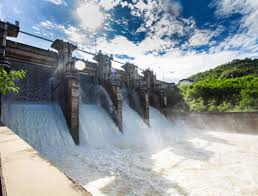
In a major push to expand renewable energy and ensure 24×7 electricity supply, the Tripura government recently identified 10 river sites to generate 185 MW of power using Hydrokinetic Turbine Technology.
- Hydrokinetic turbines are an emerging hydropower technology that takes advantage of moving water currents to generate power.
- Unlike traditional hydroelectric dams that require larger in-channel infrastructure that can disrupt flow and the river ecosystem, hydrokinetic turbines are placed directly in the river channel and have a much smaller environmental footprint.
- These turbines offer a renewable energy source by tapping into the natural flow of water in aquatic environments.
- It uses kinetic energy of flowing water with practically zero potential head for generation of electrical energy, unlike conventional units, which utilize potential energy of water through construction of suitable civil structures such as dams, diversion weirs, and barrages for creation of necessary ‘Head’.
- Benefits of Hydrokinetic Turbines
- Renewable Energy Source: Hydrokinetic turbines harness the steady flow of water to generate power. This clean energy source reduces reliance on fossil fuels.
- Minimal Environmental Impact: These turbines operate with the natural flow of water, unlike traditional dams. It preserves ecosystems and minimizes disruption to aquatic life and landscapes.
- Scalable and Flexible: Hydrokinetic turbines can be adjusted to meet different energy needs. They work well for small local setups or larger multi-turbine arrays, making them suitable for various projects.
- Cost-Effective Maintenance: With fewer moving parts and strong debris protection, these turbines require less upkeep. This reduces maintenance costs and ensures reliable long-term operation.
Salal Hydroelectric Project:
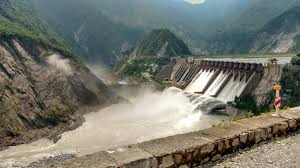
The Union Minister of Power and Housing and Urban Affairs recently directed sediment removal at the Salal Power Project in Jammu and Kashmir to ensure maximum utilisation of water resources, in the wake of the Indus Waters Treaty being kept in abeyance between India and Pakistan.
- It is a 690 MW run-of-the-river power project on the Chenab River in the Reasi District of Jammu and Kashmir.
- Although the plan for a water reservoir was originally conceived in pre-independent India, the planning of the project started in the 1960s.
- The project construction commenced in 1970 and subsequently entered into commercial operation in 1987.
- The project is developed and owned by National Hydroelectric Power Corporation (NHPC).
- This was the first hydropower project, which was built by India under the Indus Water Treaty regime in Kashmir.
- Salal Dam is 130 meters high with an elevation of 1627 feet above mean sea level.
- Jammu and Kashmir receives 12.5 percent of the energy generated from the project.
- The rest is transmitted to the Northern Grid, where it is distributed to the states of Punjab, Haryana, Delhi, Himachal Pradesh, Rajasthan, and Uttar Pradesh.
- Jammu and Kashmir also purchases additional power at regular prices.
China’s proposal of the Global Governance Initiative (GGI):
China has reiterated its four global initiatives—with the Global Governance Initiative (GGI) at the core—as a people-centred framework for peace, security, and development.
- The Global Governance Initiative (GGI) is China’s proposal to reform and improve the existing global governance system so that it becomes more inclusive, representative, and people-centred, ensuring that all nations and peoples benefit from globalisation and international cooperation.
- Four major proposals:
- Global Development Initiative (GDI): Focuses on shared and inclusive development, poverty reduction, livelihood protection, and equitable access to growth, ensuring development outcomes directly benefit people.
- Global Security Initiative (GSI): Advocates common, comprehensive, cooperative, and sustainable security, emphasising peaceful dialogue, respect for sovereignty, and non-interference to ensure stability.
- Global Civilization Initiative (GCI): Promotes mutual respect among civilisations, cultural dialogue, and rejection of civilisational superiority, recognising diversity as a strength of humanity.
- Global Governance Initiative (GGI): Calls for people-centred global governance, greater participation of developing countries, reform of international institutions, and cooperation on climate change, AI, finance, and trade.
RQ-170 Sentinel:

A rare U.S. Air Force RQ-170 “Sentinel” stealth surveillance drone was recently spotted returning to Roosevelt Roads Naval Station in eastern Puerto Rico, following U.S. military strikes conducted overnight against targets in Venezuela.
- It is an American high-altitude long-endurance unmanned aerial vehicle (UAV).
- It was designed and manufactured by Skunk Works, a division of Lockheed Martin (an American defense and aerospace manufacturer), for the United States Air Force (USAF).
- It is designed to execute intelligence, surveillance, target acquisition, and reconnaissance (ISTAR) and electronic warfare missions over a target area.
- The aircraft entered service in the mid-2000s and has previously been associated with U.S. operations in the Middle East and Asia.
- It features a flying-wing design optimized for reduced radar visibility and long-endurance flights.
- It features a blended fuselage, pointed nose, and tricycle-type landing gear.
- An electro-optic camera was incorporated beneath the front fuselage section to seize real-time imagery or videos of the battlefield it is surveying.
- It can capture real-time imagery of the battlefield and transfer the data to the ground control station (GCS) through a line of sight (LOS) communication data link.
- It is fitted with an active electronically scanned array radar, synthetic aperture radar, and signal intelligence in its belly fairings.
- About 90% of the aircraft is made up of composite materials to decrease its overall weight.
India becomes world’s largest rice producer:

Union Agriculture Minister said India has become the world’s largest rice producer, with output at 150.18 million tonnes, overtaking China at 145.28 million tonnes.
- India has overtaken China to become the No. 1 rice-producing country globally, as per the minister’s statement (2024–25 output: 150.18 MT).
India’s status:
Global ranking:
- India – world’s largest producer.
- China – second.
State-wise ranking:
- As per Economic Survey (Statistical Appendix) for 2023–24, the three largest rice-producing states were:
- Telangana – 16.63 MT (≈ 12.17% share)
- Uttar Pradesh – 15.72 MT (≈ 11.50% share)
- West Bengal – 15.12 MT (≈ 11.06% share)
Thadou Tribe:
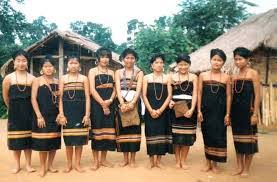
The public broadcaster Prasar Bharati recently asked the programme head of All India Radio (AIR) in Manipur’s capital, Imphal, for inputs on recruiting staff for resuming live broadcasts in the Thadou tribe’s language and other major dialects of the border state.
- They are an indigenous people who live in the hill country adjacent to the Imphal Valley in Manipur.
- The Thadous are the second largest tribe in Manipur, preceded only by the Meiteis, or Manipuris.
- They are also found in smaller numbers in Nagaland, Assam, Tripura, Meghalaya, Mizoram, and Delhi.
- They speak Chin and Thado, which belong to the Tibeto-Burman family of the Sino-Tibetan languages.
- Thadous share a common culture with all the Chin-Kuki-Mizo community.
- Thadou settlements are located in forests. Sites on the tops of ridges or just below ridges are preferred.
- Villages are not arranged according to an established urban plan, and there is no marking of the perimeter of a village.
- The village chief’s house is usually the largest dwelling within the village.
- Outside it there is a platform upon which men gather to discuss matters of importance and to mediate disputes.
- They practice subsistence activities including animal domestication, cultivation, hunting, and fishing.
- Jhum (slash-and-burn) agriculture is predominant.
- The Thadou tribe traditionally practiced an animistic religion centered on nature spirits and a supreme god, Pathen, presently, almost all Thadou people are Christians.
- The Hun-Thadou cultural festival is an annual celebration of this community, which is celebrated at the arrival of the New Year
Microlensing:

A study recently used microlensing to weigh a rogue planet, i.e. not orbiting a star.
- It is a fascinating phenomenon where the light of a background star is deflected by the gravity of a foreground object towards an observer, temporarily magnifying the star as the foreground object crosses the observer’s line of sight.
- It occurs due to gravitational lensing, predicted by Einstein’s General Theory of Relativity.
- The intervening object acts as a gravitational lens, bending the background light.
- This makes it a great way to find objects that are too far away to be visible, like distant planets, brown dwarfs, and neutron stars, and even those that are entirely invisible, like isolated black holes.
- Microlensing events are transient and generally
- Some events last for just 1 day, while others can continue for months or even years, and they can result in very sudden and dramatic changes in brightness.
- Most exoplanet-hunting techniques either find planets really close to their star (like the transit and radial-velocity methods), or very big, young planets far away from their star (the direct-imaging method).
- Microlensing is really helpful for catching the planets in the middle – planets that are similar to Jupiter – and smaller planets much further out, including free-floating ones.
- It’s even quite effective at detecting Earth-like planets.
- Other methods require many years to detect such planets. Instead, microlensing relies on the blind luck of the planet passing in front of a star.
Live Events Development Cell:

The Information and Broadcasting Ministry recently established a Live Events Development Cell (LEDC) to facilitate the expansion of the “concert economy”, boosting employment and tourism in the country.
- It was established by the Ministry of Information & Broadcasting, Government of India.
- Objective is to Support the structured growth of India’s rapidly expanding live entertainment industry and strengthen the country’s emerging concert economy.
- The LEDC will function as a single-window facilitation mechanism aimed at streamlining processes for the sector and positioning India among the world’s leading live entertainment destinations by 2030.
- It brings together representatives from the Central and State governments, industry bodies, and major event companies to coordinate policy support and sectoral expansion.
- Key Focus Areas:
- Single-Window Clearance System being developed on India Cine Hub (ICH) for permissions (fire, traffic, municipal, etc.) to ensure faster approvals and investor-friendly processes.
- Model SOPs for States and removal of redundant permissions.
Sri Govindaraja Swamy Temple:
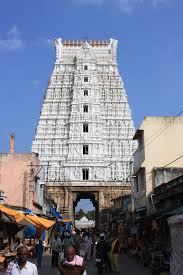
Under the influence of alcohol, a man climbed the main Gopuram of Sri Govindaraja Swamy temple in Tirupati recently.
- It is a Hindu temple located in the town of Tirupati in Andhra Pradesh.
- It is dedicated to Lord Govindaraja Swamy, a form of Lord Vishnu.
- It was built in the 12th century by the Cholas and later expanded by the Vijayanagara kings.
- Renowned Vaishnavite philosopher, Saint Ramanujacharya consecrated this temple in 1130 AD.
- The temple has a rich history and has been visited by several kings and emperors over the centuries.
- It is a beautiful blend of Dravidian and Vijayanagara styles.
- Its tall and remarkable seven storied outer Gopuram is adorned with intricate carvings and sculptures.
- The vimana (tower) above the main sanctum is an architectural highlight. It features a pyramidal shape and intricate carvings, symbolizing the cosmic journey of the deities.
- The temple complex also includes a large courtyard, several smaller shrines, and a pillared hall.
Re-circulatory Aquaculture System:
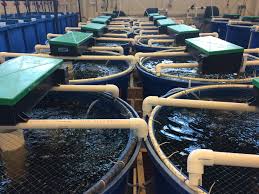
The Union Minister, Ministry of Fisheries, Animal Husbandry and Dairying is set to inaugurate state-of-the-art Re-circulatory Aquaculture System (RAS) Facility in Hyderabad, Telangana.
- It is a technology where water is recycled and reused after mechanical and biological filtration and removal of suspended matter and metabolites.
- It is used for high-density culture of various species of fish, utilizing minimum land area and water.
- Key Features of Re-circulatory Aquaculture System:
- It is an intensive high density fish culture unlike other aquaculture production systems.
- It is also a closed-loop tank-based farming that recycles water after filtration.
- RAS filters and cleans the water in the tank, removing waste and keeping it safe for the fish to live in.
- It has automated set up of culture tanks with both mechanical and biological filtration units, and effectively prevents the entry of pathogens from external sources.
- It requires the minimal interventions to assess the culture, water and disease monitoring, which allows for improved biosecurity.
- It can be set up indoors or in areas without natural water sources, allowing fish to be raised closer to cities and where demand is high.
Battery Pack Aadhaar System:

The central government has released draft guidelines for a Battery Pack Aadhaar system.
- It is an indigenous digital identification and data storage system developed to ensure end-to-end traceability of batteries throughout their entire lifecycle.
- This system aims to bring transparency, accountability, and sustainability to the battery ecosystem by enabling accurate tracking of performance, and environmental impact.
- The battery producer or importer shall have the obligation of assigning a unique Battery Pack Aadhaar Number (BPAN) to each battery that they introduce in the market and the battery they put to self-use.
- Every Electric Vehical battery pack and industrial battery above 2 kWh will be assigned a Battery Pack Aadhaar Number, or BPAN, along with a QR code.
- The BPAN will store:
- Static information: It includes the manufacturer’s identity, battery specifications, material composition, and carbon footprint.
- Dynamic data, including battery health, thermal events, charge-discharge cycles, and end-of-life status — will be maintained on a central server, enabling predictive maintenance and efficient recycling.
- BPAN will play a crucial role in enabling second-life usage, regulatory compliance, and efficient recycling.
Cetacean morbillivirus:
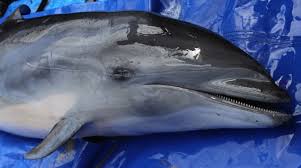
Scientists used drones to find a dangerous Cetacean morbillivirus among whales in the Arctic.
- Cetacean morbillivirus (CeMV) refers to a viral infection affecting marine mammals, particularly cetaceans.
- It belongs to the family Paramyxoviridae, which affects marine mammals such as dolphins, whales, and porpoises.
- These viruses are enveloped, negative-sense single-stranded RNA viruses.
- It has been responsible for numerous outbreaks across the world, especially in the North Atlantic and the Mediterranean.
- It is highly infectious and spread by the respiratory route and direct contact.
- The virus is shed by infected animals in ocular and respiratory secretions, urine, feces, and sloughed skin.
- It impacts the respiratory and neurological systems of the marine mammals, and can lead to mass strandings and deaths.
- There is no treatment for morbillivirus infections in marine mammals, only supportive care.
- The Cetacea are one of the most distinctive and highly specialized orders of mammals.
- Cetaceans (order Cetacea) are aquatic mammals, including whales, dolphins, and porpoises.
- Cetaceans are entirely carnivorous and are distributed in all of the world’s oceans.
White-Bellied Heron:
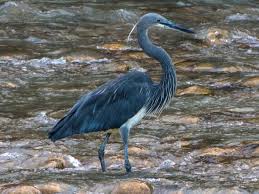
Union Environment Ministry expert panel has recommended environmental clearance (EC) for the Kalai-II hydroelectric project on Lohit River which is a white-bellied heron habitat.
- The white-bellied heron (Ardea insignis ) is a large heron species. It is the second largest living species of heron.
- It is also known as the imperial heronor great white-bellied heron.
- Its presence in the ecosystem system indicates the health of the rivers, the environment, the fish population, water quality.
- It inhabits the wetlands of tropical and subtropical forests in the foothills of the eastern Himalayas.
- It is mainly living in the foothills of the eastern Himalayas in northeast India and Bhutan to northern
- It prefers free-flowing riverine habitats with low disturbance, and predominantly depends on fish found in the river rapids.
- It is threatened by habitat loss, increasing disturbance and habitat degradation due to conversion of wetlands for agriculture and expansion of settlements.
- Conservation Status:
- IUCN Red List: Critically Endangered
- Wildlife Protection Act 1972: Schedule-I
New Action Plan For The Protection Of Chilika Lake:
The Odisha government is preparing a new action plan for the protection of Chilika Lake’s biodiversity and the development of its surrounding areas.It is a brackish water lake and a shallow lagoon with estuarine character spread across the districts of Puri, Khurda, and Ganjam in the state of Odisha.
It is Asia’s largest brackish water lake.Located at the mouth of the Daya River, Chilika Lake is the second-largest brackish water lagoon in the world, after the New Caledonian barrier reef in New Caledonia.The waterspread area of Chilika varies between 900 to 1165 sq. km. during summers and monsoons, respectively.It is connected to the Bay of Bengal by a 32 km long and 1.5 km wide channel that mostly runs parallel to the Bay, separated by a narrow spit.
10 Years of Paris Agreement:
The Paris Agreement(2015) completed ten years in November 2025, triggering a global re-evaluation of its effectiveness and relevance.The Paris Agreement is a legally binding global climate agreement adopted in 2015 (21st Conference of the Parties (COP)) under the UN Framework Convention on Climate Change.It replaced the Kyoto Protocol, expanding climate responsibility to all countries. It aims to limit global warming to well below 2°C, with efforts to restrict it to 1.5°C above pre-industrial levels. Every five years, countries submit updated Nationally Determined Contributions (NDCs), outlining plans for emission reduction (mitigation) and climate resilience (adaptation).
In 2023, the first Global Stocktake concluded at COP28, calling for faster action on mitigation, adaptation, and climate finance by 2030, including a push to transition away from fossil fuels.Countries are encouraged to submit long-term low-emission development strategies, though these are voluntary. The Paris Rulebook, finalised at COP24 (Katowice, Poland) and COP26 (Glasgow, Scotland), laid down detailed rules for implementing the Agreement.