
Today’s Current Affairs: 1st December 2025 for UPSC IAS exams, State PSC exams, SSC CGL, State SSC, RRB, Railways, Banking Exam & IBPS, etc
Table of Contents
Grey Seal : New Study
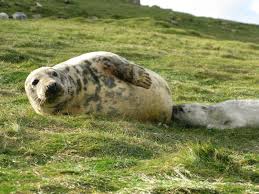
Researchers found that seal milk comprises 332 different kinds of oligosaccharides.
- Grey Seal is a large seal of the family Phocidae.
- It is also known as Atlantic seal and the horsehead seal.
- It is found on both shores of the North Atlantic Ocean.
- They are found across the North Atlantic Ocean in coastal areas from mid-Atlantic to the Baltic Sea.
- These seals spend the majority of their lives in coastal waters; when on land, they occur on rocky coasts, islands, and sandbars, as well as on ice shelves and icebergs.
- Characteristics of Grey Seals:
- Gray seals are diurnal, being active during the day and sleeping at night.
- It shows a ‘bottling’ behavior.
- These seals do not migrate but they disperse widely after the mating season.
- Gray seals are carnivores (piscivores). They feed on a wide variety of fish, mostly benthic or demersal species.
- Conservation Status: IUCN: Least Concern
Mekedatu Dam Project:
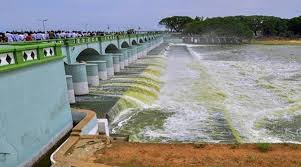
The Karnataka government decided that it would submit a “revised” Detailed Project Report (DPR) to the Centre on the Mekedatu balancing reservoir across the interstate river Cauvery.
- Mekedatu Dam Project is a multi-purpose (drinking water and power) project involving the construction of a balancing reservoir near Kanakapura in the Ramanagara district, Karnataka.
- The project is proposed at the confluence of the Cauvery River with its tributary Arkavathi. It would generate 400 MW of hydroelectricity once operational.
- Tamil Nadu, the lower riparian state, has been opposing the project, raising apprehensions that the state would be affected if the project takes shape.
- Tamil Nadu says, Mekedatu area represents the last free point in Karnataka from where Cauvery water flows unrestricted into Tamil Nadu, and the Mekedatu dam project is an attempt by Karnataka to block this free flow of water.
Hawfinch:
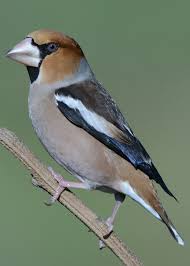
A Hawfinch bird, a species native to Europe, North Africa, and East Asia, was recently recorded at Jim Corbett National Park in Uttarakhand.
- It is a large passerine bird native to Europe, North Africa, and East Asia.
- It is the biggest bird of the Fringillidae family.
- Scientific Name: Coccothraustes coccothraustes Distribution:
- Hawfinches are found across Europe, Eastern Asia (the Palearctic including North Japan), and North Africa (Morocco, Tunisia, and Algeria).
- They are mainly resident in Europe, but many Asian birds migrate further south in the winter.
- The hawfinch frequents deciduous and mixed forests.
- Conservation Status:
- IUCN Red List: Least Concern
Jim Corbett National Park:
- It is located in the Nainital district of Uttarakhand.
- It is part of the larger Corbett Tiger Reserve.
- It is part of the sub-Himalayan ecosystem.
- It is India’s oldest national park.
- It was established in 1936 as Hailey National Park.
- It was later renamed in 1957 in memory of Jim Corbett, a famous hunter and conservationist who played a key role in the establishment of the park.
- The eastern periphery of Corbett National Park is entirely fed by the Kosi River.
- The Ramganga River (West), along with its significant tributaries Sonanadi, Palain, and Mandal, forms the prominent hydrological resource for the Corbett.
- Almost three-quarters of the park is encompassed by deciduous forest, including peepal, rohini, and mango trees.
- Bengal tigers, Indian elephants, leopards, sloth bears, deer.
Sirpur Archaeological Site:
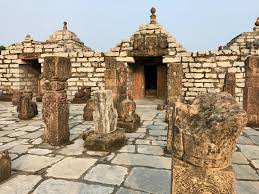
Government is planning to prepare Chhattisgarh’s 5th Century Sirpur archaeological site for UNESCO tag.
- Sirpur Archaeological Site is located in Chhattisgarh located on the banks of river Mahanadi.
- It was the flourishing capital of Dakshina Kosala under the Panduvanshi and later Somavamshi kings.
- It was discovered by Alexander Cunningham.
- Key Features of Sirpur Archaeological Site:
- Excavations revealed temples, Buddhist and Jaina .
- Lakshmana Temple (dedicated to Vishnu), one of India’s finest brick temples which was built around the 7th Century.
- Surang Tila complex: It is built on a high terrace and has multiple shrines in the panchayatana style (one main shrine surrounded by four subsidiary ones).
- Tivaradeva Mahavihara: It houses a significant Buddha statue.
- It was a major Buddhist centre with large viharas, meditation halls and excavated stupas.
- Archaeologists have also uncovered a 6th Century market complex, showing Sirpur was both a religious and commercial hub.
Vikram-I Rocket:

The Prime Minister of India unveiled Skyroot Aerospace’s first orbital rocket, Vikram-I.
- Vikram-I Rocket is developed by Skyroot Aerospace.
- It is India’s new private orbital-class launch vehicle named after the notable space pioneer Vikram Sarabhai.
- It uses an all-carbon composite structure for enhanced lightweight strength and efficiency.
- It emphasises simplicity, reliability, and the ability to launch within 24 hours from any location.
- It has four stages and the first three stages are solid-fuelled, providing robust initial thrust, topped by a hypergolic liquid upper stage for precise orbital adjustments.
- Stage 4 uses a cluster of four Raman engines. These are hypergolic engines, (meaning they ignite instantly when two chemicals, MMH fuel and NTO oxidiser, come into contact).
- It is built to target the small-satellite segment and is capable of placing multiple satellites into orbit in a single mission.
- It can deploy up to 350 kg into low Earth orbit (LEO) and 260 kg into a sun-synchronous orbit (SSO).
- Other key innovations include 3D-printed engines, ultra-low-shock pneumatic separation systems, and advanced avionics for real-time guidance.
International Institute for Democracy and Electoral Assistance:
Chief Election Commissioner of India is set to assume the role of the Chairperson the International Institute for Democracy and Electoral Assistance (International IDEA) for the year 2026.
- It is an inter-governmental organisation established in 1995.
- It works to strengthen democratic institutions and electoral processes worldwide.
- International IDEA has been granted UN observer status.
- Objective is to support stronger democratic institutions and processes, and more sustainable, effective and legitimate democracy.
- India is a founding member of International IDEA.
- The Institute’s governance consists of a Council of Member States, a Steering Committee, a Finance and Audit Committee, a Board of Advisers and a Secretariat, led by the Secretary-General.
- Each year, the Council elects a Chair and two Vice Chairs among its Members States.
- Its working modalities includes four elements: knowledge production, capacity development, advocacy as well as convening of dialogues.
- It focuses on six work streams namely:
- Electoral Processes
- Constitution-Building
- Democracy Assessment
- Political Participation and Representation
- Climate Change and Democracy
- Digitalization and Democracy
- Secretariat: Stockholm, Sweden
India Adds 7 New Names to the Martian Map:
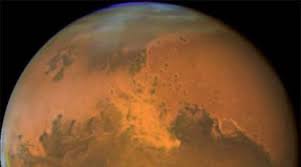
The International Astronomical Union (IAU) has approved 7 new Indian names proposed by Kerala-based researchers for Martian geological features, including a 3.5-billion-year-old crater named after geologist M. S. Krishnan, along with nearby landforms named after Kerala locations such as Valiamala, Thumba, Bekal, Varkala, and Periyar.
- Periyar Vallis: A Martian valley named after Kerala’s longest river, Periyar, which flows from the Western Ghats to the Arabian Sea.
- Varkala Crater: Named after Varkala beach, known for its geologically unique cliffs rich in jarosite, a mineral also detected on Mars, making it an important Martian analogue site.
- Bekal Crater: Named after the historic Bekal Fort in Kasaragod, a 17th-century coastal stronghold overlooking the Arabian Sea.
- The Bekal fort was in the hands of the Keladi Nayaka dynasty, Hyder Ali of Mysore and then the British.
- Thumba Crater: Named after Thumba, the birthplace of India’s space programme and site of the Thumba Equatorial Rocket Launching Centre (1962), where Indian Space Research Organisation (ISRO) began its early launches.
- Valiamala Crater: Named after Valiamala, home to the Indian Institute of Space Science and Technology (IIST), India’s premier institution for space education and research.
- Krishnan Crater: Named in honour of M. S. Krishnan, India’s pioneering geologist and first Indian Director of the Geological Survey of India.
- The crater, located in the Xanthe Terra region of Mars, is estimated to be about 3.5 billion years old. It is scientifically significant for preserving evidence of ancient glacial and fluvial activity.
- Krishnan Planus: A plain located southeast of the Krishnan Crater, also named in honour of M. S. Krishnan and geologically linked to the larger crater.
Chanakya Defence Dialogue-2025:
The President of India recently inaugurated the third edition of the Indian Army’s seminar, Chanakya Defence Dialogue-2025, in New Delhi.CDD is an annual platform that encourages discussion on contemporary security issues, technological advancements in defense, and strategic partnerships.
- It is organised by the Indian Army, in collaboration with the Centre for Land Warfare Studies (CLAWS).
- It is the third edition of the dialogue.
- Scheduled as a two-day conference, the gathering will feature military leaders, global strategic experts, diplomats, industry leaders, and young scholars.
- The ‘Chanakya Defence Dialogue’, named after the ancient Indian strategist Chanakya, aims to create a comprehensive platform for strategic deliberation on India’s future security architecture.
- It examines India’s security challenges and technological frontiers in an increasingly contested global landscape.
- The dialogue’s outcomes are expected to inform future military policies and enhance cooperative security arrangements, potentially influencing regional peace and stability.
National Mission for Mentoring:
The University Grants Commission (UGC) has called on all higher educational institutions (HEIs) across India to nominate teaching faculty under the National Mission for Mentoring (NMM).
- It is flagship initiative of the Department of School Education and Literacy, Ministry of Education.
- It is in line with the National Education Policy (NEP) 2020.
- It was launched in 2022 in selected 30 Central Schools across the country.
- It provides platforms for professionals and experts where they can share knowledge, skills and expertise as a Mentor with Mentee teachers and help them in their journey to become effective teachers.
- It aims to create a supportive environment, enhance mentorship experiences and contribute to individual and collective growth.
- National Council for Teacher Education (NCTE) has been assigned to develop and design the modalities for National Mission for Mentoring (NMM).
- NCTE released a comprehensive document on the mission (NMM – The Blue Book) with a detailed roadmap of its framework and implementation strategy.
- Important stakeholders: Mentor (the guide), Mentee (the teacher) and The Nodal officers/administration
Implementation strategy: - Seminars and workshops are conducted to teach “Master Mentors” who can subsequently teach others.
- Although participation is voluntary, the NMM manual encourages participants to do so with certificates, performance credits and other incentives.
Supreme Court to Review Anonymous Political Donations:

The Supreme Court has decided to review a petition challenging the rule that allows political parties to receive anonymous cash donations below Rs 2000, which petitioners say creates a loophole for opaque, untraceable political funding.
- It seeks to end cash donations even up to Rs 2000 allowed under Section 13A(d) of the Income Tax Act, 1961, which enables anonymous contributions, and demands full disclosure of donor details.
- The petition argues that Section 13A(d) violates Article 19(1)(a) by denying citizens their right to information, asserting that voters must know the sources of political funding to make informed choices.
- Directions Sought on Form 24A: The petition seeks a mandamus directing the Election Commission of India (ECI) to scrutinise Form 24A contribution reports and require political parties to deposit contributions lacking address or PAN details.
- It also urges the ECI to suspend or withdraw party symbols under Paragraph 16A of the Election Symbol Order, 1968 by issuing notices to defaulting parties.
- It urges that political parties’ accounts be audited by independent auditors appointed by the ECI, and calls for stronger mechanisms to ensure timely submission of contribution and audit reports.
India to Host 2030 Commonwealth Games:
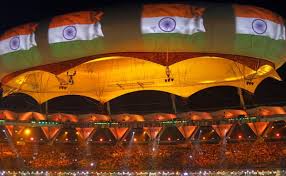
The Prime Minister of India congratulated the nation as India won the Centenary Commonwealth Games (CWG) 2030 bid, with Ahmedabad (also known as Amdavad) in Gujarat set to host the CWG 2030.
- CWG is the world’s second-largest multi-sport event after the Olympics, featuring athletes from 71 nations and territories, most of which are former British colonies.
- CWG was the brainchild of Canadian sportswriter Melville Marks Robinson.
- The idea of CWG originated from the 1911 Inter-Empire Championships in London, held during the Festival of Empire for King George V’s coronation.
- The first official CWG, then known as the British Empire Games, were held in 1930 with Canada’s Hamilton as hosts.
- Canadian athlete Gordon Smallacombe won the first gold medal at the Commonwealth Games in the triple jump.
- Since the first edition, the Games have been held every four years except in 1942 and 1946, and they were formally renamed the Commonwealth Games in 1978.
- Commonwealth Games Federation (CGF) is responsible for the direction and control of the Games.
- India at CWG: India last hosted the Commonwealth Games in 2010 in New Delhi, where it recorded its best-ever performance with 101 medals, including 38 golds, finishing second overall.
- Its next-best tally was 69 medals, including 30 golds, at Manchester 2002.
Cuban gar: Study
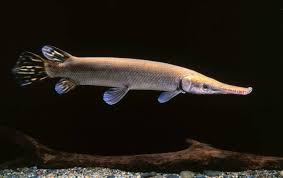
Cuban scientists have taken restoration efforts in Cuba’s Zapata Swamp to save the Cuban gar from extinction.
- The Cuban gar (Atractosteus tristoechus), also known as the manjuarí, is a fish in the family Lepisosteidae.
- This fish is part of a family called “gars,” which have been around for about 100 million years.
It is a tropical, freshwater species, although it also inhabits brackish water. - Found in various habitats from large lakes and rivers to sluggish tributaries, backwaters and pools, and can survive in both fresh and brackish waters.
- It is found in rivers and lakes of western Cuba and the Isla de la Juventud.
- Gars are ambush predators feeding on smaller fishes and aquatic crustaceans in nature.
- It is also notable for its high tolerance of high ammonia and nitrate levels in water.
- It has the ability to breathe some atmospheric air in absence of sufficiently oxygenated water.
- Habitat loss, and introduction of invasive species African walking catfish.
- Conservation Status
- IUCN: Critically Endangered.
Fujiwhara Effect:
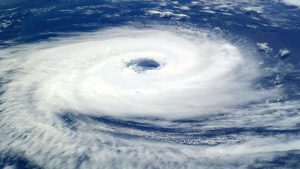
Two cyclonic storms are predicted to form in the Bay of Bengal, with a potential Fujiwhara interaction.
- The Fujiwhara Effect (also named as the Fujiwhara interaction or the binary interaction) occurs when two nearby cyclones or hurricanes interact with each other.
- It was first described by a Japanese meteorologist, Dr. Sakuhei Fujiwhara, in 1921. The phenomenon was thus named after him.
- During the Fujiwhara interaction, the centers of the two cyclones involved in the phenomenon begin to mutually orbit in a counterclockwise direction about a point between the two cyclones.
- The position of the point is dependent on the intensity and relative mass of the cyclonic vortices.
- The smaller cyclone involved in the Fujiwhara Effect moves at a faster rate than the bigger one about the central point.
- The Fujiwhara Effect might lead the two cyclones to spiral into the central point and merge with each other, or it might trigger the development of a larger cyclone.
- The effect might also divert the original path of one or both the cyclones.
Hoya dawodiensis:
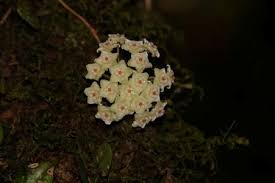
Arunachal Pradesh recently reported a major scientific milestone with the discovery of a new plant species, Hoya dawodiensis.
- Hoya dawodiensis is a new plant species.
- It was discovered in the Vijoynagar region in Changlang district, Arunachal Pradesh.
- Vijoynagar landscape, accessible only by air or multi-day treks, remains one of the least explored but biologically richest regions of the state.
- Hoyas constitute a diverse group of tropical flowering species, many of which are valued for their ecological roles and unique morphology.
- Hoyas are also known as wax plants or porcelain flowers because of their unique and beautiful flowers that look like they are made of wax.
- Hoyas are native to tropical and subtropical regions of Asia, Australia, and the Pacific Islands, but they can be grown indoors as houseplants in most climates.
- Hoya plants thrive in bright, indirect light.
- Hoyas prefer well-draining, airy soil.
- Hoyas are accustomed to high-humidity environments, though their waxy, thick leaves do help them tolerate periods of dry air.
International Astronomical Union:

A 3.5-billion-year-old Martian crater has been named after pioneering Indian geologist M.S. Krishnan, following the International Astronomical Union’s (IAU’s) approval of this and several other Kerala-proposed names for Martian landforms.
- International Astronomical Union (IAU) was founded in 1919 as a senior body governing international professional astronomical activities worldwide.
- Its mission is to promote and safeguard the science of astronomy in all its aspects, including research, communication, education, and development, through international cooperation.
- Activities:
- Definition of fundamental astronomical and dynamical constants and unambiguous astronomical nomenclature
- Rapid dissemination of new discoveries
- Organization of international observing campaigns
- Promotion of educational activities in astronomy to early informal discussions of possible future international large-scale facilities.
- It is the only organization recognized professionally for the naming of astronomical bodies, which it does solely on the basis of merit, history, or discoverer’s privilege.
- The IAU holds a General Assembly every three years in varying parts of the world. The long-term policy of the IAU is defined by the General Assembly.
- Headquarters: Paris, France.
- Its individual Members — structured into Divisions, Commissions, and Working Groups — are professional astronomers from all over the world, at the Ph.D. level and beyond, who are active in professional research, education and outreach in astronomy.
Amyotrophic Lateral Sclerosis:
A research paper highlighted that number of cases of Amyotrophic Lateral Sclerosis (ALS) in the world will increase from 222,801 in 2015 to 376,674 in 2040, representing an increase of 69%.It is also known as Lou Gehrig’s disease. It is a progressive neurological disorder that affects muscle movement.
It can occur at any age but symptoms commonly develop between the age of 55 and 75. The men are more likely to develop the condition. In few people with ALS, a genetic cause can be identified. In people with ALS, the motor neurons degenerate and die and messages sent by the brain do not reach the muscles which results into muscles atrophy (lose strength and become weak). Eventually, the brain loses control over voluntary movements including walking, chewing and even breathing, as the condition progresses. Symptoms includes muscle twitches in the arms, leg, shoulders or tongue; muscle cramps; Tightness or stiffness of muscles; muscle weakness in a limb or the neck; and difficulty in chewing or swallowing. There is no treatment to reverse nerve degeneration, but some therapy may help to delay progression. A treatment would include physical, occupational and speech therapy to improve quality of life.
Finn’s Weaver Bird:
Ornithologists alerted that the Finn’s Weaver bird is silently disappearing from the marshy lowlands of the Terai region in India.Finn’s weaver (Ploceus megarhynchus ) are also known as Finn’s baya and yellow weaver is a weaver bird species.It is native to the Ganges and Brahmaputra valleys in India and Nepal.They live close to water bodies. Marshy soil, tall grasses, Semal (silk cotton) and Shisham (rosewood) trees make up their natural habitat. They are largely granivorous. Human activities including expansion of agriculture, grass cutting, construction work, residential buildings, and increase in industrial units across the Terai has disrupted the natural habitat of these birds. Conservation Status: IUCN: Vulnerable, WildLife (Protection) Act, 1972: Schedule IV.
SURYAKIRAN XIX – 2025:
The 19th edition of the India–Nepal joint military exercise, SURYAKIRAN XIX – 2025, was held at Pithoragarh, Uttarakhand, to deepen military cooperation.The joint exercise first started in 2011. It aims to practice Sub-Conventional Operations under Chapter VII of the UN Mandate, crucial for peacekeeping and conflict-management missions.Training areas include Jungle Warfare, Counter-Terrorism in Mountain Terrain, Humanitarian Assistance & Disaster Relief (HADR), Medical Response, Environmental Conservation, and Integrated Ground–Aviation Operations. The 19th edition integrates emerging technologies, such as Unmanned Aerial Systems (UAS), drone-based Intelligence, Surveillance, and Reconnaissance (ISR) AI-enabled decision tools, unmanned logistics platforms, and armoured protection systems.



