
Charophytes:
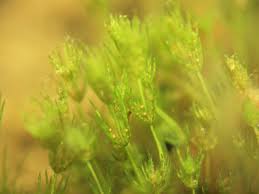
Research conducted at 27 test lakes in northeastern Germany revealed that the abundance of charophytes increased.
- Charophytes are a type of green algae.
- Fossils of Charophytes have been found going back to the Silurian Period (443 million years ago).
- This was the period when plants moved from water to land—and Charophytes are considered the closest living relatives to land plants.
- They grow in silt, mud, peat or sand, often as the first plants to colonize newly-cleared areas.
- These “plants” are found on all continents except Antarctica.
- They have no true leaves, stems nor fruits.
- These are generally submergent and are loosely attached to the sediment by thin rhizome- like structures called ‘holdfasts’.
- Seeds can remain dormant for years.
- They are unable to grow or are restricted in growth in turbid or murky waters.
- They play a crucial role in the water quality and biodiversity of lakes;
- They stabilize the lake bed, produce oxygen, promote water clarity, and provide habitat for numerous aquatic organisms.



