
Centre Pauses Rice Fortification:
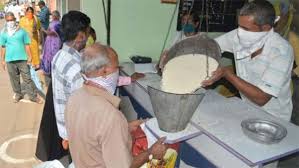
The Union government has decided to “temporarily” discontinue rice fortification under the Pradhan Mantri Garib Kalyan Anna Yojana (PMGKAY) and allied schemes after a comprehensive review based on a study from the Indian Institute of Technology (IIT) Kharagpur.
- The IIT Kharagpur study assessed the shelf life of Fortified Rice Kernels (FRK) and Fortified Rice (FR) across diverse agro-climatic zones.
It found that moisture content, storage conditions, temperature, relative humidity, and packaging material critically influence stability, leading to a decline in micronutrient levels over time. - The problem is exacerbated by the fact that rice in the central pool is often stored for 2-3 years. With an annual allocation of 37.2 million tonnes under PMGKAY and a total projected availability of 67.4 million tonnes, the gap implies extended storage cycles that heighten the risk of nutrient loss.
- The government has clarified that this temporary discontinuation will not reduce foodgrain entitlements and will not affect operations under the Public Distribution System (PDS), Integrated Child Development Services (ICDS), or the PM Poshan Scheme (formerly Mid-Day Meal scheme).
- The sudden decision has caused distress in the milling industry, with stakeholders reporting huge losses on raw materials like folic acid, broken rice, and premixes, and suggesting the policy should have been aligned with the next crop season (2026–27).
- Rice fortification is the deliberate addition of essential vitamins and minerals to rice during post-harvest processing to enhance its nutritional quality.
- It addresses hidden hunger (micronutrient deficiencies) without changing the rice’s taste, appearance, or cooking properties.
- Polished white rice, the most commonly consumed form, loses 75–90% of its natural vitamins (like thiamine, niacin, B6, and vitamin E) during milling. Fortification restores these lost nutrients and adds others that rice naturally lacks.



