
India Adds 7 New Names to the Martian Map:
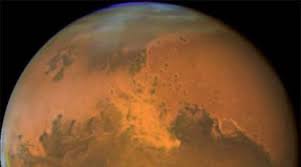
The International Astronomical Union (IAU) has approved 7 new Indian names proposed by Kerala-based researchers for Martian geological features, including a 3.5-billion-year-old crater named after geologist M. S. Krishnan, along with nearby landforms named after Kerala locations such as Valiamala, Thumba, Bekal, Varkala, and Periyar.
- Periyar Vallis: A Martian valley named after Kerala’s longest river, Periyar, which flows from the Western Ghats to the Arabian Sea.
- Varkala Crater: Named after Varkala beach, known for its geologically unique cliffs rich in jarosite, a mineral also detected on Mars, making it an important Martian analogue site.
- Bekal Crater: Named after the historic Bekal Fort in Kasaragod, a 17th-century coastal stronghold overlooking the Arabian Sea.
- The Bekal fort was in the hands of the Keladi Nayaka dynasty, Hyder Ali of Mysore and then the British.
- Thumba Crater: Named after Thumba, the birthplace of India’s space programme and site of the Thumba Equatorial Rocket Launching Centre (1962), where Indian Space Research Organisation (ISRO) began its early launches.
- Valiamala Crater: Named after Valiamala, home to the Indian Institute of Space Science and Technology (IIST), India’s premier institution for space education and research.
- Krishnan Crater: Named in honour of M. S. Krishnan, India’s pioneering geologist and first Indian Director of the Geological Survey of India.
- The crater, located in the Xanthe Terra region of Mars, is estimated to be about 3.5 billion years old. It is scientifically significant for preserving evidence of ancient glacial and fluvial activity.
- Krishnan Planus: A plain located southeast of the Krishnan Crater, also named in honour of M. S. Krishnan and geologically linked to the larger crater.



