
Indian Railways’ Electrification Drive:
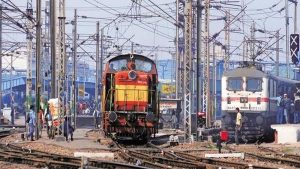
Indian Railways has electrified 99.2% of its Broad Gauge (1.676 metre distance between the inner faces of the two parallel rail lines) network, covering 69,427 Route Kilometres (RKMs) out of 70,001 RKMs as of November 2025, aligning infrastructure growth with sustainability.
- Railway electrification in India began in 1925 with the first electric train running between Bombay Victoria Terminus and Kurla Harbour, laying the foundation for energy-efficient rail mobility.
- Electrification pace surged from 1.42 km/day (2004–2014) to over 15 km/day (2019–2025). The share of electrified railway tracks increased from 24% in 2000 to over 96% by 2024, reaching 99.2% by November 2025.
- Railways’ networks in 25 States/UTs are 100% electrified, with only 5 States (Rajasthan, Tamil Nadu, Karnataka, Assam, and Goa) having residual non-electrified sections totalling 574 RKMs (0.8%).
- Electric traction is about 70% more economical than diesel and significantly reduces carbon emissions, air pollution, and fossil fuel dependence.
- Switzerland leads with 100% railway electrification, followed by China (82%), Spain (67%), Japan (64%), France (60%), Russia (52%), and the United Kingdom (39%).
- As of November 2025, Indian Railways has commissioned 898 MW of solar capacity, up from 3.68 MW in 2014, representing a nearly 244-fold increase.
- Solar installations now cover 2,626 railway stations across India.



