
Menkes Disease:
The U.S. Food and Drug Administration recently approved the Zycubo (copper histidinate) as the first treatment for Menkes disease in pediatric patients.
- It is a genetic disorder that affects body’s ability to process copper.
- It is caused by a mutation of the ATP7A gene located on the X chromosome. This ATP7A gene affects how the body transports copper and maintains copper levels.
- While the body only uses a small amount of copper, even this tiny amount is required for many functions.
- Copper helps with metabolism, brain functioning, blood vessel and blood cell formation, wound healing, and the immune system.
- Copper also helps to convert iron into a usable form in the body.
- It is naturally available in many foods and dietary supplements.
- Menkes Disease usually causes low copper levels in blood plasma, the liver, and the brain.
- The condition also reduces the activities of copper-dependent enzymes in the body.
- Copper may accumulate in other tissues, such as the kidney.
- Because the condition prevents the body from using copper correctly, Menkes disease can lead to serious damage to the brain and nervous system and can harm a child’s development.
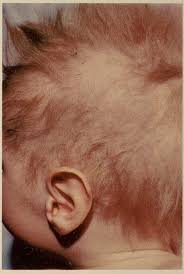
- It occurs mostly in male infants and is characterized by coarse, kinky hair (leading to its nickname of “kinky hair disease”), as well as failure to grow and thrive.
- Symptoms include seizures, slow growth, floppy muscles, and kinky (crinkly) hair.
- There isn’t a cure for Menkes disease, but early treatment with copper can help reduce symptoms and prolong life.
- Treatment includes copper replacement injections (also known as a copper histidine compound) to increase the development of copper in your child’s body.
- Without treatment, most Menkes disease patients do not survive past age 3.



