
Srimanta Sankardeva:
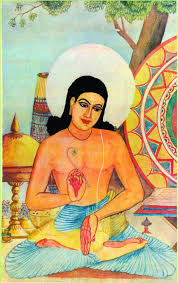
The Union Home Minister inaugurated the redeveloped Batadrava Than, the birthplace of Vaishnavite saint Srimanta Sankardeva, in Assam’s Nagaon district.
- He was a 15th–16th century Bhakti saint who holds a high position in Assam’s history, society, culture, and religious beliefs. His diverse contributions led to a new phase of Assamese literature and culture, making him an important figure in the Indian Bhakti movement.
- Born in October 1449 to a family of Siromani Bhuyans (landed gentry), he undertook a transformative pilgrimage across North India in 1481 and composed his first Borgeet (devotional songs) at Badarikashrama (Badrinath).
- He faced opposition from kings and orthodox sections, shifted locations frequently, and passed away in 1568.
- Founder and propagator of the Neo-Vaishnava Bhakti movement in 15th-century Assam.
- He established eka-sarana-nama-dharma (also called Mahapurushiya dharma), whose cardinal principle was the worship of the single deity Vishnu (as Krishna), with its essence being the act of seeking refuge (sarana) in one God.
- Emphasized only two of the nine forms of Bhakti i.e., Sravana (hearing God’s name) and Kirtana (chanting God’s name).
- Preached universal brotherhood and sought to unite Assam’s heterogeneous society (multiple tribes, languages, communities) under the Neo-Vaishnava fold.
- He established Namghars (community prayer halls) and Satras (Vaishnava monasteries) which became centers for congregational worship, social equality, moral discipline, and the arts.
- Namghars, in particular, allowed the participation of all castes and communities, promoting social inclusivity.
- He translated eight of the twelve books of the Bhagavata Purana into Brajavali (common linguistic style in Assam) to make sacred Vaishnava texts accessible, with the Adi Dasama, covering Krishna’s childhood, being the most popular.



