
W Ursae Majoris Star:
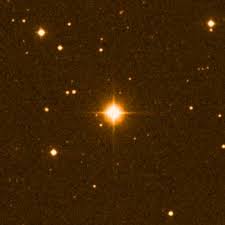
Astronomers from Aryabhatta Research Institute of Observational Sciences used data from Devasthal Fast Optical Telescope and NASA’s TESS space telescope to create detailed light curves of the W Ursae Majoris (W UMa) star.
- It is also known as a low mass contact binary, is a type of eclipsing binary variable star.
- They share a single outer atmosphere and they orbit around each other.
- W UMa stars are easily recognized by their light curves with near equal minima and continuous light variation.
- Their variability ranges from a few tenths to slightly over a magnitude.
- The periods are typically short and range between 25 days to around 1.0 days.
- The traditional theory explaining the origin of contact binaries is W UMa systems form from detached binaries of that comparable periods through orbital decay by angular momentum loss.
- The idea of the contact binary seems to have been first introduced by Kuiper (1941).
- They assist in precise determinations of fundamental stellar parameters such as masses, radii, and temperatures, crucial for testing theories about how stars evolve over time.
- It was found that stars share their outer layers, their orbits shift slightly over time, as if tugging and pulling on one another
- Some stars appear lopsided—brighter on one side than the other.
- It is found that there is an uneven brightness point at dark magnetic star spots similar to star spots.
- These spots rotate in and out of view, creating bumps in the light curves.
- This also suggests the stars have strong magnetic activity.
- Scientists also found specific light signals (called H-alpha and H-beta) that clearly show activity in the star’s outer layer, which is linked to magnetic events like star spots and stellar flares.



