
Wet Dress Rehearsal:
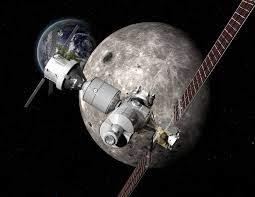
NASA found a hydrogen leak during a wet dress rehearsal of its Artemis II mission.
- It is the final practice run for a high-stakes rocket launch.
- The “wet” in the name refers to the loading of cryogenic fuel (typically liquid oxygen and liquid hydrogen for large rockets) into the rocket’s massive tanks.
- It is a rigorous demonstration of ground team preparedness.
- Wet rehearsals are important because only they can reveal events that happen in cryogenic conditions, e.g., leaks in seals or in the connections between the rocket and ground equipment.
- Dry Dress Rehearsal practices the countdown and important operations without loading cryogenic propellants into the rocket.
- Instead, the team power up vehicle and ground systems, verify its communications equipment, simulate critical events, and validate decision-making and handoffs between launch control, engineering, range safety, and, if applicable, crew operations.
- Many of the testing steps use simulated sensor inputs.
- These rehearsals are useful to reveal logical problems in the flow of events without risking fuel leaks.
- Artemis II Mission is the second scheduled flight of NASA’s Artemis program and the first crewed Artemis mission.
- It will be the first mission to carry humans to the moon’s vicinity since 1972.
- It is the first to fly astronauts aboard the Space Launch System (SLS) rocket and Orion spacecraft.
- While Artemis 1 successfully flew Orion around the moon without astronauts in 2022, Artemis 2 will be the first time that humans will travel aboard the spacecraft and venture beyond Low Earth Orbit.
- The astronauts and mission controllers will collect data on Orion and the crew’s performance to assess how ready the Artemis program is to send people to the moon’s surface.



