
Today’s Current Affairs: 10th January 2026 for UPSC IAS exams, State PSC exams, SSC CGL, State SSC, RRB, Railways, Banking Exam & IBPS, etc
Table of Contents
Nagauri Ashwagandha : GI Tag

The Centre has officially granted a Geographical Indication (GI) tag to ‘Nagauri Ashwagandha’.
- Nagauri Ashwagandha is mainly grown in the Nagaur district of Rajasthan.
- Nagaur’s dry climate and sandy soil are ideally suited for Ashwagandha cultivation.
- It has longer, thicker roots rich in medicinal compounds, particularly alkaloids.
- Its berries are known for their dark, bright red colour, which is considered a clear indicator of superior quality.
- It has brittle and starchy roots. The ‘Nagori Ashwagandha’ is the supreme among all Ashwagandha varieties in arid region.
- Ashwagandha (Withania somnifera) is an important ancient plant
- Other names: Indian ginseng or Indian winter cherry
- It grows in dry and sub-tropical regions.
- It grows well in sandy loam or light red soil having pH 7.5 to 8.0 with good drainage.
- It is grown as late rainy season (kharif) crop.
- The semi-tropical areas receiving 500 to 750 mm rainfall are suitable for its cultivation as rainfed crop.
- It can tolerate a temperature range of 20 to 38 degree Celsius.
- Major Ashwagandha Producing states: Madhya Pradesh, Rajasthan, Punjab, Haryana, Uttar Pradesh, Gujarat, Maharashtra and Madhya Pradesh are the of the country.
- Benefits of Ashwagandha:
- It has been in use as a medicinal plant for thousands of years, especially in traditional Ayurvedic medicine.
- It is often called an adaptogen, meaning it helps the body adapt to stressors and restore balance.
- Its other benefits are reducing inflammation, increasing energy, alleviating anxiety, ease pain, and improving sleep.
- Different parts of the ashwagandha plant, such as the root, leaves, and berries, may have different concentrations of bioactive compounds.
BIS Foundation Day 2026:
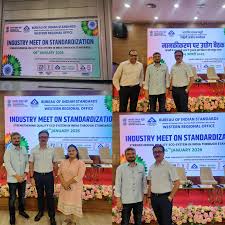
The Bureau of Indian Standards (BIS) celebrated its 79th Foundation Day on 6th January 2026.
- BIS is India’s National Standards Body under the Department of Consumer Affairs, Ministry of Consumer Affairs, Food & Public Distribution, responsible for ensuring product safety, reliability and global competitiveness.
- It was initially set up as the Indian Standards Institution (ISI) that came into being on 6th January 1947.
- The Bureau of Indian Standards (BIS) Act, 2016, provides statutory backing for standardisation, certification and hallmarking.
- Vision: To transform “Made in India” into “Trusted by India and Trusted by the World” through a digitally enabled and globally harmonised quality ecosystem.
- It provides Annual Minimum Marking Fee concessions (80%–Micro, 50%–Small, 20%–Medium), relaxes in-house laboratory requirements for large industries.
- The Silver HUID Hallmarking Scheme strengthens consumer protection and transparency making HUID-based marking mandatory while silver hallmarking remains voluntary.
Centre issues notification for first phase of Census of India 2027:
The Centre has issued the notification for the first phase of the Census of India 2027, marking the formal start of India’s largest statistical exercise after a gap of more than a decade.
- The Census of India 2027 is the 16th Census overall and the 8th after Independence, conducted under the Census Act, 1948 and Census Rules, 1990.
- It will be carried out in two phases:
- Houselisting and Housing Census (HLHC): April–September 2026
- Population Enumeration (PE): February 2027The exercise is administered by the Ministry of Home Affairs, Office of the Registrar General & Census Commissioner of India.
New features in Census 2027:
- First fully digital Census: Data collection through mobile applications (Android & iOS) instead of paper schedules.
- Self-enumeration facility: Citizens can fill details online 15 days prior to field enumeration.
- Census Management & Monitoring System (CMMS): Real-time digital monitoring of enumeration and supervision.
- GIS-based House listing Block (HLB) Creator: Web-map application for accurate geo-referencing of census blocks.
- Caste enumeration: For the first time since 1931, caste data will be collected electronically in the Population Enumeration phase.
- Census-as-a-Service (CaaS): Clean, machine-readable datasets for Ministries to enable faster, evidence-based policymaking.
Ayush Export Promotion Council:
The Ayush Export Promotion Council (AYUSHEXCIL) observed its 4th Establishment Anniversary on 4th January 2026.
- It is the nodal Export Promotion Council for the AYUSH sector, launched by the Prime Minister during the Global AYUSH Investment and Innovation Summit, Gandhinagar in 2022.
- It functions in consultation with the Ministry of AYUSH with support from the Ministry of Commerce & Industry.
- The Council undertakes exporter capacity building, regulatory compliance facilitation, B2B meetings, international exhibitions, seminars and overseas outreach programmes to strengthen global market access.
- The Council oversees exports of Ayurveda, Yoga & Naturopathy, Unani, Siddha, Sowa-Rigpa, Homeopathy, herbal products and Indian traditional healthcare services.
- AYUSHEXCIL anchors the Ayush Quality Mark programme of the Ministry of AYUSH, strengthening global quality assurance and product credibility.
- AYUSH systems have received formal recognition in bilateral trade agreements, including the India–Oman CEPA and the India–New Zealand FTA, with dedicated annexes on traditional medicine and health-related services.
- AYUSH and herbal product exports grew by 6.11%, rising from USD 649.2 million (2023–24) to USD 688.89 million (2024–25), reflecting rising global demand for India’s traditional medicine systems.
Indian Railways’ Electrification Drive:
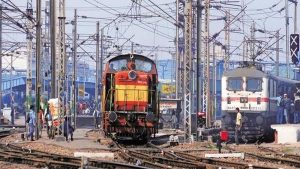
Indian Railways has electrified 99.2% of its Broad Gauge (1.676 metre distance between the inner faces of the two parallel rail lines) network, covering 69,427 Route Kilometres (RKMs) out of 70,001 RKMs as of November 2025, aligning infrastructure growth with sustainability.
- Railway electrification in India began in 1925 with the first electric train running between Bombay Victoria Terminus and Kurla Harbour, laying the foundation for energy-efficient rail mobility.
- Electrification pace surged from 1.42 km/day (2004–2014) to over 15 km/day (2019–2025). The share of electrified railway tracks increased from 24% in 2000 to over 96% by 2024, reaching 99.2% by November 2025.
- Railways’ networks in 25 States/UTs are 100% electrified, with only 5 States (Rajasthan, Tamil Nadu, Karnataka, Assam, and Goa) having residual non-electrified sections totalling 574 RKMs (0.8%).
- Electric traction is about 70% more economical than diesel and significantly reduces carbon emissions, air pollution, and fossil fuel dependence.
- Switzerland leads with 100% railway electrification, followed by China (82%), Spain (67%), Japan (64%), France (60%), Russia (52%), and the United Kingdom (39%).
- As of November 2025, Indian Railways has commissioned 898 MW of solar capacity, up from 3.68 MW in 2014, representing a nearly 244-fold increase.
- Solar installations now cover 2,626 railway stations across India.
Earth Observation Satellite EOS-N1 (Anvesha):
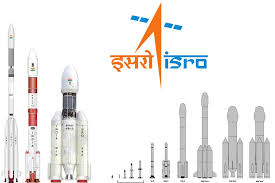
Indian Space Research Organisation (ISRO) will begin 2026 with the PSLV-C62 mission, launching the advanced surveillance satellite EOS-N1 (Anvesha) along with 18 co-passenger payloads.
- EOS-N1 (codenamed ‘Anvesha’) is an advanced hyperspectral Earth observation satellite developed primarily to support India’s strategic and civilian remote-sensing needs.
- To be launched in: January 2026, aboard PSLV-C62 from Sriharikota.
- Aim is to enhance space-based surveillance and reconnaissance capabilities while supporting civil applications such as agriculture, urban planning, and environmental monitoring.
Key functions:
Hyperspectral imaging: Captures data across hundreds of spectral bands, enabling precise identification of materials and surface features.
Strategic surveillance: Assists in border monitoring, terrain analysis, and threat detection, strengthening national security.
Agriculture support: Enables crop health assessment, soil moisture analysis, and yield estimation.
Urban and infrastructure mapping: Supports land-use planning, infrastructure monitoring, and disaster preparedness.
Environmental monitoring: Tracks ecosystem changes, pollution patterns, and climate-related impacts.
Key functions:
Hyperspectral imaging: Captures data across hundreds of spectral bands, enabling precise identification of materials and surface features.
Strategic surveillance: Assists in border monitoring, terrain analysis, and threat detection, strengthening national security.
Agriculture support: Enables crop health assessment, soil moisture analysis, and yield estimation.
Urban and infrastructure mapping: Supports land-use planning, infrastructure monitoring, and disaster preparedness.
Environmental monitoring: Tracks ecosystem changes, pollution patterns, and climate-related impacts.
Akash-NG Missile:
The Defence Research and Development Organisation (DRDO) successfully completed User Evaluation Trials (UET) of the Akash-NG (Next Generation) , clearing the path for its induction into the Indian Air Force (IAF).
- The development cycle of systems from DRDO broadly consists of three phases: developmental trials, user-assisted trials in various conditions, and UETs.
- The successful UET clears the way for the induction of the system, and an acceptance of necessity (AoN) is issued by the user, which, in Akash-NG’s case, is the IAF.
- DRDO has successfully completed User Evaluation Trials of Akash-NG, clearing the way for its induction into the Indian Air Force and marking a major step in India’s indigenous air defence capability.
- Akash-NG is a lighter, longer-range, and more lethal upgrade over the original Akash, designed to counter high-speed, low-RCS aerial threats and strengthen India’s layered air defence under Atmanirbhar Bharat.
- Akash-NG is a next-generation surface-to-air missile (SAM) designed for the IAF to intercept high-speed, high-manoeuvring, low radar cross-section (RCS) aerial threats, including aircraft, drones, and cruise missiles, with a range of up to 70 km and faster response time.
- The system is indigenously developed by DRDO (with 96% indigenous components) and produced by Bharat Dynamics Limited (BDL) and Bharat Electronics Limited (BEL), reinforcing India’s push for self-reliance in defence manufacturing.
- Akash-NG can fly at Mach 2.5, strike targets at around 60–70 km, operate beyond 20 km altitude, and achieve a kill probability of nearly 90%, making it far more lethal than earlier variants.
- The canisterised Akash-NG missile is stored and launched from sealed containers, which ease transport and storage while enhancing shelf life and operational readiness.
- It features built-in electronic counter-counter measures (ECCM), which means it has onboard mechanisms that can counter electronic systems that deceive detection systems.
- It features an indigenous Radio Frequency (RF) seeker, dual-pulse solid rocket motor, and fully homegrown radars and command-and-control systems, enabling precision strikes against low-RCS and high-manoeuvring targets.
- The missile can be launched from mobile platforms, engage multiple targets simultaneously, and counter threats at low altitude, near-boundary, and high-altitude long-range scenarios.
- Akash was inducted into the IAF in 2014, and into the Indian Army the next year. Both the IAF and the Army currently operate multiple squadrons and groups of missiles, respectively.
- Akash-NG significantly enhances India’s layered air defence architecture, improves readiness against modern aerial threats, and strengthens Atmanirbhar Bharat in critical missile technologies.
- In December 2020, India approved Akash missile exports after interest from several countries, including Armenia, the Philippines, Vietnam, Egypt, and Brazil, highlighting the global acceptance of India’s indigenous defence systems.
- The export version of Akash will be different from those in service with the Indian Armed Forces.
- Compared to the original Akash, the NG version is lighter ( now 350 kg vs earlier 700 kg), has longer range (extended range up to 70 km (earlier ~30 km), replaces ramjet propulsion with a solid rocket motor, and offers improved mobility and survivability.
- The DRDO has also developed Akash Prime, an upgraded version of the Akash missile with the same range but equipped with an indigenous active RF seeker, significantly improving accuracy against aerial targets.
ICGS Samudra Pratap:
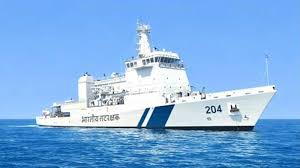
The Defence Minister commissioned Indian Coast Guard Ship (ICGS) Samudra Pratap, the first of two indigenously constructed pollution control vessels for the Indian Coast Guard, marking a significant step in strengthening India’s marine environmental protection capabilities.
- Designed for pollution response operations within the Exclusive Economic Zone (EEZ) and beyond, the vessel will be homeported at Kochi under the operational control of the Commander, Coast Guard Region (West).
- ICGS Samudra Pratap: It is built by Goa Shipyard Limited, with over 60% indigenous content.
- ICGS Samudra Pratap, meaning “Majesty of the Seas”, symbolises the ICG’s commitment to safe, secure, and clean seas while safeguarding India’s maritime interests.
- The vessel, capable of speeds above 22 knots and an endurance of 6,000 nautical miles, is the largest ship in the ICG fleet.
- It functions as a multi-role platform for pollution response, oil spill containment, fire-fighting, maritime safety, coastal patrol, and surveillance.
- Equipped with advanced pollution detection systems, specialised response boats, modern firefighting equipment, and aviation facilities, including a helicopter hangar.
- It significantly strengthens marine environmental protection, safeguards coral reefs, mangroves, and fisheries, and supports the blue economy.
Mpemba Effect:
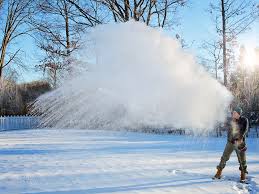
Researchers from Jawaharlal Nehru Centre for Advanced Scientific Research have used supercomputers to develop the first simulation of ice formation proving the Mpemba effect of water.
- Mpemba effect is a paradoxical phenomenon in which a hot liquid can cool or freeze faster than a cold liquid under certain conditions.
- The effect was described by Aristotle, in his book Meterologica.
- It is named after Tanzanian student Erasto Mpemba, who brought attention to this counterintuitive phenomenon in 1969, makes for curious observation.
- Possible causes to Mpemba Effect:
- Micro bubbles: One cause, scientists have posited, is micro bubbles left suspended in water that has been heated by boiling.
- These cavities promote convection and transfer heat faster as the water cools.
- Evaporation: as warmer water evaporates more, it also takes away some heat (evaporation is inherently endothermic, which is how sweat cools your skin).
- Both convection and accelerated heat transfer are enhanced in warmer water because such water is less dense.
- Presence of frost in cold water: Frost is an insulator and could slow the loss of heat.
- Scientists have also considered whether compounds in water like calcium carbonate could be precipitated by boiling, and then dissolve, thus increasing the water’s freezing point.
- Recent Findings related to Mpemba effect:
- The researchers also found that the Mpemba effect is not unique to water.
- The simulation demonstrates that similar behaviour can occur during fluid-to-solid phase transitions in other materials.
- Supercomputer simulation of ice formation gives evidence of paradoxical phenomenon of water.
NITI Aayog on Internationalisation of Higher Education in India:
NITI Aayog has released a report titled Internationalisation of Higher Education in India: Prospects, Potential, and Policy Recommendations, outlining a comprehensive road map to make India a global destination for higher education.
- India has a 1:28 inbound–outbound student ratio, indicating a major skew toward outward migration.
- This reflects a significant brain drain and loss of domestic academic capacity.
- Over 16 lakh Indians have renounced citizenship since 2011, partly due to overseas education–migration pathways. Internationalisation can convert brain drain into brain circulation.
- Indian students’ overseas education spending is projected at Rs 6.2 lakh crore by 2025.
- This equals nearly 2% of GDP and about 75% of India’s trade deficit (FY 2024–25).
- Concentration of Indian students in high-income strategic countries (US, UK, Australia) (over 8.5 lakh Indian students) risks weakening India’s long-term knowledge economy and innovation base.
- Attracting global talent improves research quality and institutional rankings.
- India hosts about 47,000 international students (2022), but with stronger policy support, inbound numbers could rise to 7.89–11 lakh by 2047.
- Since 2001, international student inflow has grown by 518%, highlighting India’s significant yet underutilised potential as a global education hub.
- Inflow of international students and faculty enhances research output, cross-cultural learning, and global collaborations.
- It positions India as a global knowledge hub and strengthens educational diplomacy.
- Internationalisation aligns with National Education Policy 2020 and India’s 2047 development vision.
- It helps build a high-skilled workforce essential for economic growth and technological leadership
Wolf Supermoon:

The first full moon of 2026, the Wolf Supermoon, peaked on 2nd January, highlighting a full moon that appeared slightly larger and brighter. A Wolf Supermoon is a combined term referring to the occurrence of the Wolf Moon at the time of a Supermoon.
- The Wolf Moon is the traditional name for January’s first full moon, rooted in indigenous, Celtic and Old English folklore, and popularised by almanacs such as the Old Farmer’s Almanac.
- It is associated with mid-winter beliefs of wolves being heard howling more frequently, though the Moon itself undergoes no physical change.
- Wolf supermoons are relatively uncommon and occur only when the January full moon aligns with a supermoon.
- A Supermoon occurs when the Moon reaches its closest point to the Earth at the same time that it is in its full phase, making it appear slightly larger and brighter in the night sky.
- As the Moon travels around the Earth in an elliptical orbit, it passes through two distinct points in its orbit: perigee, the point of closest approach, and apogee, the point of farthest distance.
- A common visual effect during a supermoon is the moon illusion, which makes the Moon appear larger near the horizon due to human perception of distance and scale rather than any physical change in the Moon.
Melghat Tiger Reserve:

The Bombay Natural History Society (BNHS) has released 15 critically endangered Indian vultures at the Melghat Tiger Reserve in Maharashtra.
- Melghat Tiger Reserve is situated in Maharashtra.
- It is located on the southern offshoot of the Satpura Hill Range in Central India, called Gavilgarh Hill.
- It was the first tiger reserve in Maharashtra.
- The name ‘Melghat’ means the confluence of various ‘ghats’ or valleys, as is typical from the landscape of this tiger Reserve.
- The forest is tropical dry deciduous in nature, dominated by teak.
- The reserve is a catchment area for five major rivers: the Khandu, Khapra, Sipna, Gadga, and Dolar, all of which are tributaries of the river Tapti.
- The Tapti River and the Gawilgadh ridge of the Satpura Range form the boundaries of the reserve.
- The Korkus are the largest tribal community in Melghat. Other communities include the Gawli community and the Gond tribe also reside here.
- Some of the common species are teak, Lagerstroemia Parviflora, Terminalia Tomentosa, Ougeinia Oojeinensis, Emblica Officinalis, Bamboo, etc.
- Sloth Bear, Indian Gaur, Sambar deer, Leopard, Nilgais, dhole, hyena, jungle cat, langur, etc.
- It is considered a stronghold of the critically endangered forest owlet.
RBI Proposes 75% Cap on Banks Dividend Payouts:
India’s banking regulator has proposed a key reform to ensure long term financial stability of banks. As banks report stronger profits and improved asset quality, the focus has now shifted to prudent capital management. The proposed move seeks to balance rewarding shareholders while ensuring banks retain sufficient earnings to absorb future risks.The Reserve Bank of India has proposed to cap banks’ dividend payout at 75% of their Profit After Tax (PAT). The proposal is part of RBI’s draft guidelines aimed at strengthening banks capital position.Under the proposed norms, banks will not be allowed to distribute dividends exceeding 75% of their annual profits.This applies to scheduled commercial banks and is intended to ensure that a portion of profits is retained to support future growth and risk management.The RBI has invited feedback from stakeholders before finalising the guidelines.
Axis Bank Launches ‘Safety Centre’ to Boost Digital Banking Security:
Axis Bank has introduced a new feature called ‘Safety Centre’ on its mobile banking app to strengthen customer protection against digital fraud. The facility allows users to manage and control key banking functions directly through the app, without visiting a branch or contacting customer care.Axis Bank launched the Safety Centre on its mobile banking app in January 2026. The move aims to give customers greater control over digital banking security and fraud prevention.
IDFC FIRST Bank Launches ‘Zero-Forex Diamond Reserve Credit Card’:
IDFC FIRST Bank announced the launch of its premium offering — the ‘Zero-Forex Diamond Reserve Credit Card’. Designed specifically for frequent international travellers and premium lifestyle spenders, this card eliminates foreign exchange markup while offering a wide range of travel, insurance, and reward benefits.The launch strengthens the bank’s presence in the premium credit card segment, catering to customers with global spending needs.The Zero-Forex Diamond Reserve Credit Card is a premium international-use credit card that allows customers to spend abroad without paying any foreign exchange markup, which typically ranges between 2%–3.5% on regular cards.
HSBC Private Bank Appoints Ida Liu as CEO:
HSBC Private Bank has made a significant leadership announcement that is highly relevant for competitive exams and current affairs preparation. In January 2026, the bank appointed Ida Liu as its new Chief Executive Officer (CEO), marking an important development in the global banking and wealth management sector.HSBC Private Bank officially appointed Ida Liu as its Chief Executive Officer (CEO) with effect from January 05, 2026.
She succeeds Gabriel Castello, who had been serving as the Interim CEO since December 2024
Goa CM Pramod Sawant Launches Second Edition of ‘History That India Ignored’:
Goa Chief Minister (CM) Pramod Sawant launched the second edition of the acclaimed book titled ‘History That India Ignored’, authored by Prem Prakash, a veteran journalist and Chairman of Asian News International (ANI). The launch event took place in Panaji, Goa, bringing renewed attention to this important historical work. The book, originally published in April 2025 by Vitasta Publishing Private Limited, aims to highlight neglected aspects of India’s freedom struggle and ensure these truths reach younger generations of students and history enthusiasts.



